
Table of Contents
That gritty little jar on your bathroom shelf might be the hardest-working product you own. An exfoliating scrub manually buffs away dead skin cells, unclogs congested pores, and leaves you with the kind of smooth, glowing skin you expect from a spa facial. But here’s the catch: the same scrub that works wonders for your legs can wreck your face, and applying more pressure won’t make it “work better” – it will just irritate your skin. The key is knowing exactly which scrub to use, where, and how often.
What Exactly Is an Exfoliating Scrub?
At its core, an exfoliating scrub is a physical exfoliant: a cream or gel with small granular particles that create friction to lift away dead cells from the skin’s surface. Unlike chemical exfoliants like AHAs and BHAs, which dissolve the “glue” between cells, a scrub works through mechanical action. The particles can be natural, like sugar, salt, coffee, or ground apricot kernels, or synthetic, like jojoba beads. You have probably used a sugar scrub on your lips or a salt scrub in a spa. The principle is the same, but particle size and shape make all the difference.
Why Exfoliating Matters: The Real Benefits
Exfoliating is not just about having impossibly soft shoulders. When you slough off the top layer of dead skin, several things happen:
- Your skin regenerates faster. Cell turnover slows as you age. In your 20s, it may take 28 days; after 30, that can double.
- Products sink in deeper. Without a brick wall of dead cells, serums and moisturizers penetrate much better.
- Pores look smaller. Scrubbing away surface debris prevents blockages, so pores appear less visible.
- Circulation gets a boost. The massaging action brings blood to the surface, which gives an instant rush of color.
- Texture smooths out. Rough patches on your elbows, knees, and heels call for a well-chosen scrub.
Types of Exfoliating Scrubs: Which Grain Should You Pick?
Not all scrubs are created equal. Here are the most common types and what they are best for.

Sugar Scrubs
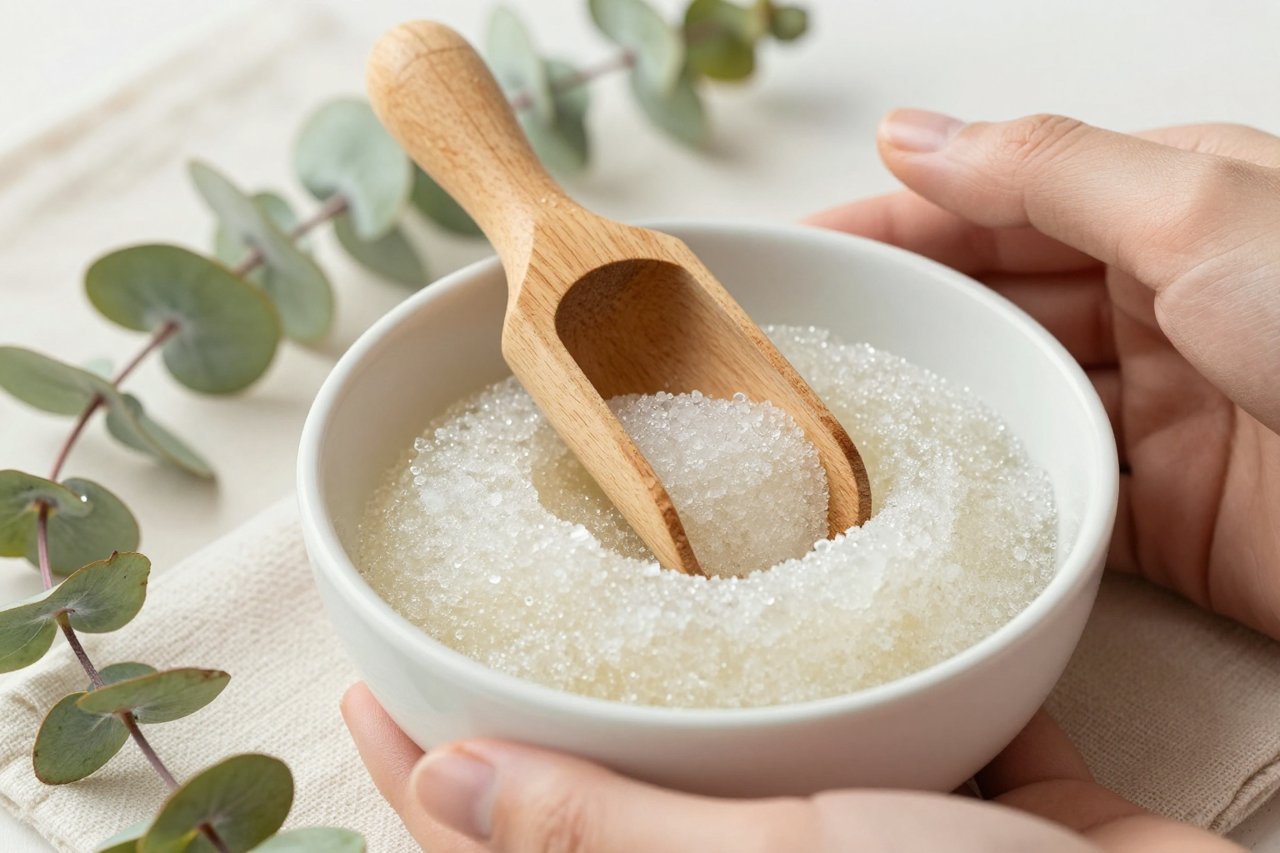
Sugar granules are naturally oval and dissolve as you massage, making them one of the most forgiving physical exfoliants. Brown sugar is finer and softer; white sugar is more coarse. Sugar scrubs work well for the face if you are gentle, and for body skin that is easily irritated. Beware: some sugar scrubs are oil-heavy, which can leave a film on your bathtub or cause breakouts if you do not rinse thoroughly.
Salt Scrubs
Sea salt and Epsom salt are more abrasive and dissolve slowly, so you will mostly find them in body scrubs. The crystals are much bigger, and using a salt scrub on your face is a one-way ticket to micro-tears and redness. Save them for your feet, elbows, and knees.
Coffee Scrubs
Caffeine is a vasoconstrictor, which means applying coffee granules can temporarily tighten and firm skin. That is why coffee scrubs are famous for fighting the appearance of cellulite. They also smell incredible. The trade-off is that coffee grounds are jagged, so always pick a formula blended with shea butter or another rich base, and avoid fresh coffee grounds on freshly shaved skin.
Jojoba Beads and Microbeads
Synthetic beads are perfectly round, so they glide over skin and are very gentle. The problem is the environment: many are made from polyethylene microplastics. Some brands now use biodegradable jojoba beads instead, so read the label.
Korean Exfoliating Mitts
A traditional Korean spa scrub does not involve a jar at all. Instead, a rough, wet fabric mitt rolls away dead skin in little pills. The effect is dramatic, and fans swear by it. If you want to try this technique, our roundup of the best Korean body scrubs according to K-beauty experts will walk you through the exact process and products.
How to Choose an Exfoliating Scrub for Your Skin
Start by asking yourself three questions: face or body? What is your skin type? And do you prefer a separate scrub or an in-shower combo?
Face vs. Body
Facial skin is thinner and more reactive than the skin on the rest of your body. Use a fine-grained scrub designed for the face. A cult favourite like Ole Henriksen’s Strawberry Lemonade Smoothing Scrub uses crushed strawberry seeds and pumice to refine texture without shredding your complexion. Body skin can tolerate coarser grains, so go ahead with a robust salt or coffee scrub from the neck down. If you are shopping for a full-body fix, our guide to the 8 best body scrubs for baby-soft skin all year round includes options that rinse off clean and don’t leave you sticky.
For Different Skin Types
- Dry skin: reach for a sugar scrub with a rich oil base (like sweet almond or jojoba).
- Oily or acne-prone: choose a scrub that rinses thoroughly, like a gel with fine synthetic beads, and avoid heavy oils.
- Sensitive skin: keep to the finest sugar scrubs or a soft konjac sponge, and always patch test first.
- Normal skin: you have the most flexibility, but skip anything with crushed shells or large jagged seeds.
If you do not want to spend extra time buffing, exfoliating body washes combine cleanser and granules. We have tested the 8 best exfoliating body washes to smooth skin from shoulders to shins. Many include both physical beads and a small percentage of glycolic acid for extra smoothing.
Solid vs. Creamy Formulas
Exfoliating bar soaps are another underrated way to get your exfoliation fix. They take up less space and are easy for travel. The exfoliating bar soaps we have reviewed combine cleanser and granules in one solid bar, but they can be drying if you use them every day. Try swapping your bar two or three times a week and using a moisturizing cleanser on the other days.
How to Use an Exfoliating Scrub (Without Hurting Yourself)
Here is the step-by-step routine most people skip:
- Take a warm shower for five to ten minutes before you scrub. Steam softens the outer layer of dead cells, making them easier to remove.
- Pour a small amount into your palm. A quarter-sized scoop is plenty for the face; for the body, a palmful.
- Massage in gentle circular motions, going with your skin’s natural grain. Do not press down. The granules are doing the work.
- Spend only 30 to 60 seconds per area. You want to buff, not polish a floor.
- Rinse thoroughly with lukewarm water. Get every bead out of your hairline, creases, and folds.
- Pat your skin dry and apply moisturizer within three minutes to lock in hydration.
How Often Should You Exfoliate?
Consistency beats intensity. For the face, once or twice a week is plenty. For the body, you can go two to three times a week if you are using a gentle scrub. If you have sensitive skin, start with once a week and gradually build up. Signs like tightness, redness, or a shiny look mean you are overdoing it.
Common Exfoliating Mistakes That Ruin Your Skin
- Scrubbing harder. Pressure causes micro-tears in your skin and broken capillaries. Let the grains do the work.
- Using a body scrub on your face. A giant sea salt crystal will shred your facial skin.
- Exfoliating right after shaving. Your skin is already irritated; scrubbing will sting and cause razor burn.
- Scrubbing active breakouts or sunburn. You will spread bacteria and inflame a damaged barrier.
- Layering with chemical exfoliants. Do not use an acid toner or retinol on the same day as a physical scrub. Wait at least 24 hours.
Putting It All Together: A Simple Exfoliating Scrub Routine
- Sunday night: use a fine sugar scrub on your face and a salt or coffee scrub on your body. Follow with a rich moisturizer.
- Wednesday: swap your regular body wash for an exfoliating body wash to keep things gentle. Skip the face scrub.
- Saturday morning: if you used a chemical exfoliant earlier in the week, take today off. A soft Korean mitt in the shower is enough for extra glow.
- Every day: moisturize, wear SPF, and check in with your skin. If it feels tight or tingly, put a week-long hold on all scrubbing.
Glowing, smooth skin isn’t about spending a fortune or scrubbing like you are cleaning a frying pan. It’s about finding the right texture, applying it gently, and staying consistent. The right exfoliating scrub can make a noticeable difference in a week, but the real payoff shows up after a month of smart use.


