
Table of Contents
Cracked heels start out as a few rough patches. Before long, that dry skin deepens into fissures that make every step hurt. You’ve probably tried slathering on lotion and hoping for the best, but cracked heels treatment requires a little more strategy than that. The good news: most cases can be fixed at home in a couple of weeks with the right routine.
Why Do Heels Crack in the First Place?
The skin on your heels is naturally thicker and has almost no oil glands. It also absorbs the toughest pressure every time you walk. When that skin dries out and loses its elasticity, the weight of your body literally splits it. Common causes include open-backed shoes and sandals, standing for long stretches, hot showers that strip natural oils, and cold, dry winter air. Excess weight and medical conditions like diabetes or thyroid issues can also increase your risk. Knowing what’s driving your cracks makes treatment far more effective.
A Step-by-Step Home Routine for Cracked Heels Treatment
To fix cracked heels for good, you need to soften, remove, moisturise, and protect the skin. Here’s a system that dermatologists and podiatrists agree on.
1. Soak Your Feet to Soften the Thick Skin
Warm water loosens the hard outer layer. Fill a basin with comfortably warm water and add a gentle soap or a dedicated foot soak. If you prefer a DIY approach, there are plenty of foot soak recipes that use Epsom salt, apple cider vinegar, or baking soda. Soak for 10 to 15 minutes. Don’t go longer than that, or you’ll strip away the skin’s natural oils and make the problem worse.

2. Gently Exfoliate With a Pumice Stone
After soaking, the dead skin should feel soft. Use a pumice stone or a foot file to buff away the callused areas. Work in one direction, not back and forth, and keep the pressure light. Exfoliating aggressively can create micro-tears that make cracks even deeper. Limit this step to two or three times a week.
3. Apply a Targeted Treatment Cream
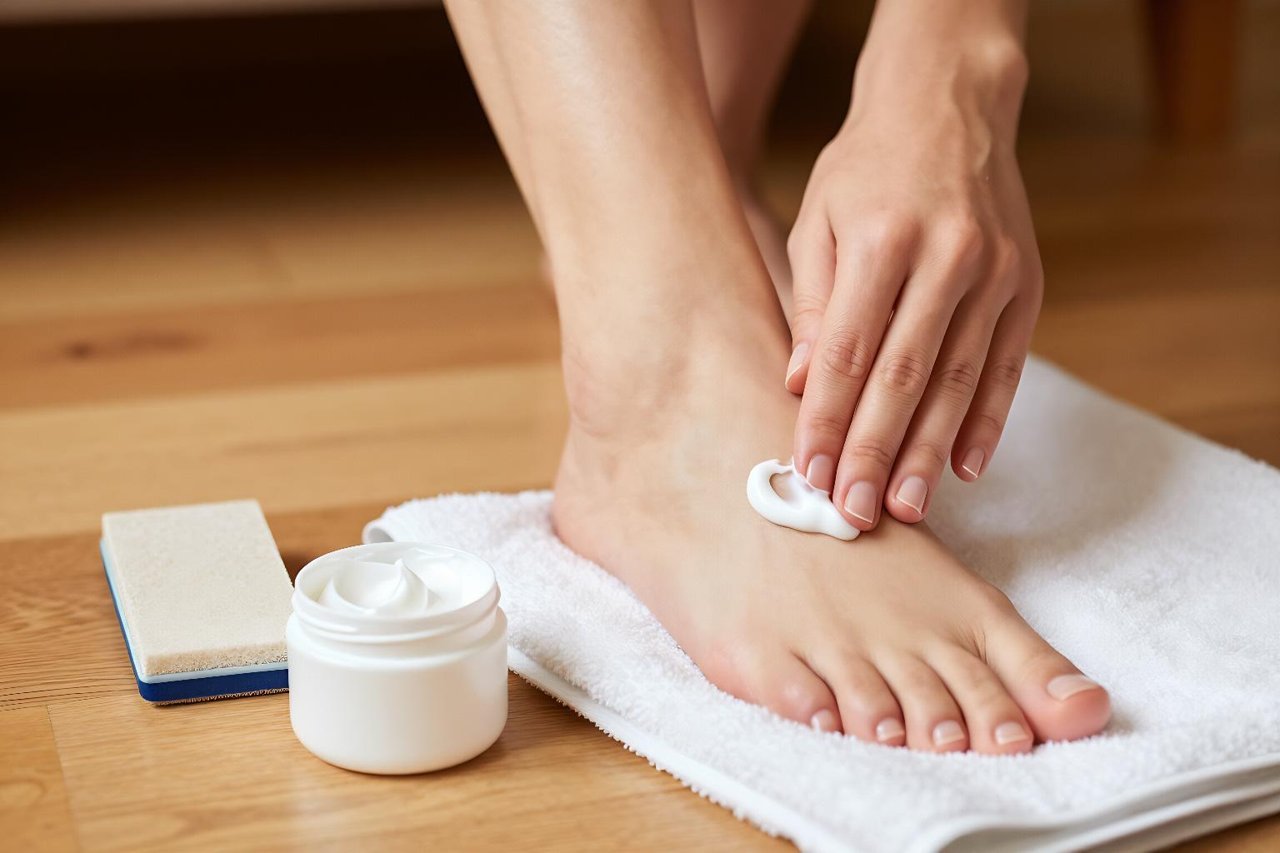
This is the step most people skip. A regular body lotion won’t cut it. You want a foot cream that contains urea or lactic acid. These ingredients break down calluses and pull moisture into the deeper layers of skin. Apply it right after exfoliating, while your feet are still slightly damp. For a broader solution, check out this complete guide to dry skin treatment to understand how humectants and emollients work together.
4. Lock in Moisture With an Occlusive
For deep heel cracks, a moisturiser alone isn’t enough. You need something on top to seal the moisture in and stop it from evaporating. Petroleum jelly is the classic choice, but a rich body butter is just as effective and far more pleasant to apply. It’s also why your skin needs body butter, especially in areas prone to dryness. Massage it into your heels, then put on a pair of cotton socks to keep everything in place overnight.
The Best Ingredients for Cracked Heel Repair
If you’re shopping for a cracked heels treatment product, check the label. These are the key players that actually make a difference:
- Urea (10%–15%): Softens calluses and helps dead skin shed.
- Lactic acid: Exfoliates while pulling moisture into the skin.
- Shea butter: Rich in fatty acids that nourish and repair.
- Ceramides: Restore the skin’s protective barrier.
- Glycerin: A humectant that attracts and holds water.
If you’d rather use one product for both your feet and your body, there are some excellent body butters that work wonders on dry skin. A good body butter can soften your heels just as well as a dedicated foot cream, without the heavy, sticky feeling.
When Home Treatment Isn’t Enough
Home care works for most people, but not everyone. You should see a podiatrist if:
- The cracks are deep, bleeding, or painful.
- You notice signs of infection, like redness, swelling, or oozing.
- You have diabetes, nerve damage, or poor circulation.
- Two weeks of consistent at-home treatment hasn’t improved anything.
A podiatrist can carefully trim away thickened calluses and prescribe a stronger topical treatment. Another option worth considering is a medical pedicure, which uses sterile instruments and medical-grade products to address foot problems safely. It can give you a clean slate and a professional assessment of what your feet need.
How to Stop Cracked Heels From Coming Back
Treating cracked heels is only half the battle. To keep them from returning, you need to adjust a few daily habits.
First, think about your footwear. Open-heeled sandals and backless shoes allow the fat pad on the underside of your heel to spread outward, which increases pressure and causes skin to crack. Swap them for closed-back shoes or supportive slippers when you’re home. Second, make moisturising non-negotiable. Apply a heel balm or body butter every night before bed, even after your skin looks smooth. The moment you skip a few days, dryness comes back.
Also, avoid harsh soaps in the shower. Hot water and aggressive cleansers strip away the skin’s natural barrier. Use lukewarm water and a mild, fragrance-free wash. Staying hydrated and running a humidifier in dry climates makes a noticeable difference too. And if you spend long hours standing on hard floors, take short breaks to sit down and give your heels a break.
Cracked heels treatment doesn’t have to be complicated, but it does need to be consistent. With the right soaking, exfoliating, moisturising, and protection, your feet can stay smooth for good.


