
Table of Contents
Zinc benefits sound universal until you try to choose a source. A 15 mg zinc citrate capsule, a bowl of chickpeas, a multivitamin with 8 mg of zinc oxide, and a lozenge dissolving in your mouth all promise the same mineral. They do not deliver it the same way. Absorption, dose, cost, and side effects shift depending on the route. If you already know the essential mineral your body can’t function without, the practical question is which version is worth your money and your stomach.
Why the source changes the benefits
Zinc supports immune response, wound healing, taste, smell, skin health, testosterone production, growth, and DNA synthesis. Your body has no dedicated zinc warehouse. You need a steady intake because you lose zinc through sweat, urine, and the gut every day.
Absorption is where sources diverge. Mixed diets usually deliver 15% to 40% of the zinc you swallow. High-phytate meals, common in vegetarian and vegan diets, can push that number lower because phytates bind zinc in the gut. Animal protein helps absorption. Supplements bypass phytates, but they can flood the transporters that move zinc into cells. High doses also compete with copper and iron. More zinc is not automatically better.
Option 1: Food-first zinc
What food does well
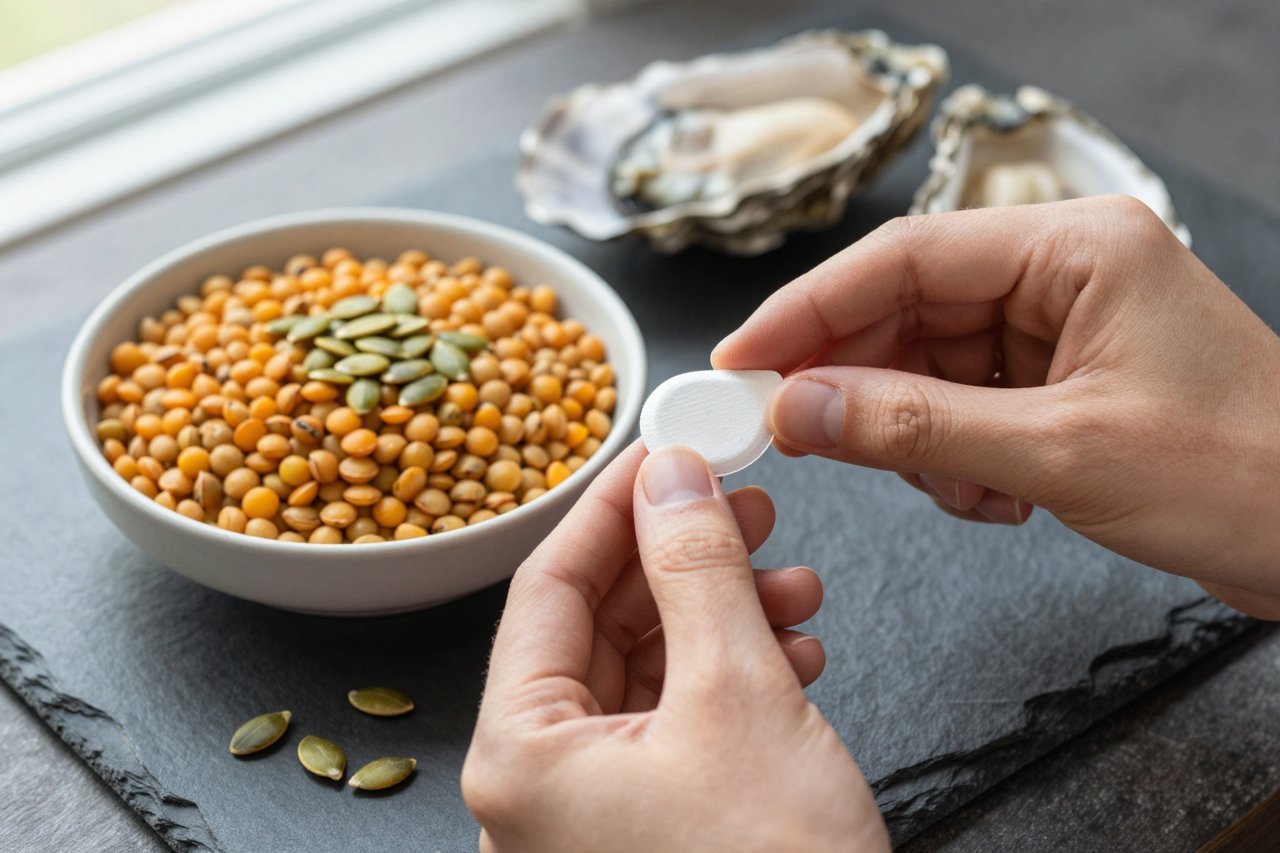
Oysters are the standout. A 100 g serving of cooked oysters can supply more than 60 mg of zinc, which is several times the daily requirement. Beef, crab, lobster, and dark poultry meat are strong animal sources. Pumpkin seeds, hemp seeds, cashews, lentils, and chickpeas carry useful amounts for plant-based eaters. Fortified breakfast cereals can add 15 mg or more per serving.

- Pros: broad nutrient package, lower risk of toxicity, food matrix improves tolerance, no pill burden.
- Cons: phytates reduce absorption from grains and legumes, intake varies day to day, shellfish allergies limit the richest sources, and restrictive diets make consistently high intake harder.
A practical plan matters more than a single “superfood.” This step-by-step guide to getting enough zinc without guesswork walks through portions and timing. Whole grains can help too, especially when prepared with soaking or fermentation. Dishes built around jowar (sorghum) benefits and recipes add zinc alongside fiber and magnesium, though the phytate content means they work best with animal protein or vitamin C-rich foods at the same meal.
Option 2: Standalone zinc supplements
The form matters more than the marketing
Walk into a pharmacy and you will see zinc gluconate, citrate, picolinate, sulfate, and oxide. They are not interchangeable.
- Zinc gluconate: common, inexpensive, well absorbed. A 50 mg tablet usually provides about 7 mg of elemental zinc.
- Zinc citrate: good absorption, gentle enough with food, often used in lozenges and capsules.
- Zinc picolinate: marketed for superior absorption, but independent evidence is mixed. It costs more.
- Zinc sulfate: cheap and effective, but more likely to cause nausea or stomach cramps.
- Zinc oxide: cheap and common in multivitamins, yet poorly absorbed compared with other forms.
Standalone supplements win on precision. If a blood test shows low zinc, a doctor can recommend an exact dose. Lozenges can deliver zinc directly to the throat during a cold. The trade-offs are real: nausea on an empty stomach, a metallic taste, copper depletion with long-term high doses, and interactions with antibiotics such as tetracyclines and fluoroquinolones.
Option 3: Multivitamins with zinc
A multivitamin usually contains 5 mg to 15 mg of zinc, often as oxide or sulfate. That is enough to fill a small gap in a diet that is already close. It is not enough to correct a diagnosed deficiency or to match the zinc load of a therapeutic lozenge.
Convenience is the main selling point. You get zinc plus vitamin D, B12, magnesium, and other nutrients in one swallow. The downside is competition. Many multivitamins include iron and calcium, which can compete with zinc for absorption. If you also take a standalone zinc tablet, you can stack past the safe upper limit without noticing. For a broader look at what a daily pill can and cannot do, read the real deal on what a daily supplement can do. If you want to build the habit properly, this 5-step plan to get multivitamin benefits you can actually feel is a useful companion.
Option 4: Lozenges and cold-focused zinc
Zinc lozenges are a different category from daily capsules. Studies that show shorter colds typically use zinc acetate or zinc gluconate lozenges providing 75 mg or more of elemental zinc per day, started within 24 to 48 hours of the first symptom. The zinc touches the throat directly, which may explain the local effect.
Pros: may shorten a cold by a day or two in some people, easy to carry, no need for daily use. Cons: metallic taste, nausea, mouth irritation, and a daily dose that should not continue long term. Lozenges are a short-term tool, not a source of everyday zinc benefits.
The upper limit and the interactions that decide the winner
For adults, the tolerable upper intake level for zinc is 40 mg per day from all sources. Go above that for weeks or months and you risk nausea, vomiting, loss of appetite, headaches, and copper deficiency. Copper deficiency can cause anemia, nerve damage, and actually weaken immune function, the opposite of what you wanted.
Timing and separation matter:
- Take zinc with food if it makes you nauseous.
- Separate zinc from iron, calcium, and copper supplements by at least two hours.
- Separate zinc from tetracycline and fluoroquinolone antibiotics by two to four hours.
- Do not stack a multivitamin, a standalone zinc, and a lozenge without adding up the elemental zinc.
Matching the option to your plate and your problem
- You eat oysters, beef, or crab two to three times a week: food likely covers you. A multivitamin is optional insurance.
- You are vegetarian or vegan: aim for beans, seeds, whole grains, and fortified foods daily. A 15 mg to 30 mg zinc supplement with meals can close the gap.
- You have a cold starting today: use a zinc lozenge, not a daily capsule. Stop when symptoms fade.
- You already take a multivitamin: check its zinc content before adding anything else. If it already has 15 mg, you may not need more.
- You have a confirmed deficiency: use a standalone supplement under medical guidance and retest. Food alone may be too slow if levels are very low.
- You are pregnant, breastfeeding, an athlete, or over 65: needs can be higher. Ask a clinician before guessing at doses.
How to read a zinc label without getting fooled
The number that matters is elemental zinc. A label might say “zinc gluconate 50 mg,” but that is the weight of the compound, not the mineral. Zinc gluconate is roughly 14% elemental zinc, so 50 mg delivers about 7 mg. Zinc sulfate is about 23% elemental. Zinc citrate is about 31%. Zinc oxide is high in elemental zinc but poorly absorbed. If a label lists only the compound, do the math or choose a brand that states elemental zinc clearly.
Cost is another filter. Zinc oxide is cheap because it is inexpensive to produce, not because it is the best. Zinc citrate and gluconate usually cost a little more and tend to be better absorbed. Picolinate sits at the premium end without reliable proof that it beats citrate. For most healthy adults, a simple 15 mg to 30 mg zinc citrate or gluconate tablet with food, plus a zinc-rich meal plan, covers the bases without drama.


