
Table of Contents
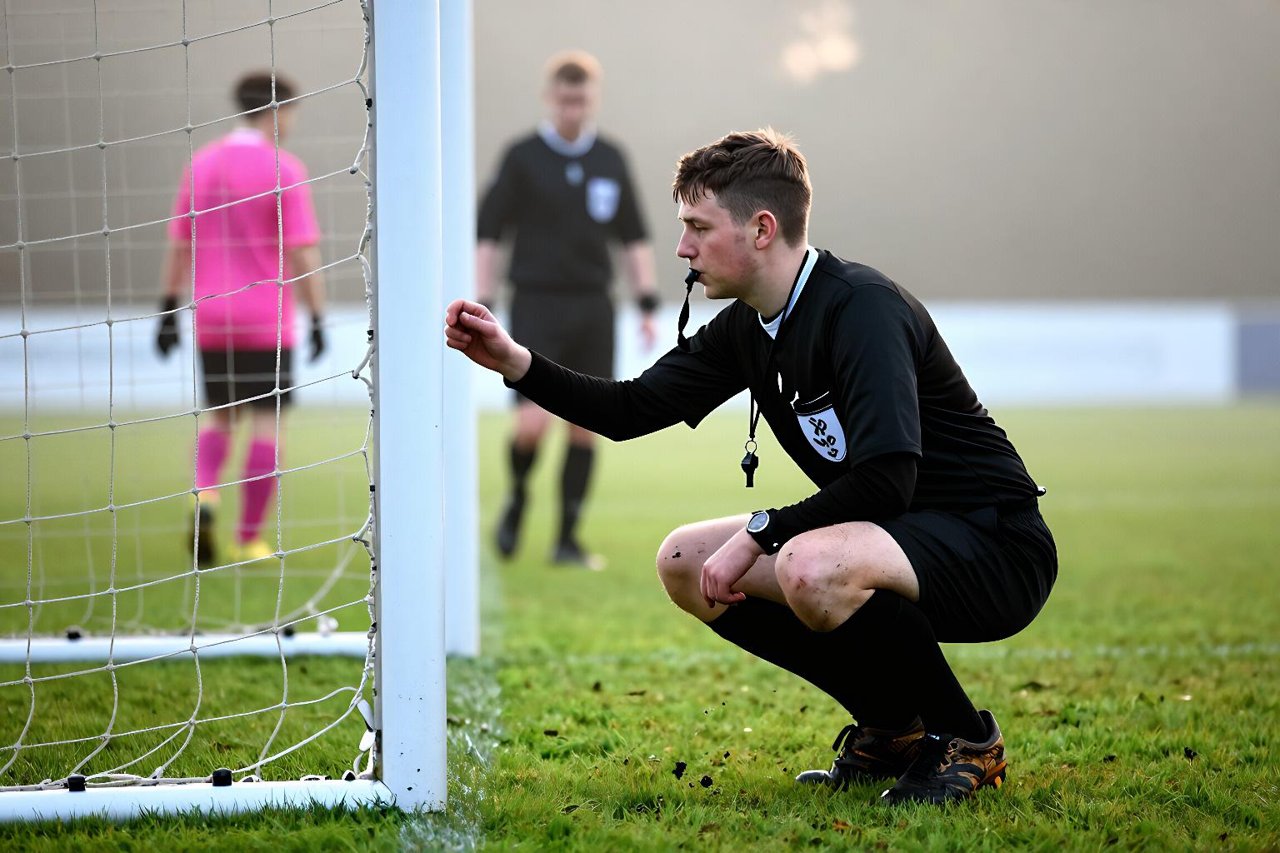
You know the feeling. A decision goes against your team, 200 people turn to one person in black, and the abuse starts. Somewhere in that crowd is a 15-year-old thinking: I could do better than that.
That’s usually how it starts. Refereeing is one of the few jobs in sport you can begin at 14 and still be doing at 50, and it’s genuinely one of the fastest routes from “person who watches football” to “person who works inside football.” Here’s what the process actually looks like, including the parts nobody puts on the recruitment poster.
Most of us learn the game from the scoreline upward, picking up how to read a result long before we understand why it happened. Refereeing reverses that. You learn the why first, in a classroom, then spend a decade applying it at speed.
Start with your governing body, not a YouTube channel
Every country runs its own version of the same entry course. In England it’s the FA’s refereeing course, around £130 to £160 depending on the county, made up of online modules followed by a practical day. The minimum age is 14. Scotland, Wales and Northern Ireland run near-identical routes through the SFA, FAW and Irish FA. In the United States, US Soccer’s grassroots referee licence costs roughly $75 to $90, starts at 13 in most states, and pairs an online theory module with a field session. Australia and Canada follow similar formats.

Two things beginners get wrong. You don’t need to be an ex-player; plenty of excellent referees stopped playing at 13. And you don’t need to be fit to book the course. You need to be fit by the time you’re appointed to adult football, which is a different problem with a different timeline.
What the course actually teaches
Expect a walk through all 17 Laws of the Game, heavy on offside and handling, plus positioning, whistle tone, signals and a written exam. The FA’s test needs 80% to pass. You’ll also complete safeguarding training and, if you’re under 18, a background check before you can be appointed to youth matches.
Be realistic about the gap between passing and refereeing. The course makes you legal. It doesn’t make you competent. Ten games on a cold Sunday will teach you more about managing 22 people than ten hours of e-learning ever could.
The kit costs more than the course
- Two shirts in contrasting colours. Most leagues want black, with yellow or green as the change shirt.
- A pea-less whistle, usually a Fox 40 Classic, plus a spare on a lanyard.
- Cards, a notebook or wristband, and two pencils.
- A watch with a countdown timer. Many referees wear two, one per half.
- Flags if you’re running the line.
- Firm-ground boots, plus studs for winter pitches.
- County registration, typically £20 to £35 a season, and liability insurance if your county doesn’t bundle it.
Budget £150 to £250 to get going properly. Buy the whistle first and the expensive jacket last.
Your first season: small fees and a lot of walking
New referees get youth football. Under-11s and Under-12s on a Sunday morning pay about £20 to £25 a match, and a parent usually runs the line for you. Adult Sunday league is £35 to £50 plus mileage, often 40p a mile. Three games across a weekend and you’ll clear £100 before petrol.
The admin is unglamorous, but it’s where your reputation gets built. Arrive 30 minutes early, check studs and jewellery, collect team sheets, confirm the pitch and nets, and phone the league if you’re running late. League secretaries remember the referees who communicate and quietly stop appointing the ones who don’t.
Fitness: the part that catches people out
A 90-minute adult game will see you cover seven to nine kilometres, much of it sideways and backwards, and you need to stay within 15 to 20 metres of play to sell a decision. Guess from 40 metres away and the players know instantly.
Intervals beat long runs. Four minutes hard, three minutes easy, repeated four times, twice a week, gets most people to the required level in eight to ten weeks. Higher levels bring formal testing. Step 5 and above in England use a fitness test with repeated sprints and a distance component, and FIFA’s test for international officials is tougher again.
Game management is the actual skill
Nobody cares that you know Law 11 word for word if you lose control in the 60th minute. The referees who last are the ones who talk. They use first names, explain decisions in six words or fewer, and use the captain-only protocol introduced in 2019 to keep the crowd of complainers down to one.
Learn the sin bin. Ten minutes off the pitch for dissent has changed behaviour at grassroots level more than any fine ever did. Use it once, early, and the temperature usually drops.
The same clarity that separates a good sports commentator from a rambling one applies here. Say what you saw, say it once, move on.
The promotion ladder works like a league table
In England you start as a Level 7 and move through 6 and 5, then Level 4 and supply league football, then 3, 2B, 2A and finally the National List. Each step needs a minimum number of games, marks from every club you officiate, assessments from a referee developer, and a fitness test.
It is a table in every sense. Club marks average out over a season, one poor month can drop you below the promotion line, and the way a league table shapes a whole season is exactly how the promotion pool works: consistency beats brilliance. Most people who reach the National List needed seven to ten years to get there.
What the money really looks like
Grassroots is pocket money, roughly £1,500 to £3,000 a season if you’re busy. Supply and contributory league appointments pay £60 to £90 as a referee, less as an assistant. Step 2 and the National League push match fees into the low hundreds, while the small group of EFL and Premier League officials earn a retainer plus several hundred pounds per game. The honest version: refereeing pays for your weekends and your petrol for years before it pays anything like a wage.
The rules that can end a career in one afternoon
Betting on football is banned outright for registered officials, in any competition, anywhere, and the ban covers letting a friend place a bet on your behalf. Social media is the second trap. Criticising a club, a player or an appointment from a public account will get you suspended faster than a bad offside call. If you want to understand why the integrity rules are this strict, it helps to know how betting markets work and where the edges live. Officials are the one group in the sport who can’t touch any of it.
Keep up with the Laws, because they change every summer
IFAB meets in the spring and changes take effect from 1 June. Recent years have brought adjustments to handball interpretation, added time calculations and how goalkeeper time-wasting is punished. Your county FA sends the circulars out. Read them, watch the clips, and don’t be the referee still enforcing a law that was scrapped two seasons ago.
Following the wider game helps too. Keeping an eye on sports news without drowning in it means you’ll know which competitions are trialling new protocols before you’re appointed to one.
Habits that separate the referees who climb
Turn up early, every time. Write your match report before you leave the car park, while the details are fresh. Watch one higher-level referee a month, in person if you can, and note three things they did that you don’t. Ask for assessments instead of waiting to be offered them, and take the criticism without arguing, even when the assessor has it wrong.
Keep a record of your own games too: appointments, marks, incidents, fitness scores. Two seasons of that data tells you more about your trajectory than any single assessor’s opinion. The referees who reach the top are rarely the most talented at 18. They’re the ones still turning up at 30, still improving, still enjoying the walk to the middle.


