
Table of Contents
On the morning of 11 February 1990, the sports books at the Las Vegas Hilton had Mike Tyson at 42-1. He was 37-0, undisputed heavyweight champion of the world, and he had knocked out 33 of those opponents inside the distance.
Across the ring in Tokyo stood James Buster Douglas, a 29-year-old from Columbus, Ohio, who had been stopped by Tony Tucker three years earlier and had never beaten a ranked contender. Twenty-three days before the fight, his mother died. He turned up in Japan overweight and, by most accounts, on his own.
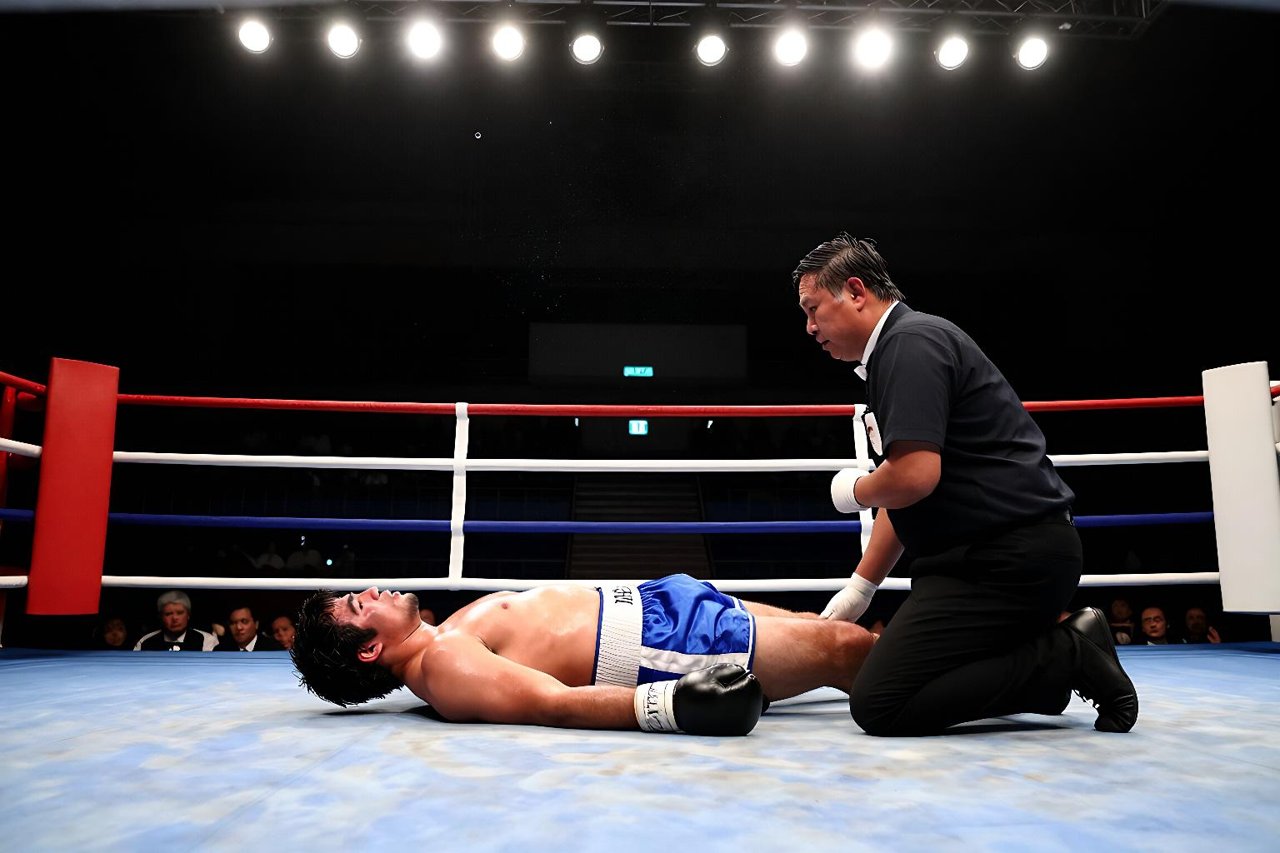
In the eighth round Tyson hit him with an uppercut that should have ended everything. Douglas beat the count. Two rounds later he walked Tyson onto a four-punch combination and the most feared man in the sport was on the canvas, fumbling for his mouthpiece.
That is the anatomy of an upset: an unbeatable favourite, an opponent nobody rates, one night, and a result the record books still struggle to explain. The biggest sports upsets are not simply surprises. They are moments where reputation and reality collide in public, with no chance to edit.

What Makes an Upset Big?
Losing is not an upset. Losing when the market, the rankings and the eye test all agree you cannot win is. The size of the shock comes down to the distance between expectation and outcome, which is why context matters far more than the final margin.
Take March Madness. Before UMBC beat Virginia in 2018, a 16-seed had never beaten a 1-seed in 135 attempts. A 12-seed beating a 5-seed lands roughly a third of the time. Same bracket, same screaming on the studio desk, wildly different weight.
Odds are the cleanest measuring stick available, because they are a price set by people with money at stake rather than a columnist’s hunch. When fans spend October arguing over the college football rankings, the argument is really about the size of the gap between No. 4 and No. 5, and whether anybody can actually prove it before the bowls do.
Six Upsets That Still Get Talked About
Douglas over Tyson, Tokyo, 1990
Tyson’s handlers wanted a warm-up before Evander Holyfield. Douglas was supposed to be it. He was ahead on two scorecards and level on the third when the fight ended in the tenth, and promoter Don King’s protest about the count became part of the legend.
United States 1, England 0, Belo Horizonte, 1950
England’s first World Cup, against a squad of American part-timers that included a dishwasher, a postal worker and a hearse driver. Joe Gaetjens scored in the 38th minute. Some British newspapers assumed the wire report was a typo and printed 10-0 instead. Wander through the World Cup’s epic history and the pattern repeats: a month-long tournament, thin margins, reputations revised overnight.
Leicester City win the Premier League, 2016
Bookmakers priced them at 5,000-1 in August. Claudio Ranieri had just been sacked by Greece after a home defeat to the Faroe Islands. Leicester lost three league games all season, won the title by ten points, and Jamie Vardy, who was playing non-league football at 25, scored 24 goals.
The Miracle on Ice, Lake Placid, 1980
The Soviet Union had won four straight Olympic golds and, ten days before the Games, had beaten an NHL all-star team 6-0 at Madison Square Garden. Herb Brooks’s college players averaged 21 years old. They won 4-3 and still had to beat Finland to take gold. Al Michaels’s famous call aired after the buzzer, not during the play.
Japan 34, South Africa 32, Brighton, 2015
South Africa had two World Cups behind them and a squad built on size. Japan had won once in seven previous World Cup matches. Trailing 32-29 with time up, they turned down a penalty that would have levelled the game and kicked to the corner. Karne Hesketh scored from it.
Super Bowl III, Jets 16, Colts 7
The Colts were 18-point favourites and the AFL was widely treated as a junior circuit. Joe Namath guaranteed a win at a dinner three days out, then completed 17 of 28 passes for 206 yards against a defence that had conceded 144 points all season. If you want to see how a knockout format keeps producing swings like that, the way the NFL playoff bracket is built explains a great deal of it.
Why Upsets Keep Happening
A single game is a terrible measuring instrument. A few factors do most of the work:
- Small samples. A 90% favourite still loses one time in ten. We remember the ten and forget the nine.
- Style clashes. Leicester did not out-pass anyone in 2016. They sat deep, broke at speed, and made richer teams defend space they had never had to defend.
- Pressure asymmetry. Favourites play to avoid the mistake. Underdogs play as if the scoreboard is already lost, which is a freer way to compete.
- Hidden information. Markets are sharp on the top division and approximate on everything below it. A 20-year-old nobody has priced is not a nobody.
- Format. A knockout cup, a best-of-five series and a 16-game NFL season all compress the advantage that talent is supposed to buy.
Odds Are a Price, Not a Probability
5,000-1 was never a genuine estimate of Leicester’s chances. It was a number that would attract a few hundred hopeful bets at a price the book could live with, and when it landed the payout reportedly cost several firms seven figures.
Which is why the more useful question is not who will win, but whether the price is honest. Anyone who has spent an afternoon on match predictions that actually hold up knows the routine: separate what you know from what you assume, weigh the format, and never treat a market price as a forecast.
The Next One Is Already Taking Bets
Upsets rarely arrive from nowhere. They cluster around a recognisable setup:
- A favourite whose edge sits with one or two players who can be isolated or fouled out of the game.
- An underdog with a narrow, repeatable plan that does not require them to be the better team for 90 minutes.
- A venue that flattens the favourite: heat, altitude, a tight pitch, a crowd close enough to touch.
- A competition where one bad afternoon ends the entire thing.
None of that makes the next Douglas or the next Leicester predictable. It simply means the number on the board is a starting point, not a verdict. Odds compress the messy reality of sport into a single line, and single lines are easy to be wrong about.
Somewhere this weekend a fighter, a winger or a 21-year-old goalkeeper is walking into a building where the price next to his name says he cannot win. Occasionally he makes that number look ridiculous, and we spend the next thirty years talking about it.


