
Table of Contents
Twenty-two euros for a plate of paella on Barcelona’s Las Ramblas. Nine euros for a better version of the same dish four streets inland, where the menu is handwritten and half the tables are full of people on their lunch break. Same city, same rice, less than half the price.
The gap between those two plates is the whole game. Eating cheaply while traveling is rarely about eating less or surrendering to instant noodles for a week. It comes down to understanding where the price premium is coming from, then quietly stepping around it. These are the habits that have saved me the most money on long, slow trips without a single sad dinner.
Start at the Grocery Store, Not the Restaurant
Hotel breakfast is the most overpriced meal in travel. Sixteen euros for a buffet of pale scrambled eggs and a machine coffee is money you could spend on three proper meals.
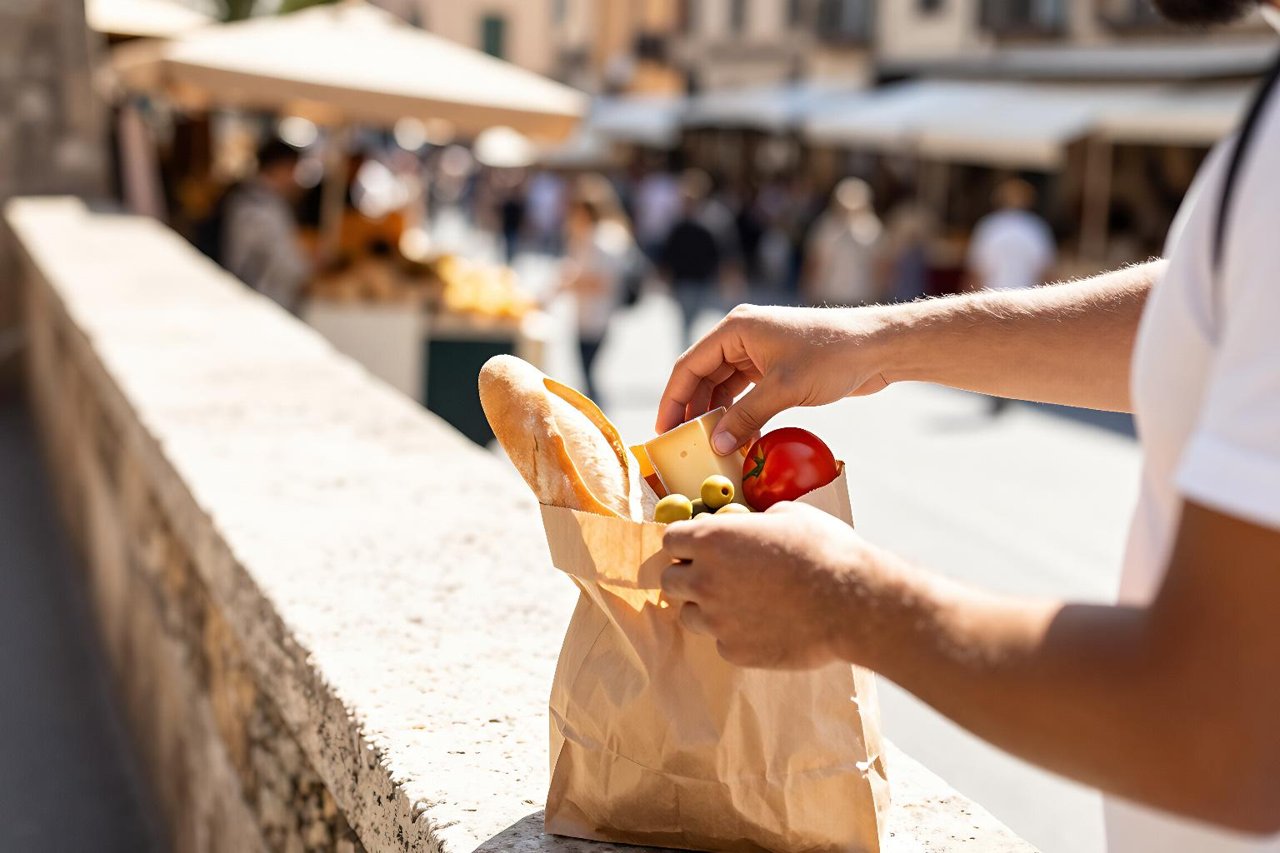
A normal supermarket run in Europe looks like this: a tub of yogurt for 70 cents, a fresh loaf for 1.50, a wedge of cheese, a bag of tomatoes, two peaches. That covers breakfast and a park lunch for two people for under 10 euros. Add a small jar of pesto, some olives, and a packet of crackers and you have dinner sorted on a night train too.

Buy a cheap paring knife and a plastic container in your first day or two. They cost about 5 euros combined and pay for themselves by the second morning. Most hostel kitchens have a shelf of abandoned salt, oil, and coffee that previous guests left behind. Use it.
Chase the Set Lunch, Not Dinner
Restaurants across most of the world sell the same kitchen at half price in the middle of the day. In Spain it’s the menú del día: three courses, bread, and a drink for €10 to €13 at almost any neighborhood restaurant between 1pm and 4pm. That same kitchen charges €18 for a single main course at 9pm. Portugal has the prato do dia for €7 to €9. Japan’s teishoku lunch sets run ¥800 to ¥1,000 against ¥2,500 for a comparable dinner. Mexico’s comida corrida, usually soup plus a main plus a drink, goes for 80 to 120 pesos and is often the best food on the block.
The practical version: make lunch your big, sit-down, order-everything meal, and keep dinner light. Your wallet notices immediately, and so does your sleep. If you want a crash course in this approach, the lunch culture in these 17 best cities in Spain to visit right now is worth planning a trip around.
Eat Where the Chalkboard Is Handwritten
Photo menus in eight languages, a host waving you in from the pavement, and a view of the main cathedral: walk away. That combination is a pricing strategy, not a recommendation.
What you want instead is a handwritten board in one language, plastic stools, a television on in the corner, and a queue of people in work clothes at 1pm. The best food street in most cities is two blocks back from the obvious one, and the prices drop by 40% in those two blocks. This is the same instinct that underpins how to find hidden gems while traveling, and it transfers straight to the plate.
One reliable trick: follow office workers. At 12:45 on a weekday, stand near a government building, a hospital, or a university and see where the crowd turns. That route leads to the cheapest honest lunch in the district.
Markets, Street Food, and the Picnic Habit
A market hall gives you the widest range of good food at the lowest markup, especially if you buy from the stalls rather than the prepared-food counters near the entrance. In Florence, the ground floor of the Mercato Centrale sells produce and cheese at a fraction of what the upstairs food court charges for a plate of pasta.
Build a picnic instead of ordering one:
- A loaf or a bag of flatbread bought in the morning and eaten the same day
- Cheese, olives, or cured meat sliced from a deli counter and sold by weight
- Seasonal fruit from the stall furthest from the door, which is almost always cheaper
- Tomatoes plus a small bottle of olive oil, with salt sachets lifted from a café
- Cold drinks from a supermarket at a third of café prices
- Street food with a line of locals and fast turnover: grilled skewers, dumplings, falafel, arepas, tamales
Street food is usually the safest cheap option, paradoxically, because a stall selling 300 skewers a day is not sitting on old stock. Watch where the queue forms and follow it.
Cook One Meal a Day, Even If You Hate Cooking
You don’t need to become a hostel chef. One self-catered meal a day is enough to reset the budget. A box of pasta, a jar of sauce, an onion, and a bag of spinach costs around €5 and feeds two people twice. Rice, eggs, and whatever greens are cheapest that week can be turned into something decent in 15 minutes with soy sauce from the free shelf.
This habit alone typically saves €15 to €25 per person per day in Western Europe. That’s a museum ticket, a train segment, or two nights in a cheap guesthouse.
Drinks Are Where Travel Budgets Quietly Die
Food is easy to price-check. Drinks are not, and they’re where a €40 day becomes a €90 day without anyone noticing.
In Italy, an espresso at the bar counter costs €1.20. Sit down at a table on a piazza with the same coffee and it’s €6. Two cocktails at a rooftop bar in Lisbon or Mexico City can cost more than your entire food spend for the day. Beer from a corner shop, drunk on a bench with a view, is a time-honored travel tradition for good reason.
Carry a refillable bottle. Tap water is free and safe in most of Europe, and public fountains in Rome and Ljubljana will refill it for nothing. Asking for agua del grifo in Spain is completely normal and saves €2 to €3 a sitting.
Time Your Eating Around the Clock
Prices move during the day, and knowing the rhythm is free money.
Supermarkets in France, Germany, and the UK start slapping 30% to 50% discount stickers on sandwiches, salads, and ready meals from about 6pm. Bakeries sell off the day’s bread in the final hour. Market traders at closing time will fill a bag with ripe produce for a couple of euros rather than pack it away.
Apps help too. Too Good To Go operates across Europe and parts of North America, selling surplus bags from bakeries, sushi counters, and restaurants for €3 to €5. You get whatever they have left, which is occasionally strange and usually excellent.
Go Where the Food Is Cheap in the First Place
A day of eating in Hanoi, Medellín, or Tbilisi can cost less than a single main course in Oslo. Destination choice outweighs every tactic on this list combined, so it’s worth checking real grocery and street-food costs before you book flights. These 10 cheapest places to travel in 2026, with real budgets and insider tips, are a good place to start comparing.
If your dates or destination are fixed and you still need to trim the trip, there are broader structural savings to look at beyond food, from transport to accommodation. These easy ways to save money traveling stack nicely with a cheap-food strategy.
Learn Six Words Before You Land
Language is the cheapest discount available. Six words will get you further than any app:
- The local words for “set menu” or “lunch special”
- “Takeaway” (so you’re not paying for a table)
- “Tap water”
- “How much?”
- “The bill”
- “Delicious,” which costs nothing and gets you a bigger portion more often than you’d expect
Write them on your hand for the first day. Use them badly. Locals visibly relax when you try, and that small shift is often what gets you pointed toward the good cheap place around the corner rather than the tourist menu in the window. Six words, a bit of nerve, and a willingness to walk two blocks out of your way will do more for your food budget than any spreadsheet.


