
Table of Contents
Zinc rarely gets the attention that vitamin C or magnesium does. It won’t help you sleep, and it doesn’t give you a visible energy boost. But this trace mineral is involved in more than 300 enzyme reactions, from healing a scraped knee to helping immune cells respond to a threat. If you’ve ever wondered whether you need more of it, or whether a supplement is worth the money, this beginner’s guide covers the basics without the hype.
What zinc is, in plain terms
Zinc is a mineral you need in tiny amounts. “Trace” makes it sound unimportant, but your body can’t make it and can’t store much of it, so you need a steady supply from food. It shows up in every cell and plays a structural role in proteins, including some involved in DNA repair. That’s why a true zinc deficiency can affect everything from your skin to your growth to how food tastes. For a deeper look at the mineral’s full job description, this breakdown of why zinc is essential for your body is a useful starting point.
The main zinc benefits, explained simply
Immune support that starts at the cellular level
Zinc helps immune cells like T-cells mature and communicate. Low levels don’t just make colds more likely; they can make infections last longer. Research on zinc lozenges is mixed, but the strongest evidence is for getting enough zinc day to day rather than megadosing at the first sneeze.
Faster wound healing and calmer skin
Your skin uses zinc to rebuild collagen and regulate inflammation. That’s why zinc oxide shows up in diaper creams and some acne treatments. People with low zinc often notice cuts and scrapes that take longer than usual to close.

Taste, smell, and appetite
Zinc is needed for the proteins that let you detect flavors and odors. A dulled sense of taste is one of the classic signs of deficiency. It can also create a loop where food becomes less appealing, which matters for older adults especially.
Growth, hormones, and reproduction
Zinc supports normal growth in children and plays a role in testosterone and sperm production. It’s not a magic fertility fix, but severe deficiency can interfere with both.
How much zinc you actually need
Adult men need about 11 mg per day, and adult women need about 8 mg. Pregnancy bumps that to 11 mg, and breastfeeding to 12 mg. The upper limit for adults is 40 mg per day from all sources combined. Most people get enough from food, but certain groups fall short.
Food sources: where zinc shows up
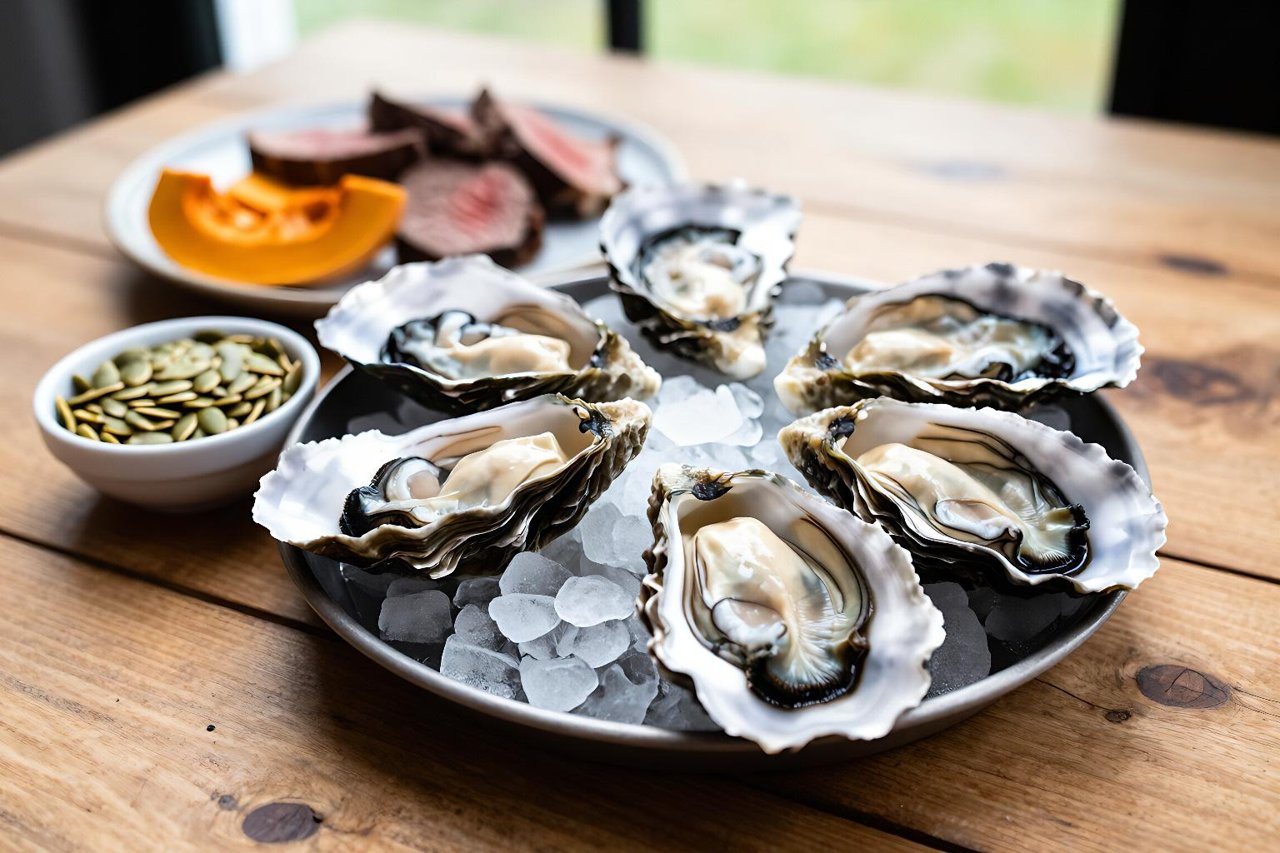
- Oysters, the standout source: six oysters can provide more than a day’s zinc
- Beef and dark poultry meat
- Pumpkin seeds, hemp seeds, and cashews
- Lentils, chickpeas, and baked beans
- Yogurt and cheese
- Fortified breakfast cereals
Plant sources contain phytates, which bind zinc and reduce absorption. Soaking beans and choosing leavened bread over unleavened can help. If you eat mostly plants, you may need up to 50% more zinc than the recommended amount. This comparison of food, supplements, and multivitamins as zinc sources can help you decide which fits your diet best.
Who is most likely to be low?
- Vegetarians and vegans, because plant zinc is harder to absorb
- Older adults, whose absorption declines and appetites often shrink
- Pregnant and breastfeeding women
- People with digestive conditions like Crohn’s disease or celiac
- Anyone with heavy alcohol use
- People taking high-dose iron or calcium supplements long-term, since those minerals compete with zinc for absorption
Signs you might not be getting enough
- Slow-healing wounds
- Frequent infections
- Hair loss
- Loss of taste or smell
- Dry, rough skin
- Poor appetite
- Unexplained weight loss
These symptoms overlap with many other issues, so don’t self-diagnose. A blood test isn’t perfect because zinc levels in blood don’t always reflect tissue stores, but it can help.
If you’re thinking about a supplement
Zinc supplements come in several forms: zinc gluconate, citrate, picolinate, and oxide. Oxide is cheap but poorly absorbed. Doses above 40 mg daily can cause nausea and interfere with copper absorption, which can lead to anemia over time. If you take a multivitamin, check the label. Many contain 11 to 15 mg, which is plenty for most people. Taking zinc on an empty stomach often causes queasiness, so pair it with a meal. There are also common mistakes that quietly cancel zinc’s benefits, like taking it with a high-iron meal or assuming more is better. And if you already take a multivitamin, it’s worth checking how it fits into your routine so you don’t double up without realizing it: multivitamin benefits you might be accidentally cancelling covers that ground well.
A simple way to get started
Start with food. Add a handful of pumpkin seeds to your yogurt, choose beef or lentils a few times a week, and pay attention to how often you get sick or how quickly minor cuts heal. If you’re in a group that struggles with absorption, or you eat a plant-heavy diet, a low-dose supplement of 10 to 15 mg is a reasonable conversation to have with your doctor. Skip the megadoses. Zinc benefits come from consistency, not from swallowing 100 mg at the first sign of a cold.


