
Table of Contents
A rumored couple is photographed leaving the same Los Angeles restaurant on a Thursday. By Friday morning you can read three versions of the same night: that they’re engaged, that they’re “having fun and nothing more,” and that the whole thing is a rollout timed to a film opening in six weeks. None of those reports is necessarily a lie. Each one comes out of a different supply chain, with different deadlines, different legal exposure and very different reasons to be wrong.
Celebrity dating coverage isn’t one product. It’s five or six products sold under the same name, and the gaps between them matter far more than most readers realise. So here’s an honest comparison of the main options, including where each one falls apart.
Tabloids and legacy gossip desks
The oldest pipeline still has the best infrastructure. A gossip desk has contacts at photo agencies, a Rolodex of publicists, and institutional memory stretching back decades. When a story breaks fast, it’s usually because a tabloid paid for a photo set or got a publicist on the phone at 11pm.
Where it wins: speed, reach, and access to the people actually involved. A well-sourced tabloid item can put a timeline on a relationship that no fan account could reconstruct.

Where it breaks: the sourcing language. “A source close to the couple” can mean a publicist, an assistant, a bartender, or the reporter’s own read of an Instagram post. Those phrases are often negotiated with the couple’s own team, which is why the phrasing tends to shift in step with the couple’s strategy. Once one outlet prints a claim, three others repeat it with a link, and a single anonymous tip starts to look like confirmation from multiple sources.
The vocabulary of the celebrity dating machine is remarkably consistent, and once you know it you can hear the difference between a planted story and a found one. The real rules of celebrity dating, from secret DMs to breakup publicity is a useful map of that vocabulary.
Fan sleuths and social platforms
Fans do the unpaid forensic work. They spot the mutual follow, the sister’s Instagram Story with a mirrored bathroom, the duplicate coastline in two separate vacation posts, the Spotify playlist that gained eleven songs in one weekend. Their raw material is primary: original posts, original timestamps, original comments before deletion.
Where it wins: it’s often the first place a relationship becomes visible at all, weeks before any outlet notices. Receipts are usually embeddable and datable.
Where it breaks: pattern-matching is not proof. A shared holiday destination is weak evidence when everyone in a certain tax bracket goes to the same three resorts in December. Screenshots of deleted posts are unverifiable and easy to fake. And the engagement economy rewards certainty, so “they might be dating” turns into “they ARE dating” within two reposts. Framing and confirmation bias do the rest.
Treating fan detective work as a lead generator rather than a verdict is the sanest approach, and there’s a disciplined way to do it. How to track celebrity rumors like a pro walks through the escalation from first whisper to final call.
Paparazzi agencies and photo evidence
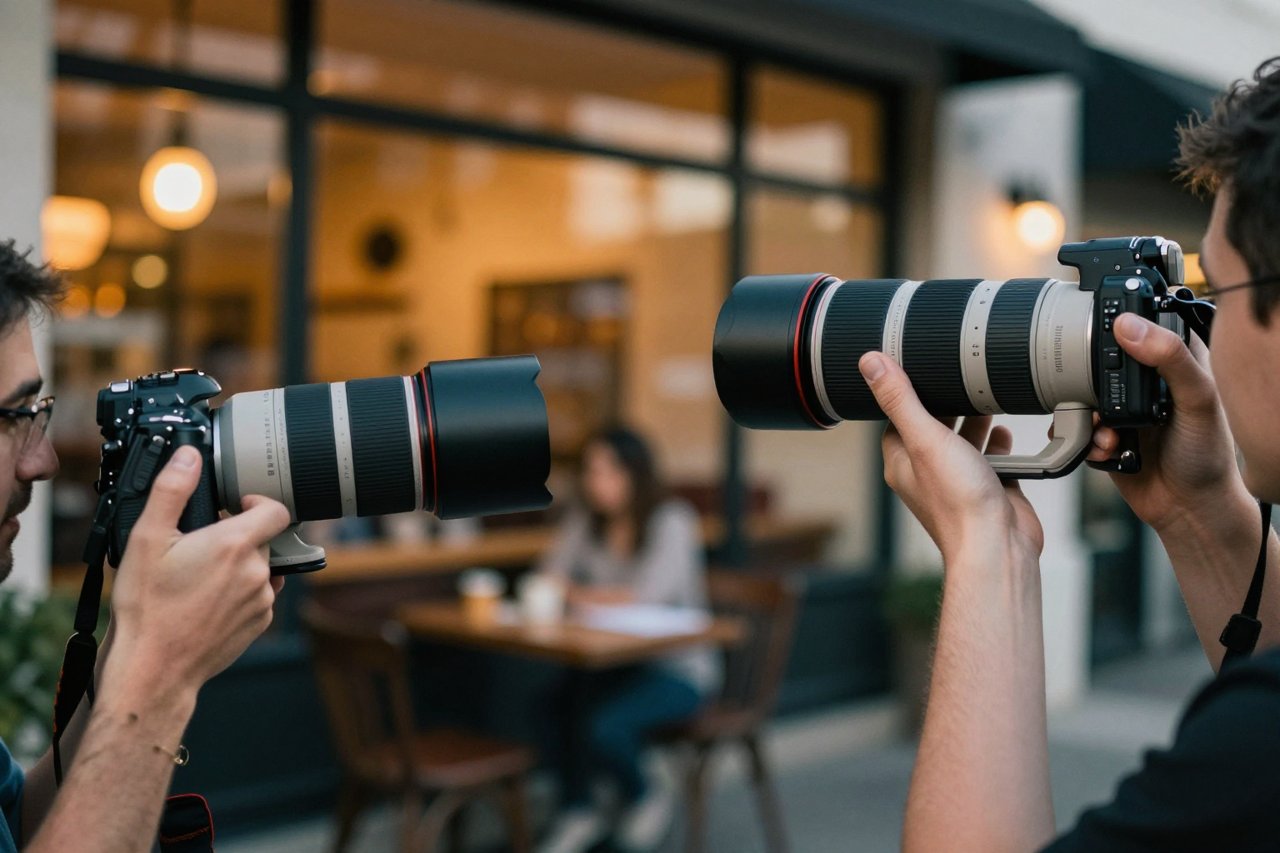
Photographs feel like the hardest evidence available, and sometimes they are. Two people holding hands on a public street is a fact with a timestamp, and no amount of PR can retroactively delete it.
Where it wins: visible corroboration. It’s the only source that shows rather than tells, and in a world where everyone carries a camera, the absence of photos in a heavily trafficked city is itself informative.
Where it breaks: the tip-off problem. A large share of flattering “candid” shots come from someone on the couple’s side making a call, which means the couple controls the when, the where, and the angle. A driveway kiss photographed at golden hour with a clean sight line to the face is a very different artifact from a grainy supermarket snap. Also, a photo proves proximity. It doesn’t prove a relationship, exclusivity, or anything about how the two people speak to each other.
Court filings, licenses and paper trails
This is the boring tier that settles arguments. Marriage licenses (public in Nevada, with a confidential option in California), divorce petitions filed at county superior courts, name changes, property deeds, business registrations, and trademark oppositions all create dated, signed documents.
Where it wins: verifiability. Nobody’s publicist can negotiate with a recorded filing.
Where it breaks: lag and accessibility. A split can be filed months after it happened, some records get sealed, and searching the right jurisdiction at the right courthouse is genuinely tedious. Documents tell you what happened legally, not what the relationship felt like or when it soured.
They’re still worth the effort when a story matters. The mechanics of watching a split move from whisper to paperwork are laid out in following a celebrity breakup from first whisper to final filing.
Databases and crowd-edited pages
IMDb, Wikipedia and fan wikis are the layer everyone checks first and trusts too much. They’re fast, free and organised, which is exactly why errors propagate through them so efficiently. Wikipedia edit histories are transparent but not always right; IMDb is heavily user-contributed; fan wikis are usually energetic and unsourced.
The hierarchy between these three is less obvious than it looks, and it’s covered properly in IMDb vs. Wikipedia vs. public records. The short version: use them to orient yourself, never as the final word on a contested detail.
The trade-offs, side by side
- Speed: fan socials beat tabloids, tabloids beat photo wires, photo wires beat official statements, and court records arrive last by months.
- Verifiability: filings and licenses outrank photos, photos outrank publicist statements, and anonymous tabloid sourcing sits near the bottom.
- Context: PR statements and long-form desks explain motive and timeline; social crumbs show behaviour without explanation.
- Cost to you: records take effort and patience, fan threads take time and a tolerance for noise, tabloids take neither and return the least.
- Failure mode: tabloids fail by being used, photo agencies fail by being arranged, fans fail by over-reading, records fail by arriving too late to matter.
How a hybrid read actually works
Nobody uses one source. The workable routine is a 10-minute pass through three tiers.
Start with artifacts, not conclusions
Look at what physically exists: original posts, dated photos, comment timestamps. Write down what you can see, not what it implies. The distinction is the whole game.
Then check who’s talking
Ask whether the story has a named source, an anonymous one, or none at all. Check whether the couple’s team has any reason to want it out this week. Publicity cycles have rhythms, and a story landing the week a press tour begins deserves more scrutiny than one landing in a quiet August. There’s a structured version of this instinct in decoding a celebrity relationship without getting fooled by PR.
Hold the verdict
Give a story two weeks before you believe it and see what survives. Arranged shoots don’t produce follow-up photos in unremarkable places. Real relationships generate boring evidence: a second trip, a grocery run, a shared car. Anything that only appears alongside a promotional moment should be priced accordingly.
The part nobody puts in the comparison
Each source charges you differently. Fan forums charge attention and reward emotional investment. Tabloids charge you a small amount of credulity per story, which sounds cheap until you’ve paid it four hundred times. Court records charge patience and give back certainty. That’s the actual trade-off, and it’s why the right choice depends on what you need the information for. If a colleague mentions a rumored couple at lunch, a two-line headline is enough. If you’re writing about it, or you simply don’t want to be the person repeating something false in six months, budget the hour and go to the paperwork.
The most reliable readers of celebrity dating news aren’t the ones with the best sources. They’re the ones who know which tier of evidence they’re standing on at any given moment, and who say “I don’t know yet” without flinching.


