
Table of Contents
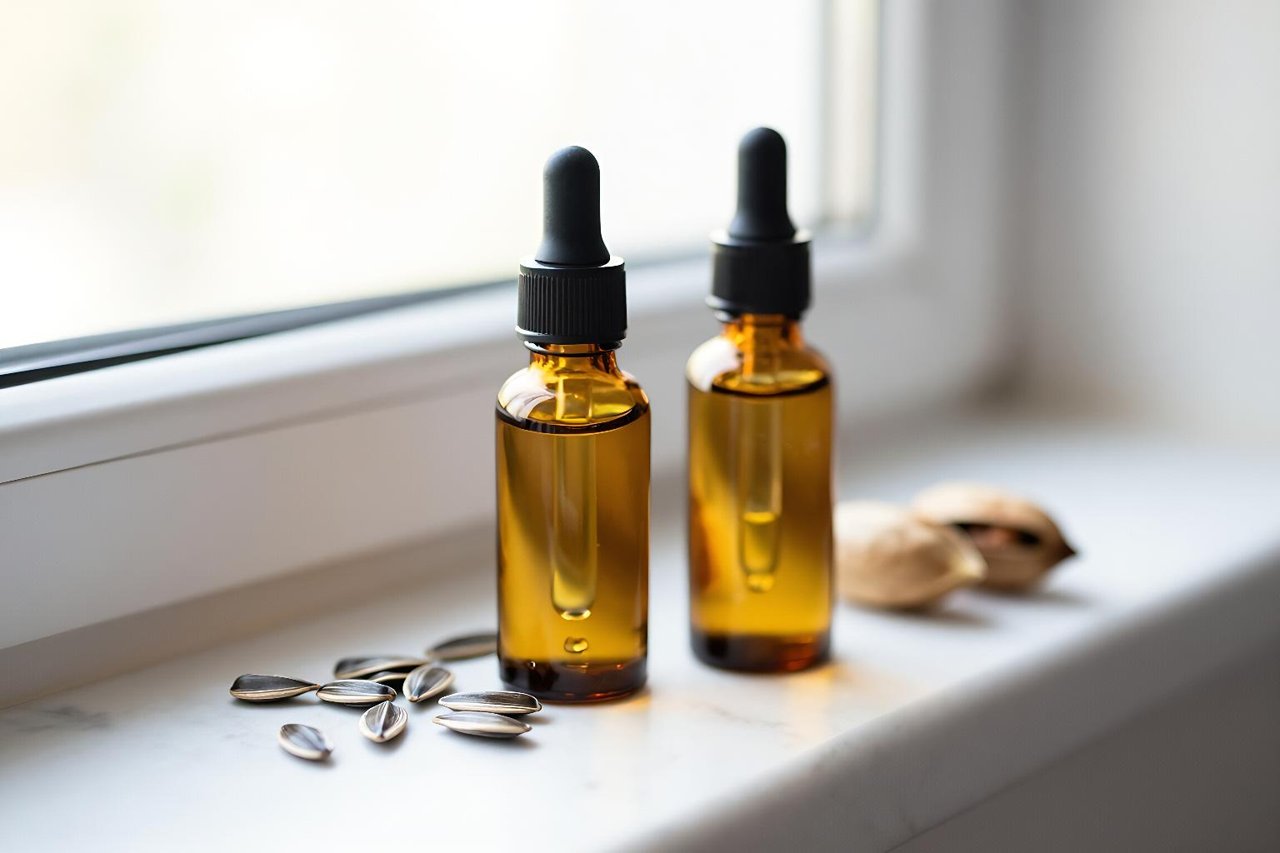
Two amber bottles sit on your shelf. One is pale gold, the other slightly deeper and nuttier. Both promise softer skin and shinier hair, both cost more than a standard moisturiser, and both get pushed by the same beauty editors. So which one earns permanent counter space?
The honest answer is that jojoba and argan are not interchangeable. They behave differently on skin, they suit different hair types, and they fail in different ways when you use them badly. Here’s how to tell them apart and pick the one that fits what your skin and hair actually need.
What each oil actually is
Jojoba (say ho-HO-ba) comes from the seeds of a shrub native to the Sonoran Desert. Chemically it isn’t really an oil at all. It’s a liquid wax ester, roughly 96% of it, which puts it closer to human sebum than almost anything else you can buy. That single fact explains most of what jojoba does well.
Argan oil is pressed from the kernels of the argan tree, which grows almost exclusively in southwestern Morocco. The kernels are cracked by hand, usually by women’s cooperatives, then cold-pressed into a golden oil with a faint toasted-nut smell. It carries more vitamin E and phenolic antioxidants than jojoba, which is a big part of its reputation.

Jojoba for skin that makes its own oil
Here’s the counterintuitive bit: jojoba works best on oily and combination skin. Because its wax esters resemble sebum, your skin doesn’t treat it as a foreign substance. It sinks in fast, sits light, and doesn’t leave that film you get from heavier plant oils.
It also keeps for ages. Expect around two years from opening if you store it away from direct sunlight, which is noticeably longer than most polyunsaturated oils manage. If you’ve ever had a facial oil turn sour in six months and start smelling like old crayons, jojoba is the one that won’t.
Who it suits
- Oily and acne-prone skin that reacts to richer plant oils
- Combination skin needing hydration without residue
- Scalp care and pre-shampoo oiling on tight or flaky scalps
- Anyone who wants one bottle for face, cuticles and hair ends
Argan oil for dryness and damage
Argan leans richer. It runs about 43-49% oleic acid and 30-35% linoleic acid, with vitamin E and squalene working alongside. That profile makes it better suited to dry, mature or compromised skin, and genuinely excellent on hair that has been through bleach, heat styling or hard water.
On the face it feels heavier than jojoba but still absorbs within a few minutes. Two or three drops pressed into damp skin after your serum is plenty. Use more than that and you’ll be blotting before bed.
Who it suits
- Dry or dehydrated skin, especially through winter
- Mature skin where barrier repair matters more than lightness
- Curly, coily or colour-treated hair that needs slip and shine
- Brittle nails and rough cuticles
The skin type question, answered plainly
Oily or acne-prone? Start with jojoba. Its comedogenic rating sits around 2, low but not zero, and the lightness means less chance of clogged pores around the nose and chin. Dry or mature? Argan will do more for you in fewer drops.
Sensitive skin is trickier. Argan comes from a tree nut, so if you react to tree nuts, patch test on your inner arm first. Jojoba is a seed wax and rarely triggers allergies, though rarely isn’t never. Either way, give it 24 hours on the inside of your elbow before it touches your face.
Hair is where argan pulls ahead
For most people argan wins on hair, and it isn’t close. The higher oleic acid content coats the shaft more effectively, smoothing the cuticle and adding shine that survives a blow-dry. Two drops warmed between your palms, worked through the mid-lengths and ends. Skip the roots unless you enjoy flat hair by lunchtime.
Jojoba plays a different role. It’s better as a scalp treatment, applied 20 minutes to an hour before washing, or as a light serum on very fine hair that gets weighed down by anything richer. Crispy bleached ends want argan. A tight, flaky scalp wants jojoba.
How to layer and blend them
You don’t have to choose. A 50/50 blend gives you jojoba’s lightness with argan’s antioxidant load, and it makes a good body oil or pre-shampoo treatment. Mix small batches, maybe 30ml at a time, so nothing sits around long enough to oxidise.
Layering matters as much as the oil itself. Apply to damp skin, never bone dry. A drop or two over a water-based serum traps moisture that would otherwise evaporate in minutes. On parched skin the oil has nothing to hold onto and just sits on the surface looking greasy.
Buying them without getting ripped off
Pure argan is expensive to produce, which makes it a favourite target for cutting. Sunflower oil, silicone and fragrance are the usual fillers. A few things to check before you pay:
- One ingredient only. The label should read ‘argania spinosa kernel oil’ and nothing else.
- Cold-pressed and unroasted for face. Roasted argan smells like toasted nuts and belongs in a kitchen.
- Dark glass bottles. Both oils oxidise in light, so clear plastic is a red flag.
- Price sanity. Real argan runs roughly $15-30 for 50ml. Anything under $8 is likely blended.
- Smell test. Genuine argan has a soft nutty note. If it smells of perfume or of nothing, walk away.
Jojoba is harder to fake and cheaper, usually $10-18 for 100ml of decent quality. Golden jojoba is refined; the darker, cloudier version is unrefined and keeps more of its natural vitamins.
Storage, dosage and the mistakes that waste a good bottle
Both oils want a cool, dark cupboard, not the sunny windowsill above your sink. Heat and light speed up rancidity. Argan lasts about a year once opened; jojoba lasts closer to two. Write the open date on the bottle with a marker, which sounds fussy until you’ve binned a half-full $25 bottle.
The bigger mistake is quantity. Most people use four to six drops when two is plenty. Start with one, warm it between your palms, then pat rather than rub. Shiny 20 minutes later? You used too much, and the fix is less oil, not more powder.
One last thing worth being clear about: neither oil replaces sunscreen, exfoliation or a retinoid. They’re occlusives and emollients, brilliant at sealing in moisture and softening rough texture, useless at blocking UV or speeding up cell turnover. Treat them as the final step of a routine rather than the whole thing. Pick the bottle that matches your skin on an ordinary Tuesday, buy a size you’ll actually finish, and let the rest of your shelf earn its place.


