
Table of Contents
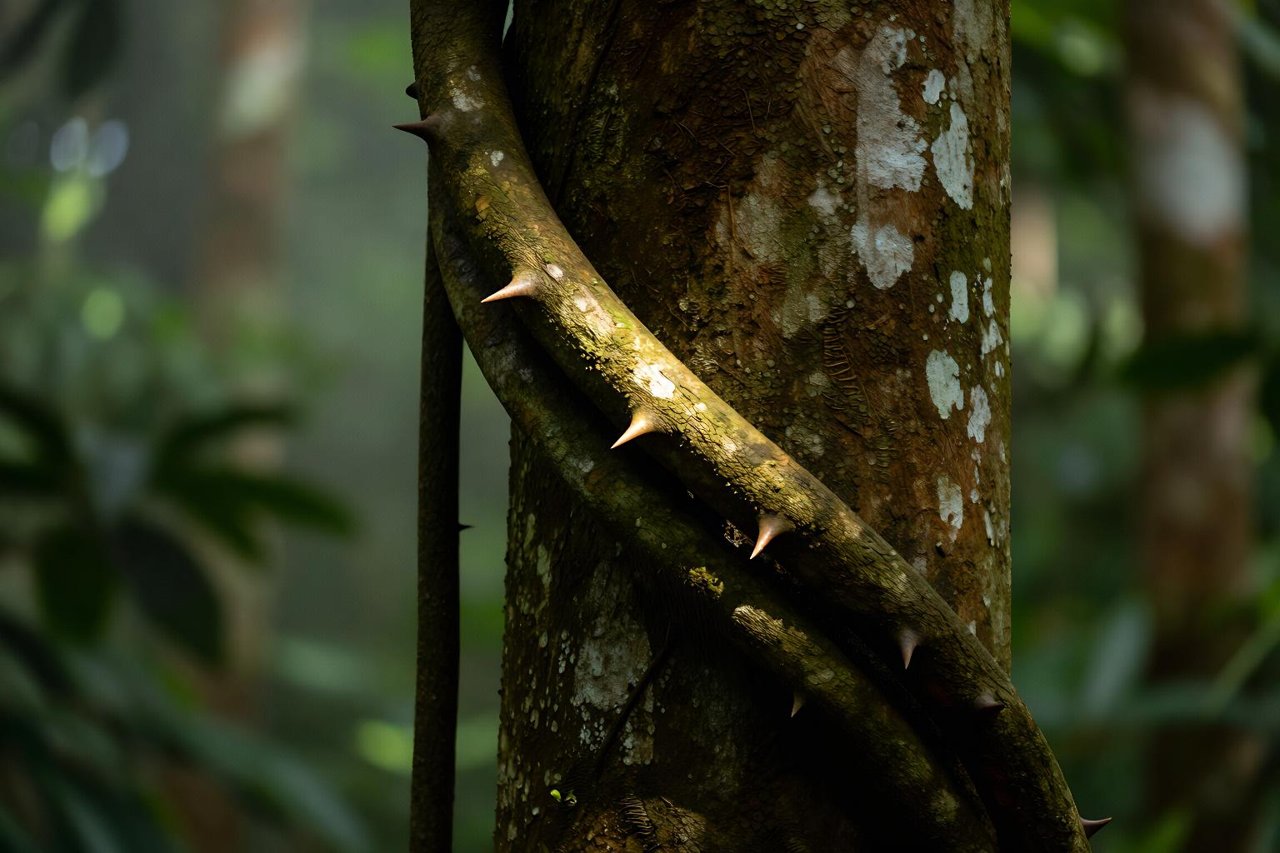
Walk the edge of a cleared plot in the Peruvian Amazon and you may spot it climbing 20 or 30 metres into the canopy: a woody vine with pairs of curved thorns that grip bark the way a cat holds a branch. That shape gave the plant its Spanish name, uña de gato. Cat’s claw has been cut, boiled and drunk in these forests for centuries, and over the past four decades it has become one of South America’s most exported medicinal plants. The research file is thicker than most people expect, and messier than the marketing suggests.
What follows separates the two strands, the traditional use and the clinical evidence, and points out where they meet and where they don’t.
Two Species, One Name
Two vines share the title. Uncaria tomentosa is the species in most capsules on the shelf, and it is the one with thorns so pronounced they look like fish hooks. Uncaria guianensis is smaller, less studied, and was the plant used in the best-known human trial of the herb. Both grow across the Amazon basin, from Peru and Ecuador to Colombia, Bolivia and Brazil.
The bark holds oxindole alkaloids, the compounds researchers keep returning to. They fall into two chemical families. Pentacyclic alkaloids, including isopteropodine, mitraphylline and uncarine F, are the group linked to immune and anti-inflammatory activity in laboratory work. Tetracyclic alkaloids such as rhynchophylline behave differently, more like a mild sedative and blood-pressure reducer. That split matters a great deal when you are standing in a shop trying to choose a bottle.

Traditional Uses in the Amazon Basin
Ashaninka, Shipibo, Aguaruna and Campa communities used the vine for a range of complaints, and ethnobotanical surveys from the 1970s onward recorded a consistent list: stomach ulcers and gastritis, intestinal infections, rheumatism, wounds, fevers, and recovery after childbirth. Some groups used the root for serious illness and considered it stronger than the bark. Others treated a daily decoction as a rainy-season tonic when infections spread through the village.
Preparation was practical. A handful of shredded bark went into a pot of water, simmered for 20 to 45 minutes, and was drunk two or three times a day; the taste is bitter and woodsy, closer to strong oak tea than to a fruit infusion. In some traditions the vine was added to ayahuasca brews, and in others it was taken as a contraceptive, a detail worth remembering when we get to safety.
European visitors brought the plant back in the 1950s and 1970s, and German researchers published the first alkaloid analysis in 1974. From there it moved into the international supplement trade.
What the Scientific Research Shows
More than 200 papers mention cat’s claw, but only a handful are human trials. The rest are test-tube experiments, rodent studies and phytochemical analyses. That gap between bench work and bedside evidence is the central fact about this herb, and it gets quietly skipped in most product descriptions.
Inflammation and immune signalling
In cultured cells, Uncaria tomentosa extracts suppress the NF-kappaB pathway, a master switch for inflammatory signalling, and reduce TNF-alpha production in macrophages. Researchers have also shown effects on dendritic cells and on the way white blood cells migrate. The catch is concentration: lab studies often use extract strengths far above what reaches your bloodstream after swallowing a capsule. Encouraging, but not proof.
Joint pain and arthritis
The most cited human study, published in 2001 by Piscoya and colleagues in Peru, gave 45 patients with knee osteoarthritis 100 mg of freeze-dried U. guianensis daily for four weeks. Patients on the herb reported less pain during daily activity than those on placebo. It was a small, short trial, and the authors called for larger work that has never really happened.
A second trial, from Austria in 2002, tested a standardised extract in 40 people with rheumatoid arthritis over six months. Joint swelling did not improve significantly, though pain scores dipped slightly. That is a modest result, and it fits the bigger picture: some benefit for symptoms, no evidence of disease modification.
The gut
Animal and in vitro work shows cat’s claw extracts protecting intestinal lining cells and reducing inflammatory markers in colitis models. One small Peruvian study looked at the herb as an add-on to standard therapy in people with inflammatory bowel disease and reported improvements in some symptom scores. It was short, unblinded and has not been repeated at scale, so treat it as a hint rather than a finding.
Viruses, bacteria and cancer claims
Laboratory studies describe activity against dengue virus, herpes simplex and, in older work, HIV reverse transcriptase. All of that is test-tube data. There is no human evidence that cat’s claw treats or prevents any viral infection.
Cancer claims deserve particular caution. Rodent and cell studies suggest antiproliferative properties, but no clinical trial has shown the herb treats cancer in people. Because it affects liver enzymes that metabolise drugs, taking it alongside chemotherapy could alter how those drugs are cleared. That is a conversation for an oncologist, not a supplement label.
Dose, Safety and Interactions
Dosages in the literature range widely. Traditional decoctions use 1 to 3 g of dried bark daily. Supplements typically provide 100 to 300 mg of extract standardised to around 3% alkaloids, once or twice a day, with food. Human trials ran between four weeks and six months, so there is little data past that window.
Side effects are usually mild, mostly stomach upset or a bout of loose stools. Some people report dizziness or flushing. The real risks sit in specific situations:
- Pregnancy and breastfeeding. Avoid. The plant has documented uterotonic activity and a folk history as a contraceptive.
- Autoimmune conditions. Because the herb appears to stimulate immune activity, people with lupus, multiple sclerosis or rheumatoid arthritis on immunosuppressants should ask a doctor first.
- Surgery. Stop two weeks before any operation, given the alkaloids that lower blood pressure and the theoretical effect on clotting.
- Blood thinners and sedatives. Additive effects are plausible, so monitor closely or skip it.
- Children. No established dosing.
Buying Something That Is Actually Cat’s Claw
Independent analyses of commercial products have found alkaloid content ranging from near zero to well above label claims, and occasional substitution with cheaper Uncaria species. A few practical filters help.
- Check that the species is named: Uncaria tomentosa, not simply “cat’s claw” or “uña de gato” on its own.
- Look for pentacyclic alkaloid percentage or a note that tetracyclic alkaloids were reduced, since the two groups work at cross purposes in some immune assays.
- Prefer brands that publish third-party testing or a batch certificate.
- Ask about sourcing. Root harvesting kills the vine; sustainably farmed bark from Peru or leaf-based preparations are the better choice.
Where It Fits in a Realistic Routine
Cat’s claw is not a cure for anything, and it is not snake oil either. The honest position is that it sits among the better-studied Amazonian plants, with plausible mechanisms, a couple of small trials pointing toward modest benefit for joint discomfort, and a decent safety record for short-term use in healthy adults.
If you want to try it, give it three to six weeks and keep a simple log of pain or digestive symptoms before and after. Buy a single-ingredient product with a named species so you know what you are actually testing. Tell your doctor, especially if you take anything for blood pressure, clotting or immune suppression. And keep taking the medication that has already been proven, because none of the trials suggest cat’s claw can replace it.


