
Table of Contents
Your kidneys sit just below the ribcage, roughly the size of a fist each, and they filter about 180 litres of blood every single day. They balance sodium and potassium, help set your blood pressure, switch on red blood cell production, and keep your bones from leaching calcium. None of that comes with a notification.
That’s the whole problem. Chronic kidney disease tends to creep in over years, and the early stages are usually silent. In the United States, about 1 in 7 adults has some form of it, and as many as 9 in 10 of those people have no idea. There’s no sharp pain, no visible wound, nothing to point at.
What the body does offer are quiet hints. Most of the top 7 early signs of kidney disease get blamed on salty food, a long week, or turning 50. They’re worth a second look.
1. Foamy urine that won’t flush away
All urine foams a little, especially when the stream is fast or the toilet bowl is clean. The difference is persistence. Protein that should stay in your blood can leak into the urine when the kidney’s filtering units (the glomeruli) are damaged, and protein foam behaves differently: thick, white, and still sitting there after two or three flushes.

Check it in the morning for a few days. If the foam looks more like beer head than a light bubble ring, and it keeps happening, mention it at your next appointment. A urine protein test settles the question in minutes.
2. Getting up twice or more a night to pee
Waking once isn’t unusual, particularly after a large evening drink or for men with prostate enlargement. Repeated nighttime trips, called nocturia, are different. As kidney function drops, the organ loses its ability to concentrate urine overnight, so your bladder keeps filling.
Other patterns matter too: urine that’s much paler or darker than usual, a stream that starts and stops, pressure or difficulty going, or blood that turns the water pink or rusty (cola-coloured urine warrants a same-week call to a doctor).
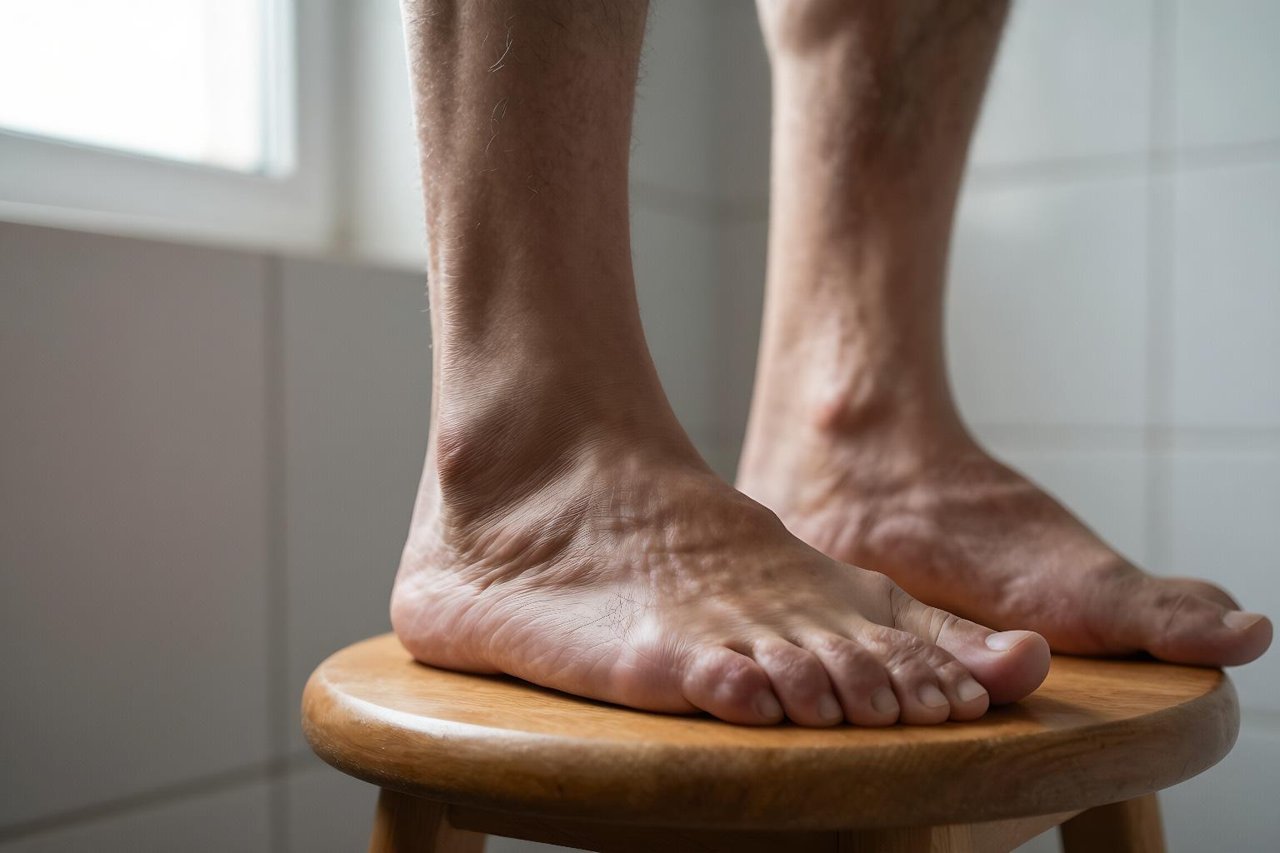
3. Swelling in your feet, ankles, or around your eyes
Kidneys regulate sodium and water. When they falter, fluid pools in the softest tissue it can reach. Press a finger into the skin above your ankle for a few seconds. If a dent stays behind, that’s pitting oedema.
Watch for two versions of this: socks leaving deep grooves by mid-afternoon, and puffy eyelids or bags under the eyes that are worst first thing in the morning and settle by lunchtime. Swelling that comes on fast, or with breathlessness, needs urgent attention rather than a wait-and-see approach.
4. Tiredness that sleep doesn’t repair
Kidneys produce erythropoietin, the hormone that tells your bone marrow to make red blood cells. Damaged kidneys make less, which leads to anaemia: less oxygen circulating, and a tiredness that feels more like walking through wet sand than ordinary sleepiness.
Add to that the buildup of waste products the kidneys can no longer clear, and you get short-term memory slips, trouble holding a train of thought, and a foggy feeling that’s easy to attribute to stress or age. If eight hours of sleep still leaves you flattened for weeks, get a full blood count alongside your kidney numbers.
5. Dry, itchy skin that spreads
Pruritus is one of the most underrated symptoms. When kidneys struggle to clear urea and phosphorus, these compounds build up in the blood and settle in the skin. The itch tends to hit the back, arms, and legs, often worse at night, and no amount of moisturiser keeps it away.
Itching has dozens of causes, of course, and most are harmless. This breakdown of the most common causes of persistent itching is useful for sorting a passing rash from something that needs a blood test.
6. Muscle cramps and restless legs after dark
Failing kidneys throw off calcium, potassium, and magnesium, and that imbalance shows up as cramps in the calves and feet, often in bed. Restless legs, that crawling urge to move your legs when you lie down, are also common in people with reduced kidney function.
Cramps alone rarely mean kidney disease. But recurring cramps with no obvious cause, especially paired with swelling or fatigue, deserve investigating. There’s overlap here with other conditions, which is why signs of muscle disorders that people wave off are worth reading before you settle on a diagnosis of “too much exercise”.
7. Food tastes metallic and your appetite is shrinking
Bacteria in the mouth convert urea into ammonia, which leaves a metallic or bitter taste and breath that mints don’t fix. Meat in particular starts to seem unappetising. Because of this, and because waste buildup causes mild nausea, portions shrink without any decision to diet.
Losing 3 or 4 kilos without trying, pushing food away twice a week, or feeling queasy before breakfast are all worth flagging. Unexplained weight loss is one of the most reliable red flags in medicine, whatever the cause.
These signs overlap with a lot of other conditions
None of the seven is exclusive to kidney disease. Fatigue could be thyroid trouble or iron deficiency. Swelling could be a heart issue. Foamy urine might just mean you were dehydrated. What raises concern is clustering: two or three of these hanging around for more than a few weeks, particularly if you have diabetes or high blood pressure.
The body is a connected system, and liver, kidney, and bladder problems often produce confusingly similar complaints. This guide to what kidney, liver, and urinary symptoms are telling you helps separate them.
Who should get their kidneys checked
Most people over 35 should have kidney numbers checked at least once as part of a routine blood panel. Certain groups should be testing far more often:
- Type 1 or type 2 diabetes, the single largest cause of kidney failure
- High blood pressure, which damages the small vessels inside the kidney
- A parent or sibling with kidney disease
- Age 60 or over, or a history of heart attack, heart failure, or stroke
- Long-term use of NSAID painkillers such as ibuprofen or naproxen taken most days
- Recurring kidney or urinary infections, which can scar tissue over time and sometimes signal an immune system that isn’t holding the line. These risk factors for immune deficiency are worth a look if infections keep returning.
Two simple tests that catch damage early
You don’t need an ultrasound or a specialist referral to start. Two cheap tests do most of the heavy lifting. An eGFR blood test estimates how much filtering capacity you have left, expressed as a percentage; above 90 is normal, 60 to 89 with other markers is early trouble. A urine albumin-to-creatinine ratio (UACR) checks for protein leaking through, which can show up years before eGFR starts falling.
Ask for both by name. A basic blood panel sometimes leaves the urine test out, and early kidney disease is very often found in that urine sample alone.
When to book an appointment
Book a visit if any of these apply: you’ve noticed two or more of the signs above lasting longer than three weeks, the swelling or foamy urine is getting more pronounced, or you have diabetes and haven’t had a UACR in the past year.
Go sooner, this week rather than this month, if there’s blood in the urine, swelling with shortness of breath, or a sudden drop in how much you’re urinating. Early kidney disease is manageable with blood pressure control, diet changes, and medication that protects the filters. The earlier it’s found, the more of your kidney function stays with you.


