
Table of Contents
A space heater that ignites at 3 a.m. A hip implant that loosens by year four. A lithium-ion battery in a cheap e-scooter that turns a hallway into a fireball. Product liability lawsuits exist because the things we buy are supposed to be safe when used the way they’re advertised, and sometimes they aren’t.
These cases are different from most injury claims. There’s no careless driver to point at, no slippery floor. The defendant is usually a corporation that never laid eyes on you. Winning or losing often turns on engineering documents, test data, and the physical object itself.
What Actually Counts as a Product Liability Lawsuit
A product liability claim argues that a defective product injured you or damaged your property, and that the company that designed, built, or sold it is legally responsible for that harm. The product has to be a tangible thing: a car, a drug, a power tool, a pressure cooker, a crib, a bag of salad.
It’s not a gripe about poor service or a product that simply didn’t perform well. A blender that’s loud and weak isn’t defective. A blender whose blade assembly detaches at 18,000 RPM and throws metal into a kitchen is.

The Three Theories That Carry Almost Every Case
Attorneys usually frame a product claim under one or more of three theories. Getting the theory right matters, because each one requires different evidence.
Design defect
The product was manufactured exactly to specification, and the specification was dangerous. The classic test asks whether a reasonable alternative design would have reduced the risk without gutting the product’s usefulness or price. If a $1.40 fuel tank shield would have prevented fires in rear-end collisions, the absence of that shield is a design defect.
Manufacturing defect
Most units of the product are fine. Yours wasn’t. Maybe a batch of tires got the wrong rubber compound, or a batch of heart stents got a bad weld. Here the winning evidence is usually a comparison: your unit versus a properly made one, plus manufacturing records and quality-control logs.
Failure to warn or inadequate instructions
The product may be reasonably safe, but the label, manual, or packaging didn’t tell users what they needed to know. This shows up constantly in prescription drug and medical device cases, where the argument is that the manufacturer downplayed a known risk to doctors. It also shows up in ordinary consumer goods, like a chemical cleaner sold without adequate ventilation warnings.
Who You Can Sue
The list is longer than most people expect. It can include the manufacturer, the maker of a component part (think the ignition switch supplier rather than the automaker), the distributor, the retailer who sold it, and sometimes a company that put its brand on a product made by someone else.
When more than one party’s conduct contributed to the injury, states apply different rules about who covers what. In some jurisdictions, a single defendant can be forced to pay the entire judgment even if it was only partly at fault, a doctrine worth understanding before you assume each company pays its own percentage. Joint and several liability rules vary sharply from state to state and can reshape how a case settles.
Strict Liability Doesn’t Mean Automatic Payout
Most product cases are filed under strict liability, which is a genuine advantage: you don’t have to prove the manufacturer was careless. But strict liability still requires you to prove three things. The product had a defect. The defect existed when it left the company’s control. That defect caused your injury.
That middle element trips up a lot of claims. A ladder that fails after ten years of improper storage, or a tool that was rebuilt with third-party parts, gives the defense an opening. If you want a plain-language grounding in how fault and payment get sorted out in these disputes, this breakdown of how civil liability determines who pays is a useful starting point.
Plaintiffs also file under negligence and breach of warranty, sometimes all three at once. Warranty claims can reach purely economic losses, like a defective machine that costs a factory a month of production, even where no one got hurt.
What Building the Case Looks Like
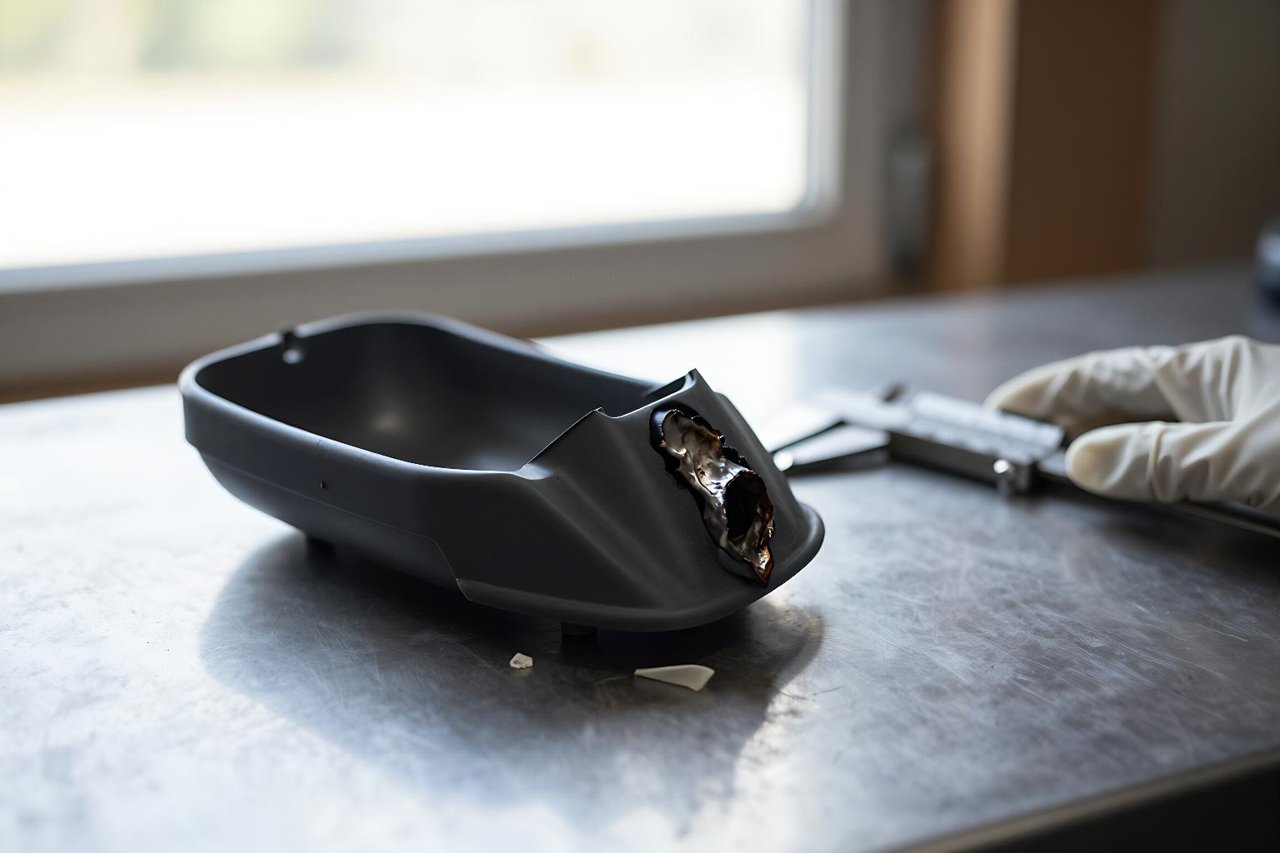
The single most important piece of evidence is usually the product itself. Keep it. Don’t throw away the box, the manual, the receipt, or the failed component. Don’t let a repair shop “fix” it. Attorneys often have the item inspected and photographed by an expert before the manufacturer ever gets a look, because evidence degrades and defendants will argue about chain of custody.
From there, a case typically builds on:
- Medical records tying the injury to the product failure
- Incident reports and warranty claims showing the company knew
- Internal emails and engineering memos, obtained in discovery
- Complaints filed with the Consumer Product Safety Commission
- Expert testimony on design alternatives, testing standards, and warnings
- Recall history and prior lawsuits involving the same defect
Pattern evidence is powerful. One exploding battery looks like bad luck. Forty documented cases with the same failure mode looks like a decision somebody made.
Defenses You Should Expect
Manufacturers don’t roll over. Common defenses include:
- Misuse. You used the product in a way it wasn’t intended for, and the warning said so.
- Assumption of risk. You knew the danger and proceeded anyway.
- Alteration. Someone modified the product after it left the factory.
- Federal preemption. For drugs and some devices, the company argues federal regulation barred stronger warnings.
- Statute of repose. Many states cut off claims a set number of years after manufacture, regardless of when you were hurt.
- Comparative fault. Your own conduct reduced the damages owed.
Deadlines matter more than people realize. The statute of limitations for a personal injury claim is typically two to three years, but the clock can start at the injury, at discovery of the defect, or at the last sale of the product. A missed deadline usually ends the case permanently.
When One Defect Hurts Thousands
Some failures aren’t isolated. Faulty airbag inflators, pelvic mesh, talcum powder, defective hip systems, and contaminated infant formula have generated litigation involving tens of thousands of claimants at once. These are handled as mass torts, where individual cases are coordinated for pretrial purposes but keep their own damages claims.
That structure is quite different from a class action, and it affects how long things take and how money is divided. This explanation of how mass tort lawsuits work and who qualifies covers the mechanics if you suspect you’re one of many injured by the same product.
What the Money Covers
Damages in a product case generally fall into two buckets. Economic damages are documented: medical bills, rehabilitation, lost income, reduced earning capacity, home modifications, and future care costs. Non-economic damages cover pain, disfigurement, and lost quality of life, and some states cap them.
Punitive damages are rare but real. They’re awarded when the evidence shows the company knew about a risk and prioritized profit, like the ignition switch memo that surfaced in the GM litigation. Claims involving severe burns from defective appliances often hinge on exactly this kind of internal knowledge, which is why burn injury claims and what’s provable in them tend to involve such heavy document discovery.
When a defect kills someone, the family’s claim shifts to a different framework, with its own rules about who may file and what can be recovered. The structure of wrongful death lawsuits explains why those cases are usually brought by a spouse, parent, or estate rather than by anyone who knew the deceased.
Timelines and Realistic Expectations
Most product liability lawsuits take 18 months to four years from filing to resolution. A straightforward case with clear liability might settle in a year. A coordinated mass tort can run five years or more. Roughly 90% settle, typically after expert reports are exchanged, because that’s the moment both sides finally see the strength of the other’s technical case.
Initial settlement offers before an attorney is involved are frequently low, sometimes comically so. That’s not generosity, it’s a calculation that uninformed claimants will take quick money.
The First Few Weeks After an Injury
What you do early shapes the case more than anything afterward. Set the product aside and photograph it in place before moving it. Keep the packaging, the manual, and the receipt. Photograph your injuries as they heal. Save every medical record and estimate of lost work. Do not post about the incident on social media, since adjusters read it and defense lawyers will pull it in discovery.
Check whether the product has been recalled through the CPSC’s public database, which takes about two minutes and can establish that the company knew about a problem. If the manufacturer’s insurer calls, be polite and say nothing about fault, cause, or your medical condition until you’ve spoken with a lawyer. Sign nothing.
None of this guarantees a payout. Product cases are technical, expensive to build, and defended hard. But the claimants who preserve evidence and move quickly start with a real advantage, and the ones who wait often find the most valuable proof has already been thrown in a dumpster.


