
Table of Contents
Most adventure travel marketing assumes you already own a dry bag, a headlamp and the calves of someone who runs trails for fun. That is not how first trips work. A good beginner adventure vacation asks two things of you: reasonable fitness and a willingness to be mildly uncomfortable for a few hours at a time. Everything else (ropes, routes, weather calls, safety checks) should be someone else’s job while you find your feet.
Every trip below passes the same test. You can book it with zero technical skill. It runs on fixed dates with guides handling the logistics. And if the weather turns, you still have something worth doing that afternoon.
Match the trip to your real fitness, not your fantasy self
Before you look at a single itinerary, answer three questions honestly. Can you walk 12 kilometres with a daypack and still enjoy dinner? Have you paddled a kayak for more than 20 minutes? Can you climb six flights of stairs without stopping?
If the answer to any of those is no, that is fine. It just means you book a trip graded easy or moderate with a maximum of four to six hours of activity a day, and you give yourself eight weeks to train before departure. Three brisk walks a week and a couple of long weekend rambles will get nearly anyone from the sofa to a five-day walking holiday.

Water is the friendliest entry point
Water activities come with built-in safety nets: guides, life jackets, shallow depths and the option to sit one out on the boat. They also forgive bad technique in a way that, say, scrambling up a mountain does not.
Snorkelling from a boat, not a cliff
Pick a guided boat snorkel in calm, shallow water. Stingray City off Grand Cayman sits in about three metres of water. The house reefs in the Maldives and the Bay Islands of Honduras start a short swim from the sand. Two hours in the water with a guide who points out what you are looking at beats three hours of flailing around on your own.
Kayaking and paddleboarding where the water is flat
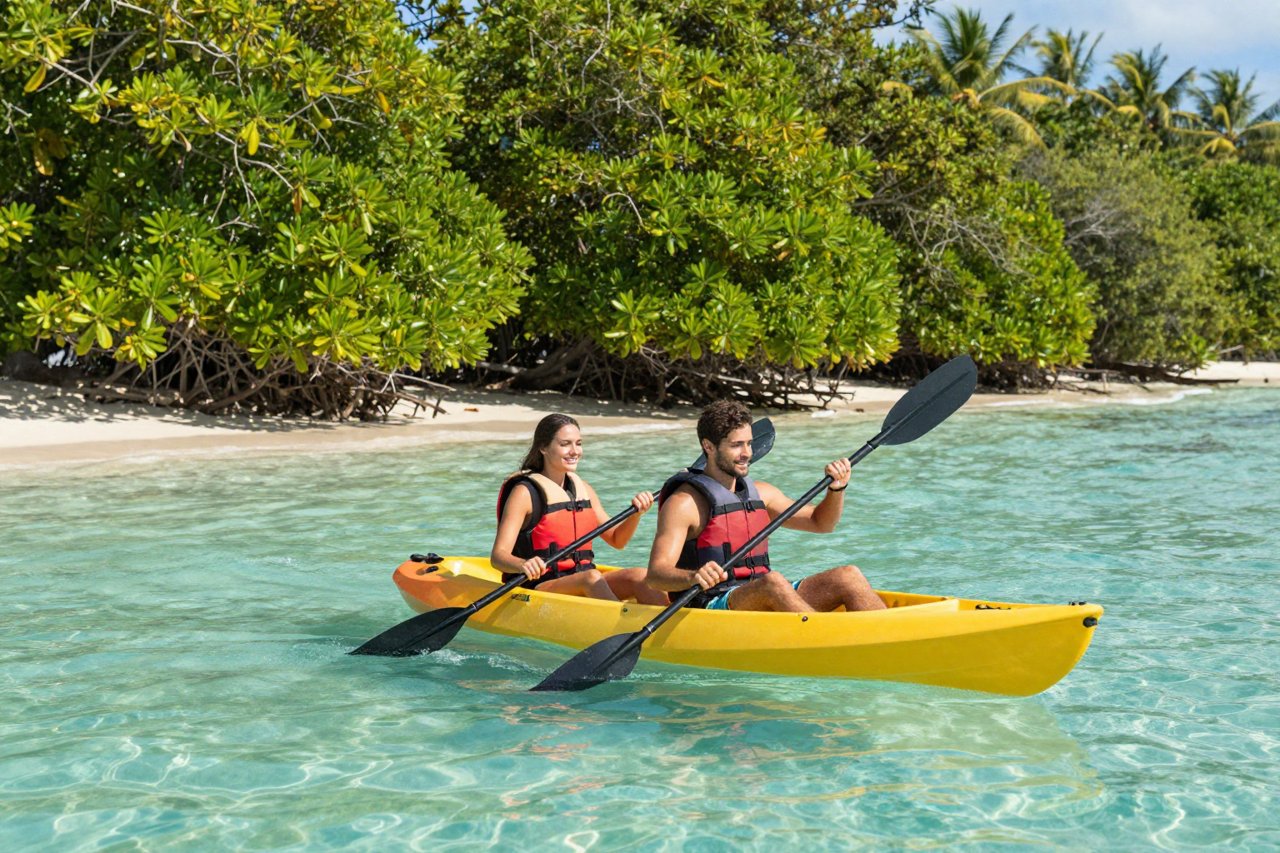
Bioluminescent bays in Puerto Rico, the mangroves of Florida’s Ten Thousand Islands, the sheltered coves of New Zealand’s Abel Tasman. Flat water, short distances, and a guide who knows the tides. A single two-hour lesson before you travel is genuinely enough to make a half-day paddle comfortable rather than nerve-wracking.
A Discover Scuba course instead of a full certification
Resort courses such as PADI Discover Scuba take about half a day, start in a pool, and cap the depth at 12 metres with an instructor holding your hand, sometimes literally. You get the reef without committing to a four-day open water course you might not finish.
Hiking trips that pay off without punishing you
Inn-to-inn walks with luggage transfers
This is the single best format for a first walking holiday. You carry a daypack, someone drives your suitcase to the next village, and dinner is booked. The last 115 kilometres of the Camino de Santiago from Sarria takes five days at three to four hours of walking a day. The Queen Charlotte Track in New Zealand runs water taxis alongside the trail so you can bail at any point. Scotland’s West Highland Way can be sliced into three-day chunks around Loch Lomond.
Single-base hiking holidays
One hotel, a handful of day hikes, no packing and repacking. The Alps around Chamonix, the Dolomites and Slovenia’s Julian Alps all have cable cars and chairlifts that cut out 800 metres of climbing before you have even started. Nobody hands out medals for taking the lift.
Use an all-inclusive resort as your adventure base
The resorts that suit beginners are not the ones with nine swim-up bars. They are the ones with kayaks, paddleboards, bikes and guided nature walks included in the rate. Costa Rica, Belize and the Dominican Republic are full of them, and a base like that removes almost every decision you would otherwise make badly on day one.
You get gear rental, three meals and a bed in one booking. You can try a morning activity and, if it wrecks you, spend the afternoon horizontal. And the on-site guides know which reef is calm when the wind picks up. If that sounds like your speed, it is worth browsing the best all-inclusive resorts in the world and filtering for the ones with watersports and excursions included.
Wildlife trips: low effort, high payoff
Wildlife watching is adventure travel’s quiet cheat code. You sit still, you look, and something extraordinary happens.
Manuel Antonio in Costa Rica delivers sloths, monkeys and toucans within a 90-minute looped path. Leopard safaris in Sri Lanka’s Yala National Park run from the back of a jeep at dawn. Sea lion snorkelling in Mexico’s Sea of Cortez is a two-hour boat ride and a swim in water so clear you can see your own shadow on the sand. None of it requires a training plan.
Grand Cayman: a genuinely easy first adventure trip
If you want one destination that covers water, wildlife and very little risk, Grand Cayman is hard to beat. Seven Mile Beach has reef within swimming distance of the sand. Stingray City is a sandbar you can stand on. Starfish Point is knee-deep. The island drives on the left, English is spoken everywhere and the flight connections from the US are short.
You can fill a week without ever doing anything that requires a skill. Start with this list of 15 awesome Cayman Islands adventures and pick the ones with a boat involved.
Guided multisport weeks: the shortcut
If you cannot decide between hiking, cycling and paddling, book a week that does all three badly-proofed. Operators in Croatia, Vietnam and Costa Rica run eight to twelve person groups through a rotating menu of activities with a van following behind. You cycle 30 kilometres in the morning, kayak a river in the afternoon, and sleep somewhere with a hot shower.
Ask two questions before you pay: what is the guide-to-guest ratio, and what happens if I cannot keep up? Good operators have a second vehicle and an answer that is not a shrug.
Six things to sort out before you book
- Insurance that covers your actual activity. Check the small print for altitude limits, usually 3,000 to 4,000 metres, and whether kayaking or snorkelling is listed as an exclusion.
- Boots broken in. Aim for 20 to 30 kilometres of walking in them before you fly. Blisters ruin more first trips than weather does.
- One lesson. A two-hour kayak or paddleboard session at home is worth more than any amount of YouTube.
- Layers, not gadgets. A quick-dry base layer, a warm mid layer and a waterproof shell cover almost everything.
- Realistic daily mileage. Beginners routinely book itineraries designed for people who hike weekly.
- Rent gear first. Hire the helmet, the dry bag and the poles. Buy the boots and the rain jacket, because those need to fit you.
Three mistakes beginners make
Over-scheduling day one
Flights are tiring and jet lag is real. If your itinerary has a 6am hike the morning after a long-haul flight, move it. One activity per day is plenty for the first three days.
Underestimating heat and altitude
A 10-kilometre hike at sea level is a different animal at 2,500 metres or in 34°C humidity. Build in a rest day, drink more water than feels necessary and eat the salty snacks.
Booking the cheapest operator on the beach
Licensed, insured and reviewed are the three words to look for. The difference in price is usually 15 to 20 percent. The difference in safety briefing is not something you want to discover from the water.
Questions worth emailing an operator before you pay
Copy these into a message and see how they respond. A good company answers all six in detail and within a day. A bad one replies with a link and a payment button.
- What is the maximum group size, and how many guides come with it?
- What percentage of your guests are first-timers?
- What is the cancellation policy if weather shuts the activity down?
- Which specific skills are required, and can you send a sample day’s schedule?
- Do you provide gear, and what condition is it in?
- What is the closest medical facility to the activity?
The answers tell you more about a trip than any glossy itinerary page. Pick the operator who writes back like a human who has actually walked the route, and your first adventure vacation stops being a gamble.


