
Table of Contents
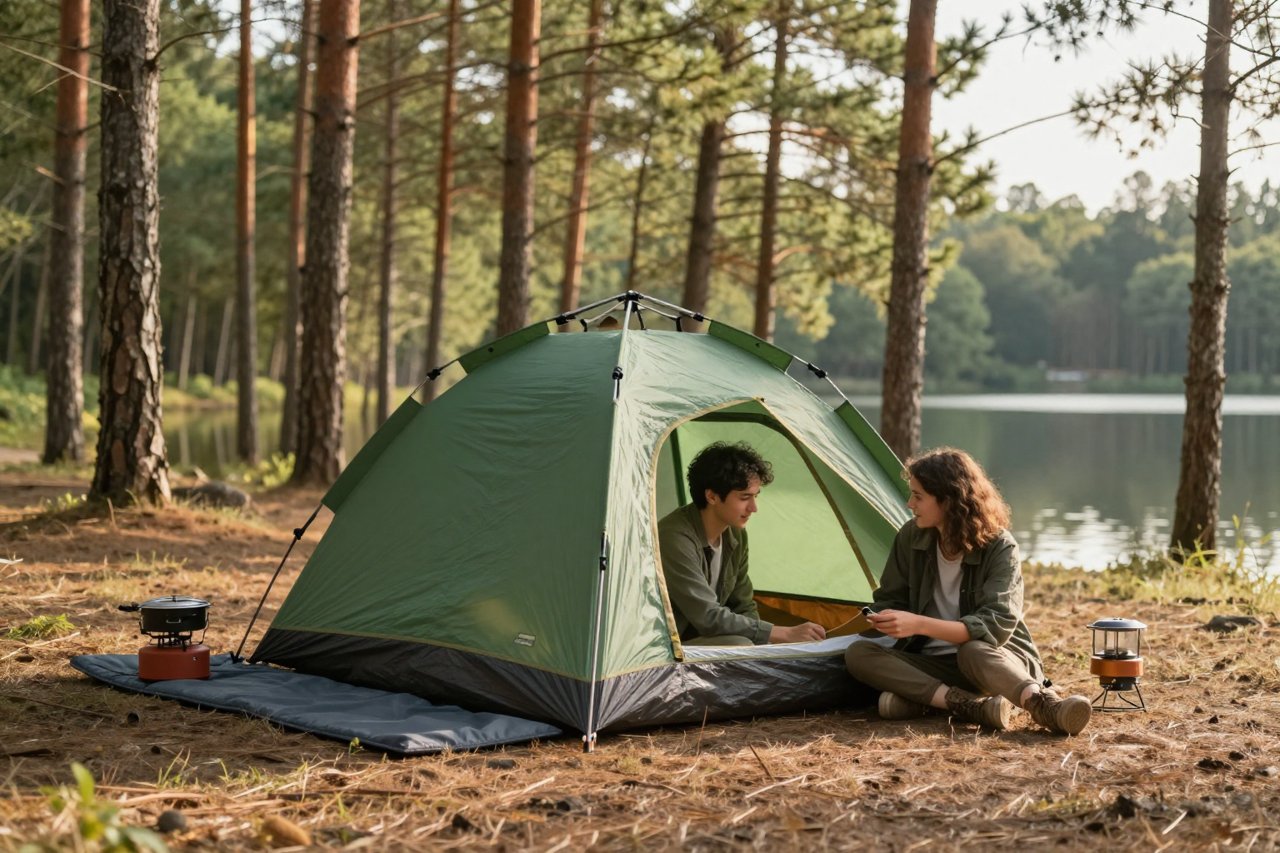
Your first camping trip does not need a roof rack full of gear. A two-night stay at a state park 45 minutes from home is a better test than a remote backcountry route, and it will teach you more than any gear review. The camping essentials for beginners are simpler than the outdoor store suggests: a dry place to sleep, a warm layer, a way to boil water, and enough light to find the tent after dark. Everything else is comfort or convenience.
Here is the practical short list, with the details that actually matter on a first trip.
Shelter and Sleep: The Non-Negotiables
If you get cold or wet, nothing else on the trip matters. Spend your first gear budget here.
Choose a tent with a little extra room
A tent rated for two people is tight for two adults plus packs. For car camping, buy a three-person dome tent for two people, or a two-person tent for one person. Look for a freestanding design, a bathtub-style floor, and a full rainfly. A cheap tarp underneath protects the floor from sticks and grit. Pitch it in the yard once before you leave. Ten minutes of practice at home beats an hour of headlamp fumbling in the dark.

Sleeping pad first, sleeping bag second
The ground pulls heat out of you fast. A closed-cell foam pad or an insulated air pad with an R-value of 3 or higher works for three-season camping. For cold nights, aim for R-5. Your sleeping bag should be rated about 10°F below the coldest temperature you expect. If the forecast says 40°F, a 30°F bag is a reasonable margin. A stuff sack with a clean T-shirt inside makes a decent pillow.
Build a Simple Camp Kitchen
You do not need a full chuck box. One stove, one pot, one pan, and a sharp knife cover most first trips.
Stove and fuel
A two-burner propane stove suits car camping. A small canister stove is lighter for backpacking. Check the fuel before you leave, and pack a lighter plus matches in a waterproof bag. Never cook inside a tent. Carbon monoxide builds up quickly, and tent fabric is more flammable than it looks.
Food, water, and cleanup
Plan meals you already know how to cook. Pasta, canned chili, tortillas, pre-chopped vegetables, and instant oatmeal are reliable. Freeze a couple of water bottles to use as cooler ice, then drink them as they melt. Bring one gallon of water per person per day for drinking, cooking, and basic cleanup, plus extra if it will be hot.
- Two-burner stove or canister stove with spare fuel
- One pot with a lid, one frying pan, and a spatula
- Biodegradable soap, a small sponge, and a collapsible wash basin
- Cooler with block ice, kept in the shade
- Trash bags and a few zip-top bags for leftovers and scraps
Wash dishes at least 200 feet from streams and lakes, and pack out food scraps. A clean camp keeps animals away and leaves the site better for the next person.
Clothing That Handles Weather Swings
Mountain and lakeside campsites can swing 30°F between afternoon and dawn. Pack layers, not a single heavy jacket. Start with a synthetic or wool base layer, add a fleece or light puffy, and finish with a waterproof shell. Cotton jeans and cotton socks stay wet and steal warmth. Wool hiking socks, a warm hat, and dry camp shoes make evening chores much more pleasant.
What to wear around camp
Bring one set of clothes for hiking and one dry set for camp. Sleep in clean, dry layers, and keep them in a stuff sack so they stay that way. A pair of lightweight sandals or camp shoes lets your hiking boots air out. Pack everything in a dry bag or a lined duffel if rain is in the forecast.
Lighting, Power, and Small Tools
A 200- to 300-lumen headlamp with a red mode is the single most useful small item you can bring. Red light preserves night vision and is less annoying to neighbors. Add a small lantern for the picnic table, a power bank for your phone, and a basic multi-tool. A roll of duct tape wrapped around a water bottle fixes torn stuff sacks, split straps, and loose tent poles.
Gadgets are optional. If you like tracking sleep and steps, a comfortable smart ring can replace a bulky watch on the trail, but do not let charging cables crowd out dry socks. Comfortable smart rings are worth considering only if you already use one at home.
Safety and First-Aid Basics
Most first-trip injuries are small: blisters, cuts, sunburn, and twisted ankles. A compact kit with blister plasters, gauze, medical tape, pain relievers, antihistamine, and personal medications covers the common problems. Add sunscreen, insect repellent, and a tick removal tool if you are in tick country. Check the forecast before you leave and set a turnaround time on hikes. Tell someone your campsite and expected return time.
Know the campfire rules before you build one. Some parks ban fires in dry season, and others require a raised fire pan. Keep water and a shovel nearby, never leave a fire unattended, and drown the coals before you sleep. If you are new to fire starting, practice at home with a fire starter and dry kindling.
Packing Smart Without Overpacking
Pack by category in clear bins or stuff sacks: sleep, kitchen, clothing, safety, and tools. You will find things faster and notice what you forgot before you leave the driveway. Use a checklist and update it after every trip. Leave the novelty gear at home until you have a specific use for it. A camp chair and a small table are worth the space for car camping. A folding saw, a giant flashlight, and a four-person coffee maker usually are not.
If friends or family want to help equip your first season, ask for consumables: fuel canisters, batteries, freeze-dried meals, and good socks. For birthdays and holidays, a practical holiday gift guide can point them toward useful outdoor gear instead of another novelty mug. Planning a Father’s Day camping trip? These useful gift ideas for men include gear a beginner camper will actually use.
Your First-Trip Packing Checklist
Use this as a starting point, then adjust for weather and campsite rules.
- Tent, footprint or tarp, stakes, and a mallet
- Sleeping bag, insulated pad, pillow, and earplugs
- Stove, fuel, lighter, pot, pan, utensils, and a knife
- One gallon of water per person per day, plus food and cooler ice
- Headlamp, spare batteries, lantern, and power bank
- Layered clothing, rain shell, wool socks, hat, and camp shoes
- First-aid kit, sunscreen, bug spray, and personal medications
- Trash bags, dish soap, sponge, and a small towel
- Map, campsite reservation, and a printed weather forecast
Set a phone alarm for sunset on day one. It sounds small, but it gives you 30 minutes to finish dinner and clean up before the headlamps come out. That one habit turns a frantic first night into a calm one.


