
[ad_1]
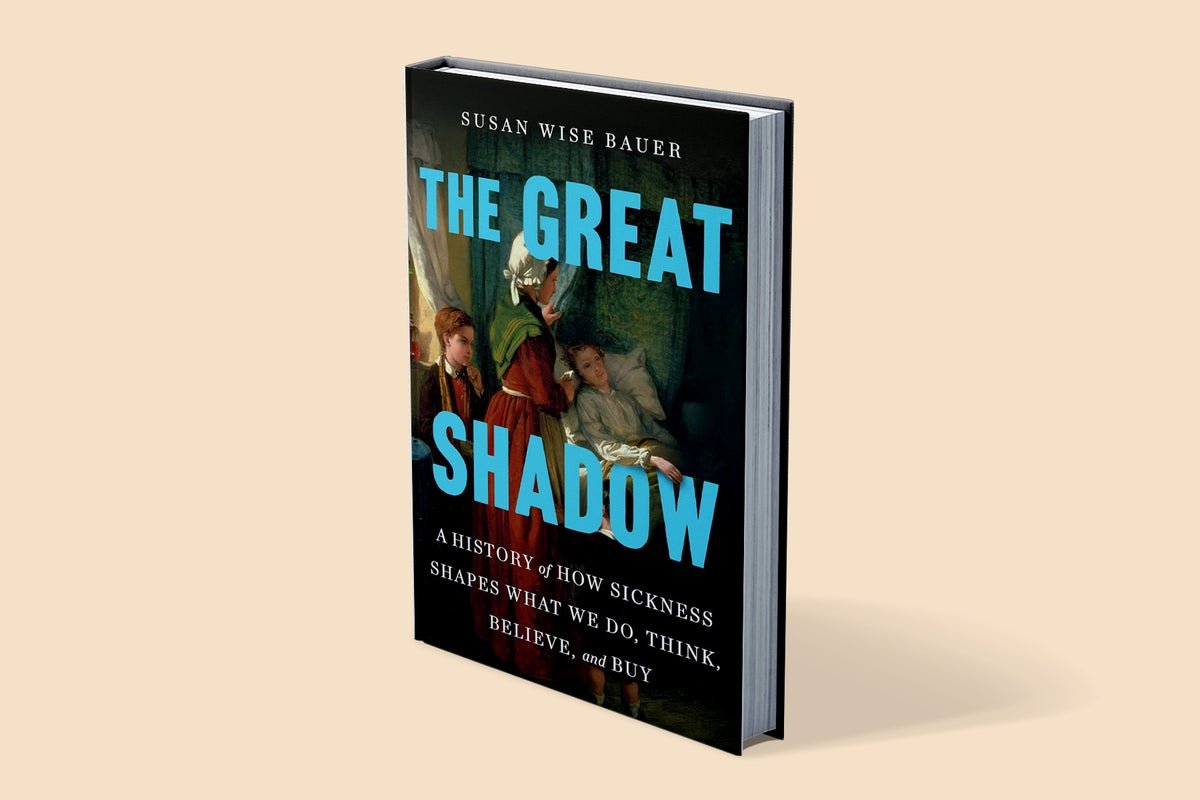
Adapted from The Great Shadow: A History of How Sickness Shapes What We Do, Think, Believe, and Buy, by Susan Wise Bauer. Copyright © 2026 by the author and reprinted by permission of St. Martin’s Press.
CHAPTER 1: THE PRISM
Our bodies are the crossroads where our most private selves meet the world outside, the matrix where our thoughts and emotions and beliefs are formed. When our bodies are functioning well—when we are healthy, strong, energetic, pain-free—we don’t notice how our physical existence affects those thoughts, emotions, and beliefs.
On supporting science journalism
If you’re enjoying this article, consider supporting our award-winning journalism by subscribing. By purchasing a subscription you are helping to ensure the future of impactful stories about the discoveries and ideas shaping our world today.
But let a grain of sand grit its way into the works, and suddenly everything changes.
The most ancient stories we possess tell us this. Gilgamesh and his companion Enkidu barrel through the Mesopotamian landscape, blithely raising hell wherever they go, until fever shoots through Enkidu. Suddenly, the hardened warrior Gilgamesh is dithering around his friend’s bed in agonized confusion, the trajectory of his triumphant life halted dead. Job luxuriates in his fields and herds and family. Then carnage descends on his livestock and children and his own body, and he sits in the ashes, scraping his boils with a potsherd. His entire world is overthrown, the disorder in his body the last and greatest expression of the family catastrophe.
Sickness is not “just” sickness. Sickness is the most intimate expression of our vexed relationship with reality, the place where smooth functioning suddenly fractures and spins apart without warning. Sickness is the great mirror that reflects back our most urgent question: Why does calamity descend without warning? How can we explain it? How do we avoid it? How do we fight back?
Our evolving understanding of what makes us sick, and how, is a prism through which our perception of the outside world has always filtered. As we investigated the causes and cures of sickness within us, we began to change our views of the universe outside. When no explanation for illness was available, we pleaded with and worshipped deities. When illness was thought to be related to the balance of humors, we became obsessed with equilibrium and symmetry. When we discovered germs, we created an antiseptic culture; since person-to-person infection was the theory du jour, we developed a Tupperware-enclosed, plastic-wrapped, disposable world, and instituted separate drinking fountains and lavatories for those who carried “different” sorts of germs. When we thought we’d conquered infection, finally triumphing over illnesses that had plagued humanity from the beginning of memory, we jubilantly turned our focus outward, looked up to space, and aimed for the stars.
And now that we realize viruses might have the upper hand after all, we enforce borders, fearing outsiders as carriers of “disease”; we distrust the recommendations of medical science (we feel it has failed us, after all), so that vaccine-denying becomes fashionable, homeopathic remedies and magnetic therapies are embraced, energy healing prospers.
And, in our fear, we predict the end of the world.
These are stages of understanding. But the old outdated understandings of illness don’t simply disappear. They linger on. This dissonance often shows up in harmless and passing ways (as when a twenty-first-century parent, fully aware that a virus causes the common cold, yells, “Don’t go outside with wet hair or you’ll catch a cold!”). But it also causes sharp rifts: A Canadian teenager trusting in God to heal her is forced by a court to receive a blood transfusion; anti-vaxxers turn their backs on germ theory and rely on proper life balance (yogurt, herbs, cold-water baths) to keep their children safe.
Our contradictory, overlapping ideas about sickness create layers of tension, edges of conflict, fatal inconsistencies.
Our ideas about sickness, not injury. It’s important to differentiate between the two (as many histories of medicine do not).
From the most ancient times, humans understood injury. Illness could descend from nowhere, but the source of bodily injury was always clear—whether you were trampled by a mastodon, crushed by a falling block of Egyptian limestone, skewered by a bolt from a medieval crossbow, or felled by a bullet from a nineteenth-century Colt revolver. Dealing with injury might be complicated and the aftereffects puzzling, but the cause was obvious. Whether by rock, sword, cannon, or bomb, the body was shattered. There was no mystery as to how or why. The most ancient medical texts all involve this sort of injury. Scholars of medical history have marveled over the Papyrus, an Egyptian treatise whose recommendations reveal an anachronistically skilled understanding of bodily trauma. With a surprisingly acute sense of scientific method, attending physicians were advised to carefully examine wounds to the forehead, or fractures of arm bones, or slashes across the neck or cheek; gods and demons are notably absent, commonsense prescriptions for pain relief and wound care dominate.
But dig a little bit deeper into this earliest of “scientific” monographs, and we find decidedly less rational secondary recommendations. If the injury, properly cared for, did not heal as expected, practitioners were encouraged to “drive out the enemy within the wound” by calling on Isis, begging her to dispel the “hostile force within the blood, the robber of Horus,” the enemy of man that always bent its malevolent force toward the living soul.
The unexpected turning of a wound was, like illness, a mystery. Both arrived without herald, without visible agency. The Theban physician knew what had caused that facial laceration: Falling masonry was an ever-present ancient threat. But why did one patient heal, while another rotted? And what about the shivering, miserable sufferer who simply awoke with a sore throat and cough, after going to bed healthy and filled with plans the night before?
It is the constant presence of sickness, not injury, that has shaped the way we think about ourselves and our world.
[ad_2]
Source link


