
Table of Contents
[ad_1]
Many of us remember the iconic scene from Disney’s The Lion King where Mufasa teaches Simba about the “circle of life:” a powerful metaphor illustrating the interconnectedness of all living beings and the delicate balance of nature.
Protecting that ecosystem is the core mission of the Connected Conservation Foundation, which, in partnership with Cisco, is training and empowering individuals worldwide to safeguard protected areas and species, with the support of Cisco Networking Academy courses.
A decade of partnership: Cisco and the Connected Conservation Foundation

For over ten years, Cisco has partnered with the Connected Conservation Foundation (CCF) to harness technology in safeguarding biodiversity hotspots across Africa and beyond. This collaboration has evolved from focusing on protecting rhinos to deploying advanced digital tools across 35 conservancies in 15 countries.
Together, they tackle critical challenges such as poaching, human-wildlife conflict, and habitat loss by integrating IoT sensors, AI analytics, satellite tracking, and real-time data platforms.
However, technology alone is not enough; there’s a growing need for skilled conservation technology professions that understand how to install, maintain, and manage these systems to keep critical data flowing.
Introducing the Protected Area Technician (PAT) Training Program
To help solve for this, Cisco Networking Academy and CCF launched the Protected Area Technician (PAT) Training Program in summer 2025. The launch was also made possible by the Open University, who provided guidance and significant logistical support. This initiative equips local communities with the skills to operate and maintain the sophisticated conservation technologies deployed in protected areas.
The PAT Program offers 10 expert-led, free online courses covering essential topics such as sensor deployment, networking, off-grid infrastructure, cybersecurity, data management, and system integration. Course content was developed by industry leaders and leading professionals in conservation technology, including Sabi San Nature Reserve and African Parks — and it’s already changing lives.
“As a student in Ecology and Conservation at the University of Fianarantsoa, Madagascar, I strengthened my understanding of environmental monitoring, conservation strategies, and field data collection methods,” shared PAT participant, Razafinandrasana Gerard. “The knowledge and skills I gained are directly applicable to my fieldwork, research activities, and my future career in biodiversity conservation.”
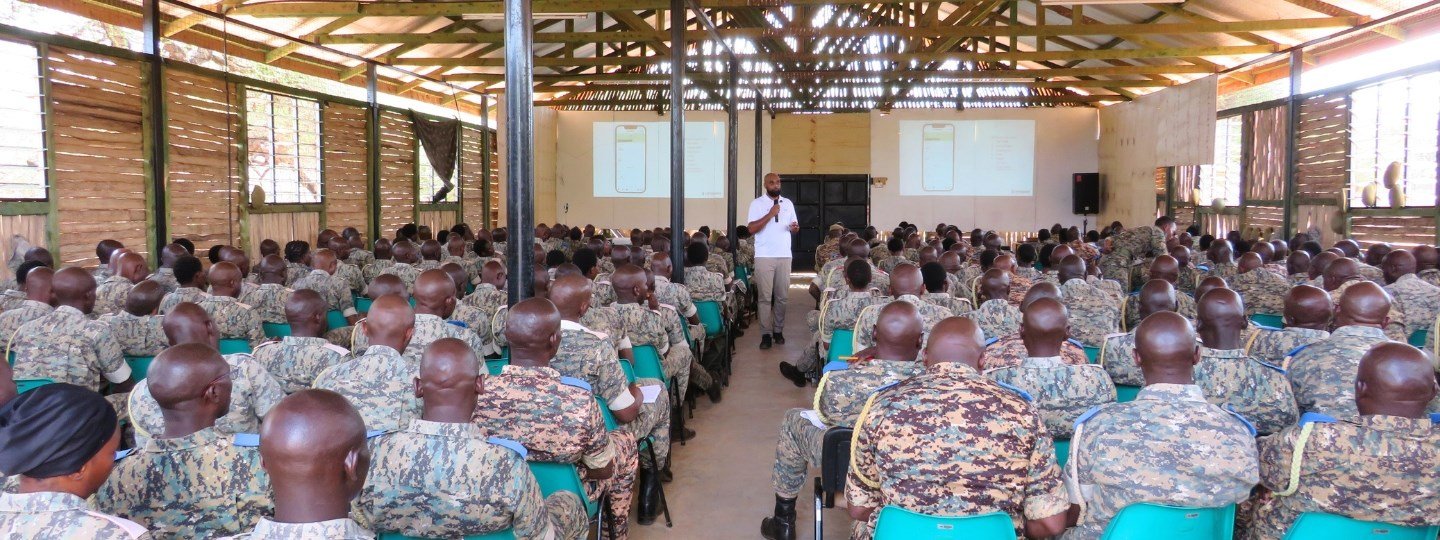
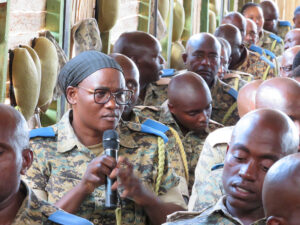
Recently, CCF delivered its first in-field PAT training in Kenya, bringing their online curriculum directly to conservancies and government teams on the ground. During that time, Kenya Wildlife Service staff from 13 conservancies were trained to independently deploy, manage, and troubleshoot their own IoT digital infrastructure for conservation.
The results were immediate. Shortly after the training, the Masai Mara Triangle successfully re-deployed their gateways onto the new Konza server — entirely in-house.
Impact and outcomes: Building local capacity for conservation
Since its inception just over six months ago, the PAT Training Program has already enrolled 529 learners, with 530 certificates issued. This growing cadre of skilled technicians enables conservation teams to:
“My park has challenges with communication,” shared Martin Ndego Abodiba, a PAT participant and part of the Wildlife Division Forestry Commission in Ghana. “This course has made me aware of how communication should flow from field rangers to the control room. It has helped my thinking and enhanced operations activities, including how to brief my rangers before and after patrols.”
By fostering local expertise, the program not only strengthens wildlife protection but also creates new career pathways, supporting community-led stewardship of natural resources.
Technology and training: A holistic approach to conservation
The partnership between Cisco Networking Academy and CCF exemplifies how technology and education can combine to create lasting conservation impact. Advanced digital tools provide the means to monitor ecosystems and detect threats, while the PAT program ensures that these tools are effectively managed by skilled professionals on the ground.
Across Africa, home to a quarter of the world’s biodiversity, collaborative initiatives that bring together technology, training, and community engagement help further conservation efforts.
Continuing the legacy of the Circle of Life
Just as Mufasa’s lesson reminds us of our responsibility to maintain the balance of life, the Cisco-CCF partnership and the PAT Training Program embody this in action. By supporting local communities with technology and skills, they a nurture a future where wildlife and people coexist.
Together, these efforts are not only protecting endangered species and vital ecosystems – but building more resilient communities and inclusive opportunities. This is how the circle of life continues: through respect, responsibility, and the power of collaboration.
[ad_2]
Source link


