
[ad_1]
If you purchase an independently reviewed product or service through a link on our website, SheKnows may receive an affiliate commission.
“It’s not grief porn,” Paul Mescal told The Wrap of Hamnet this month, an apparent response to a discourse that has bubbled up around the Chloe Zhao-directed film. “I think the film is very much interested in healing through grief rather than observing grief.”
Hamnet, based on Maggie O’Farrell’s 2020 book of the same name, premiered in November to a largely positive critical response, but soon found itself at the center of a debate around emotionally manipulative art. “It tugs the heartstrings and targets the tear ducts with absolute ruthlessness,” wrote a BBC review. “Is it just highly effective grief porn?” asked The New Yorker.

Related story
One of Sinners’ Most Oscar-Worthy Moments Is a Tragic & Honest Portrayal of Parenting
O’Farrell’s novel, and therefore the film, puts a somewhat fictionalized spin on the family life of William Shakespeare, drawing a connection between the death of his 11-year-old son, Hamnet, and the writing of one of his greatest plays, Hamlet.
The film centers largely on Shakespeare’s wife, Agnes (Jessie Buckley), a fiery, rebellious woman whose strong connection to the natural world prompts a local rumor that she’s the daughter of a forest witch.
Her maternal love for her three children is deep and vast, and when her son dies, so is her grief. The moment Agnes realizes her son has passed is silent. Then, from somewhere deep within, she lets out a scream, heaving with the pain. From there, it seldom lets up. Agnes grows resentful of her husband, by now a famous playwright who spends his time working in London. Mescal’s character, meanwhile, is almost stoic in front of his family, channeling his grief into his art and sparing a few moments for solitary breakdowns.
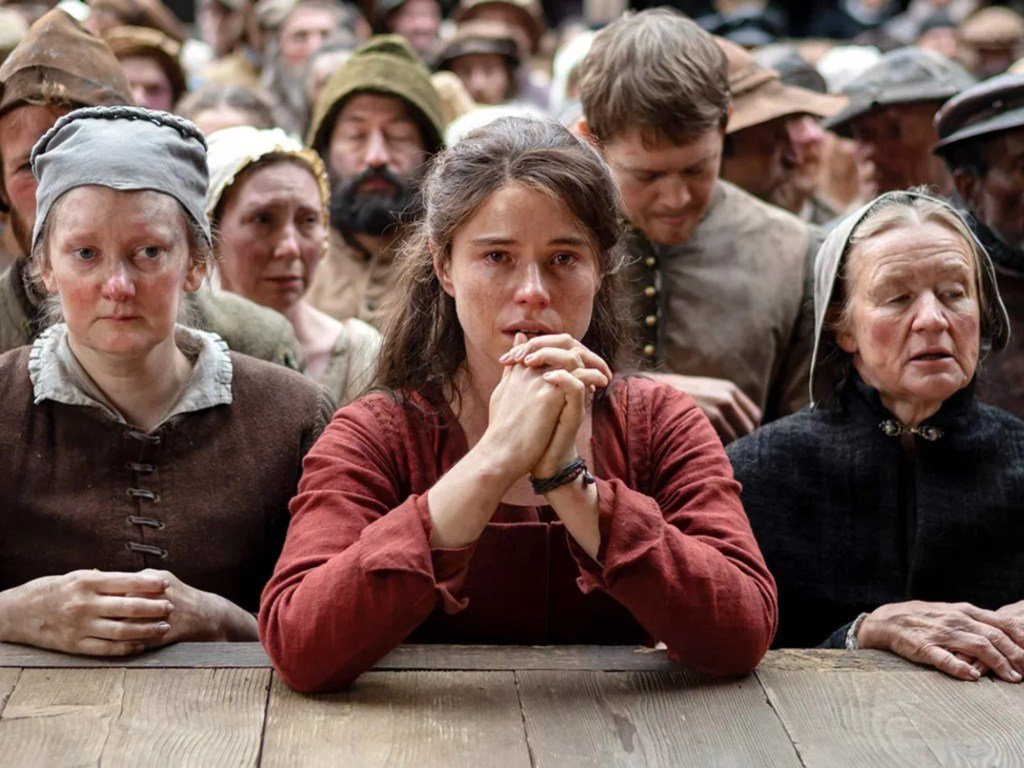
It isn’t until the final act that the couple meet each other in their grief when Agnes goes to see the play named for her late son.
The film isn’t subtle in its approach to the intensity of grief and child loss, a choice that has garnered backlash. But this is also its appeal and, perhaps, its duty.
Dr. Jessica Zucker, a psychologist specializing in reproductive and maternal mental health, notes that child loss remains one of the most taboo forms of grief and is not something we should shy away from.
“Thoughtful portrayals can give language and visibility to an experience that is frequently isolating,” the I Had a Miscarriage author notes. “These stories also remind audiences that grief doesn’t follow a neat arc and that there’s no correct way to mourn — something that can feel validating rather than merely sad.”
To Zucker, some of the criticism of Hamnet “reflects our broader discomfort with sustained depictions of pain.” The film is unflinching in its approach. This is deliberate.
“Hamnet doesn’t sensationalize loss; it refuses to look away from it. The film doesn’t use child loss as a narrative device to propel someone else’s growth — the grief itself is the story,” Zucker adds. “That intensity won’t necessarily resonate with everyone, but honest portrayals of sorrow aren’t inherently exploitative, and for some viewers, especially bereaved parents, they can feel deeply affirming.”
Just as Zhao and O’Farrell suggest that Shakespeare laced his grief into every line in Hamlet, Hamnet becomes about the pain of carrying on and the fleeting moments of joy and healing we find when we do. If it tugs at the tear ducts on the way, so be it.
[ad_2]
Source link


