
[ad_1]
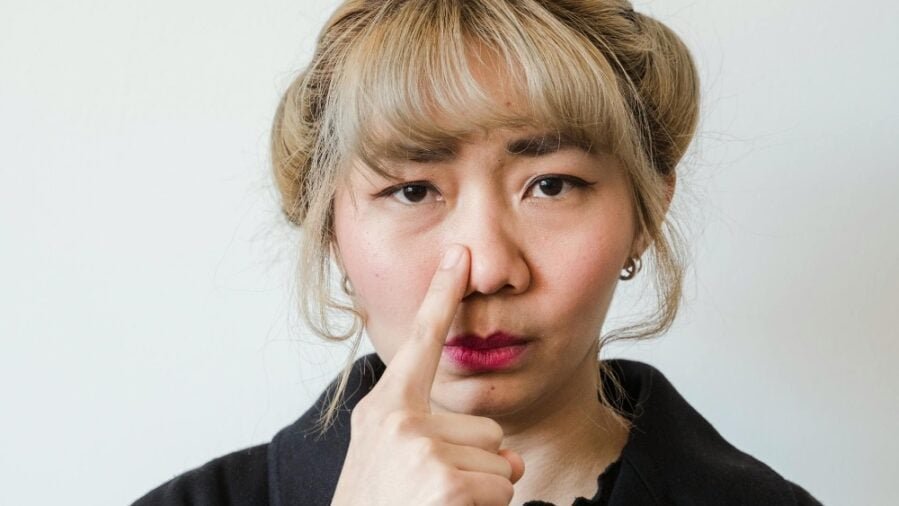
OPEN Instagram and you’ll notice something odd. Every face has roughly the same nose – small, straight, narrow as a pencil. It doesn’t matter whether the person is Korean, Nigerian, Brazilian or Swedish. The filter does its work, shrinking and straightening until everyone fits the template. A template that traces back through centuries of religious propaganda, racist pseudoscience and witch-hunting manuals.
Laura Glitsos spent months wading through Reddit posts about noses. Not the glamorous side of research, perhaps, but revealing. She analysed nearly 1,000 posts from r/Noses, a community where people share photos and feelings about the bit of cartilage and skin sitting front and centre on their faces.
“Many users believed their nose ‘ruined’ their face after years of exposure to filtered images and beauty influencers,” says Glitsos, who researches digital culture at Edith Cowan University in Perth. The pattern repeated across hundreds of posts – people in their twenties apologising for the nose they were born with, asking strangers whether they looked acceptable.
Then Glitsos noticed something. The language people used – “witch nose,” Jewish nose, profiles that “ruin” faces – wasn’t new. It echoed through centuries of art, folklore and propaganda. “Social media hasn’t invented these ideas,” she says. “It has inherited them and amplified them at an unprecedented scale.”
Consider the phrase “witch nose”. Nine people in the Reddit community described being bullied with exactly those words. One remembered the taunt from primary school. Another spent years considering surgery to escape it. The term reaches back to 14th-century paintings of Saint Eligius, depicted grabbing a witch by her prominent nose with blacksmith’s pincers, banishing her from the godly realm. Large or distinctive noses marked you as other, dangerous, someone who threatened the natural order. Orthodox Christian icon painters gave their saints impossibly thin, straight noses as markers of spiritual purity – the reasoning being that if the nose was an organ of earthly pleasure, to shrink it was to prove you’d transcended the physical world. Everyone else, with normal human noses, was implicitly more bound to base desires.
The symbolism didn’t stay symbolic. By the 2nd century, Christian persecution of Jewish communities weaponised nose stereotypes as literal targets. Travellers following the Crusades used “the Jewish nose” as justification for raiding villages – if someone’s profile matched the caricature, they were fair game. Medieval German coins featured grotesque faces with exaggerated features, distilling hatred into something you could hold in your palm. Nazi propaganda perfected the technique, using illustrated guides to teach citizens how to identify Jewish people by nasal shape alone, transforming individual prejudice into systematic genocide.
Fast forward to 2026 and the technology has changed, but the taxonomy hasn’t. Glitsos’s research revealed 74 posts explicitly connecting nose shape to ethnicity or race; thirteen specifically linked Jewish heritage to nasal insecurity. One user wrote about learning to love their “Jewish-Italian schnoz” after years of bullying. The mechanisms have simply moved digital – Instagram filters automatically narrow and shorten noses toward that same Western ideal, TikTok contouring tutorials teach people to shade away natural bridges, AI photo editors suggest “improvements” that consistently erase ethnic characteristics. The 19th-century pseudoscience that ranked faces along a hierarchy from “primitive” to “civilised” is now embedded in algorithms, applied a billion times a day without anyone quite noticing.
“The nose is not just an organ, it’s where history, culture and politics leave their mark on our bodies,” Glitsos argues. Lauren Gulbas, who studies aesthetic surgery in Venezuela, found that the medical industry’s “gold standard” for rhinoplasty is explicitly based on White European features. Kathy Davis, researching what she calls surgical “passing,” documented how people from marginalised groups undergo nose jobs to move through society without attracting attention or violence – the surgery promises invisibility, the chance to escape being marked as other.
But something else is happening on platforms like Reddit. The same technology that spreads beauty standards also creates spaces to resist them. The r/Noses community explicitly celebrates nasal diversity – members post photos not to apologise, but to reclaim features connecting them to family, heritage, history. “People use these spaces to unlearn shame and support each other,” Glitsos says. “The nose becomes a place where personal history, ancestry and identity are reclaimed rather than erased.”
Thirty-eight posts in her dataset credited the online community with helping them overcome years of internalised bias. One user summarised it: “I always hated my nose because it wasn’t straight or small, but I stopped following beauty influencers on social media, and I learned to like its uniqueness.” Your nose knows this history even if you don’t consciously remember learning it – that instinct to turn slightly in photos, to check your profile in mirrors, to wonder if you’d look better with something smaller, straighter, more acceptable.
We’re still writing the story of what noses mean. The old narratives are powerful, embedded in algorithms and Instagram filters and the unconscious associations we’ve all absorbed. But there are new narratives emerging too, built from thousands of individual decisions to stop apologising for faces that don’t match a template drawn by medieval priests, Renaissance painters, Nazi propagandists and Silicon Valley engineers. Maybe that’s the real story here – not that social media invented nose anxiety, but that it’s finally making visible just how deep the roots go, and giving people tools to dig them up.
If our reporting has informed or inspired you, please consider making a donation. Every contribution, no matter the size, empowers us to continue delivering accurate, engaging, and trustworthy science and medical news. Independent journalism requires time, effort, and resources—your support ensures we can keep uncovering the stories that matter most to you.
Join us in making knowledge accessible and impactful. Thank you for standing with us!
[ad_2]
Source link


