
[ad_1]
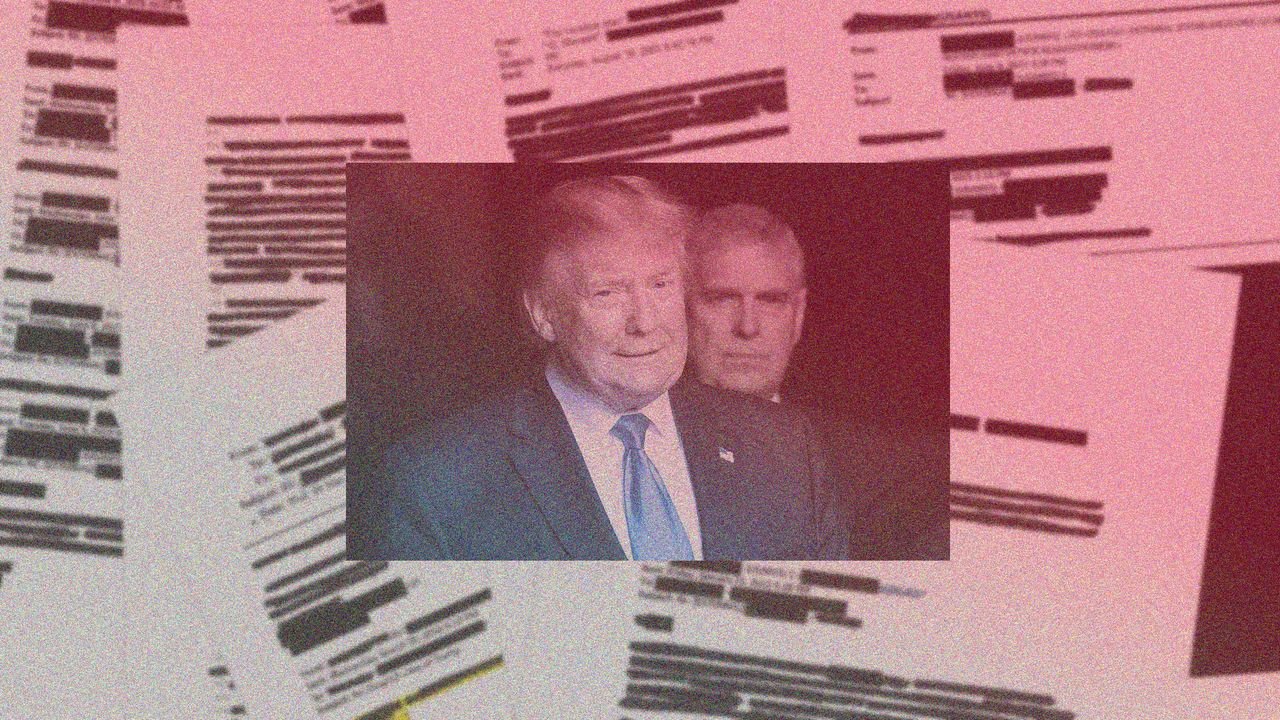
“I’m the expert [on the fallout from the Epstein files] in a way, because I’ve been totally exonerated. That’s very nice. I can actually speak about it very nicely. I think it’s a shame. I did nothing,” Donald Trump said when asked if American associates of the convicted paedophile will “wind up in handcuffs,” as former Prince Andrew did on Thursday.
The president then went on to say that Andrew’s detainment on suspicion of misconduct in public office – which the royal has previously denied – is “very sad”. “I think it’s so bad for the royal family. It’s very sad. It’s a very sad thing. To me, it’s a very sad thing,” he added.
When the Epstein files were partially released on 30 January by the US Justice Department, it was considered by many to be a watershed moment. Yes, it had been 18 years since the sex offender’s conviction and seven years since his death in prison, but the publication of the 3 million-page dossier would finally shed some light on his and Ghislaine Maxwell’s depraved international operation, as well as their associations with some of the world’s most influential people. Or so we thought.
In reality, the documents have not had the desired effect, with large swathes of information being redacted and very little consequence being felt by those named in the communications.
Of course, to simply be named in the files is not to be implicated. But when, in any criminal investigation, it is standard procedure to gather statements from victims and witnesses, and to go through suspects’ accounts of events, as well as any forensic or digital evidence, it begs the question: why has this not happened in the case of Jeffrey Epstein’s pals?
Earlier this year, then, when British Prime Minister Keir Starmer started receiving criticism over his appointment of Peter Mandelson, who had a long-standing friendship with Epstein and to whom he apparently leaked confidential government communications, it was a welcome update. It was even more meaningful when Mandelson himself was forced to resign as a member of the House of Lords and came under public scrutiny.
Since, with the arrest of Andrew Mountbatten-Windsor at Royal Lodge in Windsor on his 66th birthday yesterday – having already been stripped of his royal title and honours by his brother, King Charles, last year – it feels as though momentum has picked up, and that those who have spoken out about his links to Epstein are finally getting the acknowledgement and respect they deserve – however late in the day it may be.
Now, it should be made clear that Andrew’s arrest yesterday is understood to have arisen from the suggestion that he may have passed confidential information to Epstein. But the fact still remains that without the tireless campaigning of Virginia Giuffre (whose claims Andrew has consistently denied) we may not have seen the release of these documents at all.
Indeed, Virginia Giuffre’s family spoke out yesterday after Andrew’s arrest, telling CBS News: “At last, today, our broken hearts have been lifted at the news that no one is above the law, not even royalty.
“On behalf of our sister, Virginia Roberts Giuffre, we extend our gratitude to the UK’s Thames Valley Police for their investigation and the arrest of Andrew Mountbatten-Windsor. He was never a prince. For survivors everywhere, Virginia did this for you.”
And yet, in the US, there has been no such fallout.
Despite various members of Congress urging the US government to take action against those named in the Epstein files, including Andrew, and Jasmine Crockett’s impressive grilling of Attorney General, Pam Bondi, last week, very little has been done.
[ad_2]
Source link


