

Notice: Function wp_get_loading_optimization_attributes was called incorrectly. An image should not be lazy-loaded and marked as high priority at the same time. Please see Debugging in WordPress for more information. (This message was added in version 6.3.0.) in /home/bestselect/booboone.com/wp-includes/functions.php on line 6260
Notice: Function get_loading_optimization_attributes was called incorrectly. An image should not be lazy-loaded and marked as high priority at the same time. Please see Debugging in WordPress for more information. in /home/bestselect/booboone.com/wp-includes/functions.php on line 6260
Notice: Function wp_get_loading_optimization_attributes was called incorrectly. An image should not be lazy-loaded and marked as high priority at the same time. Please see Debugging in WordPress for more information. (This message was added in version 6.3.0.) in /home/bestselect/booboone.com/wp-includes/functions.php on line 6260
[ad_1]
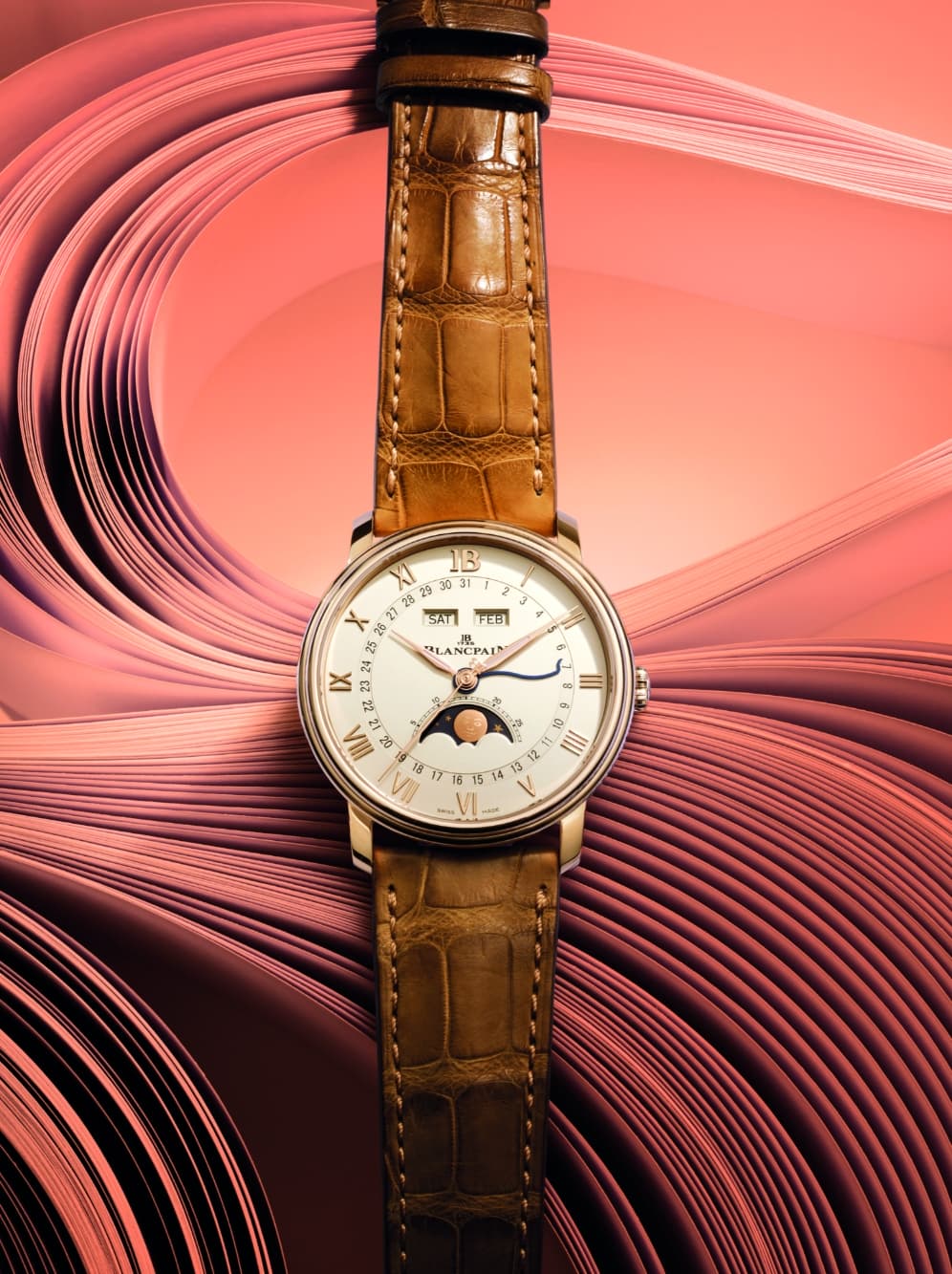
The Blancpain Villeret collection has embodied the tenets of classic watchmaking since its debut in 1983. The range occupies a position of distinction within Blancpain’s catalogue, standing out as the standard-bearer of understated elegance from amid the sporty Fifty Fathoms, the sumptuous Ladybird, the ornate Metiers d’Art, and the utilitarian Air Command. Even though the Villeret collection was officially named only in 2003 — a tribute to Blancpain’s hometown in the Bernese Jura mountains — its unmistakable style and philosophy trace its beginnings to 1982. This was when Blancpain initiated its modern era, following the acquisition, for about CHF22,000 (approximately $60,650 in 2026), of its name rights led by future legend Jean-Claude Biver and Jacques Piguet the year before. The duo went on to consolidate Blancpain’s manufacturing capabilities in the village of Le Brassus, in the Vallée de Joux, more than 100km southwest of Villeret; Piguet was already established here with the movement maker Frederic Piguet.
In a concerted effort to double down on traditional mechanical watchmaking, the strategy for the reinvigorated Blancpain hinged on emphasising its prowess in complications. In an interview with EuropaStar (2019), Biver reiterated that his concept for Blancpain was to make its comeback not with a conventional time-only dress watch, but to shoot for the stars with a moonphase indication as the quintessential complication representing both technical complexity and nostalgia fused with romance. This plucky decision was then effectively an act of proud defiance at a time of major upheaval, an inflection point in the history of mechanical watchmaking, amid economic turmoil wrought by the collapse of the Bretton Woods system in the early 1970s and the subsequent spike in the value of the Swiss franc against the US dollar, which depressed the competitive advantage of Swiss watches; the advent and popularity of quartz watchmaking only worsened the depression.
Blancpain introduced the Villeret style in 1983 as part of its (former) Classique collection, in the form of the Complete Calendar Moonphase references 6595 and 6395, which measured 34mm and 26mm respectively; the latter even earned the title of smallest complete calendar moonphase for its time. The moonphase, conceived to track the evolution of a lunar cycle with precision and artistry, was employed here as a diminutive but significant physical manifestation of the brand digging its heels in and placing all its metaphorical chips on mechanical watches. Recall that the quartz revolution/crisis had wreaked havoc on the watch industry for more than a decade at that point, and would continue for some years to come. “[T]here has never been a quartz Blancpain. And there never will be,” proudly declared Blancpain’s early marketing campaign ads of that era.
The remainder of the 1980s was devoted to unveiling and refining Blancpain’s Six Masterpieces of the Watchmaker’s Art, a neo-vintage series of tickers intended to represent the pinnacle of traditional mechanical watchmaking and Blancpain’s mastery of high complications, all packaged in the svelte case of the Villeret. On the heels of the Complete Calendar Moonphase references came the manual-winding Ultra Thin reference 0021 in 1984, with a minimal profile thanks to the 1.75mm-thick Frederic Piguet calibre 21. Next was the Perpetual Calendar reference 5395 in 1986, which captured the complexity of months of varying lengths in a triple-register dial and a compact form factor.
The manual-winding Minute Repeater reference 0033 debuted in 1988, a triumph of acoustic timetelling, followed closely behind by the Chronograph reference 1185 and the Split Seconds Chronograph reference 1186, with the latter’s Calibre 1186 being the first automatic splits-seconds chronograph movement. And finally, appearing in 1989 was the Flying Tourbillon reference 0023, which earned the title of the first tourbillon watch with eight days of power reserve and also the first flying tourbillon in a wristwatch. Comprising more than 50 minuscule parts packed into a continuously spinning carriage, this tourbillon was developed in collaboration with OG independent watchmaker Vincent Calabrese, who was also the inventor of the Golden Bridge movement and co-founder of the Académie Horlogère des Créateurs Indépendants.

GROWTH OPPORTUNITY
In 1990, Blancpain took things up a notch when it presented the 1735 Grande Complication as an audacious amalgamation of all the Six Masterpieces into a single formidable unit, still housed in a Villeret-style case but a more pronounced one measuring 42mm in diameter and 16.5mm in thickness. The next year, the Six Masterpieces, as individual 34mm watches in platinum, were released as a box set limited to 99 pieces (Box set #63 was auctioned by Christie’s in 2024 for HK$529,200 or approximately $86,000, with a pre-sale estimate of HK$260,000–500,000.)
Then in 2005, to celebrate the anniversary of its founding, Blancpain launched the Apotheosis Temporis limited edition, an entirely self-winding set of platinum Villeret timepieces, comprising the Six Masterpieces plus two others — one a dual time zone watch and the other a running equation of time perpetual calendar watch — all housed in a custom eight-rotor winding box. The latter gives an indication of the difference, which can grow as large as 16 minutes, between mean solar time, as dictated by the standard 24-hour day, and true solar time, which is based on the sun’s position and is affected by the Earth’s inclined rotation and elliptical orbital path and other complexities of the cosmos.
The inaugural complete calendar moonphase of 1983 is the progenitor of today’s Villeret timepieces, and it set in motion the aesthetic codes that the collection’s watches have remained faithful to to this day: an understated style, a slim silhouette, a double-stepped bezel, a clean and highly legible dial set in a round case, and the utmost regard for complications, imbued with emotion and artistry that Blancpain had forged over its vast history. The sublime crystallisation of Blancpain’s horological tradition fuelled the revived Blancpain with renewed vigour. “The Villeret embodies the very essence of Blancpain,” according to Marc A. Hayek, president and CEO of Blancpain. “It is both the expression of our watchmaking tradition and the proof that timeless elegance can always be reinvented with subtlety. One is never overdressed or underdressed with a Villeret.”
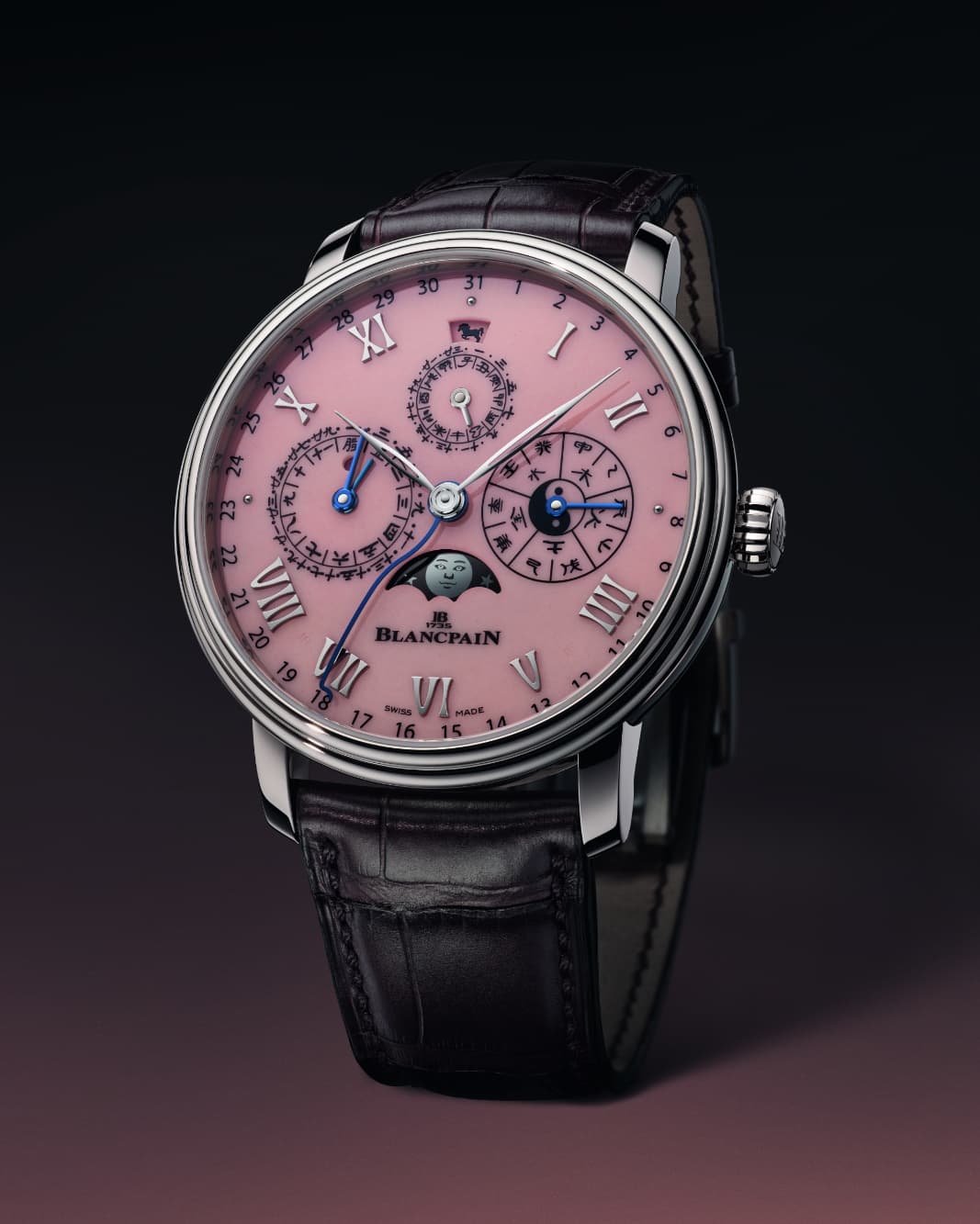
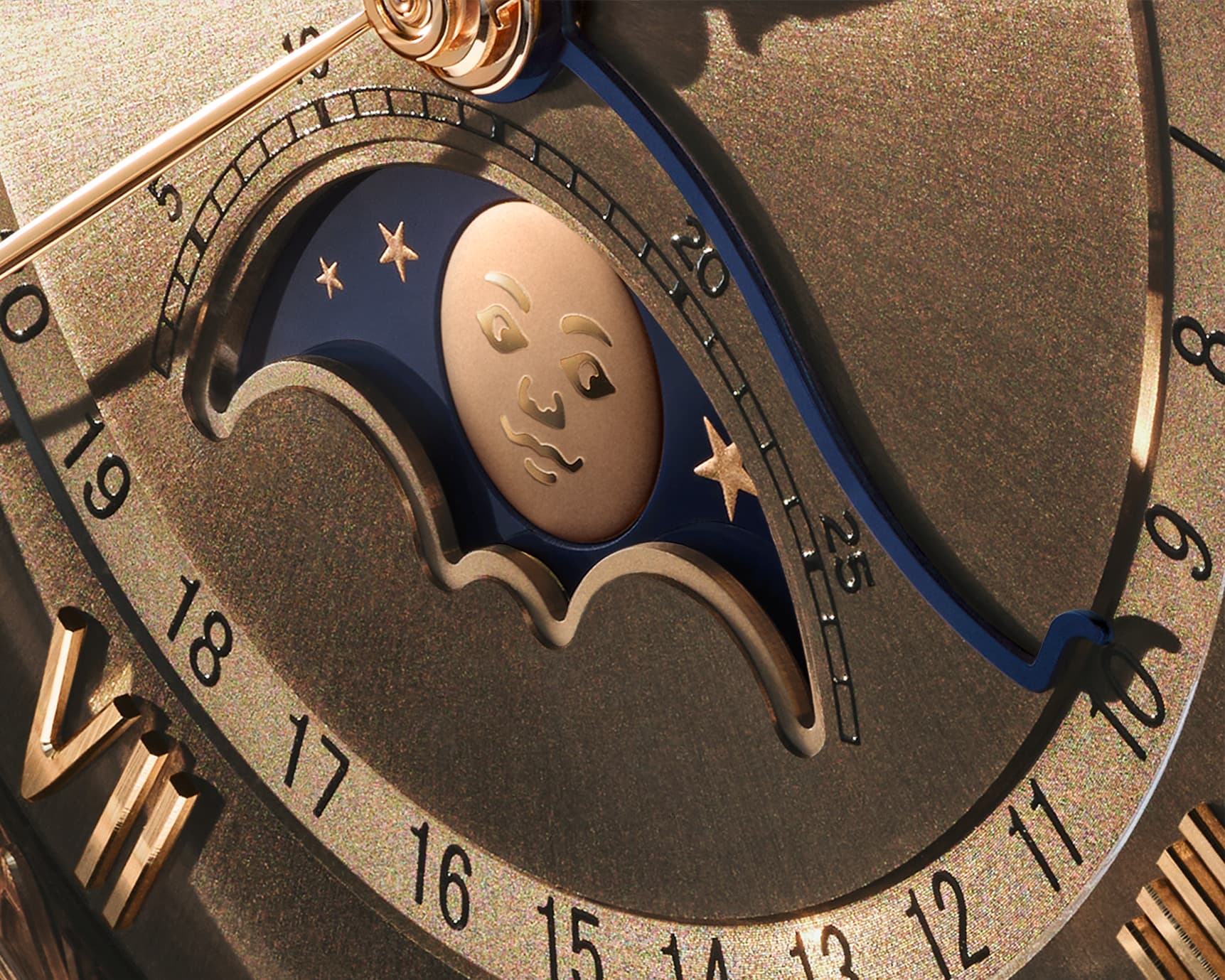
The Villeret collection has evolved, transformed and diversified since 1983, but it has never strayed from its single-minded focus on exemplifying the Blancpain style, one that exudes harmony and elegance, presence and discretion. From the exceptionally decorated moon motif created from gold to bear an enigmatic and spirited expression, a nod to centuries of symbolism and the tradition of anthropomorphising natural phenomena by associating celestial bodies with gods and representing them in human-like form, to surmounting the perennial challenge of designing and building thin movements that drive the most complex of complications and still offer a generous power reserve, the Villeret collection has demonstrated over the decades its ability to turn out a succession of sophisticated watches with an unmistakable purity of design.
And in that time, the collection has welcomed variations and complications such as a Chinese lunar calendar (Blancpain’s 2026 edition of the Villeret Calendrier Chinois Traditionnel being the most recent example of 15), a retrograde-day display (the Villeret Grande Date Jour Rétrograde, from 2018), a jumping-hours with retrograde-minute display plus a flying tourbillon (the Villeret Tourbillon Volant Heure Sautante Minute Rétrograde, also from 2018), and a diamond-set bezel with a Mille Mailles bracelet (one of the Villeret Date interpretations from 2019).

GOLDEN HOUR
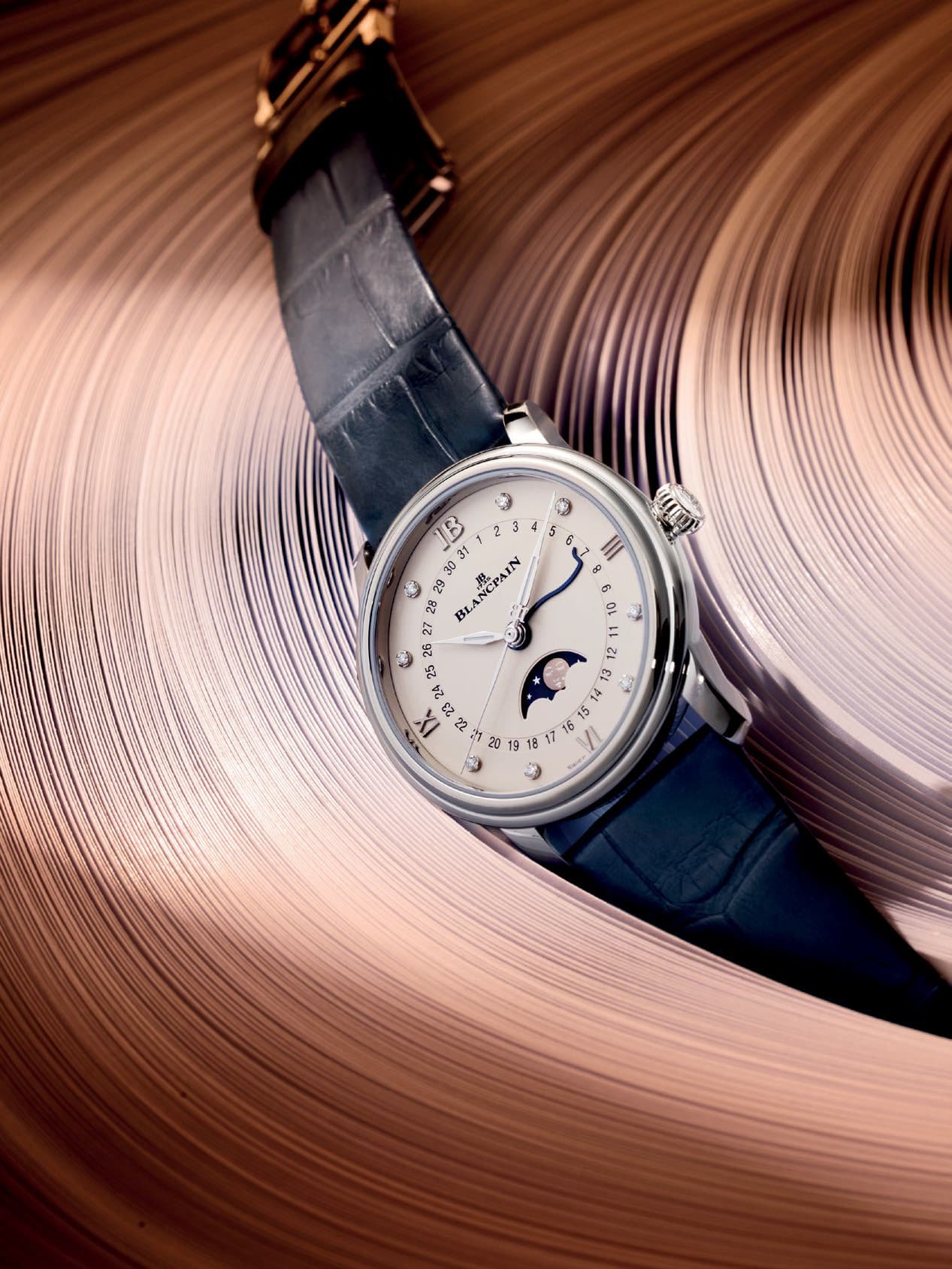
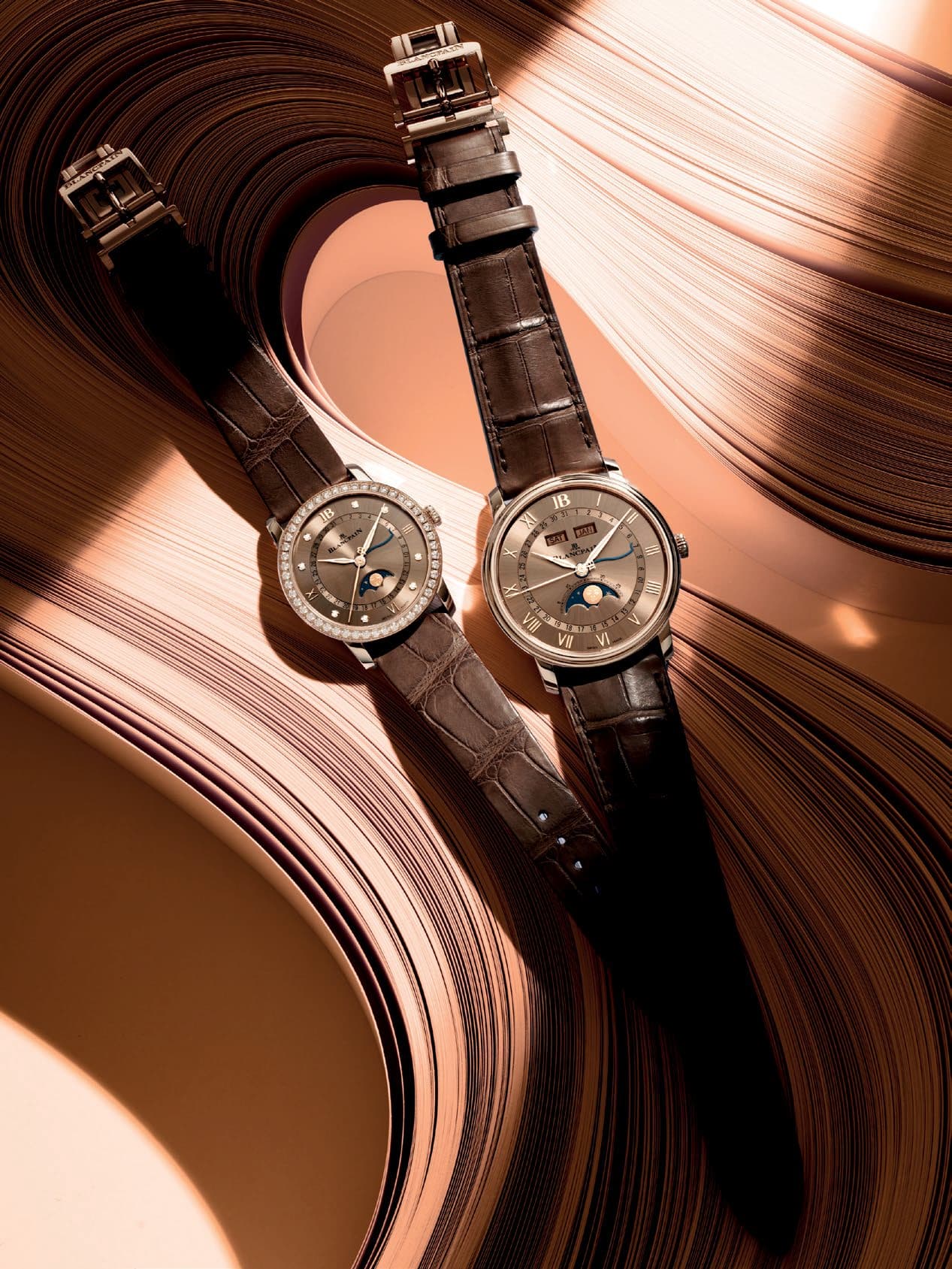
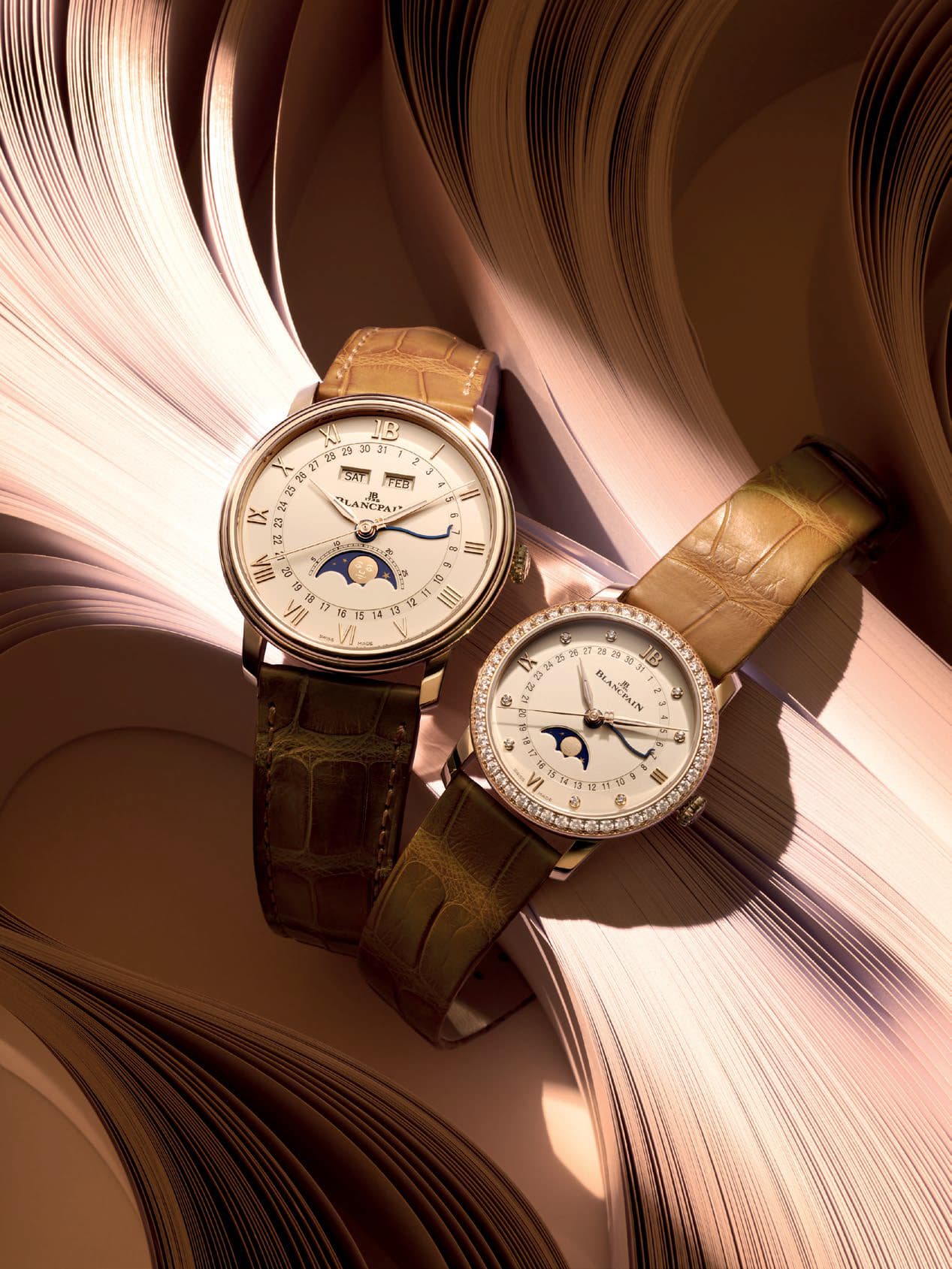
Fast forward to 2025, and the Villeret collection showed no signs of standing still. Last October Blancpain gave the collection a significant facelift with the introduction of the Golden Hour series, made up of three key models from the collection — the Villeret Quantième Complet Phases de Lune reference 6654N complete calendar moonphase, the Villeret Quantième Phases de Lune reference 6126N calendar moonphase, and the Villeret Ultraplate reference 6651N ultra-thin — enlivened to produce 16 regular-production iterations united by an autumnal palette: 33.2mm or 40mm red-gold or stainless-steel cases; the option of diamond-set bezels; opaline or taupe dials; and alligator-leather straps in light brown, beige, tan, or dark blue-grey. Perhaps not a complete overhaul, but the update is a thematic rethinking that feels intentional and of the moment, and is replete with seemingly modest modifications that together imbue these references with thoughtfulness, cohesion and freshness that go far beyond the aesthetics.
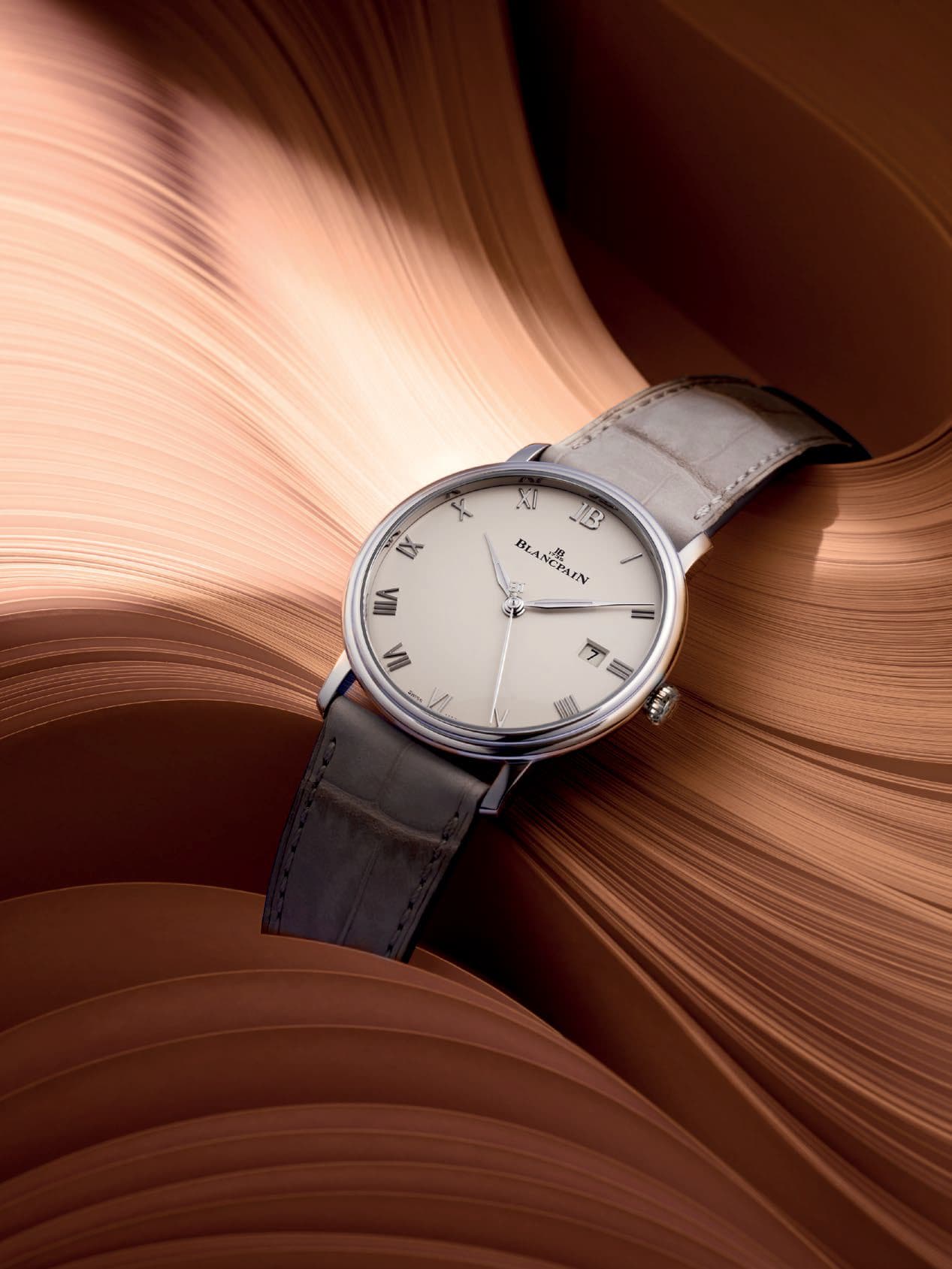
For starters, the moonphase indication, that signature complication of the Blancpain universe, is now composed of a ceramic disc, and a domed satin-brushed solid-gold moon motif that brings to mind the likeness of the Man in the Moon from the 1902 Georges Méliès silent film peeks out from an enlarged aperture. The XII numeral has now been replaced by a JB applied logo, while the rest of the Roman numerals, crafted from gold that is satin-finished on top and polished on the sides, are now modernised and rendered in a sans serif typeface. On that note, the JB logo appears no less than four times across the watches (count them)!
Luminescent inserts have been added to the leaf-shaped hour and minute hands, which is a highly unusual feature for a dress watch. An interchangeable strap system with quick-release spring bars at both the lugs and the folding clasp offer the wearer more versatility and ease of use. For the Villeret Quantième Complet Phases de Lune reference 6654N, their 40mm cases sport slimmer bezels, for a total thickness of just 10.6mm, compared with the 10.9mm of some of the model’s predecessors. Larger crowns make adjustments easier to handle, while lugs have been reworked and shortened ever so slightly for a more ergonomic fit.
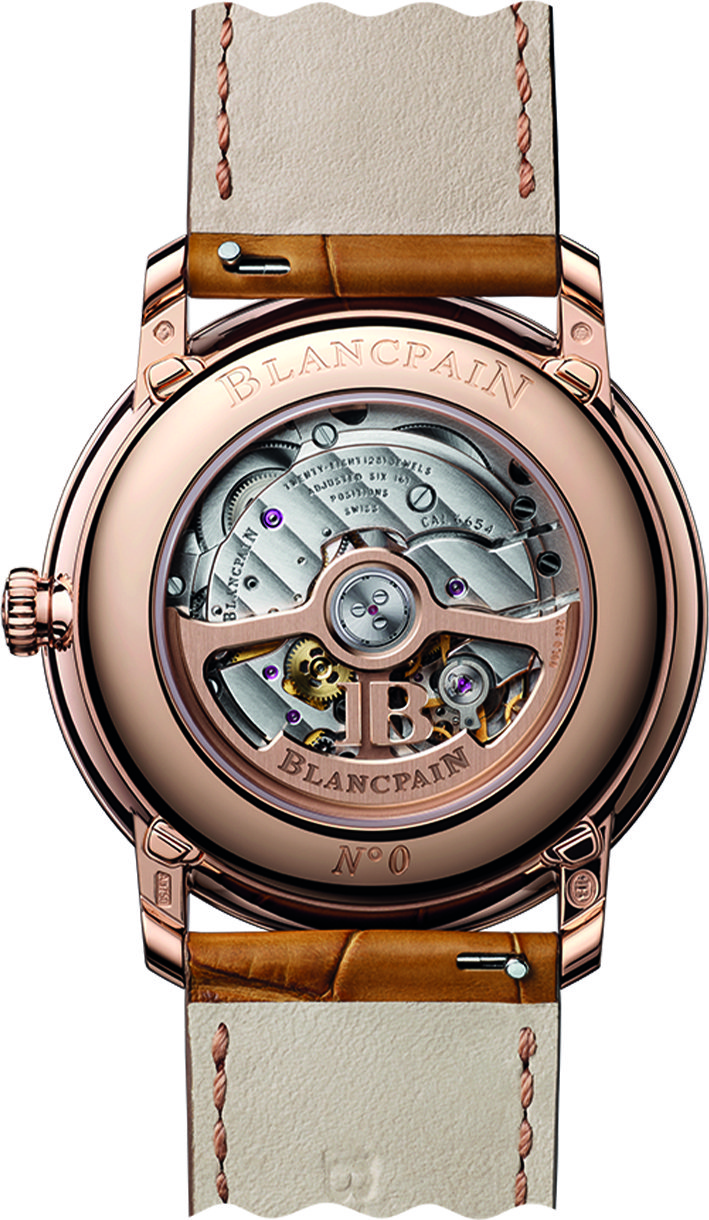
As for the movements, they can be admired through the exhibition caseback; the oscillating weight is revealed to have gone from solid yellow gold to openworked red gold or yellow gold, skeletonised to echo the JB emblems from the dial and seconds-hand counterweight. The satin-finished rotor also accentuates refined craftsmanship and exceptional watchmaking through its gleaming polished angles, which highlight the Geneva stripes and bevelling on the bridges. This is all a mixture of industrial and handcraftsmanship, which is only to be expected at this level of production and prestige. All the movements are now covered by a five-year warranty too, a massive step up from the two-year warranty that had been in place until January 2025.
Specifically for the four Villeret Quantième Complet Phases de Lune variants of reference 6654N, these are powered by the self-winding movement 6654.4, with 72 hours of power reserve. Though the manufacture movement 6654.4 is not a new movement per se — variations have powered a slew of complete calendar siblings. The employment of this calibre confirms its broad practicality and suitability for the complete calendar moonphase. This is related to a longstanding Blancpain innovation — the correctors tucked under each of the four lugs that permit adjusting calendar indications at any time without risking damage to the movement, or disrupting the uniformity of the case lines or obstructing the caseback. This user-experience boon first appeared in Blancpain’s watches in 2004 with the Villeret Quantième Perpetual reference 6057.
The four 40mm Villeret Extraplate references 6651N owe their 8.7mm thickness to the ultra-slim calibre 1151 automatic movement, which manages to provide an impressive 100 hours of power reserve with so little real estate, thanks to twin barrels. This movement has also underpinned a number of Fifty Fathoms Barakuda and MIL-SPEC references, plus the No Rad released in 2021. And for the eight 33.2mm Villeret Quantième Phases de Lune references 6126N, the calibre 913QL.P automatic movement, which measures 23.7mm across and 4.65mm thick, offers 40 hours of power reserve, with the correctors for its calendar indications positioned on the midcase, but the movement remains secured as well. Plus all three movements benefit from the improved accuracy, amagnetism, durability and thermal stability of silicon hairsprings.
From the Complete Calendar Moonphase of 1983 to honing its Six Masterpieces over the following years and then establishing the Villeret collection as one of the linchpins of its oeuvre, Blancpain has united the contemporary Villeret design with the brand’s high watchmaking savouir faire and its devotion to craftsmanship. With its latest Golden Hour series, it offers its perspective on beauty and sophistication that knows no limits.
This story was first seen as part of the WOW #83 Spring 2026 Issue
For more on the latest in luxury watch reads, click here.
[ad_2]
Source link


