
[ad_1]
Key Points
- IARPA published RFI IARPA-RFI-26-01 on April 20, 2026, seeking information on bio-derived materials for transient UAV propulsion systems, with responses due May 15, 2026.
- The RFI targets turbines, motors, and engine components that degrade via environmental triggers beyond UV or water exposure, leaving minimal physical residue.
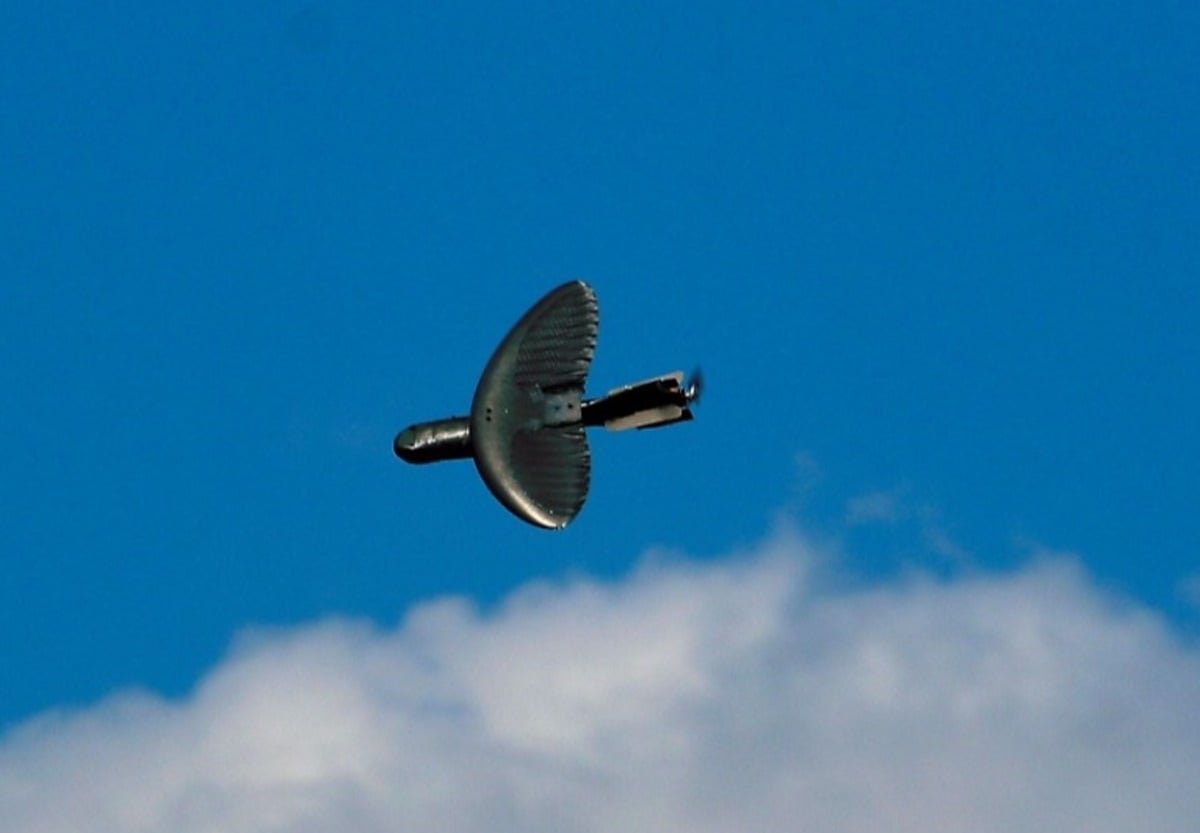
The core technical problem IARPA is trying to solve is straightforward in concept but formidable in execution: build drone engines and motors out of materials that perform reliably during a mission, then break down on their own afterward, leaving little or no physical trace.
Current drone propulsion components — turbine blades, motor housings, combustion chambers, and associated control systems — are made from metal alloys, engineering plastics, and advanced composites. Those materials are durable by design, meaning a lost or downed drone can leave hardware in the field for decades or longer. IARPA wants to know whether biological materials can replace or augment those components in ways that allow the hardware to simply disappear under the right environmental conditions.
The challenge is considerably harder for propulsion systems than it has been for airframes. DARPA previously demonstrated transient materials through its ICARUS program — short for Inbound, Controlled, Air-Releasable, Unrecoverable Systems — which showed that structural drone components could be built from ultraviolet-triggered photopolymers that degrade on command. But propulsion systems are a different problem entirely. Turbines and motors operate under extreme heat, mechanical stress, and chemical exposure. UV light — ICARUS’s primary trigger — may not penetrate enclosed engine assemblies. IARPA is specifically looking for degradation triggers that don’t rely on UV or water exposure, asking instead about biological mechanisms such as enzymatic activity, microbial action, humidity, thermal cycling, and oxidation — conditions far more reliably present across diverse operational environments.
– ADVERTISEMENT – CONTINUE READING BELOW –
The biological materials IARPA has identified as candidates span a wide range. Structural proteins including silk, keratin, and collagen; polysaccharides like chitin and cellulose; fungal and mycelium-based composites; bio-acrylics; and bio-derived ceramics are all listed as areas of interest. Recent advances in synthetic biology and biomanufacturing have pushed some of these materials toward performance levels once considered achievable only with conventional engineered materials. Genetically modified structural proteins with tailored mechanical properties and enzymatically sensitive polymers with programmable degradation rates are among the specific examples cited. Still, IARPA acknowledges that significant gaps remain between what has been demonstrated in laboratory settings and what would be required in an operational propulsion system subjected to real-world mission stresses.
The propulsion components IARPA specifically wants addressed include turbine and engine elements, electric motor components, and auxiliary systems. The agency is asking respondents to address not just whether bio-derived materials can survive high-temperature environments above 500 degrees Celsius and high-stress conditions above 100 megapascals, but also whether they can be manufactured to the dimensional tolerances and surface finish standards required for reliable operation. Questions about scalable production, quality control, and cost are also explicitly included in the RFI.
Intelligence and military drone operations frequently involve missions in denied or contested environments where recovery of downed systems is impossible. A drone engine that survives its mission but then degrades beyond forensic usefulness offers obvious advantages in limiting adversary exploitation of captured hardware and reducing the intelligence signature left behind. The ICARUS program established that this concept is achievable for airframes; IARPA is now probing whether the same logic can be extended to the parts of the drone that actually generate thrust.
[ad_2]
Source link


