
Table of Contents
[ad_1]


—
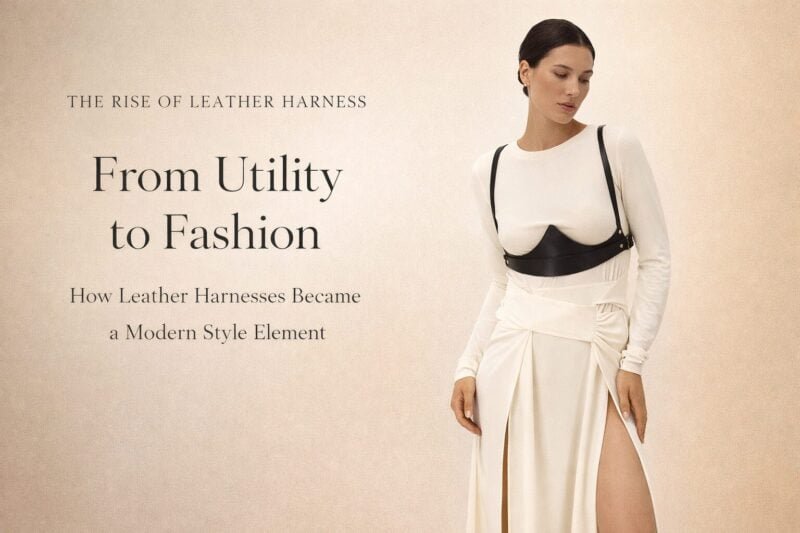
Fashion has always been shaped by transformation. Items once created for pure function often find new meaning as cultural symbols, evolving into expressions of identity and style. Among the most interesting examples of this shift is the leather harness—a piece that has moved from practical origins to become a refined element in contemporary fashion.
Today, leather harnesses are no longer confined to specific subcultures or niche aesthetics. Instead, they are being reinterpreted as structured accessories that enhance silhouette, add depth to outfits, and reflect a broader movement toward intentional dressing. This transformation highlights how modern fashion continues to blur the lines between utility and design, function and expression.
Brands such as Muntalia are contributing to this evolution by presenting harnesses not as statement novelties, but as carefully designed components of everyday wardrobes—pieces that emphasize structure, balance, and subtle impact.
The Functional Origins of the Leather Harness
To understand the modern role of the leather harness, it is important to look at its origins. Historically, harnesses were designed for utility. They were used in fields such as equestrian work, military applications, and manual labor—contexts where durability, strength, and reliability were essential.
In these settings, the harness served a clear purpose: to distribute weight, secure equipment, and provide stability. There was no consideration for aesthetics beyond what was necessary for function. The design was driven entirely by practicality.
However, as with many utilitarian objects, the harness began to take on new meaning as it moved into cultural and stylistic contexts.
From Subculture to Mainstream Awareness
The first major transformation of the leather harness occurred when it entered subcultural fashion spaces. In these environments, it became a symbol of identity, rebellion, and self-expression. Its structured design and strong visual presence made it stand out, allowing it to communicate a sense of individuality.
Over time, elements from these subcultures began influencing mainstream fashion. Designers started to reinterpret harnesses, refining their shapes, simplifying their construction, and adapting them for broader audiences.
This transition marked a significant shift. The harness was no longer limited to specific communities—it began to appear in editorial shoots, runway collections, and modern street style.
The Modern Reinvention of the Leather Harness
In today’s fashion landscape, the leather harness has been redefined once again. It is no longer about bold statements alone; instead, it is about structure, proportion, and subtle enhancement.
Modern harness designs focus on:
- Clean lines
- Adjustable fits
- Minimal hardware
- Balanced proportions
These elements allow the harness to function as an accessory that integrates seamlessly into an outfit rather than dominating it.
Curated selections such as a leather harness collection reflect this refined approach, emphasizing wearability and design precision over visual excess.
The Psychology Behind Harness Styling
One of the most compelling aspects of the leather harness is the psychological effect it creates. Unlike many accessories, a harness interacts directly with the structure of the body, influencing both perception and posture.
1️⃣ Structure and Control
The harness introduces defined lines across the torso, guiding the eye and creating a sense of order within an outfit. This structured appearance often translates into a feeling of control and confidence for the wearer.
2️⃣ Subtle Confidence
Because harnesses are still relatively uncommon in everyday fashion, wearing one requires a degree of self-assurance. However, modern designs make this expression more accessible by reducing visual intensity and focusing on balance.
The result is a form of confidence that feels intentional rather than forced.
3️⃣ Identity Through Design
Fashion is increasingly used as a tool for personal expression. The leather harness, with its unique structure, allows individuals to communicate a sense of individuality without relying on loud colors or heavy embellishment.
Harnesses as Structural Accessories in Modern Outfits
In contemporary styling, the leather harness is best understood as a structural accessory. Similar to how a belt defines the waist or a blazer shapes the shoulders, a harness adds dimension and form to an outfit.
It works particularly well when layered over:
- Minimal tops
- Tailored garments
- Clean, monochrome outfits
In these contexts, the harness enhances the overall silhouette without overwhelming it.
For example, pairing a harness with a leather skirt creates a balanced look where both elements contribute to the structure of the outfit. The result is cohesive rather than contrasting, allowing the materials and shapes to complement each other.
The Influence of Editorial and High-Fashion Styling
Editorial fashion has played a significant role in redefining the perception of leather harnesses. In high-fashion settings, harnesses are often used to create visual interest and emphasize body lines.
Designers and stylists use them to:
- Break up flat silhouettes
- Add layering without bulk
- Introduce texture and contrast
These techniques have gradually influenced everyday fashion, making harnesses more approachable and easier to integrate into personal style.
Minimalism and the Rise of Intentional Dressing
Modern fashion is increasingly moving toward minimalism and intentionality. Instead of relying on multiple accessories or complex combinations, many individuals prefer a few well-chosen pieces that define the outfit.
The leather harness fits perfectly into this philosophy. It offers:
- Visual impact without excess
- Function through structure
- Style through simplicity
Rather than adding multiple layers, a single harness can transform the overall look, making it a practical choice for those who value efficiency in styling.
Versatility Across Fashion Contexts
Another reason for the growing acceptance of leather harnesses is their adaptability. While they were once associated with specific aesthetics, they are now being styled in a variety of ways.
Casual Contexts
When paired with simple garments, harnesses add structure without making the outfit feel overdesigned.
Smart-Casual Settings
Combined with tailored pieces, they introduce a modern edge while maintaining a refined appearance.
Editorial Looks
In more experimental styling, harnesses can be layered with bold silhouettes and textures to create visually striking compositions.
This versatility allows the harness to move across different fashion spaces, making it more relevant to contemporary wardrobes.
Craftsmanship and Design Considerations
As harnesses become more integrated into modern fashion, craftsmanship plays an increasingly important role. High-quality designs are characterized by:
- Precise stitching and construction
- Durable yet flexible materials
- Thoughtful strap placement
- Comfortable adjustability
These factors ensure that the harness is not only visually appealing but also practical for extended wear.
The Future of Leather Harnesses in Fashion
The evolution of the leather harness reflects a broader trend in fashion—the transformation of functional objects into expressive design elements. As consumers continue to seek pieces that combine utility with aesthetics, the role of the harness is likely to expand further.
Future developments may include:
- More refined, minimalist designs
- Integration into mainstream collections
- Increased focus on comfort and wearability
Rather than remaining a niche accessory, the harness is steadily becoming part of a larger conversation about structure and design in fashion.
Final Thoughts
The journey of the leather harness—from a purely functional tool to a modern fashion element—illustrates the dynamic nature of style. Today, it represents more than just an accessory; it is a reflection of how fashion evolves to meet changing preferences and values.
By emphasizing structure, balance, and subtle impact, modern harness designs align with the priorities of contemporary wardrobes. They offer a way to enhance an outfit without overwhelming it, allowing individuals to express confidence through thoughtful design.
As fashion continues to move toward minimalism and material-driven aesthetics, the leather harness is poised to remain a relevant and influential element—one that bridges the gap between function and style in a way few other pieces can.
—
This content is brought to you by Muhammad Asim
Photo provided by Muhammad Asim
[ad_2]
Source link


