

Table of Contents
[ad_1]
When I looked into the best disclosure management software, one pattern came up repeatedly in G2 reviews: finance and compliance teams are not struggling because reporting is unimportant. They are struggling because the process is too important to depend on disconnected files, manual checks, and last-minute inconsistencies.
If you’re responsible for SEC filings, annual reports, XBRL or iXBRL tagging, or broader regulatory reporting, you’re likely balancing accuracy, speed, and cross-functional coordination at the same time. From the feedback I reviewed, that often means version confusion, repetitive tie-outs, fragmented review cycles, and too much time spent making sure the same number matches everywhere.
Strong disclosure management software does more than help teams publish reports. Many organizations also evaluate disclosure management platforms based on their ability to support compliance disclosure solutions with robust audit trails and insider trading controls for large enterprises, particularly in highly regulated industries such as banking, financial services, insurance, and healthcare.
After analyzing G2 reviews, I narrowed my shortlist to Workiva, Oracle Hyperion Disclosure Management, CCH Tagetik, IRIS CARBON®️, and Ethico, five tools that each stand out for a different disclosure management need.
5 best disclosure management software: My top picks
- Workiva: Best for linked financial reporting and compliance collaboration
Connected reporting engine that automatically syncs data across filings, footnotes, and presentations in real time. - Oracle Hyperion Disclosure Management: Best for Oracle-integrated regulatory reporting
Native integration with Oracle EPM and Smart View for seamless XBRL tagging and disclosure workflows inside Excel and Word. - CCH Tagetik: Best for unified financial consolidation and planning
All-in-one CPM platform combining consolidation, planning, reporting, and disclosure management in a single system. - IRIS CARBON®️: Best for service-driven regulatory filing and XBRL compliance
Expert-led filing support with built-in XBRL validation and fast turnaround for SEC and regulatory submissions. - Ethico: Best for compliance-driven ethics and disclosure management
Integrated compliance platform with hotline, case management, and disclosure workflows backed by proactive support.
These are the top-rated products in the disclosure management software category, based on the G2 Spring Grid Report 2026. Pricing details are not publicly available for most tools and typically vary based on company size and requirements.
5 best disclosure management software I recommend
Average user adoption for disclosure management software on G2 sits at 64%, reflecting how organizations are increasingly moving away from spreadsheet-heavy reporting processes toward more centralized and audit-ready disclosure workflows.
At its core, disclosure management software gives finance, accounting, and compliance teams a more controlled way to produce accurate reports, coordinate reviews, and manage regulatory filings without depending on scattered spreadsheets and manual cross-checks.
From the G2 reviews I analyzed, the best disclosure management tools do much more than assemble reports. They help teams centralize data, improve collaboration, support XBRL and iXBRL reporting, and reduce the risk of errors across filings, footnotes, and supporting documents. For teams handling SEC reporting, annual reports, or other high-stakes disclosures, that level of control matters.
The market is growing quickly, too. The global disclosure management market is projected to reach $5.24 billion by 2033, growing at a 17.4% CAGR from 2025 to 2033. One of the biggest reasons is the rising adoption of XBRL disclosure management software and other structured reporting formats as regulators push for more standardized, transparent financial disclosures.
That growth reflects a larger shift in how companies approach financial disclosure management software. As reporting requirements become more complex, teams need platforms that can support regulatory reporting, improve audit readiness, and create a more reliable process for producing accurate disclosures at scale.
How did I find and evaluate the best disclosure management software?
I started by reviewing G2 Data and category-level information to identify the disclosure management tools with strong user satisfaction and enough review depth to evaluate meaningfully.
To go beyond rankings, I used AI to analyze G2 reviews at scale and surface repeated themes across products. That helped me spot what users consistently valued, like linked reporting, XBRL and iXBRL support, compliance collaboration, workflow control, and regulatory reporting accuracy, as well as where they ran into friction, such as setup complexity, performance issues, or limitations in day-to-day usability.
Because I did not test these tools firsthand, I based my evaluation on verified G2 user feedback and patterns that appeared repeatedly across reviews. I focused especially on how well each platform supports real disclosure management needs, including financial disclosure management, SEC reporting workflows, audit trails, document collaboration, and the ability to keep data consistent across filings and supporting reports.
By combining G2 review analysis, category research, and AI-assisted pattern extraction, I narrowed the field to the five best disclosure management software tools for different use cases and reporting needs. The screenshots featured in this article may be a mix of those captured during research from publicly available material and those obtained from the vendor’s G2 page.
What makes the best disclosure management software: My take
To separate the best disclosure management software from tools that only look strong on paper, I focused on recurring patterns in G2 reviews that showed what really matters in accurate, efficient, and audit-ready reporting environments.
- Data linking and consistency across reports: Disclosure workflows break down quickly when teams have to update the same number in multiple places by hand. I prioritized tools that help keep financial data consistent across filings, footnotes, schedules, and presentations. The best platforms reduce manual tie-outs and make it easier to maintain a single source of truth throughout the reporting cycle.
- XBRL, iXBRL, and regulatory reporting support: Since structured reporting is a major part of this category, I looked closely at how well each platform supports XBRL and iXBRL tagging, validation, and submission workflows. The strongest tools make regulatory reporting easier to manage by helping teams stay compliant without adding unnecessary complexity.
- Collaboration and workflow control: Disclosure management is rarely a one-team job. Finance, legal, compliance, and external stakeholders often need to review and approve content under tight deadlines. I gave extra weight to tools that support real-time collaboration, version control, review workflows, task tracking, and approval visibility, because those features directly affect how smoothly reporting cycles run.
- Accuracy, audit trails, and compliance readiness: For financial disclosure management software, accuracy is non-negotiable. I looked for platforms that give teams better control over document history, change tracking, validation, and audit trails. The best tools do not just help teams move faster; they make it easier to prove how a report was built and reviewed.
- Integration with source systems and familiar workflows: A disclosure platform becomes much more valuable when it connects naturally to the systems finance teams already use. I prioritized tools that integrate with ERP, EPM, Excel, Word, and other reporting environments, because strong integration reduces rework and helps teams pull trusted numbers directly from source systems.
- Ease of use relative to complexity: This is an enterprise-heavy category, so I did not expect every tool to feel lightweight or instantly intuitive. Still, I paid attention to whether users found the product manageable once implemented and whether its complexity felt justified by the value it delivered. The best disclosure management tools balance depth with usability, especially for teams working under recurring filing deadlines.
- Support and implementation experience: In a category this specialized, vendor support matters a lot. I looked for repeated feedback on onboarding, training, responsiveness, and ongoing customer support. For tools used in SEC reporting, annual reports, and other high-stakes disclosure workflows, strong support can directly impact team confidence and execution.
With that in mind, I evaluated a broad set of disclosure management tools through G2 review analysis and narrowed the list down to the five best disclosure management software options based on different reporting needs and strengths. None of these platforms is perfect for every team, but each one stands out in an area that matters for financial disclosure management, regulatory reporting, or compliance collaboration.
The list below contains genuine user reviews from the Disclosure Management Software category. To be included in this category, a solution must:
- Provide generic and industry-specific templates for documents and reports
- Deliver workflows to streamline and optimize disclosure processes
- Match and map information from multiple data sources
- Maintain versions and audit trails for documents and reports
- Track certifications related to disclosure management
- Allow external users to access documents and reports
- Automatically generate and update reports at predefined intervals
*This data was pulled from G2 in 2026. Some reviews may have been edited for clarity.
1. Workiva: Best for linked financial reporting and compliance collaboration
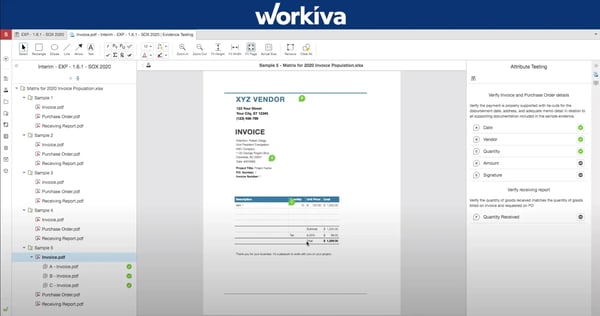
After going through hundreds of G2 reviews for Workiva, one thing became unmistakably clear: the data linking engine is the heartbeat of this platform. Workiva is built around the idea that when a number changes in one place, it should update everywhere it lives, across filings, footnotes, presentations, and board decks, without anyone having to track it down manually.
For teams managing SEC reports, ESG disclosures, SOX compliance, or any high-stakes regulatory filings, that kind of automated consistency is not a nice-to-have; it is the entire point. Reviewers describe it as the single feature that transformed how they work, and after evaluating the patterns across G2, I can see why it earns that kind of loyalty.
The linking capability is what users talk about most, and it goes deeper than simple cell references. Reviewers explain how they connect spreadsheets to documents to presentations, creating a chain where updating a trial balance figure flows automatically into the 10-K, the earnings release, and the investor deck. Several users specifically noted that this eliminates hours of manual tie-out work and dramatically reduces the risk of inconsistent numbers showing up across deliverables. According to G2 Data, 92% of reviewers say Workiva meets their requirements, and based on what I saw in the reviews, the linking engine is a major reason.
Collaboration is the second theme that came up constantly. Workiva lets multiple team members work inside the same document simultaneously, with real-time edits, threaded comments, tagging, and structured review workflows that replace the old cycle of emailing drafts back and forth. Reviewers from legal, finance, and external audit teams all described how this cut down turnaround time significantly, especially during filing season when speed and accuracy both matter. G2 Data shows 93% of users rate Workiva highly on ease of doing business with, and the collaboration experience clearly plays into that.
The SEC filing and compliance workflow is another area where Workiva stands apart. Users praised the end-to-end process, from drafting and XBRL tagging to milestone tracking, blackline comparisons, and direct filing through EDGAR. Multiple reviewers described how moving away from financial printers and manual coordination saved both cost and time. For teams handling 10-Qs, 10-Ks, proxy statements, or even S-3 filings, the platform essentially consolidates what used to require several disconnected tools and vendors into a single controlled environment.
Automation and efficiency came up repeatedly as well. Reviewers described how roll-forward features, automated review notifications, structured task assignments, and process workflows reduced the manual overhead in their reporting cycles. Several users mentioned that what previously took days now takes hours, particularly for recurring quarterly filings.
Customer support earned its own category of praise. Reviewers frequently called out their dedicated Customer Success Managers by name, describing them as extensions of their own teams. Users talked about CSMs proactively guiding them through filings, troubleshooting XBRL issues in real time, and helping configure workspaces to fit specific workflows. G2 Data backs this up, with quality of support sitting at 92%. For a platform that handles high-pressure, deadline-driven work like SEC filings, that level of responsiveness clearly matters.
Integration and data connectivity round out the core strengths. Users described pulling data from ERP systems, consolidation tools, and other source systems directly into Workiva through Wdata and connectors, creating what many called a single source of truth for their reporting. This matters because it reduces the manual re-keying of numbers and keeps the data lineage intact for audit purposes. With 58% of Workiva’s G2 reviewers coming from enterprise organizations, the platform is clearly built to handle the complexity of multi-system, multi-entity environments.
From what I gathered in the G2 reviews, the built-in spreadsheet does not offer the full depth of desktop Excel, with features like pivot tables, complex formulas, or familiar shortcuts. For teams that depend on detailed Excel modeling, this often means continuing to use Excel alongside Workiva rather than replacing it entirely. In practice, this balance works well for teams that handle heavy data manipulation in Excel while relying on Workiva for structured reporting and collaboration.
Several reviewers pointed out that once you move beyond everyday tasks into areas like Wdata configuration, complex permissions, or XBRL tagging, the learning curve steepens noticeably. While the basics feel intuitive and align with familiar Microsoft Office workflows, organizations onboarding larger teams or managing frequent turnover may need to plan for a more structured ramp-up. With the right onboarding approach in place, teams are able to build confidence in these advanced areas and fully take advantage of Workiva’s deeper capabilities over time.
Workiva gives reporting, compliance, and audit teams a connected platform where data stays consistent, collaboration happens in real time, and the path from draft to filing is controlled and efficient. For organizations managing complex regulatory reporting across finance, legal, and audit functions, and especially those filing with the SEC, Workiva remains one of the most purpose-built and well-supported platforms in the disclosure management space.
What I like about Workiva:
- The data linking engine is genuinely the standout feature, letting teams connect numbers across filings, footnotes, and presentations so a single update flows everywhere without manual tie-outs.
- Real-time collaboration with threaded comments, structured reviews, and milestone tracking makes filing season far less chaotic, especially for cross-functional teams spanning finance, legal, and audit.
What G2 users like about Workiva:
“We have been utilizing Workiva as an audit tool for at least 2 years now for SOX testing purposes, and simply having Workiva has made it well worth it. Also, I find the Workstream feature helpful when we need to involve a large number of individuals to respond to PBC requests. It is much less of a hassle than sending multiple emails and hoping someone will read them.”
– Workiva review, Oleg T.
What I dislike about Workiva:
- Based on G2 feedback, Workiva handles most reporting workflows well within its built-in spreadsheets, but teams that rely heavily on advanced Excel capabilities may find themselves keeping some work in Excel alongside the platform rather than fully consolidating into one environment.
- I also noticed several reviewers mention that while the everyday interface feels intuitive and familiar, moving into more advanced areas comes with a steeper learning curve, so teams with frequent onboarding or limited training capacity should plan for some additional ramp-up time.
What G2 users dislike about Workiva:
“Workiva has limited functionality compared with Excel features. It also has a steep learning curve and does not allow users to edit and work on existing Microsoft documents, requiring users to create new spreadsheets instead.”
– Workiva review, Uma V.
2. Oracle Hyperion Disclosure Management: Best for Oracle-integrated regulatory reporting
If your finance team already lives inside Oracle EPM, Oracle Hyperion Disclosure Management probably needs very little introduction. It sits at the tail end of the Hyperion financial close suite, picking up where consolidation and financial reporting leave off, and turning that data into structured, submission-ready disclosures.
Where the platform earns the most praise is for bringing the full reporting cycle into a single, governed space. G2 reviewers describe moving away from scattered files and fragmented handoffs toward a single environment where financial data, narratives, schedules, and footnotes all live together under proper version control and audit trails. That consolidation of effort is a big deal for teams producing quarterly or annual regulatory filings, where visibility across contributors directly affects accuracy. G2 Data tells us 88% of reviewers say the platform meets their requirements, which aligns with this being a tool that reliably does what it was built to do.
Accuracy is another thread that runs through the reviews. Once data sources are connected and templates are configured, users notice a noticeable drop in manual copy-paste errors and number mismatches that haunt disclosure season. The platform keeps figures consistent from source through to final output, and for teams where a single incorrect figure can mean restatement risk or regulatory scrutiny, that reliability carries real weight. According to G2 Data, 86% of reviewers would recommend the product, and confidence in data integrity appears to be a meaningful driver of that number.
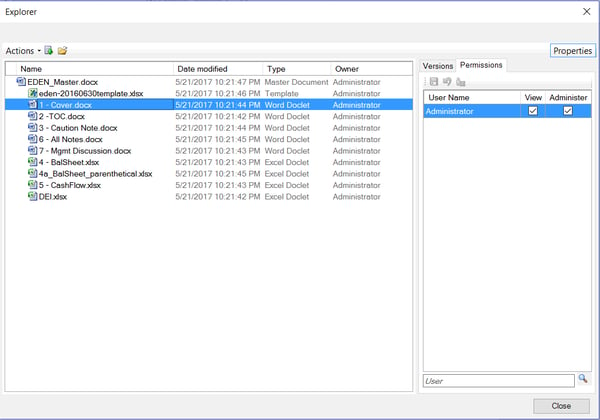
On the automation side, reviewers appreciate how much repetitive assembly work the platform absorbs. Rather than rebuilding disclosure packages from scratch every quarter, teams can lean on structured templates, recurring workflows, and managed document production cycles to shave hours off the process. G2 Data shows 87% of users believe the product is heading in the right direction, and the efficiency gains from automation likely contribute to that forward-looking confidence.
Customization also gets consistent attention. Reviewers describe being able to shape report structures, approval workflows, and output configurations to match their specific organizational and regulatory requirements. For large enterprises juggling multi-entity structures or jurisdiction-specific filing rules, this adaptability matters because disclosure needs are rarely identical across business units or geographies.
The integration story is where Oracle Hyperion Disclosure Management feels most deliberately designed. It plugs directly into HFM, Essbase, and Financial Reporting through Smart View, and the Microsoft Office add-in lets finance teams handle XBRL mapping, tagging, and report assembly without leaving Word or Excel. Outputs span XBRL, iXBRL, EDGAR HTML, and PDF, all from one managed document set. G2 reviewers rate ease of use at 83%, and for a tool operating in this level of enterprise complexity, that signals the Oracle and Office integration is doing its job in keeping the day-to-day experience workable.
Something worth noting from the reviews is that users who push past the onboarding phase tend to find the interface surprisingly manageable for ongoing work. The platform borrows enough from the Microsoft Office experience that finance professionals comfortable in Word and Excel can navigate disclosure workflows without leaning on IT for every task. It is not instant familiarity, but the payoff in daily usability is real once that initial investment is made.
The biggest concern G2 reviewers raise is the setup process. Getting the platform configured, moving over existing workflows, and training users takes time, and most teams end up needing specialized training or consultant help to get things right. Once that groundwork is done, though, reviewers say the platform runs smoothly, and the daily efficiency gains make the early effort worth it.
Similarly, a few reviewers flagged that report generation can slow down during peak filing periods, particularly with large or heavily customized outputs. For teams working against tight regulatory deadlines, timing matters. Outside of those high-volume windows, though, most users describe the platform’s performance as steady and dependable for standard reporting cycles.
All things considered, Oracle Hyperion Disclosure Management occupies a specific and well-defined lane. It is not the tool for teams shopping for a lightweight, cloud-native disclosure solution they can spin up in a week. But for enterprise finance organizations already running Oracle EPM, who need governed workflows, built-in XBRL support, and a reliable path from financial close to regulatory submission, it does that job with the kind of structure and control that high-stakes filing demands.
What I like about Oracle Hyperion Disclosure Management:
- It turns what used to be a fragmented, spreadsheet-heavy disclosure process into a single governed workflow, giving finance teams better visibility, tighter version control, and more confidence in the accuracy of their final output.
- The native integration with Oracle EPM and the Smart View add-in for Word and Excel keeps data flowing naturally from consolidation into disclosure, so teams can map, tag, and publish without bouncing between disconnected tools.
What G2 users like about Oracle Hyperion Disclosure Management:
“Oracle XBRL is very helpful in reporting management, and documentation accessibility is very useful and powerful.”
– Oracle Hyperion Disclosure Management review, Balarama Raju N.
What I dislike about Oracle Hyperion Disclosure Management:
- Based on G2 feedback, the platform delivers strong day-to-day efficiency once implemented, but onboarding, migration, and early setup often require extra training or consultant support, so teams should budget for that ramp-up, knowing the payoff in daily efficiency.
- I also came across multiple reviewers noting that report generation can slow down during peak periods, especially with large or heavily customized outputs, something worth planning around during filing season, though for standard reporting cycles, most users find the performance reliable.
What G2 users dislike about Oracle Hyperion Disclosure Management:
“The initial learning curve is a bit difficult with Hyperion; once you overcome it, the software becomes an asset.”
– Oracle Hyperion Disclosure Management review, John T.
Disclosure management works better when reporting and planning stay connected. Explore the best CPM platforms to bring both into one workflow.
3. CCH Tagetik: Best for unified financial consolidation and planning
Most disclosure management tools focus on one slice of the financial cycle. CCH Tagetik takes a different approach; it bundles consolidation, planning, forecasting, and reporting into a single platform, and based on the G2 reviews, that bet on breadth pays off more often than not.
That is the pitch, and the reviews suggest it delivers on it more consistently than most enterprise CPM tools do. With 50% of its G2 reviewers coming from enterprise organizations and another 29% from mid-market, the platform is clearly built for teams managing complexity across multiple entities, geographies, and regulatory requirements.
The unified platform story is the single most consistent theme across the reviews. Users describe replacing fragmented setups, separate tools for budgeting, consolidation, and reporting, with one environment where everything connects. That means fewer reconciliation headaches, less time spent moving data between systems, and a much cleaner view of where things stand at any point in the financial cycle. G2 Data shows 100% of reviewers say the product is going in the right direction, and when half the reviews mention the single-platform value, it is easy to see why that number is so high.
Automation is where users describe the most dramatic before-and-after improvement. One reviewer described cutting a recurring task that took two to three days down to 15 minutes once the workflows were configured. Others talk about eliminating repetitive manual steps in data collection, consolidation, and period-end reporting. For finance teams stuck in spreadsheet-heavy close cycles, that kind of time savings is not incremental; it changes how the team spends its month.
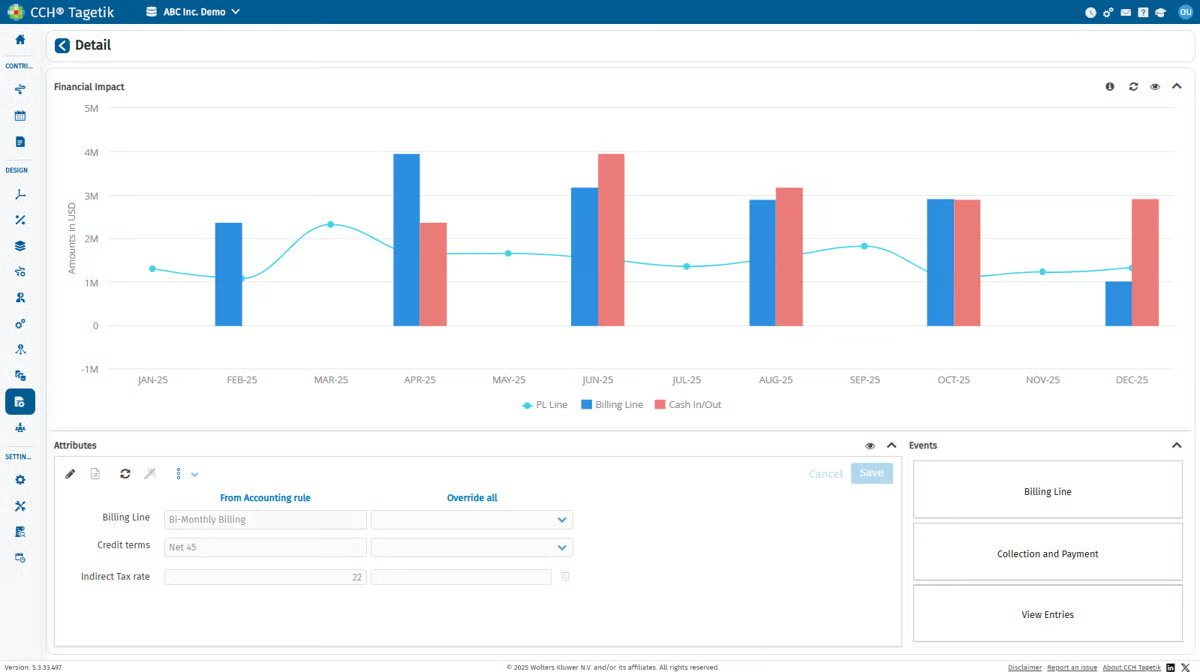
Data integration and ETL is another area that gets real appreciation. Reviewers describe pulling data from multiple ERPs, general ledgers, and operational systems into Tagetik without the fragmentation and reconciliation pain that usually comes with multi-source environments. The platform’s built-in ETL tools are described as intuitive and well-connected to the broader Microsoft Office ecosystem, which makes the data pipeline feel less like an IT project and more like something finance teams can own.
Workflow management goes beyond simple task tracking. Reviewers describe designing approval chains, monitoring consolidation progress through visual flow charts, assigning responsibilities at each stage, and tracking who has contributed what. For multi-entity organizations where dozens of contributors feed into a single reporting package, that kind of structured process control keeps filing cycles on track and gives leadership real-time visibility into where things stand.
The reporting capabilities stand out for their flexibility. Users highlight features like dynamic reporting, overrides, and built-in templates for both statutory and management reporting. The platform’s disclosure management add-on also gets positive mentions for handling internal and external report packages, including annual and interim report templates.
What ties all of this together is customization. Reviewers describe building complex financial models, tailoring workflows, and adapting the platform to match specific business requirements, all without heavy coding or constant IT involvement. That finance-owned flexibility is a recurring thread: the platform is powerful enough to model complicated scenarios but accessible enough that the CFO’s office can maintain and evolve it themselves. G2 Data reflects this adaptability, with 93% satisfaction with the quality of support, suggesting Wolters Kluwer backs the platform well when teams need help stretching its capabilities.
CCH Tagetik clearly invests significant engineering muscle in its underlying capabilities, and most reviewers acknowledge that the platform is functionally deep. Several users, however, mention that the user interface feels a step behind what the platform can actually do, and that newer feature updates do not always match how people work with the tool day to day. For teams coming from more visually polished tools, the initial look and feel can take some adjusting. Most reviewers are quick to add, though, that once you settle into the workflow, the interface fades into the background and the depth of what you can do with the platform more than makes up for it.
A few reviewers also flag that performance can dip when working with large datasets or heavily customized reports, particularly when multiple users are active on the platform simultaneously. Saving forms or generating complex outputs can take longer than expected in those scenarios. For standard reporting workloads, though, most users describe the speed as perfectly adequate.
CCH Tagetik is not a quick-start tool. It rewards organizations willing to invest in proper setup and training, and it pays that investment back through automation, consolidation, and reporting capabilities that genuinely change how finance teams operate.
What I like about CCH Tagetik:
- Having consolidation, budgeting, forecasting, and reporting all in one platform eliminates the reconciliation mess that comes from stitching together separate tools, and the automation alone can turn multi-day tasks into something that takes minutes.
- The data integration and workflow management give finance teams real control over the full reporting cycle, from pulling data out of multiple source systems to tracking every approval step before a disclosure package goes out the door.
What G2 users like about CCH Tagetik:
“I love how CCH Tagetik consolidates budgeting, forecasting, and reporting into one cohesive platform, which streamlines the financial planning process significantly. By centralizing all necessary data, it not only reduces the manual labor involved but also improves accuracy and speeds up decision-making. The automation of data collection and consolidation within the platform saves a considerable amount of time and minimizes the potential for human error. These features together make it highly efficient and valuable for gaining deeper insights and making more informed business decisions.”
– CCH Tagetik review, Charles M.
What I dislike about CCH Tagetik:
- G2 reviewers appreciate the tool’s depth, though many note that the interface feels dated compared to the platform’s capabilities. Most users add that this becomes less noticeable once teams settle into the platform.
- While everyday reporting performance is reliable, some reviewers mention slowdowns when generating large reports or handling complex datasets during peak filing periods.
What G2 users dislike about CCH Tagetik:
“Not fully anglicized and not entirely intuitive to use, but easy enough to learn the key parts needed.”
– CCH Tagetik review, Adam J.
Strong disclosures depend on solid compliance processes. Check out the best GRC software to manage risk and stay audit-ready.
4. IRIS CARBON®️: Best for service-driven regulatory filing and XBRL compliance
Most disclosure management tools lead with their platform. IRIS CARBON®️ leads with its people. The technology works well, but what stands out in the G2 reviews is how much users trust the experience because the team behind it makes the entire filing process feel taken care of.
The support story deserves its own paragraph because it is that consistent. Reviewers describe fast issue resolution, personal proactive contact, and a team that does not just react to problems but anticipates them. One user specifically highlighted having what feels like an extension of their SEC team. Another mentioned that in years of filing FERC forms, they have never had a single issue. G2 Data reflects this clearly: 99% of reviewers rate IRIS CARBON®️ favorably for the quality of support and ease of doing business, which rank among the highest scores in the entire disclosure management category grid.
Speed and turnaround are the second most consistent themes. Reviewers do not just say the platform works; they say it works fast. Quick processing, on-time delivery, and a team that meets regulatory timelines without drama come up repeatedly. For finance teams operating under tight filing windows, knowing that the tool and the team behind it will deliver on schedule removes a layer of stress that most disclosure workflows carry.
The platform itself earns praise for its straightforwardness and organization. Reviewers describe a logical workflow, clear guidance, and an interface that does not require weeks of training to navigate. For teams where disclosure management is not an everyday task, where users might only interact with the tool during quarterly or annual filing cycles, that low barrier to entry matters. G2 Data shows 93% satisfaction with ease of use, which, given the complexity of XBRL and iXBRL, signals that the platform does a good job of keeping that complexity behind the scenes.
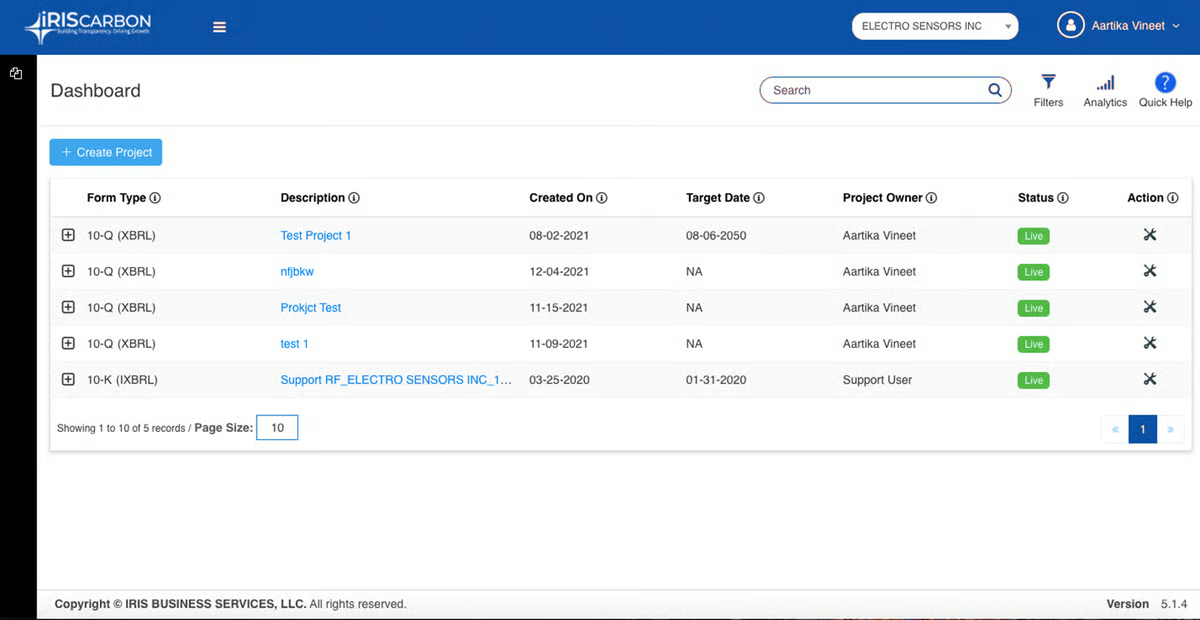
Flexibility and adaptability show up as a quieter but important theme. Reviewers mention customization options, the ability to adapt to different ways of working, and broad platform features that accommodate specific organizational needs. One user highlighted how the provider managed all their specific requests and timing with full flexibility. For organizations with non-standard reporting structures or unique regulatory requirements, the willingness to bend rather than force a rigid workflow is a differentiator.
On the regulatory and XBRL side, IRIS CARBON®️ delivers what you would expect from a company with deep roots in XBRL services. Reviewers call out instant XBRL checks, taxonomy cloning, and built-in validation that catches errors before they become filing problems. SEC and FERC filing support gets specific mentions, and the platform’s ability to keep up with regulatory changes earns trust from teams that need to know their tool is always current.
Automation and workflow efficiency round out the core strengths. Reviewers describe fast tagging, simplified complex workflows, and the ability to work across different report sections simultaneously. The platform’s automation features reduce the manual friction that typically slows down the last mile of disclosure production, and paired with the support team’s hands-on involvement, the overall filing experience feels more managed than self-service.
The most specific feedback that came up more than once in G2 reviews is around bulk uploads. A couple of reviewers mentioned that the platform does not currently support uploading multiple pages simultaneously, and when alignment issues arise, resolving them typically means reaching out to the support team. Given how fast that team responds, it rarely becomes a real holdup, but teams handling large multi-section filings regularly will want to factor that into their workflow.
A few reviewers also noted some minor friction when moving between report sections during editing, and that the page replacement process could feel smoother. These are small rough edges rather than real pain points, and most users say they stop noticing them after a short familiarization period with the platform.
For mid-market and enterprise teams that value a service-led approach to XBRL and disclosure management, and especially those filing with the SEC or FERC, IRIS CARBON®️ delivers exactly that combination of reliable technology and reliable people.
What I like about IRIS CARBON®️:
- The support team is the standout; reviewers consistently describe them as fast, proactive, and deeply knowledgeable, to the point where multiple users say it feels less like a vendor relationship and more like having extra members on their own filing team.
- The platform keeps regulatory filing workflows simple and efficient, with instant XBRL validation, fast tagging, and a clean interface that does not require heavy training to get productive with.
What G2 users like about IRIS CARBON®️:
“Ease and organization of the disclosure management system and the responsive and efficient support and services.”
– IRIS CARBON®️ review, Richard C.
What I dislike about IRIS CARBON®️:
- The filing workflow runs smoothly overall, but a couple of G2 reviewers note that uploading multiple pages at once is not currently supported, and alignment issues that pop up typically need the support team to step in, which, given their response speed, rarely slows things down much.
- The platform is easy to pick up for core tasks, though a few reviewers mention minor friction when switching between report sections during editing and find the page replacement process slightly clunky; most say these quirks fade after a short learning period.
What G2 users dislike about IRIS CARBON®️:
“To improve the company taxonomy interface, implement a drag-and-drop feature that allows users to easily reorder elements instead of relying on repetitive clicking of up or down arrows. This change would streamline the process, making it more intuitive, efficient, and user-friendly.”
– IRIS CARBON®️ review, Irene K.
5. Ethico: Best for compliance-driven ethics and disclosure management
Ethico is a compliance-first platform that brings together hotline services, case management, sanctions screening, and disclosure workflows into one place, all backed by a support team that G2 reviewers consistently describe as one of the best they have worked with.
Unlike the other tools on this list, Ethico approaches disclosure management from a compliance and ethics perspective rather than a financial reporting one. Its strengths are centered around conflict of interest disclosures, hotline reporting, policy attestations, and case management workflows, making it a better fit for organizations focused on employee compliance programs and internal disclosure processes than SEC or XBRL-driven reporting.
Customer service is where Ethico separates itself from the pack. Dedicated Client Success Managers work closely with each account, offering proactive outreach, fast response times, and genuine compliance expertise. Users describe a team that actively listens, resolves issues promptly, and provides ongoing guidance rather than just answering tickets. Ethico has a 100% satisfaction score for quality of support in G2 Data, and the reviews make clear that this is a team that treats every compliance program like it is their own. For compliance officers who have been through the cycle of unresponsive vendors, that kind of partnership changes the experience entirely.
The platform is consistently described as simple and easy to navigate. Creating and updating cases, running reports, and moving through the system all feel intuitive, even for users who are not particularly technical. On G2, Ethico earns 95% satisfaction for ease of use, which matters for a platform handling sensitive compliance workflows because the design stays clean and accessible.
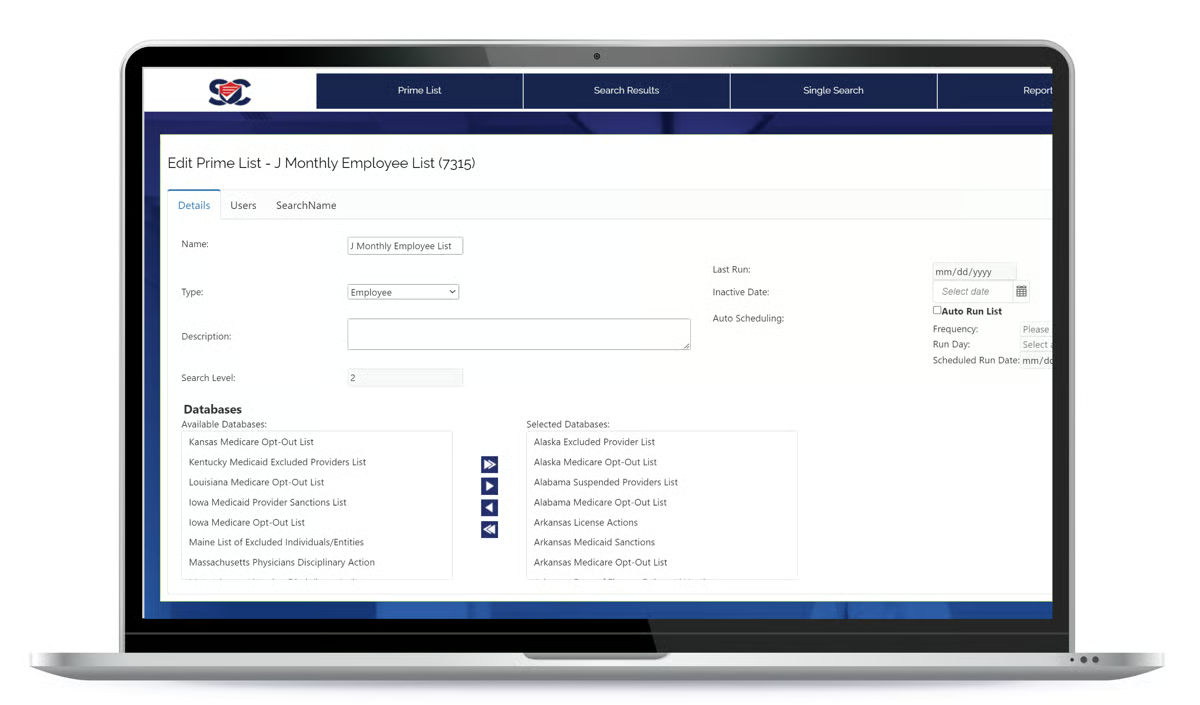
What makes Ethico different from a generic case management tool is that it is purpose-built for compliance officers. Beyond the core platform, it offers a knowledge hub, weekly Ethicsverse webinars, and Compliance Week resources that help teams strengthen their broader ethics programs. Reviewers appreciate that the platform understands the compliance context rather than just providing software and stepping back. Ethico also sees 98% of reviewers say it meets their requirements on G2 Data, and that compliance-first positioning is a big part of why.
Getting started with Ethico is fast and well-supported. Multiple reviewers describe onboarding as smooth and thorough, with the team handling the heavy lifting during setup. Users also highlight the ability to customize their hotline landing pages and tailor the platform to their specific program needs during implementation.
Reporting and analytics earn solid marks from users who rely on them for board presentations and quarterly compliance assessments. The ad hoc reporting capability lets teams pull specific data without jumping through hoops, and thoughtful design touches like the ability to select specific sanctions rather than manually excluding irrelevant ones save real time during audits.
Case management through MyCM ties the experience together. Reviewers describe it as easy to use for logging compliance issues, reviewing cases, and tracking investigations from intake to resolution. The tool is open-ended and customizable, which means teams can shape it to fit their specific compliance workflows rather than working around a rigid structure.
Ethico clearly has strong momentum, and users trust the product direction. A few reviewers mentioned that as their compliance programs grow more complex, they would like to see the platform continue expanding its feature set to keep pace. The feedback is framed positively; no one is describing gaps that are blocking their work today, but for organizations with highly specialized or rapidly evolving compliance needs, it is worth confirming the current capabilities align with your program’s roadmap.
The platform is easy to pick up overall, though a couple of reviewers mentioned that figuring out where to run certain reports or enter investigations took a little time when they first started. It was not a steep learning curve by any means; most users say everything clicked quickly, but a short walkthrough during onboarding goes a long way in getting new users comfortable from day one.
Ethico is not trying to be an enterprise-wide financial planning suite or a sprawling multi-module platform. It is focused, deliberate, and built around what compliance officers actually need day to day. For mid-market organizations looking for an ethics and compliance solution that combines hotline services, case management, sanctions screening, and disclosure workflows with hands-on, human support that genuinely delivers, Ethico is a strong fit.
What I like about Ethico:
- The dedicated Client Success Managers go well beyond standard vendor support; they offer proactive compliance guidance, fast issue resolution, and the kind of hands-on partnership that makes the platform feel like more than just software.
- The platform keeps things simple and compliance-focused, from intuitive case management in MyCM to the knowledge hub and Ethicsverse webinars that help teams build stronger ethics programs beyond just managing cases.
What G2 users like about Ethico:
“Ethico provides an excellent system for reporting compliance issues, serving both our employees and customers effectively. Their team has been instrumental in managing incoming calls and complaints. Even though the call center isn’t frequently used for compliance complaints, Ethico has consistently demonstrated its ability to thoroughly investigate issues and report them clearly through its portal.”
– Ethico review, Joseph A.
What I dislike about Ethico:
- Users trust the product direction and the team behind it, but a few G2 reviewers note that as compliance programs scale in complexity, they would like to see continued feature development to keep the platform growing alongside their needs.
- Getting productive is quick for most users, though a couple of reviewers mentioned that locating certain reporting functions and case entry points took a little time at first, but nothing that lasted beyond the initial few sessions.
What G2 users dislike about Ethico:
“There isn’t much that I dislike. When I was first getting to know the system, I did find it a bit challenging to figure out how to run reports and where to enter investigations. However, as I became more familiar with it, these tasks became easier.”
– Ethico review, Mandy G.
Frequently asked questions about disclosure management software
Have more questions? Find your answers below.
Q1. What does disclosure management software do?
Disclosure management software streamlines the process of preparing and filing financial disclosures. It connects data across spreadsheets and documents, automates updates, manages version control, and supports regulatory requirements like SEC reporting and XBRL tagging. This reduces manual work and minimizes the risk of errors in high-stakes filings.
Q2. Which disclosure management platforms integrate easily with existing document management and email systems?
Disclosure management platforms such as Workiva, Oracle Hyperion Disclosure Management, and CCH Tagetik offer integrations with common enterprise systems, including ERP platforms, Microsoft Office applications, document repositories, and reporting environments. The best option depends on your existing technology stack and compliance requirements.
Q3. Which disclosure management solutions prevent unauthorized disclosures through controlled access and approval enforcement?
Many enterprise disclosure management solutions include role-based permissions, approval workflows, version controls, and audit trails that help prevent unauthorized disclosures. Workiva, Oracle Hyperion Disclosure Management, and CCH Tagetik all provide governance features designed to strengthen disclosure controls and compliance oversight.
Q4. Does disclosure management software support XBRL and iXBRL?
Yes, most disclosure management software supports XBRL and iXBRL reporting.
These formats are required by many regulatory bodies for standardized financial disclosures. Leading tools include built-in tagging, validation, and taxonomy management to ensure compliance with regulatory requirements.
Q5. What is the difference between disclosure management software and financial reporting software?
Disclosure management software focuses on preparing and filing regulatory disclosures, while financial reporting software focuses on generating internal and external reports.
Disclosure tools emphasize compliance, XBRL tagging, audit trails, and filing workflows, whereas financial reporting tools are more focused on analysis, dashboards, and performance tracking.
Q6. Can disclosure management software integrate with ERP or EPM systems?
Yes, most disclosure management tools integrate with ERP and EPM systems.
These integrations allow teams to pull financial data directly from source systems, reducing manual data entry and ensuring consistency across reports and filings.
Q7. Which platforms streamline multi-level approval workflows while keeping full visibility into disclosure status?
Leading disclosure management platforms provide structured review cycles, approval routing, status tracking, and audit-ready workflow documentation. Workiva is particularly recognized for collaboration and workflow visibility, while Oracle Hyperion Disclosure Management and CCH Tagetik support complex enterprise approval processes.
Q8. What are the best disclosure management software reducing regulatory submission timelines while maintaining complete approval documentation?
Disclosure management software helps reduce reporting timelines by automating document updates, approval routing, data synchronization, and filing workflows. Solutions such as Workiva, Oracle Hyperion Disclosure Management, IRIS CARBON®️, and CCH Tagetik are frequently used to accelerate regulatory submissions while preserving complete audit and approval records.
Q9. What are the best disclosure management platforms automating compliance workflows for financial services and banking operations?
Financial institutions often look for disclosure management platforms that automate review cycles, approval processes, regulatory reporting, and documentation requirements. Workiva, Oracle Hyperion Disclosure Management, and CCH Tagetik are commonly used in financial services environments because they support governed workflows and regulatory reporting requirements.
Q10. What are the top-rated disclosure management solutions offering pre-built compliance templates for insurance and healthcare disclosures?
Some disclosure management vendors provide industry-specific templates, workflows, and reporting frameworks that help organizations standardize disclosure processes. The availability of templates varies by vendor, so organizations in insurance and healthcare should evaluate whether the platform supports their specific regulatory requirements.
Q11. Who are the best disclosure management vendors with industry-specific expertise, catching missed filing deadlines before regulatory penalties occur?
Vendors with deep regulatory reporting experience often provide implementation guidance, workflow controls, deadline management features, and compliance expertise that help organizations reduce filing risks. Workiva, IRIS CARBON®️, Oracle, and Wolters Kluwer’s CCH Tagetik are frequently considered by organizations managing complex reporting obligations.
Q12. What is the highest-rated disclosure management software for banking institutions managing complex insider trading compliance?
The best disclosure management software for banking institutions depends on the organization’s reporting complexity, governance requirements, and existing technology environment. Enterprise-focused solutions such as Workiva, Oracle Hyperion Disclosure Management, and CCH Tagetik are commonly evaluated by financial institutions because of their workflow controls, audit trails, and compliance capabilities.
Q13. What is the most trusted disclosure management software by compliance and legal officers at financial services and banking firms based on user reviews?
Based on G2 user feedback, Workiva, Oracle Hyperion Disclosure Management, CCH Tagetik, IRIS CARBON®️, and Ethico are among the most frequently recognized disclosure and compliance management platforms. The right choice depends on whether the primary need is regulatory reporting, XBRL filing, financial disclosure management, or broader compliance workflows.
Q14. Which compliance disclosure solutions provide robust audit trails and insider trading controls for large enterprises?
Large enterprises typically prioritize disclosure management software that offers detailed audit trails, role-based access controls, approval workflows, certification tracking, and governance features that support insider trading compliance. Workiva, Oracle Hyperion Disclosure Management, and CCH Tagetik are frequently considered by enterprise organizations that require strong compliance oversight and reporting controls.
Q15. What are the best value-for-money disclosure management tools for companies that need multi-entity consolidation and reporting?
CCH Tagetik offers strong value to companies that manage multi-entity consolidation, budgeting, and reporting in a single system. Oracle Hyperion Disclosure Management is also a strong fit for organizations already invested in Oracle EPM ecosystems.
Finding the right fit for your disclosure workflow
Every finance and compliance team operates differently. Some manage high-volume SEC filings with dozens of contributors. Others need a tightly integrated platform that fits into an existing ERP ecosystem. And some just need a reliable partner who will make sure the filing gets done right and on time.
That is why there is no single best disclosure management tool, only the best one for how your team actually works. Workiva makes the most sense for organizations handling complex, multi-stakeholder financial reporting where linked data and real-time collaboration are non-negotiable.
Oracle Hyperion Disclosure Management rewards teams already invested in the Oracle EPM stack with deep native integration and structured governance, provided they are prepared for the setup commitment. CCH Tagetik is worth a close look if your priority is bringing consolidation, planning, and reporting under one finance-owned roof. IRIS CARBON®️ stands out for teams that want a service-driven filing experience where the people behind the platform are as much a part of the value as the technology. And Ethico fills a distinct need for compliance-first organizations building ethics programs around hotline services, case management, and speak-up culture.
Before settling on a tool, take a step back and think about what your disclosure process actually looks like today and where the friction sits. Is it in data accuracy? Collaboration bottlenecks? XBRL tagging? Regulatory deadlines? The answer will point you toward the right kind of platform faster than any feature comparison chart.
If your disclosure needs overlap with audit and compliance workflows, you might also want to check out our picks for the best audit management software to see how these categories work together.
[ad_2]
Source link


