

Table of Contents
[ad_1]
I evaluated 40+ tools to find the six best event registration and ticketing software. These are Jotform, Eventbrite, Cvent Event Marketing and Management, RegFox, Swoogo, and Whova.
I know how daunting it can be to handle manual event spreadsheets, customize registration forms, and maintain decent event attendance.
For event leads and operations decision-makers, the stakes are high: attendee drop-off, broken branding, and tech issues can derail months of planning. While the best event registration and ticketing software help personalize user experience and maintain brand reputation, the real challenge remains: choosing the right one.
As you search for the perfect tool, it is sometimes easy to lose yourself in clutter. Maintaining a steady framework of features like technical documentation, mobile experience, and form personalization is all at the back of your head, but not easy to find.
Curious to curate a proper decision-making process, I reached out to in-house event coordinators to shortlist the six best event registration and ticketing tools that are intuitive, scalable, and enterprise-ready without friction.
If you’re evaluating platforms to streamline registration, automate attendee tracking, and boost event ROI, here’s a vetted shortlist of solutions. These best event registration and ticketing software aren’t just popular, they’re backed by real users on G2, peer-validated, and designed to align with your goals, whether you’re hosting 50 attendees or 5,000.
Let’s dive in.
6 best event registration and ticketing software: My 6 top picks
-
Jotform: Best for registration forms with offline access
Drag-and-drop form builder with conditional logic and mobile-accessible offline data collection. (Starts from $34/month) -
Eventbrite: Best for streamlined registration and payment processing
Self-service registration pages with embedded checkout and a built-in event discovery marketplace. (Free to publish; 3.7% + $1.79 per paid ticket) -
Cvent Event Marketing & Management: Best for event setup and scheduling
End-to-end event lifecycle management with branded microsites, OnArrival mobile check-in, and CRM-connected reporting. (Custom pricing) -
RegFox: Best for advanced event configuration and registrant management
Tiered ticketing with conditional logic, registrant CRM, and a pay-as-you-go fee model. (Starts at $0.99 + 1% per registrant) -
Swoogo: Best for agenda building and automated communication
Custom registration paths with branded templates, session and speaker management, and automated email workflows. ($11,800/year) -
Whova: Best for attendee engagement and on-site logistics
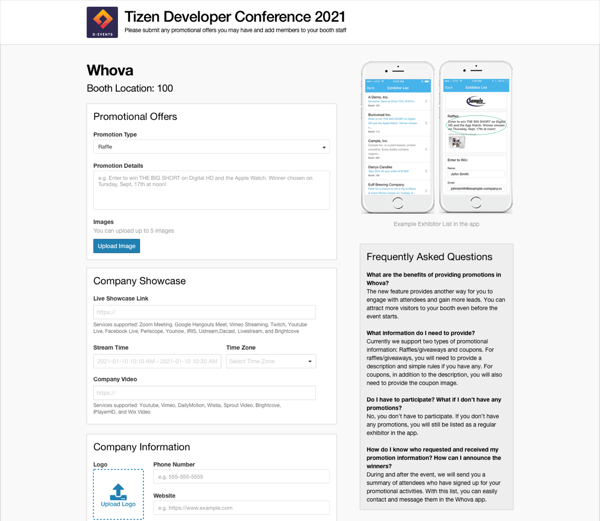
In-app networking with attendee profiles, icebreaker prompts, live polls, and Q&A sessions. (Custom per-event pricing)
*According to G2’s Summer 2026 Grid Report, these event registration and ticketing software are top-rated in their category. I have added their monthly pricing to make comparisons easier for you.
According to the Global Meetings and Events Forecast, 42% of meeting professionals say their audiences want more interactive sessions, and 40% want more networking opportunities at events.
Meeting these expectations starts before the event even begins. Registration platforms capture the preference data, attendee profiles, and session sign-ups that fuel personalized networking, live polling, and the engagement features audiences increasingly expect.
6 best event registration and ticketing software that I recommend
Event registration software helps teams streamline their entire attendee journey, from setting up branded registration and sending speaker invitations to customizing sign-up forms and tracking overall attendee engagement metrics.
An ideal event registration and ticketing system helps you establish better alignment with internal and external stakeholders to make online and offline workflows run smoothly.
If you are looking for ways to streamline your high-stakes seminars, coordinate guest accommodation, or organize multi-track global events, this list will be quite useful. Delving into real-time G2 Data and overall market satisfaction trends for event registration and ticketing software is crucial to substantiate your investment decision.
How did I find and evaluate the best event registration and ticketing software?
I spent weeks trying and evaluating the best event registration and ticketing workflows that automate visitor tracking, customize form registrations, and plan and track upcoming events. I used AI to shortlist the appropriate software by summarising first-hand G2 Summer 2026 Grid Report and real-time review sentiment.
While evaluating event registration and ticketing software, I also checked for compatibility with event management platforms, venue management software, and mobile event apps so that I could get real-time updates on event projects from anywhere.
In cases where I couldn’t sign up and access the tool, I factored in the opinions of market research experts and professionals who have firsthand experience working with and evaluating event registration and ticketing tools. I also evaluated other parameters like vendor complexity, long-term relationship, SLA guarantee, product roadmap alignment, and advanced analytics that prove beneficial to small, mid, and enterprise-level software buyers.
I also used AI to analyze G2 product reviews, gaining insights into real users’ needs, motivations, and pain points. The screenshots featured in this article come from G2 vendor listings and publicly available product documentation.
What makes an event registration and ticketing software worth it according to me
As part of event coordination teams in my previous roles, I already have a good idea of the ideal functionalities to look for in event registration software. When evaluating event registration and ticketing systems, I recommend ensuring that the tool actually helps you cut the chaos and solve recurring event challenges. Shortlisting a tool with predetermined objectives can help save a lot of time and resources.
After going over the top-rated tools on G2, I realized that choosing an event registration and ticketing platform isn’t just about a sleek UI or fast setup. It’s about how well you can use it to solve operational headaches and scale your event coordination workflows.
- Customizable registration forms with conditional logic: I shortlisted tools that offered customizable, logic-driven registration flows, especially ones that let event teams trigger different questions or fields based on user input. This is non-negotiable for teams running multi-track agendas, VIP/invite-only events, or requiring legal or health declarations. Most of the time, event platforms have rigid forms that lead to duplicate workflows or messy manual segmentation. So, I prioritized tools that supported field-level logic, branding flexibility, and embed options, especially for teams working across different departments or geographies.
- Multi-tier ticketing setup with real-time promo code control: One of the most crucial parameters for me was ticket type flexibility. I focused on tools that allow admins to spin up early bird passes, group discounts, VIP entries, free trials, and promo code-based unlocks without a dev ticket. These are critical for driving conversions, managing demand phases, and enabling flexible pricing structures. If a platform couldn’t support capacity caps, timed offers, or invite-only access, it didn’t make the cut.
- Integrated payment systems with automated refund workflows: Attendees expect secure, instant payments, not redirected, clunky flows. I prioritized tools with Stripe, PayPal, and Square integrations baked in, and which support multi-currency payments and tax compliance (like VAT). More importantly, refund workflows matter. Whether you’re hosting free or paid events, you might witness a lack of self-service refund portal or admin-side refund automation as a major pain point. So I focused on platforms that let teams issue full or partial refunds without toggling tools or involving finance every time.
- CRM and marketing automation integrations: Registration is just the first step. I gave more weight to platforms that offered native integrations with HubSpot, Salesforce, Marketo, and even tools like Mailchimp and ActiveCampaign. The ability to map form data directly into your CRM, tag and score leads, and trigger email journeys, all without third-party hacks.
- Check-in tools with QR support and on-site badge printing: I prioritized the tools offering QR support and on-site badge printing to cut down on registration desk or attendee entry operations. I chose platforms that offered mobile check-in apps, QR-code scanning, and badge printing integrations for their ability to reduce chaos at venue gates. I also evaluated if these platforms allowed multiple check-in methods (manual override, scanning, app-based) and let teams monitor attendance in real time. This is critical not only for crowd control but for understanding session-level footfall and drop-off.
- Post-event analytics that go beyond attendance counts: I looked for tools that connect registration and engagement data with clear dashboards, export options, and attribution models. Sometimes, even basic analytics, like total registrations or check-ins, are no longer enough. The best tools give you session-level participation, lead scoring, drop-off tracking, and even ROI indicators like conversion by source (email, paid ad, organic). These insights feed directly into the event strategy for the next quarter or year.
- Active user ecosystem and proven vendor support: I paid close attention to how often tools were updated, how responsive vendors were in G2 reviews, and whether they had a vibrant support ecosystem (help docs, Slack communities, customer success stories). Platforms with frequent product updates, momentum badges, and high NPS among mid-market and enterprise teams consistently ranked higher. That gave me confidence in long-term reliability and vendor responsiveness, especially in fast-changing event environments.
My experience with these tools was a hybrid of personal evaluation, market research analysis, and a G2 review-based study to list the technical complexities, integration, and authentic pros and cons of event registration and ticketing software to make venue operations easy.
Out of the initial 40+ tools I shortlisted, the top 6 listed below stood out in terms of customization, relevance, operational efficiency, and vendor documentation.
The list below contains genuine reviews from the Event Registration and Ticketing Software category page. To be included in this category, a software must:
- Enable the creation of an event-specific registration web page or portal
- Provide registration and information forms with customizable fields
- Include attendee list management functionality
*This data was pulled from G2 in 2026. Some reviews may have been edited for clarity.
1. Jotform: Best for registration forms with offline access
Jotform is a customizable form-handling solution that helps event teams set up branded registration pages, automate appointments, and manage attendee records through built-in integrations. Event leads can adjust form fields based on event type, optimize the registration UX, and apply label mapping to keep brand experience consistent across touchpoints.
One of the first things that stood out to me was the drag-and-drop form builder. It feels natural, and within minutes, you can spin up a professional-looking form that I could embed on my site. I especially appreciated the flexible templates; everything from RSVP forms and payment forms to multi-step registration workflows is prebuilt and customizable. G2 Data reflects this strength with a 93% rating on user registration process, Jotform’s highest-rated feature in the category.
Another differentiator is offline data collection through the Jotform Mobile Forms app. Registration forms work even without an internet connection, with submissions syncing automatically once devices reconnect. G2 reviewers in events services and education industries frequently call this out for events at venues with patchy Wi-Fi or in remote locations. For teams running outdoor events, multi-venue conferences, or international meetings, this single capability can eliminate the panic of losing attendee data at the door.
Another standout feature is the AI-assisted form builder. By describing what you need in plain language, you can generate a draft form in seconds and then refine specific fields without rebuilding from scratch. G2 reviewers consistently highlight the AI agent as a major time-saver, especially for first drafts of registration, RSVP, and intake forms. For event teams under tight setup timelines, this feature can shave hours off the form-design phase.
Across all paid tiers, I’ve used conditional logic, payment gateway integrations (like Stripe and Square), and the ability to embed forms seamlessly into websites, email campaigns, or social media. The Gold plan adds HIPAA compliance (a big deal if you’re handling medical event registrations), bumps the monthly submission cap to 10,000, and adds priority support. G2 Data shows a 94% likely-to-recommend rating, which reinforces how dependable these features are across event use cases.
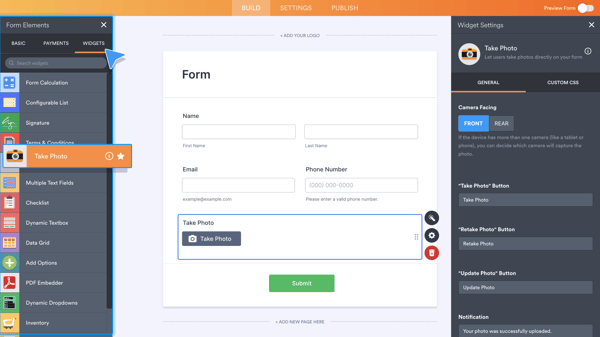
The PDF builder is another hidden gem. It automatically turns form submissions into polished, printable documents, which I’ve used to generate tickets and invoices for attendees.
What’s more, Jotform also effortlessly integrates with tools I already use, like Google Sheets, Slack, Zoom, and Mailchimp. One of my favorite automations has been linking form responses to Google Calendar for automatic event reminders. G2 reviewers often highlight integrations as a key reason for picking Jotform over single-purpose form tools.
That said, it’s not perfect. Some G2 reviewers mention slowdowns when handling multiple complex forms and note that the free plan’s submission and form customization limits can quickly become a bottleneck for larger or growing events. The pricing gap between tiers also surfaces in reviews, with some users wishing for an intermediate option between the free plan and the lowest paid tier.
Managing a growing library of forms and complex conditional logic workflows can become harder to navigate as usage scales, with G2 reviewers noting that folder organization and configuration tracking take more effort over time. For teams running straightforward registration or data collection workflows, Jotform’s intuitive builder and template library keep the experience fast and manageable from day one.
Overall, what makes Jotform stand out among event registration tools is its breadth across AI-assisted setup, mobile offline collection, payment handling, and broad third-party integrations. For event teams running varied registration types from quick RSVPs to multi-step paid sign-ups, the range explains why Jotform leads its category in satisfaction.
What I like about Jotform:
- Customer support is responsive and hands-on. G2 reviewers frequently call out fast reply times and the team’s willingness to walk through workarounds for unusual configurations.
- The interface is friendly for non-technical teams. G2 reviewers consistently say anyone can build a registration form without coding skills, which makes Jotform a fit for teams without dev support.
What G2 users like about Jotform:
“I love the ability to sync ChatGPT with Jotform. I’ve used it for multiple events for our organization, and it has completely streamlined our workflow from registration to payment tracking. The drag-and-drop builder is simple to use, and being able to connect Square directly into our forms makes registration and payment collection seamless for attendees. One of the biggest benefits has been having everything centralized in one place.”
– Jotform review, Katherine M.
What I dislike about Jotform:
- Some G2 users mention that the free plan’s limits are a bit tight for small businesses just getting started. However, it’s worth the investment for its versatility, scalability, and deep integrations.
- Managing a growing library of forms and complex conditional workflows can become harder to navigate as usage scales. For teams running straightforward registration or data collection workflows, Jotform’s intuitive builder keeps the experience fast and manageable.
What G2 users dislike about Jotform:
“One thing I find challenging about Jotform is that as forms and workflows grow, managing and organizing everything can become a little difficult. Finding older forms, keeping folders organized, and updating multiple forms can take extra time. I’ve also occasionally run into limitations when trying to customize more advanced workflows.”
– Jotform review, Crowned With Purpose L.
Manage your customer escalations efficiently and empower your customer service teams to establish a point of service with the best help desk software in 2026.
2. Eventbrite: Best for streamlined registration and payment processing
Eventbrite offers robust and agile registration and attendee management features to help teams coordinate global event workflows without hindrance. With one of the highest Market Presence scores in the Event Registration & Ticketing Software category on G2, Eventbrite lets organizers build customizable event pages, manage flexible registration forms, handle venue booking, and track visitors, all from a centralized platform built for events of any size.
Eventbrite’s UI feels like it was built for people who aren’t necessarily tech-savvy. Setting up a registration page is super fast, and if I already have my content and graphics ready, I can launch ticket sales within the hour. The drag-and-drop layout builder keeps the workflow simple enough that non-technical team members can manage event creation on their own. G2 Data shows event creation at 92%, Eventbrite’s highest-rated feature in the category.
Where Eventbrite really earns its “best for payment processing” position is in ticketing flexibility. I’ve spun up everything from free event RSVPs to multi-tier paid events with general admission, VIP tiers, and promo codes without leaving the platform. G2 Data backs this with a payment processing rating of 90%, reflecting how reliably Eventbrite handles checkout, refunds, and multi-method payment flows.
Another standout that sets Eventbrite apart is its built-in marketplace. Unlike form-first tools, Eventbrite functions as both a registration platform and a discovery engine, with millions of users actively browsing local and global events on the site. G2 reviewers frequently call this out as a major reason for choosing Eventbrite, with one organizer noting that the marketplace alone drives nearly 30% of their ticket sales.
Eventbrite also integrates tightly with the channels event teams already use to drive registrations. I’ve embedded registration forms directly on our website and synced them with Facebook to promote events seamlessly, and the built-in email tools handle invite and reminder workflows for most campaign needs. G2 reviewers consistently mention the social media share functionality as a fast way to extend reach beyond Eventbrite’s own marketplace.
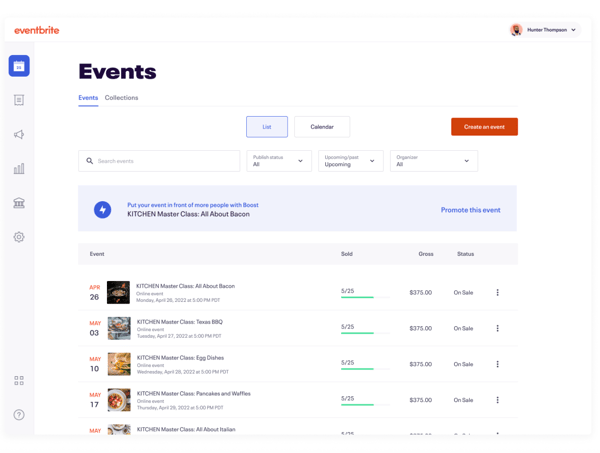
I also love that Eventbrite supports hybrid and virtual events natively. You can spin up an online-only event, link it with Zoom, and automate the reminders and access details without touching a line of code, which makes it easy for distributed teams to run webinars, workshops, and virtual conferences alongside in-person events.
Eventbrite also offers a free plan that works as a solid place to start for smaller events or first-time organizers. Once you scale up or need more advanced capabilities, the paid tiers unlock features like ticket sales heatmaps, source tracking, repeat attendee behavior, and tighter control over email layouts and confirmation pages. These are particularly useful for teams optimizing marketing strategies and tracking the ROI of registration campaigns.
However, some G2 reviewers point out that service fees can add up quickly, especially for large events or organizations running multiple events on a tighter budget. That said, many users also highlight that the free plan remains a solid starting point for smaller events, offering strong value before fees scale with ticket volume.
Design customization can feel limited, especially for emails or branded event pages, according to G2 customer feedback. Reviewers in marketing-heavy industries note that fully matching Eventbrite pages to a brand identity sometimes requires workarounds. That said, the default templates are polished and mobile-ready, which makes setup fast and reliable for most standard events.
Overall, what makes Eventbrite stand out among event registration tools is its built-in distribution. Few platforms combine a self-service ticketing engine with an active marketplace that surfaces events to millions of buyers, which makes Eventbrite particularly strong for organizers running consumer-facing events, hybrid programs, and ticketed experiences where discovery matters as much as registration.
What I like about Eventbrite:
- The ticketing flexibility makes it easy to launch everything from free RSVPs to multi-tier paid events. General admission, VIP tiers, promo codes, and refund handling all run through one platform without third-party plugins.
- The built-in marketplace doubles as a discovery engine, surfacing your events to millions of buyers actively browsing for local and global experiences. This is a major edge over form-first registration tools.
What G2 users like about Eventbrite:
“I like that I can set up an event in just 2 minutes with Eventbrite, which makes the process very efficient. It integrates well with HubSpot, so I don’t have to do any manual processes to get the data into our CRM. The initial setup of Eventbrite was easy, which was a plus for me.”
– Eventbrite review, Lee J.
What I dislike about Eventbrite:
- While Eventbrite’s default templates are polished and mobile-ready, G2 reviewers note that design customization can feel limited, especially for fully matching event pages to a brand identity. Teams without strict branding requirements typically find the standard layouts sufficient for most events.
- Some G2 users also reflected that service fees can be high for large events or those with limited budgets, though the free plan remains a solid starting point for smaller events before fees scale with ticket volume.
What G2 users dislike about Eventbrite:
“Eventbrite is an expensive service when one has to cover extensive and regular events within a strained budget since this company charges the fees rather rapidly. Event pages customization also tends to be rather restricted and it may then be challenging to make an entirely branded experience that would correspond to our organizational appearance.”
– Eventbrite review, Sabina K.
Know where to start your event coordination journey by designing an event program that your guests will enjoy and engage with to amplify your customer satisfaction.
3. Cvent Event Marketing and Management: Best for event setup and scheduling
Cvent Event Marketing and Management is a feature-rich event management platform that handles desk registration, automates event outreach workflows, and controls guest and attendee email communication to seamlessly set up your event. With the largest Market Presence in the Event Registration & Ticketing category on G2, Cvent lets teams streamline vendor orders, track attendee engagement, and manage venue planning, all from a single platform built for complex event programs.
From managing virtual and hybrid events to simplifying on-site logistics, Cvent does a great job of centralizing everything I need as an event planner. The first thing I noticed was how intuitive the event registration process is. It feels like plug-and-play for complex forms and branded landing pages. G2 Data shows user registration process at 87%, one of Cvent’s highest-rated features in the Summer 2026 Grid Report.
Creating events with customizable registration paths, conditional logic, and branded microsites takes minutes, not hours. I also love the automated email campaigns. Building sequences based on triggers like registration status or session attendance helps me save a lot of manual follow-up effort.
What really stood out to me was the attendee management system. It’s incredibly robust. I can track registrations, check-ins, walk-ins, cancellations, and even no-shows in real time. Cvent’s native integration with mobile apps, like OnArrival, made check-ins a breeze during our last hybrid event, especially with badge printing and QR scanning built in. G2 Data backs this with Mobile check-in rated at 89%, Cvent’s highest-rated feature in the category.
Another standout is how well Cvent handles large, complex event programs. From multi-event portfolios to global conferences, the platform supports detailed workflows, custom branding, and operational control across thousands of attendees. G2 reviewers in enterprise and higher education segments specifically call out Cvent’s ability to maintain data accuracy across a large account and support detailed workflows where simpler platforms tend to break down.
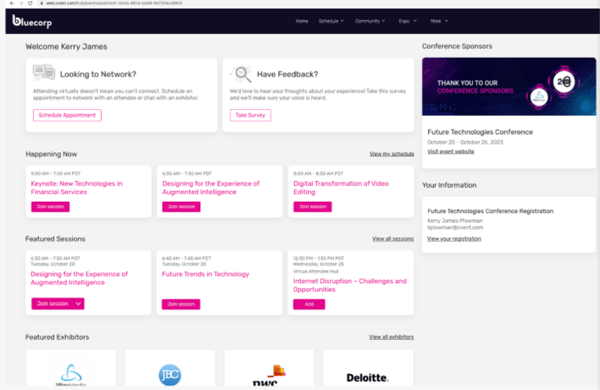
On the tech front, I appreciate that Cvent’s API integrations are stable and play well with our CRM and marketing automation stack. I didn’t need heavy IT involvement during onboarding. Cvent integrates neatly with platforms like Salesforce and HubSpot, allowing us to sync lead and attendee data seamlessly. G2 reviewers also mention Salesforce integration as a key reason for choosing Cvent over single-purpose tools.
Customer support is another win. If I’m stuck, I can hop on their chat or call their 866 number for fast resolutions, and the support team never disappoints. G2 Data shows quality of support at 89%, with reviewers consistently calling out the team’s responsiveness and the value of Cvent’s training programs during initial setup.
That said, it’s not all smooth sailing. One of the most common pain points among G2 reviewers, and I agree, is that Cvent has a steep learning curve for new users, especially when managing complex multi-track events. Custom reporting and filter setup can also feel non-intuitive at first, requiring more time in dropdowns and export settings than expected. That said, G2 reviewers note that Cvent’s training programs and customer success team meaningfully shorten the ramp-up.
A few users also raised concerns about cost and pricing transparency, particularly across different subscription tiers. G2 reviewers note that costs can ramp up quickly as you add modules like Attendee Hub or OnArrival, with per-ticket and per-registration fees compounding on higher-volume events. That said, I’ve found that the ROI from automating manual tasks and improving attendee experience often offsets the premium pricing, especially when managing larger events.
Overall, Cvent earns its Market Presence advantage by serving the corporate, higher-ed, and trade show segments where event programs are large, complex, and multi-stakeholder. For teams running detailed workflows across multiple events with strict branding and reporting requirements, Cvent’s depth is where the platform pays off.
What I like about Cvent Event Marketing and Management:
- Cvent offers everything you need in one place, from setting up registrations to keeping attendees engaged.
- The best part is the number of built-in APIs that you can integrate with other systems and CRMs, and how easy it is to implement them.
What G2 users like about Cvent Event Marketing and Management:
“Feature set that covers the full event lifecycle in one platform. We like that it can handle registration, event websites, attendee communications, reporting, and on-site management without needing a patchwork of separate tools. It’s especially valuable for organizations running more complex events, because the platform is robust, scalable, and built to support detailed workflows, branding, and operational control.”
– Cvent Event Marketing and Management review, Elsworth L.
What I dislike about Cvent Event Marketing and Management:
- Since the platform is feature-rich, G2 reviewers comment that it can have a learning curve for new users, though most note that Cvent’s training programs and customer success team meaningfully shorten the ramp-up.
- Some G2 users also cite that cost of the platform can sometimes run high, particularly when dealing with certain features, while teams running larger or more complex event programs tend to see the ROI in operational savings.
What G2 users dislike about Cvent Event Marketing and Management:
“There’s a learning curve. Although they’ve greatly improved their reporting in the last couple of years, there’s still room to grow in this area.“
– Cvent Event Marketing and Management review, Kyla P.
If you are looking on the best ways to monetize your virtual events, this guide explains ways to expand event ROI through sponsorships, virtual booths, ad placements, and on-demand content sales.
4. RegFox: Best for advanced event configuration and registrant management
RegFox offers attendee tracking, social and email integration, and registrant management features to advertise your upcoming events and drive more signups to your website. As a Leader on G2’s Event Registration & Ticketing Grid Report with 95% of users likely to recommend it, RegFox lets event teams personalize form templates, structure tiered ticketing, and automate confirmation workflows through a pay-as-you-go pricing model.
What stood out right away was how customizable everything is, from the registration form layouts to the branding and payment logic. Unlike other event software that forces you into a rigid workflow, RegFox gives you a lot of control over forms. G2 Data backs this with the user registration process feature on RegFox, socring93%, one of RegFox’s highest-rated features, with reviewers consistently calling out the form builder’s flexibility.
I was able to build tiered ticketing structures, embed promo codes, and even automate confirmation emails with ease. Conditional logic in forms lets event teams trigger different fields, ticket types, or follow-up workflows based on registrant input. G2 Data shows event creation at 93% and payment processing at 92%, reflecting how reliably RegFox handles end-to-end ticketing and registration logic.
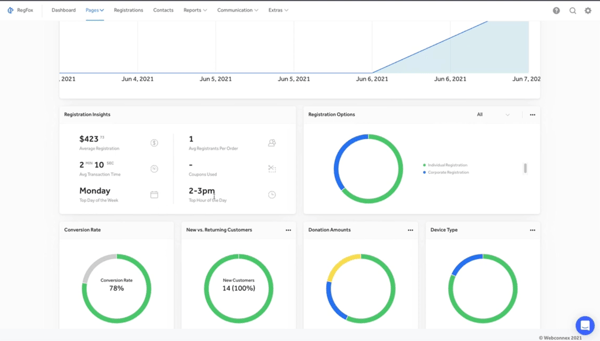
Another timesaver is RegFox’s ability to copy actions and templates to spin up new events quickly. Pulling registration data, revenue, and form conversion stats from one dashboard works well for basic reporting needs, and the export options are solid for internal reconciliation. G2 reviewers running multiple similar events particularly appreciate how page duplication cuts setup time across recurring gatherings.
What’s also been refreshing is RegFox’s customer support. Whether it’s live chat, email, or the Finn AI assistant for quick questions, the team is responsive and knowledgeable. They’ve helped me solve last-minute issues before doors opened at more than one event. G2 Data shows quality of support at 98%, with reviewers calling out custom training videos and hands-on walkthroughs as standout touches.
From a pricing standpoint, RegFox doesn’t push you into a bloated subscription. The core platform offers essential premium features like conditional logic, affiliate tracking, merch upsells, and customizable checkout flows. You can layer in what you need, like advanced analytics or text message updates, without paying for an entire enterprise suite. G2 reviewers in non-profit and small business segments especially praise this pay-as-you-go model for letting them pay only for what they use during active events.
Another factor that lands well in reviews is how quickly new users can get started. G2 reviewers consistently describe RegFox as intuitive and easy to navigate, with several noting that they were able to figure out the platform with minimal training. For teams without dedicated event ops resources, the combination of clear interface, helpful templates, and AI-assisted onboarding shortens the learning curve significantly.
Now, while RegFox has been a solid choice, it’s not without a few quirks. G2 reviewers note that dynamic email personalization beyond registration data is an area with room to grow. Teams looking to tailor messaging based on registrant behavior or segment-specific triggers may find the options more standard. That said, for teams running standard confirmation and reminder workflows, RegFox’s built-in email tools cover what most event setups need reliably.
Some G2 reviewers also mention friction with moving registrants between event pages, since transferring a registration today often means cancelling and re-entering the data on the new page. A few teams running similar recurring events would also like more flexibility around microsites or multi-page event structures. For most single-event setups, these workflow gaps stay invisible, but they can add steps for teams running complex multi-track or recurring programs.
Overall, what makes RegFox stand out among event registration tools is its combination of deep form customization, transparent pay-as-you-go pricing, and an exceptionally responsive support team. For event teams running varied paid registrations who want fine-grained control without committing to an enterprise subscription, RegFox’s flexibility is the main reason to consider it.
What I like about RegFox :
- RegFox offers different ways to customize content or add questions to forms to get the information you need.
- RegFox’s customer support consistently goes above and beyond. G2 reviewers regularly call out fast live chat responses, the Finn AI assistant for quick questions, and custom training videos that few competitors offer.
What G2 users like about RegFox:
“Regfox is really easy to use and pretty simple to navigate. The Actions tab on the pages has been a huge help for us, especially when it comes to tailoring each page to the specific needs of our courses. We also really like the deposit options available for registrations, or for anything else we need them for. Pulling reports is very easy and really nice when you can pick and choose the exact data needed.”
– RegFox review, Amanda R.
What I dislike about RegFox:
- Dynamic email personalization beyond registration data comes up in G2 reviews as an area with room to grow. For teams running standard confirmations and reminders, the built-in email tools cover most event communication needs reliably.
- Some G2 reviewers also point out that moving registrants between event pages currently requires canceling and re-entering the data, which can add steps for teams managing recurring or multi-track events. For single-event setups, this workflow gap rarely surfaces and the standard registration flow stays smooth.
What G2 users dislike about RegFox:
“I think one area for improvement would be the ability to transfer a registrant from one page to another without having to cancel the current registration on the original page and then re-enter all the information on the other page. This would save us time and also help avoid confusion for registrants if they accidentally register on the wrong page.”
– RegFox review, Verified User in Recreational Facilities and Services.
5. Swoogo: Best for agenda building and automated communication
Swoogo is designed to handle in-person, online, or hybrid interactions with increased operational efficiency and transparency. With 100% of G2 reviewers rating it 4 or 5 stars and 99% likely to recommend it, Swoogo helps event teams manage registration pages, widgets, attendee counts, communications, and the full event management cycle from one platform.
Swoogo’s biggest strength is its flexibility and user-friendly nature right out of the gate. G2 reviewers frequently call out how intuitive the interface is, making it easy for both new and experienced users to build event sites without needing technical skills. Reviewers specifically mention how quickly they can spin up landing pages and adjust elements to fit their needs.
Another standout is the customization. Whether it’s registration paths, branded templates, or conditional logic, you can tweak almost every aspect to fit your workflows. G2 reviewers particularly appreciate the conditional logic and visibility settings during registration, which let event teams control what different audiences see and when, making it easier to build clean, intentional registration flows for varied audiences.
Where Swoogo aligns with its position as a tool for agenda building and automated communication is in its session and email workflow capabilities. Event teams can build out conference schedules with speakers, tracks, and sessions, then trigger automated invitations, confirmations, and reminders across registrant segments. G2 reviewers particularly value how quickly they can send communications to exhibitors and attendees without leaving the platform.
Swoogo also handles integrations well. Syncing with Salesforce, Zoom, HubSpot, On24, and Eloqua has been smooth in my testing, with G2 reviewers calling out the platform’s ability to plug into existing marketing and CRM tools without custom development work. For teams running events as part of a broader pipeline, this integration depth keeps registration data flowing into the systems sales and marketing actually use.
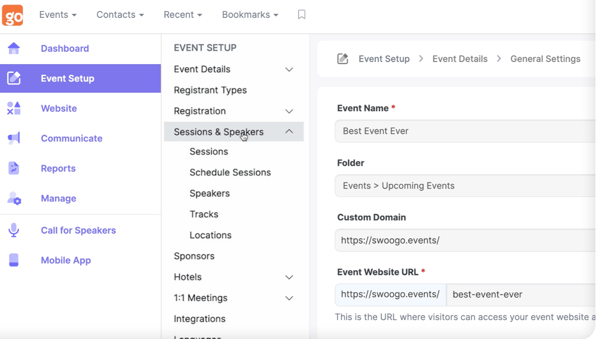
Another consistent theme in G2 reviews is Swoogo’s scalability across event types. Reviewers describe using the platform for everything from single-day webinars to multi-day, multi-track conferences, with multiple team members able to work in the same system without friction. For organizations running diverse event programs, having one platform that handles the full range of formats keeps operational overhead lower than juggling separate tools.
On top of all that, Swoogo’s support team is second to none. G2 reviewers consistently call out fast, knowledgeable, and genuinely helpful assistance, with several mentioning that responses come from actual humans rather than bots, often within hours. The team is willing to jump on calls to walk through complex setups, which sets Swoogo apart in a category where most platforms route everything through ticket queues.
That said, reporting can be a bit rigid when you’re managing multiple stakeholders or events. G2 reviewers note that while tools like the Snapshot Report give a great overview, deeper cross-event analytics and traffic insights still have room to grow. Still, for most teams, the built-in exports and filters cover the day-to-day reporting needs.
Another small limitation is that Swoogo’s mobile app doesn’t currently handle on-site essentials like badge printing, lead scanning for sponsors, or session ratings. Teams that need these features typically pair Swoogo with an external on-site partner and users note that Swoogo is actively improving the app experience.
Overall, what makes Swoogo stand out among event registration tools is its combination of intuitive design, deep customization through conditional logic, and a support team that operates more like a partner than a vendor. For event teams running varied agendas, webinars, and multi-track conferences who want a platform that scales without sacrificing usability, Swoogo’s combined breadth and approachability is the main reason to consider it.
What I like about Swoogo:
- What I loved about Swoogo is how intuitive it is to set up registration forms, manage attendee data, and customize event pages without constantly referring to documentation.
- Swoogo also has one of the best customer support models. G2 reviewers consistently note that responses come from real humans rather than bots, often within hours, with the team willing to hop on calls to walk through complex setups.
What G2 users like about Swoogo:
“Swoogo’s features make our lives easier when we’re implementing new functionalities and building new paths across our 100+ events throughout the year. The support team is truly amazing—our questions are usually answered within minutes, and the documentation covers almost everything most of the time. The app is easy to use and understand, and it consistently releases new features every month.”
– Swoogo review, Anabelle R.
What I dislike about Swoogo:
- Cross-event reporting and traffic insights have room to grow, with G2 reviewers noting it can be harder to view trends across multiple events in one place. For teams running standalone events or focused agendas, the built-in dashboards and export options cover day-to-day reporting needs reliably.
- On-site features like badge printing and lead scanning currently require pairing Swoogo with a third-party partner. For teams focused on registration, agenda management, and automated attendee communication, Swoogo’s core platform delivers everything they need without the added complexity.
What G2 users dislike about Swoogo:
“While offered through third parties, we do wish they did badge printing and event text messaging.”
– Swoogo review, Ashley G.
Need a master checklist for every stage of your event? Download G2’s Ultimate Event Planning Guide for a step-by-step plan covering six months out through post-event wrap-up.
6. Whova: Best for attendee engagement and on-site logistics
Whova is a unified event management platform that controls ticket registration, attendee management, personalization of forms, networking, and post-event communication all in one place. As a Leader on G2’s Event Registration & Ticketing Grid Report with 97% of users likely to recommend it, Whova helps event teams manage attendee networks, generate speaker welcomes, and run engagement programs from a single intuitive interface.
What stood out most to me, and what G2 reviewers consistently echo, is how Whova consolidates an entire conference into a single mobile and web experience. Registration, agendas, attendee profiles, expo booths, networking, conversation topics, and post-event follow-ups all live in one place. For attendees and organizers juggling multi-day events, having one app handle everything from check-in to community discussions reduces the cognitive load of switching between tools.
What instantly clicked was how easy it was to navigate from the agenda to networking tools. The user interface is seriously intuitive. I could filter sessions, bookmark the ones I wanted to attend, and even get reminders when they were about to start. It made managing my time so much easier, especially since I could view sessions by track, type, or speaker, and G2 reviewers specifically call out how Whova surfaces real-time agenda changes during multi-track conferences.
One of the most underrated features, in my opinion, is Whova’s networking layer. I was able to connect with other attendees before the event even started. The attendee profiles, icebreaker prompts, and in-app messaging helped me start conversations that turned into real-world meetings, with several G2 reviewers noting they specifically use Whova to keep in touch with people they met at conferences months earlier.
On top of one-on-one connections, the community board and meetup features add a group dimension to attendee engagement. I used the community board to join a few meetups during a conference, which felt like a modern spin on old-fashioned networking mixers. G2 reviewers running coaching, association, or industry conferences particularly value these features for helping attendees self-organize around shared interests.
The app also lets organizers run live polls, host Q&A sessions, and broadcast live streams, which adds a real-time, interactive flavor to sessions. This was especially helpful during hybrid events where I could participate in a poll and ask speakers questions without feeling disconnected from in-person attendees.
And the mobile app itself is fast, clean, and rarely buggy in my testing, which is more than I can say for some other event apps. G2 reviewers also frequently call out the photo sharing feature, which lets attendees upload and view pictures from the event in real time, adding a layer of community that text-only platforms tend to miss.
One minor issue I saw in G2 reviews were notifications. A few G2 reviewers note that everything gets funneled into a single notification icon, which makes it tricky to track down what triggered a particular alert. That said, the real-time reminders themselves are genuinely useful for staying on top of session changes, and most teams running short conferences find the trade-off acceptable.
Another issue is that some things can be hard to find. G2 users notice a small learning curve for navigating the app, with some mentioning it can be tricky to backtrack to a screen they were working on. That said, once you get familiar with the layout, the platform does a great job surfacing alerts and supports seamless coordination with fellow speakers and stakeholders during the event.
Overall, what makes Whova stand out among event registration tools is its breadth across attendee engagement, on-site logistics, and pre- and post-event networking. For organizers running multi-day conferences who want one app to handle everything from session reminders to community-driven meetups, Whova’s depth is the main reason to consider it.
What I like about Whova:
- Whova helps attendees stay informed of any and all changes to schedules or meeting locations during the event. G2 reviewers running multi-day conferences specifically value how the platform surfaces these real-time updates in the agenda without forcing manual refreshes.
- Whova’s networking features are on par. G2 reviewers consistently call out how attendee profiles, in-app messaging, and connection features help them keep in touch with people they met at conferences months earlier.
What G2 users like about Whova:
“Ease of use in seeing participants, commenting on presentations, finding the Agenda, uploading pix & comments make attending the conference richer and easier to coordinate contacts and networking.”
– Whova review, Matthew S.
What I dislike about Whova:
- G2 reviewers noted that notifications didn’t reset properly, and a few alerts were getting repeated. That said, it didn’t disrupt the app’s performance.
- Navigating the app requires a small learning curve. Some G2 users have mentioned that, at times, they struggle to get back to the same screen they were previously working on. That said, most reviewers report the navigation becomes intuitive within the first few sessions, particularly for teams using Whova across multiple conferences each year.
What G2 users dislike about Whova:
“The previous/back button kept taking me back to the home page, so I had to navigate back to where I was or try to remember where I left off. The Community tab also felt a bit disorganized since it wasn’t categorized or alphabetized. I also ran into a small issue with the in-app survey: two questions that appeared to be the same offered different point values (one for 4,000 points and another for 6,000). If you answered one, you missed the chance to answer the other for the leaderboard.”
– Whova review, Patricio G.
Other top-rated event registration and ticketing platforms to consider
Now, there are a few more options, as mentioned below, that didn’t make it to this list but are still worth considering, in my opinion:
- TicketSpice: TicketSpice is a highly customizable ticketing platform with a pay-per-ticket pricing model, making it a strong option for teams that want full control over their registration pages and checkout experience without a subscription commitment.
- vFairs: If you are a virtual, hybrid, or in-person event, vFairs equips you with customizable forms, seamless check-in, and branded experiences built for scale, making it a reliable partner for professional event execution.
- Purplepass: Purplepass is a full-service ticketing and event management platform with one of the highest satisfaction scores in its tier. It handles online and box office sales, reserved seating, and attendee management, making it a strong fit for teams running ticketed in-person events.
- Webex Events & Webinars: If you are looking for enterprise solutions, Webex Events & Webinars combines event registration with Cisco’s enterprise-grade infrastructure, offering strong market presence and built-in tools for webinars, virtual sessions, and hybrid event delivery.
- RSVPify: RSVPify is a streamlined event registration platform built around customizable RSVP forms, guest list management, and automated confirmations — a practical option for teams running invitation-only or private events without needing a full ticketing engine.
- Bizzabo: Bizzabo is an enterprise event management platform with strong market presence and tools for sponsor management, exhibitor activation, and B2B event marketing — worth considering for larger organizations running conference and trade show programs.
Frequently asked questions (FAQs) about the best event registration and ticketing software
Got more questions? Here are the answers.
1. What are the most trusted event registration and ticketing solutions for operations manager teams based on user reviews?
Swoogo leads with a 4.9-star rating on G2, making it the highest-rated option among the platforms covered here. Whova follows at 4.8 stars, while Jotform earns 4.7 stars from the largest review base. For operations managers who need a proven track record at scale, Cvent and Whova are the most battle-tested, with reviewers consistently praising centralized data management and reliable attendee tracking.
2. What are the most reliable event registration and ticketing platforms based on reviews from operations managers in technology companies?
Swoogo earns strong marks from computer software and IT services companies, with mid-market administrators noting it’s “incredibly intuitive to implement and maintain” with all the functionality that a busy team would want. Whova reviewers from computer software companies highlight ease of use and the ability to keep all conference information centrally accessible. For tech operations teams running internal or external events, both platforms come up repeatedly as reliable day-to-day choices.
3. What are the highest-rated event registration and ticketing platforms for mid-market technology companies focused on easy integration delivery?
Swoogo reviewers from mid-market tech companies specifically call out API and integrations as a standout, noting the platform connects seamlessly with multiple external tools and supports end-to-end automation flows. Jotform is widely cited for smooth integration with Google Sheets, Slack, HubSpot, Salesforce, and payment processors, with teams reporting go-live times under a day using in-house setups. For tech companies that prioritize integration depth without heavy configuration, these two consistently rank highest.
4. What are the best event registration and ticketing platforms for mid-market organizations that require real-time visibility?
Cvent’s reporting allows teams to “create diagrams, display specific information, and filter to view exactly what I need,” with reviewers praising the ability to manage registration, communication, and post-event analytics in a single platform. Jotform provides real-time notifications and organized data capture that feeds directly into Google Sheets and OneDrive. Swoogo also earns consistent praise for cross-event tracking and reporting, with one mid-market administrator managing 15–20 events annually calling it their primary tool for staying on top of registrant data.
5. Which event registration and ticketing solutions have the simplest configuration and onboarding for non-technical teams in mid-market companies?
Jotform mid-market reviewers consistently report going live in under a day with in-house implementations — the drag-and-drop builder lets teams build professional forms without any coding knowledge. Swoogo administrators describe setup as “straightforward,” with the platform making it easy to understand all event elements and templatize events to reduce time to market. RegFox is also worth evaluating for teams that want a focused registration setup without the overhead of a full event management suite.
6. Which event registration and ticketing solutions deliver streamlined workflow while maintaining strong user team adoption?
Swoogo reports 100% adoption among multiple mid-market user groups, with administrators describing it as “an indispensable part of my daily routine” that teams embed into daily workflows without a complicated learning curve. Whova mid-market reviewers report attending five to eight conferences a year and continuing to rely on the app because it keeps all event information in one simple, accessible place — pointing to durable usage well beyond initial rollout. Jotform shows similarly high adoption among mid-market administrators running recurring registration workflows.
7. What are the top event registration and ticketing platforms for technology companies seeking easy integration and minimal implementation complexity?
Swoogo scores highest on API and integrations from technology company reviewers, with teams noting it connects effortlessly with external tools and supports full marketing and registration automation. Jotform integrates with over 200 apps including Salesforce, Zoom, and payment processors, with tech-company reviewers reporting in-house implementation completed in under a day. For teams that want minimal friction alongside broad connectivity, these two consistently rank at the top. Whova and Eventbrite are also worth considering depending on event type and scale.
8. Which event registration and ticketing platforms provide streamlined workflow without expensive implementation costs or outside consulting?
Jotform mid-market reviewers report zero one-time setup costs, month-to-month contract options, and in-house implementations going live in under a day — with the free plan covering most registration needs for a long stretch before an upgrade is needed. Swoogo reviewers note the platform allows a one-person event team to build and manage a polished multi-event presence without outside consultants. RegFox and Eventbrite are also positioned as lower-barrier options for teams that don’t need enterprise-level implementation support.
9. Which event registration and ticketing tools do teams actually keep using beyond rollout instead of reverting?
Swoogo shows full adoption in several mid-market teams, with one reviewer using it for over five years and another noting 100% team adoption within their organization. Jotform reviewers with three to five years of use describe it as a consistent platform across surveys, registrations, and data collection workflows — the multi-use stickiness that prevents tool abandonment. Whova demonstrates similarly durable usage, with several reviewers reporting three to five years of continued use across multiple conferences per year.
10. Which event registration and ticketing platforms support real-time visibility without sacrificing system stability and overall data integrity?
Cvent is the strongest pick for data integrity at scale — one administrator managing thousands of annual events calls it “a really critical piece of infrastructure” for maintaining accuracy across a large Salesforce-integrated account. Swoogo rates 7/7 on performance and reliability from multiple mid-market reviewers, who also highlight robust reporting and registrant analytics. Whova earns the same top reliability marks from its mid-market reviewers, with the platform consistently described as stable and centralized for conference-heavy use cases.
11. What are the best platforms for managing event sponsorships?
Whova, Cvent, and Bizzabo are the top options for sponsor management. Whova offers in-app sponsor profiles and lead scanning, Cvent provides enterprise-grade sponsor portals and lead retrieval, and Bizzabo includes dedicated tools for sponsor activation and ROI tracking.
12. What are the best tools for combining event marketing with content marketing?
HubSpot Marketing Hub, Eventbrite, and Marketo Engage bridge event and content marketing well. HubSpot ties event registrations to broader content campaigns, Eventbrite’s marketplace surfaces events alongside content discovery, and Marketo connects event data with content scoring and lead nurturing.
13. What are the top-rated event registration and ticketing platforms for trade shows?
Cvent, Bizzabo, and ExpoPlatform are the strongest picks for trade shows. Cvent is widely used for enterprise trade shows with on-site logistics, Bizzabo offers exhibitor and sponsor management tools, and ExpoPlatform specializes in trade show floor planning and lead retrieval.
14. What are the best online registration tools for workshops?
Jotform and RegFox work well for workshop registrations. Jotform’s drag-and-drop builder and conditional logic make it easy to set up intake forms quickly, while RegFox supports tiered ticketing and promo codes for paid workshop formats.
15. What are the top-rated ticketing platforms for charity events?
Jotform and Eventbrite are the strongest fits for charity and nonprofit events. Jotform’s free plan with payment integrations suits smaller nonprofit budgets, while Eventbrite’s marketplace helps drive ticket discovery for public-facing fundraising events.
16. Which event registration system is best for small businesses?
Jotform and RegFox are the best fits for small businesses. Jotform’s free plan covers core registration needs, while RegFox’s pay-as-you-go model means small teams only pay during active events.
Set up your event with pomp and show!
Before you evaluate your choices, take a good look at your employee bandwidth, existing resources, network infrastructure, and budget to prepare a proper framework for your investment. If you are serious about investing in an event registration and ticketing tool, it’s better to factor in your current assets and projections at this stage, which will lessen your workload in the later stages of evaluation. Consider how these tools align with your brand experience, drive attendance, and offer the best return on investment.
As far as my own evaluation goes, all the tools on this list fit the market standards and are likely to provide you with event automation to amplify your brand experience. But if you require a more in-depth analysis, you can consult a professional for more in-depth G2 data or come back to this list!
Pair registration tools with the best virtual event platforms to deliver a seamless attendee journey from sign-up to participation.
“`html
[ad_2]
Source link


