
Table of Contents
[ad_1]
A surprising discovery inside desert mosses could reshape scientists’ understanding of plant evolution.
In some of the driest places on Earth, the ground itself can be alive. What looks like a thin, dark crust on desert soil may actually be a miniature ecosystem, packed with mosses, fungi, bacteria, algae, and tiny animals. These biological soil crusts help hold fragile landscapes together, trapping dust, storing nutrients, and protecting the ground from erosion.
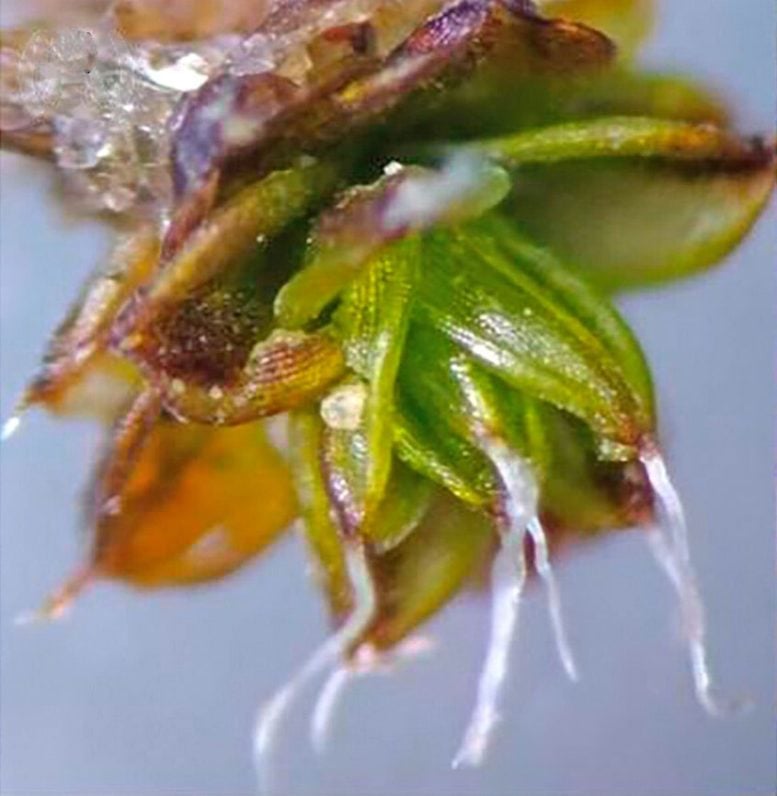
Mosses are among the toughest members of these communities. They can dry out until they appear nearly dead, then revive after a brief rain. Some species survive on bare rock, endure intense heat, and tolerate long stretches without water. Their durability has even led scientists to explore whether mosses could someday help support life in extreme environments beyond Earth.
Now, researchers at UC Riverside say desert mosses may have another survival tool: fungi living inside their tissues. The evidence, published in New Phytologist, points to a relationship that has not previously been documented in mosses.
If confirmed, the finding could reshape a basic assumption about moss biology. It may also offer a new window into one of the biggest turning points in Earth’s history, when plants first began spreading across land roughly 470 million years ago.
Why Mosses Were Thought To Be Different
Most land plants do not face the world alone. More than 85% form relationships with fungi that help them obtain nutrients from soil. In return, the fungi receive sugars that plants make through photosynthesis.
One of the most important groups in these partnerships is arbuscular mycorrhizal fungi, or AMF. These fungi are found with about three-quarters of plant species and are known for forming tiny branching structures inside plant roots, where nutrients can be exchanged.
Mosses have long been treated as an exception. Unlike flowering plants, trees, and many crops, mosses lack true roots. For decades, scientists generally believed that all 10,000 known moss species lived without this kind of fungal partnership.
“That’s been the model,” said Jason Stajich, a UCR professor of microbiology and plant pathology and co-author of the study. Mosses, he explained, simply didn’t need fungi.
Searching the Desert for Clues
To examine that assumption, UCR doctoral researcher Kian Kelly collected mosses from the Mojave and Sonoran deserts, where daytime temperatures can rise above 100 degrees Fahrenheit (38 degrees Celsius). These deserts are harsh field sites, but they are also ideal places to study survival strategies because water is scarce, heat is intense, and life is under constant pressure.
Kelly focused on mosses growing in biological soil crusts. These crusts are sometimes described as the living skin of deserts because they help stabilize loose soil and support dryland ecosystems. They are also extremely fragile. A single footprint, tire track, or other disturbance can damage them for decades.
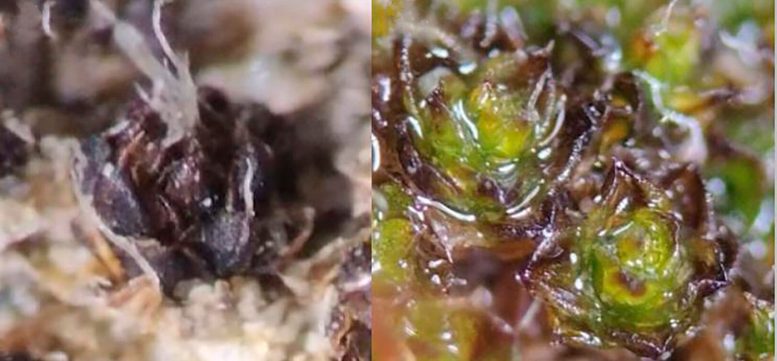
“Sometimes I couldn’t find the same species of moss,” Kelly explained, describing long searches in extreme heat to collect comparable moss species from both desert and less arid environments.
The researchers wanted to know whether mosses from different climates contained different fungal communities. That question matters because drylands are expanding in many parts of the world. If certain fungi help mosses tolerate hot, dry conditions, they could influence how desert ecosystems respond to climate change.
Fungal DNA Reveals a Surprise
In the lab, the team ground up moss samples and searched for fungal DNA. The results showed that fungi were present inside the mosses.
The most unexpected finding was the presence of mycorrhizal fungi, which are known to depend on plant partners. These fungi were not simply the same organisms found in the nearby soil. The fungal communities inside desert mosses also differed from those in mosses collected from less severe environments.
“We suspect that certain fungi are more helpful for surviving hotter, drier climates,” Kelly said.
That pattern made contamination less likely. If the fungi had merely come from dirt stuck to the mosses, the researchers would have expected the DNA inside the plants to look more like the DNA in surrounding soil. Instead, the results suggested a more selective relationship.
Microscopy Strengthens the Case
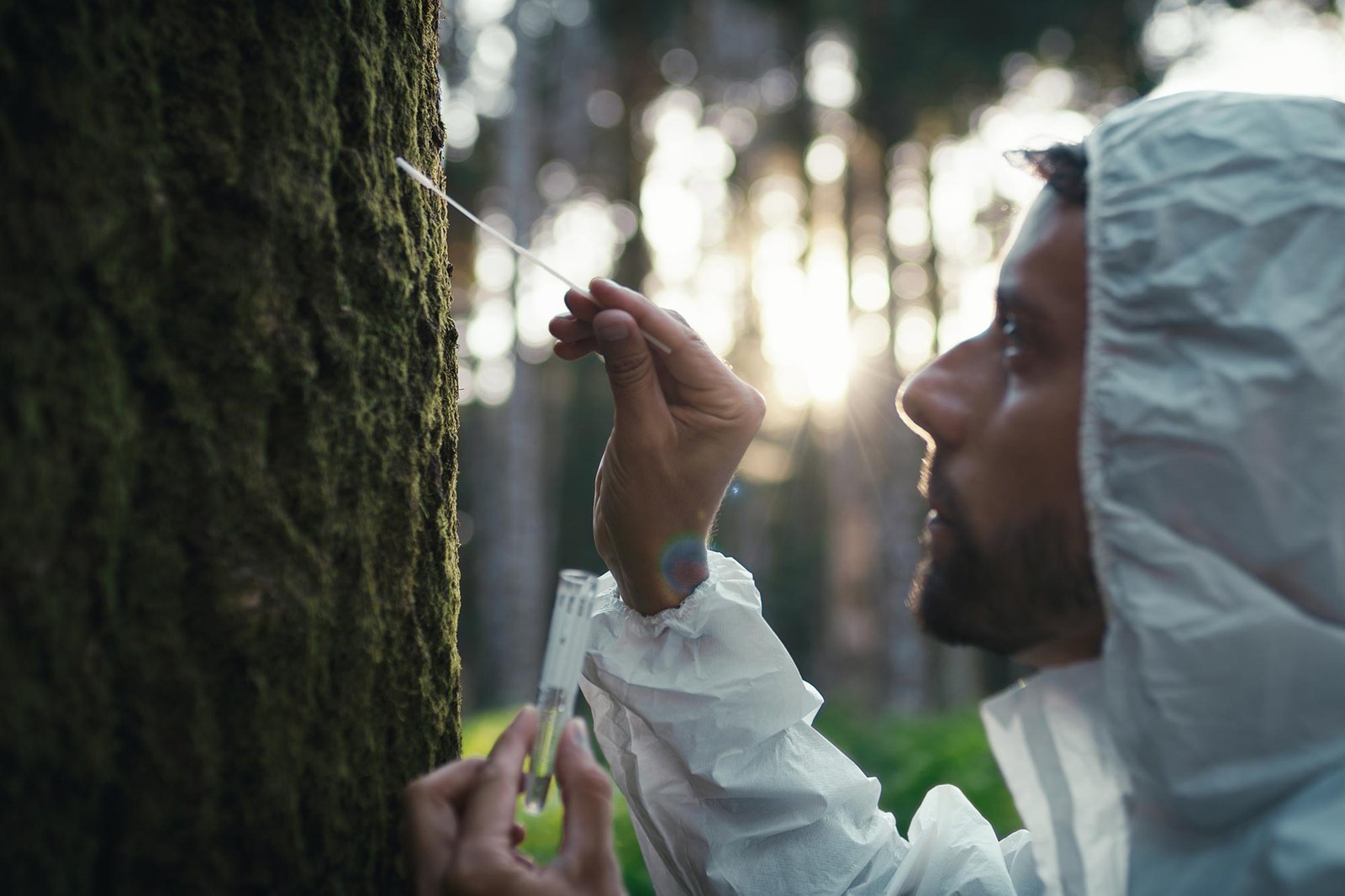
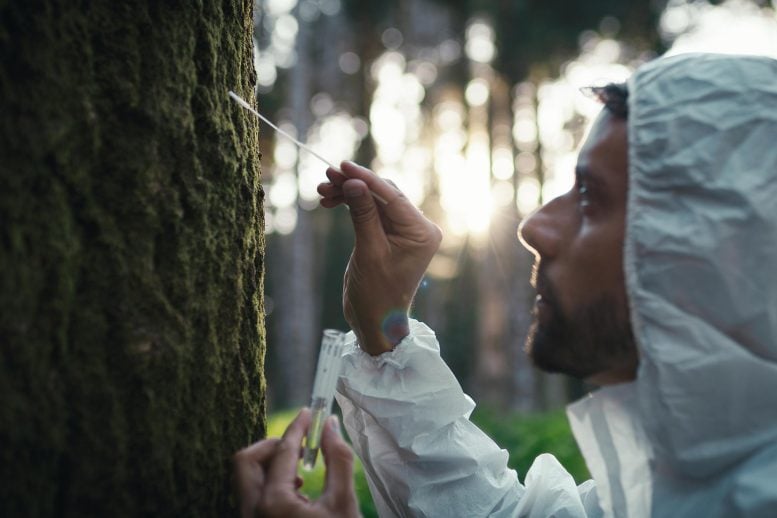
DNA alone cannot prove that fungi are actively living within plant tissues. To look for physical evidence, Kelly stained moss tissue with a blue dye that binds to fungi, then examined the samples under a microscope.
Inside moss cells, he saw branching fungal structures.
“As soon as I saw that, I knew we had something really interesting,” Kelly said.
The structures resembled arbuscules, the tree-like formations that mycorrhizal fungi typically build inside plant roots. But mosses do not have true roots, and these structures appeared in leaves instead.
For that reason, the researchers call them “arbuscule-like.” The structures look similar to known nutrient exchange sites in other plants, but scientists still need to show whether mosses and fungi are actually trading resources. Until that happens, the relationship cannot be formally described as a true symbiosis.
A Possible Link to the First Land Plants
The discovery could have implications far beyond desert ecology. Mosses belong to an ancient lineage of plants and are close relatives of some of the earliest plants that lived on land.
When plants first moved out of water, they faced major challenges. They needed ways to obtain nutrients, avoid drying out, and survive without the support of an aquatic environment. Fungal partners may have helped early plants overcome some of those barriers. Evidence of plant and fungal associations appears deep in the fossil record, and many scientists consider these partnerships central to the greening of Earth’s continents.
If mosses can host mycorrhizal fungi in a way that scientists previously missed, it could change how researchers think about the early evolution of plant-fungal relationships.
Why It Matters for Desert Recovery
The findings may also point toward new restoration strategies for damaged drylands. Biological soil crusts are increasingly threatened by warming temperatures, drought, grazing, off-road vehicles, and foot traffic. Because these communities grow slowly, recovery can take years or even decades.
For now, the study does not prove that fungi are helping mosses survive. It does, however, reveal a hidden association that scientists did not expect to find.
“The desert,” Kelly said, “is full of things people overlook. Sometimes, the biggest surprises are the ones growing quietly beneath our feet.”
Reference: “Novel Glomeromycotina–moss associations identified in California dryland biocrusts” by Kian H. Kelly, Claudia Coleine, Chris Coshland and Jason E. Stajich, 4 May 2026, New Phytologist.
DOI: 10.1111/nph.71211
Never miss a breakthrough: Join the SciTechDaily newsletter.
Follow us on Google and Google News.
[ad_2]
Source link


