
Table of Contents
The deep ocean remains Earth’s final frontier. More than 80% of our planet’s oceans are unmapped, unobserved, and unexplored. We know more about the surface of Mars than we do about our own deep sea. But what we have discovered so far only deepens the mystery. From strange sounds echoing across the abyss to creatures that seem to belong to another world, the deep ocean is a realm of unsolved enigmas. Let’s dive into the most captivating deep ocean mysteries that continue to challenge our understanding.
The Enigmatic Sounds of the Deep
For decades, scientists have recorded mysterious noises coming from the depths of the ocean. One of the most famous is the “Bloop,” an ultra-low frequency sound detected by NOAA in 1997. It was so loud that it was picked up by sensors over 5,000 kilometers apart. Initially, many speculated it came from a massive, unknown sea creature. However, later analysis linked it to icequakes—glaciers cracking and calving in Antarctica. But not everyone is convinced, and new unexplained sounds keep appearing.
The “Julia” and “Slow Down”
Another mysterious sound is “Julia,” recorded in 1999. It lasted about 15 seconds and was described as a moan. Like the Bloop, it was attributed to ice movement, but the exact source remains uncertain. Then there’s “Slow Down,” a sound that decelerates in frequency over time. These and other unexplained noises are part of a growing catalog of deep ocean mysteries that remind us how little we know about our own planet. For a broader look at such puzzling events, check out Seeking Answers: The World’s Most Intriguing Unexplained Phenomena.
Life in the Abyss: Creatures Beyond Imagination
The deep ocean is home to bizarre life forms that push the boundaries of biology. Many species have adapted to extreme pressure, total darkness, and scarce food. But some creatures remain elusive, appearing only as legends or blurry photographs.

The Giant Squid: From Myth to Reality
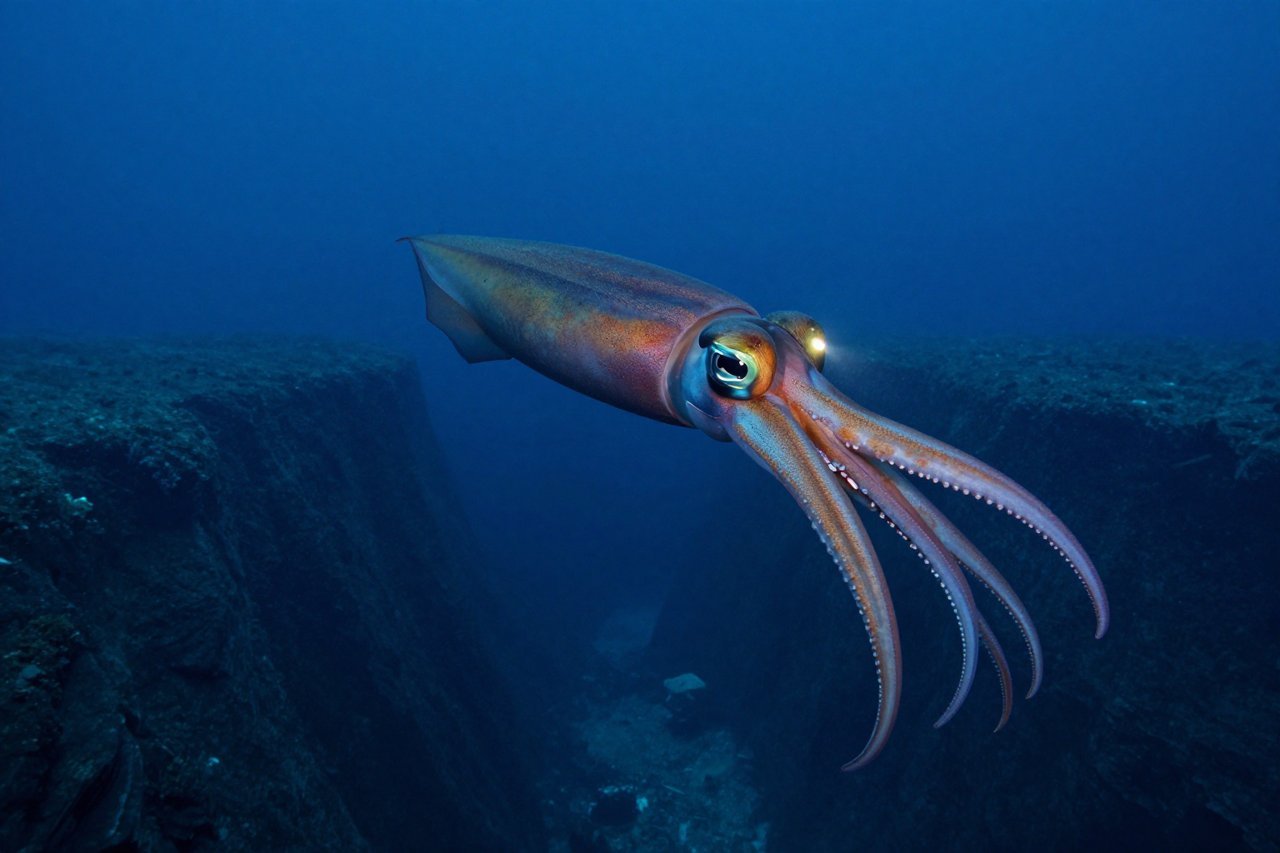
For centuries, giant squids were the stuff of sailor tales. It wasn’t until 2004 that a live adult was filmed in its natural habitat. And in 2012, a team finally captured high-definition footage off the coast of Japan. Yet the giant squid is still rarely seen, and its colossal cousin, the colossal squid, is even more mysterious. These deep-sea giants can grow up to 14 meters long and have eyes the size of dinner plates. How they live and hunt at depths of 1,000 meters remains a partial mystery.
New Species Discovered Every Year
With every deep-sea expedition, scientists haul up creatures that look like aliens. The barreleye fish has a transparent head, the vampire squid turns inside out to evade predators, and the dumbo octopus flaps ear-like fins. There are even fish that produce light through bioluminescence to attract mates or confuse enemies. The list goes on. For a deep dive into the strangest beings of the deep, read Into the Abyss: Discovering the Strangest Deep Sea Creatures on Earth.
Underwater Geological Anomalies
The seafloor is not a flat, featureless plain. It’s covered with mountains, trenches, and volcanoes. But some formations defy easy explanation.
The Baltic Sea Anomaly
In 2011, Swedish ocean explorers discovered a large, circular object on the floor of the Baltic Sea. The “Baltic Sea Anomaly” resembles a 60-meter-wide disc with straight lines and strange angles, leading to wild theories of a sunken UFO or ancient monument. Scientists argue it’s a natural geological formation shaped by glacial movements, but the debate continues. The object is magnetic and seems to disrupt electronic equipment, adding to its mystery.
Underwater Crop Circles
Off the coast of Japan, divers have found intricate geometric patterns carved into the sandy seabed. These so-called “underwater crop circles” are actually created by male pufferfish to attract mates. The fish swim in circles and use their fins to sculpt the sand into radial patterns. It’s a stunning example of animal architecture, but when first discovered, no one knew what created them. Even now, the precision of these circles amazes scientists.
These geological puzzles are part of a larger tapestry of mysterious phenomena on Earth. If you’re fascinated by such riddles, you might also enjoy exploring Echoes of the Past: The Most Mysterious Lost Civilizations and What They Leave Behind.
Lost Cities Beneath the Waves
Legends of sunken civilizations have captured human imagination for millennia. Atlantis is the most famous, but there are real submerged structures that suggest advanced societies once thrived where oceans now reign.
The Yonaguni Monument
Discovered off the coast of Japan’s Yonaguni Island, this massive underwater rock formation resembles stepped pyramids, terraces, and straight walls. Some researchers believe it’s a natural formation enhanced by human hands, while others argue it’s entirely natural. The monument is about 10,000 years old, which would predate known civilizations in the region. Could it be evidence of a lost prehistoric culture? The debate rages on.
Dwarka: The Sunken City of Krishna
In the Gulf of Khambhat, India, marine archaeologists have found remnants of a city underwater. Known as Dwarka, it is mentioned in ancient Hindu texts as the kingdom of Lord Krishna. Carbon dating places some artifacts at around 7500 BCE, making it one of the oldest known urban settlements. The site includes walls, pillars, and stone anchors, suggesting a sophisticated harbor. Discoveries like these blur the line between myth and history.
- The Bimini Road – A set of underwater limestone blocks off the Bahamas that looks like a paved road, possibly natural or part of an ancient port.
- Cuba’s Sunken City – Sonar images from 2001 revealed symmetrical structures at depths of 700 meters, sparking theories of a lost civilization.
- Heracleion – The Egyptian city of Heracleion was thought to be a legend until its remains were found submerged in the Mediterranean, complete with statues and inscriptions.
The search for lost civilizations ties directly into deep ocean mysteries. The same waters that hide these ancient secrets also conceal phenomena that challenge our understanding of the world.
The Ocean vs. Outer Space
It’s a curious paradox: we often look to the stars for answers, yet Earth’s own depths hold just as many questions. The deep ocean is more inaccessible than space in some ways. Pressure at the Mariana Trench is over 1,000 times that at sea level, crushing anything not designed to withstand it. We have sent more people to the moon than to the deepest point in the ocean. In fact, only three people have ever visited the Challenger Deep, the ocean’s deepest point at nearly 11,000 meters. Compare that to the 12 astronauts who walked on the moon. For more mind-bending facts about the universe, you might explore 25 Mind-Boggling Universe Facts That Will Change How You See the Cosmos, but remember that the ocean holds its own universe of wonders.
Unexplained Disappearances
The Bermuda Triangle is notorious for the unexplained disappearances of ships and aircraft. While many incidents have been debunked or attributed to natural causes, some remain puzzling. Deep ocean currents, rogue waves, and gas hydrates could be responsible, but definitive evidence is often missing. The ocean’s ability to swallow things without a trace is a sobering reminder of its power. Each mystery fuels the imagination, but also drives scientists to seek explanations using advanced technology like autonomous underwater vehicles and deep-sea submersibles.
As technology improves, we will continue to peel back the layers of the deep ocean mysteries. But for now, the abyss keeps its secrets well. The darkness, pressure, and sheer scale of the ocean ensure that many questions remain unanswered. And that’s exactly what makes it so fascinating. The deep ocean is a realm of perpetual discovery, where every dive brings back new wonders and new puzzles. Whether you’re a marine biologist or a curious reader, the mysteries of the deep call to us, inviting exploration and wonder.


