
Table of Contents
Rivers were the world’s first highways. Long before trains and tarmac, they carried grain, gold, armies, and ideas. Today they carry something different: travellers who want to see a continent without unpacking more than once. River cruises have grown from a niche hobby into one of the most popular ways to explore Europe, Asia, and beyond, and their appeal goes deeper than convenience. There is no rocking sea, no queue for a shuttle bus, and no sea day spent staring at nothing. Instead, there are lock gates, vine-covered hills, old stone bridges, and a new town waiting outside your cabin window each morning.
Why River Cruises Feel Unlike Any Other Holiday
Most ocean ships exist as destinations in themselves. A river ship, by contrast, is a compact, quiet base that lets the scenery do the talking. The largest river vessels hold around 190 passengers, and many hold far fewer. That small size is exactly why river cruises feel so personal. You are not a room number; you are the couple who likes a glass of Riesling on the sun deck.
Because river ships are slim and built to pass under low bridges, they can pull up right in the heart of town. In Vienna you step off the gangway and into the old city. In Cologne, the cathedral is a ten-minute walk from the mooring. River boats share the advantages of small ship cruises, where fewer passengers means better service, easier boarding, and a more relaxed atmosphere. On a river, that effect is even stronger because the view outside the lounge window changes constantly.
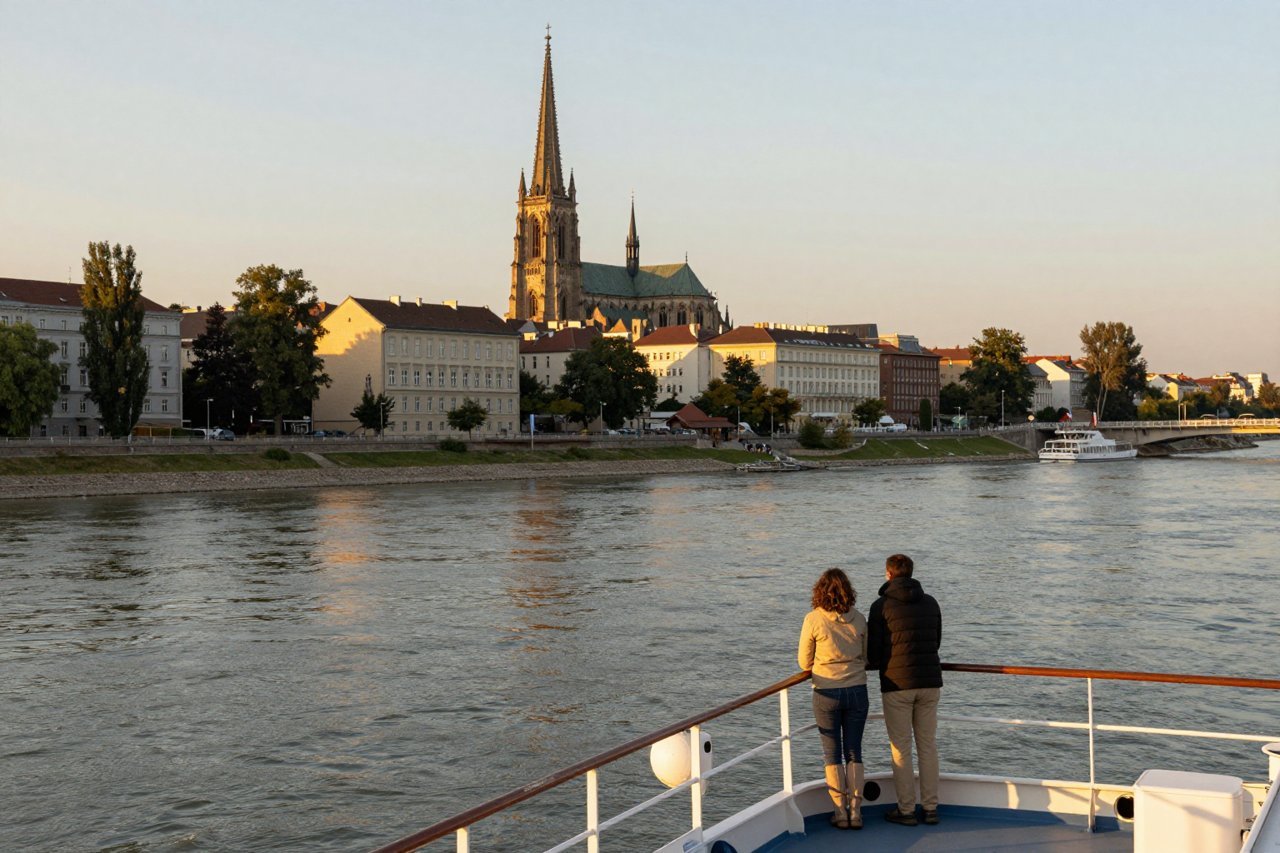
The ships have evolved, but the view from the rail still carries the timeless charm of riverboat cruises, a journey through history and scenery that no highway can match. It is the same unhurried fascination that drew people to the water two centuries ago, and it has not worn thin.

Most lines include more than you might expect. A standard fare on a European river cruise usually covers:
- All meals, including a daily breakfast buffet and a multi-course dinner
- A guided shore excursion each day, with groups labelled by walking pace
- House wine and beer at lunch and dinner
- Onboard entertainment, often a local folk group or a classical pianist
- Captain’s welcome and farewell drinks, if tradition matters to you
Choosing the River That Matches the Trip You Want
Rivers are not interchangeable. The Rhine is about castles and steep vineyard terraces, the Danube about imperial cities and slow plains, the Rhône about Provençal food and Roman ruins. If it is your first river cruise, the Danube is the easiest to love because it strings together big names: Vienna, Budapest, Bratislava and, if you take the Rhine-Main-Danube Canal, Regensburg and Nuremberg.
Europe’s Classic Waterways
On the Rhine’s Middle Gorge, you pass the Lorelei rock and more than forty castles in a single day. On the Seine, Monet’s garden at Giverny and the D-Day beaches bring art and history together. The Douro is shorter but steeper, with terraced hillsides that feel almost alpine. These routes are well served by the major lines, so departures run from April to October without a gap.
Going Beyond Europe
The Mekong, the Irrawaddy, the Chobe and the Amazon each offer river travel with a completely different mood. In Southeast Asia, river cruises are as much about floating markets and children waving from wooden boats as they are about temples. On the Chobe, the boat becomes a safari vehicle, drifting past elephants and crocodiles.
If a river of antiquity calls to you, the Nile is the classic voyage, where the temples at Luxor and Aswan appear one after another in the morning light. Read what to expect on a Nile River cruise to get a realistic sense of the ships, the shore tours, and the pace of the journey before you commit.
A Day on Board, Without the Hype
River cruise itineraries are less regimented than ocean cruises. Breakfast is open from 7 to 9, and the included morning excursion usually leaves at nine or nine-thirty. There are always two or three walking paces, from a gentle stroll to a climb up to the hilltop castle. By one, you are back for lunch. The afternoon might be a scenic sailing, a cycling excursion, or a tasting at a small vineyard. Dinner starts around seven thirty, and after that there may be a local band or a quiet nightcap at the bar.
The genius of this rhythm is that you do not have to do any of it. You can skip the excursion and read a book on deck. You can sleep through breakfast and order coffee. No one checks a timetable, and that flexibility is rare in organised travel.
When to Book, and What to Leave Out
Spring and autumn are the sweet spots for most European river cruises. April and May bring tulips and blossom, while late September and October bring milder sun and the same castles. July and August are hot and crowded in the cities, even if the ship itself stays comfortable. Booking six months ahead is common, and early birds often get a discounted rate and a better cabin. If you are flexible, the last few weeks before departure sometimes cut prices, though on popular routes you take a risk on availability.
Reading honest reviews helps. A brochure photograph does not tell you if the cabin wall is paper-thin or the wine list is mostly bulk Burgundy. Independent travellers such as Emma Cruises have built a following by showing exactly what the ships, the food and the included trips are actually like, which is more useful than a glossy deck plan.
Who Does a River Cruise Suit Best?
River cruises fit a broad range, but they suit certain travellers especially well. Couples celebrating an anniversary will find a lot to love: quiet decks, local wine, and towns made for slow, hand-in-hand wandering. Our guide to the best cruises for couples covers both ocean and river options for a romantic getaway, with notes on the cabins and dining that make the difference.
Multi-generational families are another natural fit, because the pace lets grandparents and teenagers enjoy the same day at their own speed. Solo travellers are catered for on a few ships, though the romantic atmosphere means it is worth checking the single supplement carefully before booking.
Packing for Life on the Water
This is simpler than you might think. On most European lines there is no formal night, so a smart-casual dress or a blazer for dinner is more than enough. A waterproof jacket is worth its weight, since most shore excursions happen rain or shine. Comfortable walking shoes are essential; cobbled cities eat flimsy soles. Leave space in your bag for one good bottle of local wine, because you will almost certainly want to bring one home.
Bring earplugs if your cabin is at the front and the ship passes through locks at night, but do not overthink sockets. Most river ships have European two-round-pin sockets and a USB port by the bed.


