
Table of Contents
Your shoulder aches when you reach overhead. Your elbow throbs after a long day of typing. Your Achilles tightens every time you go for a run. Tendonitis has a way of making everyday movements miserable—and it’s frustratingly common. The good news? Most cases respond well to a structured, sensible approach. This guide walks you through tendonitis treatment options, from what you can do right now at home to advanced medical procedures for stubborn cases. Whether you’re dealing with tennis elbow, runner’s knee, or a stiff shoulder, the principles here apply.
What is tendonitis and why does it hurt so much?
Tendons are tough, flexible bands of tissue that connect muscle to bone. When they’re exposed to repeated strain, tiny tears form in the collagen fibres. The body responds with inflammation—and sometimes degeneration—which is what you feel as pain and stiffness. You’ll often hear it called tendinopathy, tendinosis, or tendonitis; the terms are used loosely, but the treatment principles hold up.
Tendonitis can strike anywhere, but the most common sites are the elbow (tennis elbow or golfer’s elbow), the shoulder (rotator cuff), the wrist, the knee (jumper’s knee), and the Achilles tendon. Recognising the early signs—ache, tenderness, swelling, or a creaking sensation—means you can start treatment before it becomes chronic.
Immediate tendonitis treatment: what to do in the first 48 hours
When pain first flares up, your instincts are usually right: stop doing whatever hurts. But total immobilisation isn’t ideal, either. Relative rest is the sweet spot—dial back the activity level so you can move without sharp pain, but don’t splint or sling it for days on end.

Rest, ice, compression, elevation (the modified RICE method)
You’ve probably heard of RICE: rest, ice, compression, elevation. For tendonitis, it still holds value, though you’ll want to adapt it.
- Rest: stop the aggravating activity. That doesn’t mean bed rest—gentle movement is fine.
- Ice: apply an ice pack or frozen gel pack for 15–20 minutes every few hours. This is most effective in the first 48 hours.
- Compression: an elastic bandage or wrap can help limit swelling. Just don’t wrap it so tight that it cuts off circulation.
- Elevation: raise the affected limb above heart level when possible, especially for ankle or knee tendonitis.
Heat or ice – which is the right call?
Ice wins for acute flare-ups because it numbs pain and constricts blood vessels, which helps control inflammation. Heat, on the other hand, is better once the acute stage passes—it promotes blood flow and can ease chronic stiffness. If you’re unsure, follow this rule: ice for the first few days, heat for lingering tightness before activity.
Also, avoid stretching a newly injured tendon aggressively in the first few days. Gentle range-of-motion movements are fine, but loading it with heavy stretch can worsen the micro-tears.
Medication and topical treatment: what actually helps?
Pain relief is a priority when everyday tasks hurt. Over-the-counter options can help you get through the day, but they don’t fix the underlying tendon issue. Use them as a tool, not a long-term solution.
NSAIDs (non-steroidal anti-inflammatory drugs)
Ibuprofen or naproxen can reduce inflammation and pain, especially early on. But taking them for weeks on end raises the risk of stomach irritation and kidney issues. A short course—say, 5 to 7 days—is usually enough to calm a flare-up.
Topical gels and patches
Diclofenac gel (Voltaren) is a solid choice. It targets the exact spot that hurts with fewer systemic side effects than oral pills. Many people find it works well for hand, elbow, or knee tendonitis.
Corticosteroid injections: why experts are getting cautious
A cortisone shot can offer dramatic short-term relief—sometimes within 24 hours. However, research suggests they may weaken the tendon over time, increasing the risk of rupture. For that reason, many orthopaedic specialists now limit injections or use them only when conservative treatment has failed.
Physical therapy: the backbone of tendonitis treatment
If there’s one tendonitis treatment with strong evidence behind it, it’s physiotherapy. Your tendon needs progressive loading to rebuild strength, and that’s exactly what a good rehab programme provides.
Eccentric exercises
Eccentric exercises involve lowering a weight slowly, lengthening the muscle-tendon unit under tension. For Achilles tendonitis, standing on a step and slowly dropping your heel is a classic example. For tennis elbow, a wrist extensor eccentrics are a staple. Start with light resistance and aim for 3 sets of 15, twice a day, letting pain guide you.
Stretching and mobility work
Stiff muscles place more strain on tendons. Daily stretching—especially the calves, hamstrings, or forearms, depending on the affected area—can reduce tension and improve movement patterns.
Manual therapy
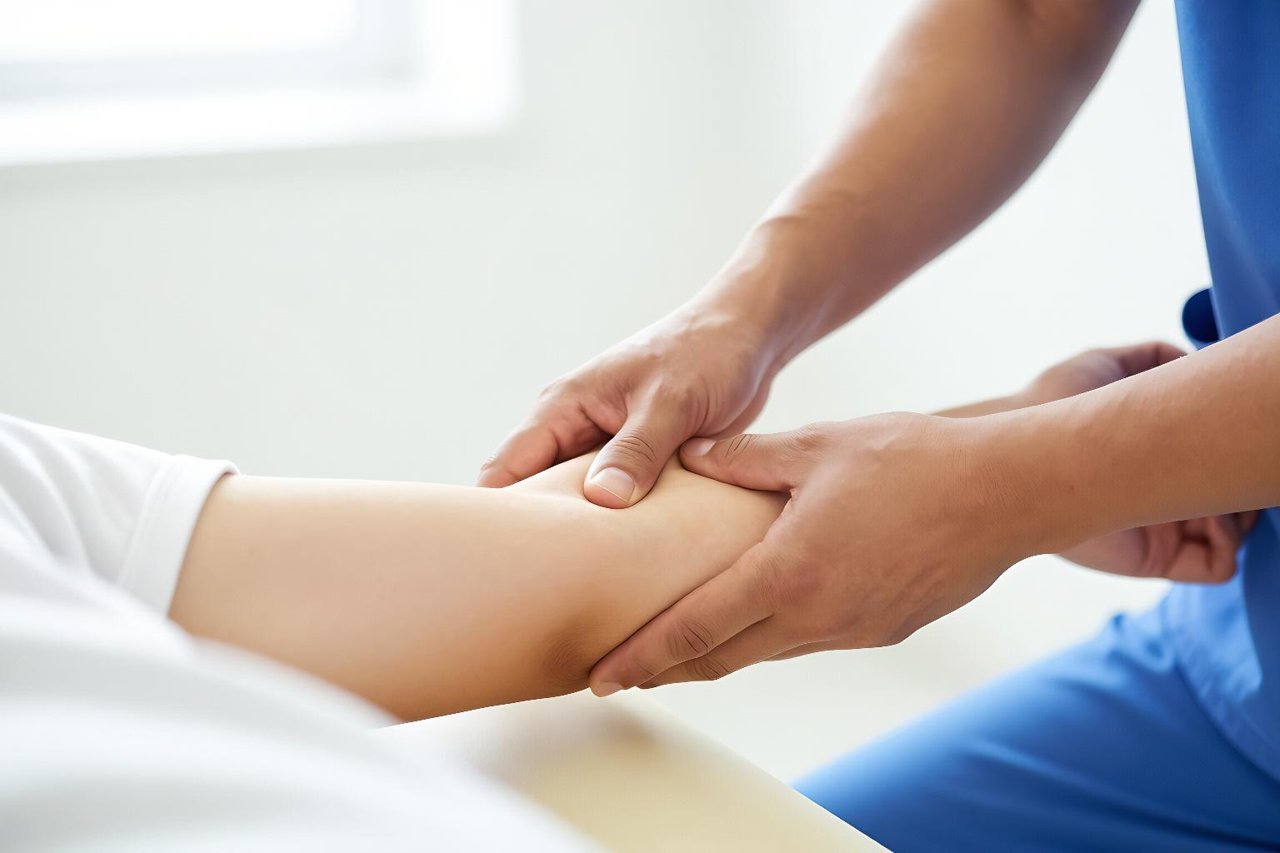
A skilled physiotherapist can use massage, joint mobilisation, and friction techniques to break down adhesions and improve local blood flow. In many cases, adding hands-on work helps people progress faster.
A good physio will also look at your biomechanics. For example, if you have flat feet, a simple orthotic insert might reduce the load on your Achilles or plantar fascia. If your shoulder pain comes from tight chest muscles, they might prescribe pec stretches alongside rotator cuff strengthening.
Advanced treatment options when tendonitis won’t settle
If you’ve done the basics for a few months and still feel pain, it’s time to talk to a specialist. Several advanced procedures show promise, but they’re not magic bullets.
Extracorporeal shockwave therapy (ESWT)
This treatment delivers high-energy sound waves to the tendon. The theory is that the mechanical stress stimulates the body’s own healing response. ESWT has the strongest evidence for calcific shoulder tendonitis and plantar fasciitis (which isn’t technically tendonitis, but shares treatment approaches). A typical course spans 3 to 5 sessions.
Platelet-rich plasma (PRP)
PRP involves drawing your own blood, spinning it down to concentrate the platelets, then injecting them into the injured tendon. It’s thought to boost healing by releasing growth factors. Results are mixed, with some studies showing benefit for tennis elbow and others finding no real advantage over placebo. If you go this route, choose a clinician who uses ultrasound guidance.
Surgery: usually the last resort
For severe tears or tendonitis that’s lasted over 6 to 12 months despite every conservative effort, surgery might be on the table. Procedures range from simply cleaning out inflamed tissue to repairing a torn tendon. Recovery can be lengthy—often several months of physiotherapy after the surgery itself.
How long does tendonitis take to heal?
The short answer: it depends. A mild case can settle in a few weeks if you catch it early. Chronic tendon problems often take 3 to 6 months of consistent rehab. Part of the problem is that tendons heal slowly because they have a poor blood supply. That means you need to be patient and consistent.
What you do in those months matters. Continuing your eccentric programme even after the pain disappears reduces the chance of recurrence. And if you’re gradually returning to sport or heavy work, do it in stages—for instance, increasing running distance by no more than 10% per week.
If your tendonitis happened at work—maybe from repetitive lifting or prolonged typing—the recovery process takes on an extra layer. You may need time off or modified duties to heal properly, and that can mean losing income or facing pressure from an employer. It’s worth knowing your legal footing. This article on how a workers compensation attorney can help when a workplace injury hits explains why having professional support can make that process far less stressful.
Ultimately, the best tendonitis treatment is the one you actually stick with. Start with the basics: back off the painful activity, use ice and anti-inflammatories wisely, and seek out a physiotherapist for a structured rehab programme. If progress stalls, don’t suffer in silence—advanced options exist. But remember that time and progressive loading are the foundation. Your tendon isn’t going to heal overnight, but with the right approach, it will.


