
Table of Contents
Rare cancers are not as rare as the label suggests. Add every uncommon subtype together and they account for roughly one in five cancer diagnoses worldwide, which works out at close to four million cases a year. The problem is that each individual type is unusual enough that a family doctor might see one or two in an entire career.
That gap between how often a disease appears in textbooks and how often it appears in a consulting room is where trouble starts. Below are seven of the rarest types of cancer, with real numbers, the symptoms that should raise a flag, and the specific reason each one tends to slip through.
What Actually Counts as a Rare Cancer?
In the United States, a cancer is classed as rare when fewer than 15 people per 100,000 are diagnosed each year. Europe draws the line at 6 per 100,000. Compare that with the cancers that dominate headlines and screening programmes: the tumour types most people have heard of occur at rates tens or hundreds of times higher.
Rarity has a practical cost. Small patient numbers mean fewer clinical trials, thinner evidence for treatment decisions, and less funding. As you read through the seven below, notice how often the common thread is not exotic biology but simply vague, easily explained-away symptoms.

1. Uveal Melanoma (Cancer Inside the Eye)
Around 3,000 people are diagnosed in the US each year, roughly five per million. Uveal melanoma grows from pigment-producing cells in the iris, ciliary body or choroid, and it is the most common eye cancer in adults. Most cases are picked up during a routine dilated eye exam before any symptoms appear, which is about as lucky as this disease gets.
When symptoms do show up, they are subtle: blurred vision in one eye, a few new floaters, flashes of light, or a dark smudge drifting across the visual field. Roughly half of patients eventually develop liver metastases, sometimes a decade after the original tumour was treated, which is why lifelong liver surveillance is standard. Treatment ranges from plaque brachytherapy to proton beam therapy to removal of the eye.
2. Merkel Cell Carcinoma
About 800 to 3,000 cases a year in the US, and the numbers are climbing. This is a fast-moving neuroendocrine skin cancer, and roughly 80% of tumours carry the Merkel cell polyomavirus. It favours sun-exposed skin in people over 50, and immunosuppression dramatically raises the odds. If you want to understand how much immune function shapes risk, this is one of the clearest illustrations in oncology, and it sits alongside the other major cancer risk factors worth tracking.
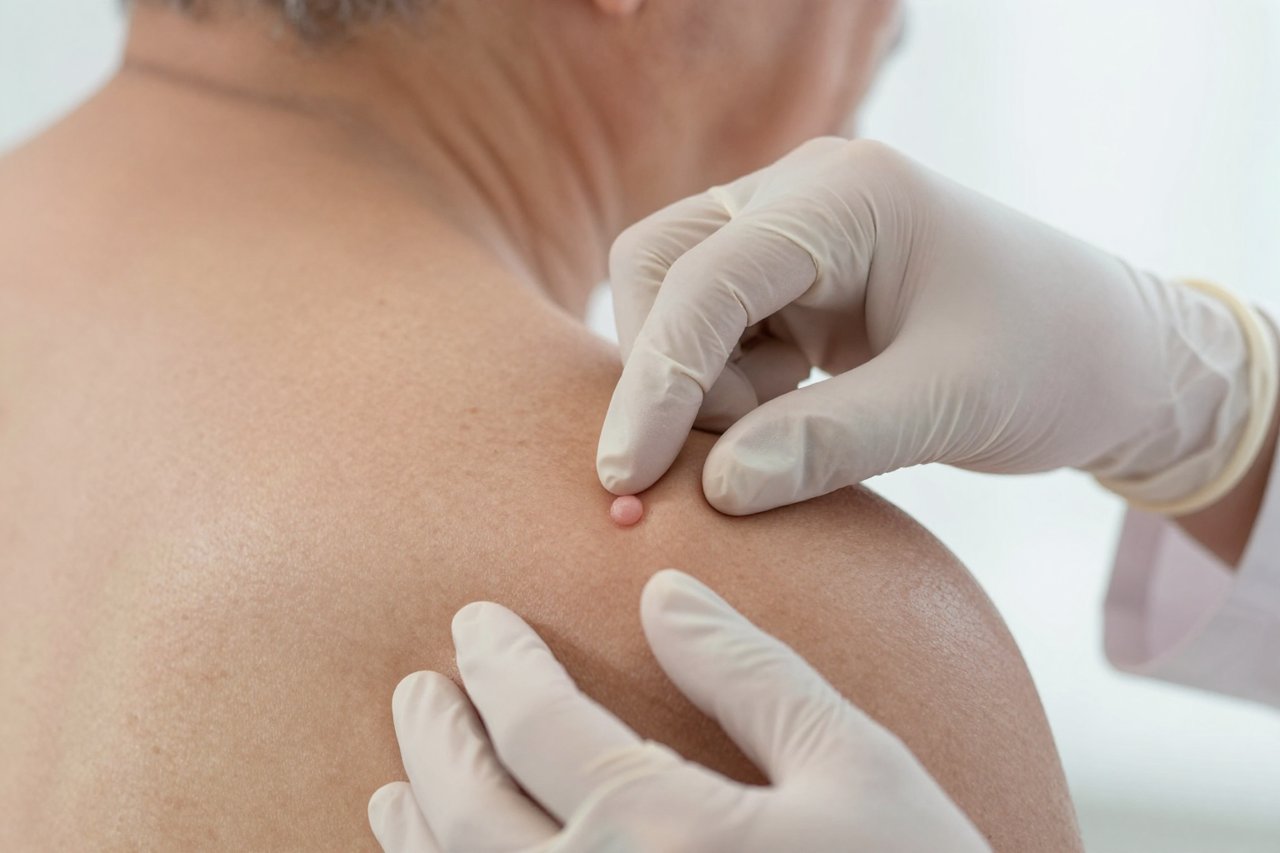
Dermatologists use the AEIOU rule: Asymptomatic, Expediting quickly, Immune suppressed, Over 50, UV-exposed skin. The lesion often looks like a shiny pink or violet bump with no more drama than a cyst or an ingrown hair. It can double in size in weeks. Any spot that grows that fast deserves a biopsy, not a wait-and-see.
3. Gastrointestinal Stromal Tumour (GIST)
Between 4,000 and 6,000 new cases a year in the US, arising from the interstitial cells of Cajal, the pacemakers of the gut. GISTs can appear anywhere from the oesophagus to the rectum, though the stomach accounts for about 60%. Most are driven by KIT or PDGFRA mutations, and the arrival of imatinib in 2001 turned a stubbornly treatment-resistant disease into one where many patients live for years on a single daily tablet.
Presentation is unglamorous. A slow bleed producing iron-deficiency anaemia, a sensation of fullness after small meals, or an unexplained mass found on a CT scan ordered for something else. Small tumours under 2cm are sometimes watched rather than removed, which still surprises people who assume the word tumour means immediate surgery.
4. Small Intestine Cancer
Roughly 12,000 diagnoses a year in the US, and fewer than 5% of all gastrointestinal cancers. This is genuinely odd when you consider the small bowel is around 20 feet of absorptive tissue sitting between two organs that get far more cancer. Its length and coiled position make it awkward to reach with a standard endoscope, so lesions can grow quietly for a long time.
Symptoms look like a hundred ordinary complaints: cramping that comes and goes, nausea, bloating, weight loss, fatigue from creeping anaemia. Many cases are found during surgery for what everyone assumed was a blockage or Crohn’s disease.
5. Chordoma
Around one per million people per year, or roughly 300 cases annually in the US. Chordomas grow from leftovers of the notochord, the embryonic structure that formed your spine, and they turn up almost exclusively at the base of the skull or the sacrum. Because they expand at a glacial pace, symptoms like neck pain, double vision or tailbone ache can persist for a year or more before anyone images the area.
Surgery is the backbone of treatment, often followed by proton radiation to spare nearby nerves and brain tissue. Recurrence is common, and a specialist centre with chordoma experience is worth travelling for.
6. Adrenocortical Carcinoma
Incidence sits between 0.5 and 2 per million. This is cancer of the adrenal cortex, and roughly six in ten tumours are functional, meaning they pump out hormones. That can produce Cushing’s syndrome, rapid virilisation, or dangerously high blood pressure, and it is often the hormonal chaos rather than the tumour that brings people to a doctor.
Non-functioning tumours announce themselves late, usually as a large abdominal mass or back pain. Most are diagnosed at an advanced stage, and mitotane remains a mainstay alongside surgery. It’s a disease where an endocrinologist, a surgeon and an oncologist really do need to share notes.
7. Male Breast Cancer
About 2,800 men a year in the US, which is under 1% of all breast cancer cases. Lifetime risk for a man is roughly 1 in 800. BRCA2 mutations, Klinefelter syndrome, chest radiation for an earlier cancer, liver disease and obesity all raise the number.
Here’s the frustrating part. Men are routinely reminded to watch for urinary changes and to discuss prostate cancer screening with their doctor. Almost nobody tells them to feel for a hard lump behind the nipple. So they wait, sometimes for months, and present with larger tumours and more involved lymph nodes than women do. A one-sided lump, nipple retraction, or discharge from one breast in a man is not normal and should be examined.
Why Rare Cancers Get Missed So Often
- Symptoms overlap with common conditions. Fatigue, bloating and back pain have a hundred benign explanations, and doctors are trained to bet on the likely one.
- No screening exists. There is no population test for chordoma, GIST or adrenocortical carcinoma, so detection depends on someone noticing.
- Pathology is hard. A general pathologist may see two GISTs a year. Rare tumours are misclassified more often than common ones.
- Evidence is thin. Randomised trials struggle to recruit when a disease affects a few hundred people nationally, so treatment often follows registries and expert consensus.
- Referral happens late. By the time a patient reaches a specialist centre, the tumour has had a head start measured in months.
What Genuinely Helps If Something Feels Wrong
The single most useful thing you can do with a rare cancer suspicion is get the pathology reviewed at a high-volume centre. For diseases this uncommon, the difference between a correct and an incorrect diagnosis is often a second pair of specialist eyes on the same slides, and it costs you a request, not a fortune. Ask for a copy of the pathology report. Ask whether molecular testing is appropriate, since GIST, uveal melanoma and several other rare tumours now have targeted options tied to specific mutations.
Keep a dated log of symptoms, even the boring ones. “Tired since March, two stone down since Christmas, spotting after the menopause” is far more actionable than “I’ve been off for a while”. Book the appointment when something has clearly changed and stayed changed for three weeks or more, and say plainly that you are worried about cancer. That sentence shifts the conversation faster than any online search will.
Rare cancers are a reminder that cancer is not one disease but hundreds, each with its own habits and its own weak spots. Knowing the seven above won’t make you an oncologist. It might stop you from talking yourself out of a check-up, and that is a much better outcome than a clever diagnosis made late.


