
Table of Contents
There’s a reason essential oils have been swapped, shared, and passed down for centuries. They’re not just pretty bottles on a shelf. They’re concentrated plant extracts that can do a lot for your skin when you handle them with respect. But here’s the catch: because they’re so concentrated, they can also irritate if you use them carelessly. This guide walks through the essentials of essential oils for skin, from how they work to which ones actually help with your specific concerns, and how to use them without causing a reaction.
How Essential Oils Actually Work on Skin
Essential oils are volatile aromatic compounds distilled from leaves, stems, roots, and petals. When you apply a properly diluted oil to your skin, the tiny molecules penetrate the outer layer of the epidermis and reach the deeper layers. There, they can influence sebum production, circulation, and inflammation. Some oils contain constituents that act on skin cell turnover, while others are naturally antimicrobial.
That said, they’re not all made equal. A lot depends on the quality of the oil and the type of skin you have. That’s why patch testing is non-negotiable, and it’s also why you should read labels carefully. A bottle that says ‘lavender essential oil’ might be a diluted blend, which isn’t necessarily bad, but you won’t know the strength until you try it. If you’re just getting comfortable with plant-based skincare, our natural skincare guide explains how to build a routine that actually respects your skin barrier.
The Best Essential Oils for Skin by Concern
Instead of throwing a list of every oil at you, let’s break it down by what you’re dealing with.

For Acne and Breakouts
Tea tree oil is the obvious warrior. It’s been studied for its ability to fight acne-causing bacteria and reduce inflammation. Cinnamon bark is another option, but it’s strong and can irritate, so it’s not for beginners. Lavender and geranium can also help balance excessive sebum. For an occasional pimple, mix 1 drop of tea tree oil with a teaspoon of aloe vera gel and dab it on the spot. Leave it on for a few hours or overnight.
For Dry, Tight, or Flaky Skin
Geranium, rose, and sandalwood are wonderfully moisturizing. They help reduce water loss from the skin and calm that uncomfortable pull. Add one drop of geranium to your regular moisturizer in the evening. If you need a deeper fix, our dry skin treatment routine works almost instantly, but adding a facial oil with these plants can be the final step to lock in hydration.
For Dullness and Early Signs of Aging
Frankincense is one of the best-kept secrets for mature skin. It’s an astringent that gently dries up excess oil while encouraging skin cell turnover, which can help fade dark spots. Carrot seed oil is also a standout because it’s rich in antioxidants and protects skin from environmental stress. Rosehip is actually a carrier oil rather than an essential oil, but it works beautifully alongside these. For a brightening boost, try a face oil with a few drops of frankincense and a carrier like jojoba.
For Sensitive, Reactive Skin
Essential oils can be especially tricky if your skin gets red or stings easily. If you’re prone to rosacea or contact dermatitis, focus on very gentle oils like rose or chamomile, and always dilute them heavily. Start with 1 drop per 2 tablespoons of carrier oil. And honestly, your skin might still be happier with fragrance-free products—you can learn more in our sensitive skin products guide. Don’t feel pressured to use essential oils just because they’re trendy.
How to Dilute Essential Oils Safely (The Missing Step)
Most people who experience irritation from essential oils for skin have one thing in common: they skipped dilution. A single drop of undiluted oil is far too strong for any skin type, and can cause redness, stinging, or even chemical burns. Dilution isn’t just a safety net—it actually helps the oil absorb more evenly and extends the life of your blend.
Here’s a simple rule: for a facial serum, stay between 0.5% and 1% dilution. That’s about one drop of essential oil per teaspoon of carrier oil. For body applications, 2% is safe if your skin is healthy. For a spot treatment, you can go up to 5%, but only on a small area and not daily.
Not sure which carrier oil to start with? These are the most versatile:
- Jojoba oil – closest to human sebum, great for all skin types
- Argan oil – rich in vitamin E, good for dry or aging skin
- Rosehip seed oil – hydrating and helps with scarring
- Squalane – lightweight, doesn’t clog pores
- Evening primrose oil – calming, helpful for hormonal breakouts
Why Carrier Oils Matter
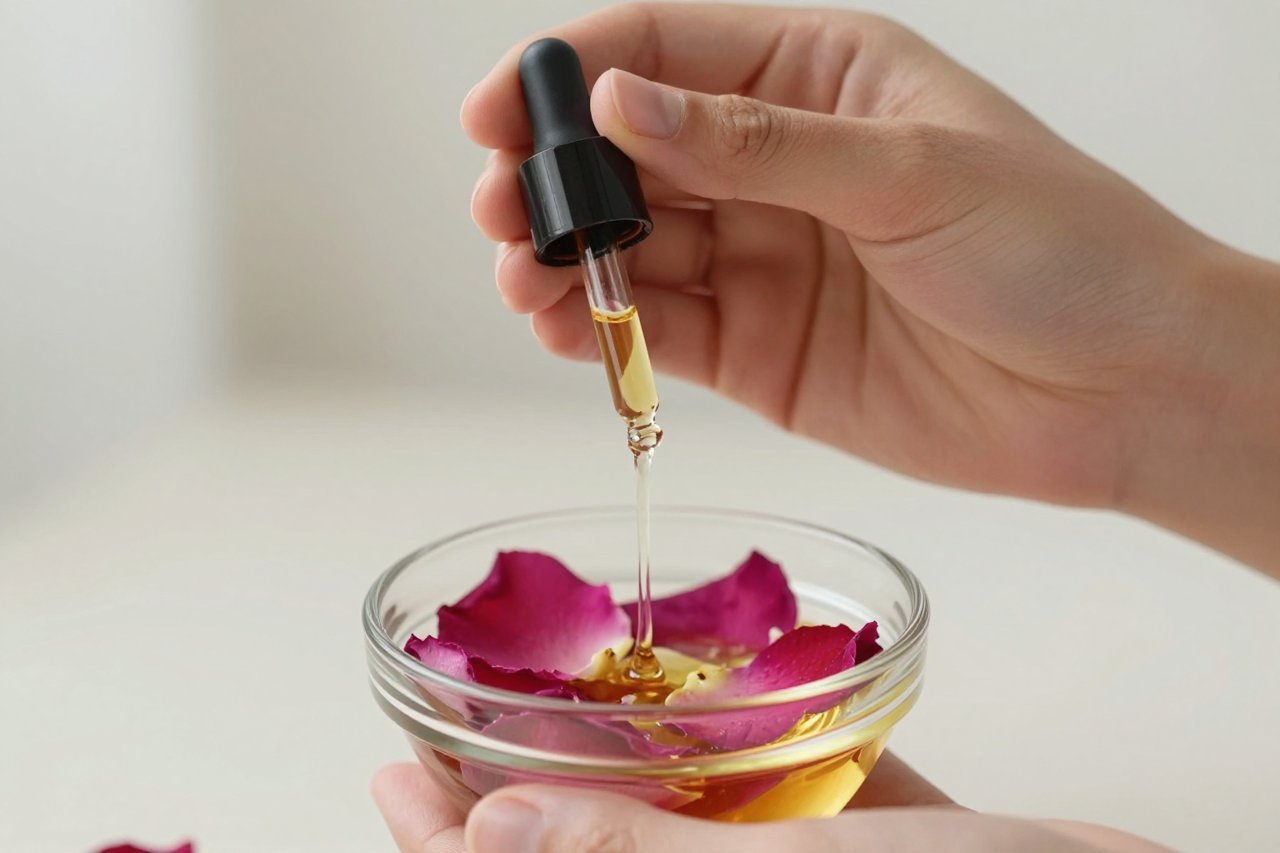
Carrier oils aren’t just vehicles—they bring their own healing properties. Jojoba helps regulate sebum, rosehip offers essential fatty acids, and squalane keeps moisture locked in. A quality carrier can double the effectiveness of your essential oil. Create a blend in a 10ml glass bottle: fill it nearly full with carrier, add your drops, swirl gently, and you have a ready-to-use face serum.
Simple DIY Essential Oil Recipes (No Mad Science Required)
You don’t need a lab. Here are three easy recipes that address the concerns above.
Calming Night Serum
- 10ml jojoba oil (about 2 teaspoons)
- 1 drop lavender essential oil
- 1 drop geranium essential oil
Mix in a glass dropper bottle. Massage a few drops onto a clean face before bed.
Breakout Spot Treatment
- 1 drop tea tree oil
- 1/2 teaspoon aloe vera gel
- 1 drop lavender oil (optional)
Mix and dab onto blemishes with a cotton swab. Keep it away from surrounding skin.
Brightening Face Oil Blend
- 10ml rosehip carrier oil (or squalane)
- 1 drop frankincense essential oil
- 1 drop carrot seed essential oil
Use a few drops on damp skin to help your moisturizer sink in and give your complexion a fresh, dewy look.
Want more ideas? There’s a whole list of homemade skincare remedies that actually work and cost pennies — many use essential oils you probably already have.
Essential Oil Safety: The Rules You Shouldn’t Skip
Even the gentlest essential oil can cause problems if you ignore these basic rules:
- Always patch test – apply a diluted drop to the inside of your forearm and wait 24 hours.
- Never eat or ingest essential oils – they’re meant for topical or aromatic use unless a doctor says otherwise.
- Avoid citrus oils like bergamot, lime, and grapefruit during the day – these are phototoxic and can cause burns in sunlight.
- Keep oils away from your eyes and broken skin – they will sting badly.
- Talk to your doctor if you’re pregnant, nursing, or on medications – some oils interact with drugs.
The patch test is your best friend. A reaction can be immediate, but sometimes it shows up after a few days. Give yourself a small trial period before slathering any new oil all over your face.
Building a Skin Ritual That Feels Good
The point of essential oils for skin isn’t to turn your bathroom into a chemistry set. It’s about paying attention to what your skin needs and giving it a little plant-based support. Start with one oil. Use it for a week, then decide if you want to add another. If you’re already using a nourishing body butter, warm a small scoop in your palm and add a drop of your favorite oil before applying. It’s a tiny change that makes a noticeable difference.
Your skin is alive, and it communicates. Once you learn to listen—and choose your oils carefully—you’ll begin to notice what’s right for your own body. There’s no universal magic formula, but there is a blend with your name on it.


