
Table of Contents
Your skin feels fine at 8am. By 3pm your cheeks are tight, your forehead has that faint crepey look, and smiling feels like it might crack something. Nothing dramatic happened in between. You sat at a desk, maybe under an air conditioning vent, drank two coffees, and washed your face once.
That midday tightness usually isn’t a sign you need a fancier cream. It’s water leaving your skin faster than your routine can replace it. Keeping skin hydrated through a full day is less about one hero product and more about a handful of small, well-timed moves.
Why hydration disappears by mid-afternoon
Skin loses water constantly through a process called transepidermal water loss. Your outer layer holds moisture using a mix of ceramides, cholesterol, fatty acids and what formulators call natural moisturising factor. When those run low, water escapes and the surface starts to feel rough and papery.
Indoor air accelerates the whole thing. Central heating in winter can push indoor humidity down to around 20%, roughly half of what skin is comfortable in. Air conditioning does something similar in summer, and a desk positioned under a vent can dry out one side of your face before lunch. Add wind, sun exposure through a window, and a hot shower, and you’ve got a full day of small moisture leaks.

Apply everything to damp skin
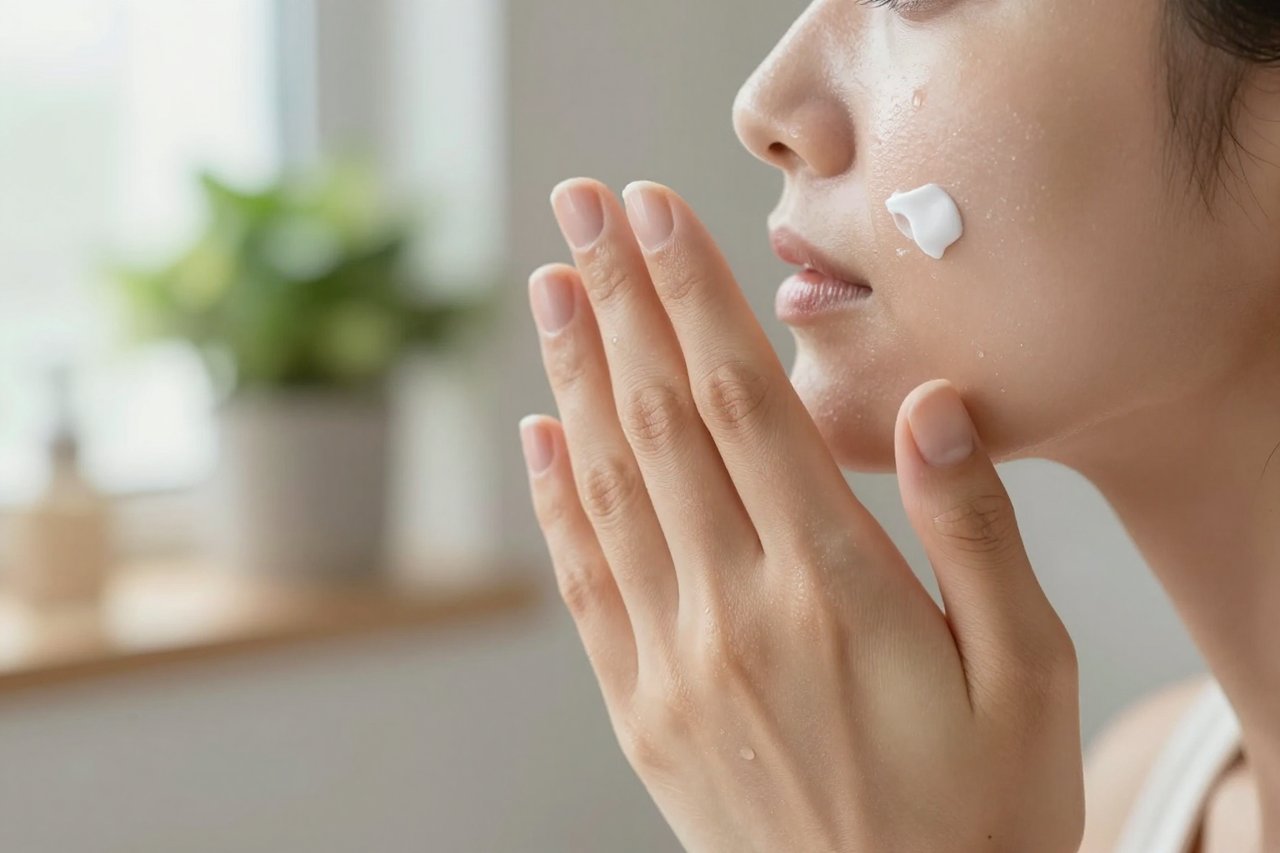
The single biggest upgrade to most routines costs nothing: stop applying products to bone-dry skin. After cleansing or even a quick splash, you have about 60 seconds before surface water evaporates. Layer your serum and moisturiser inside that window and you trap that water instead of losing it.
A hyaluronic acid serum is the simplest way to add a humectant layer, but humectants need something on top. In dry air they can pull moisture from your skin rather than the room, which is why a serum alone sometimes leaves you drier an hour later.
The three-layer sandwich that holds water in
- Humectant first: glycerin, hyaluronic acid or panthenol on damp skin, pressed in with your palms rather than rubbed.
- Emollient second: a cream with squalane, shea butter or fatty alcohols that softens the surface and fills the gaps between cells.
- Occlusive last: a thin layer of dimethicone or petrolatum on the spots that dry first, usually the corners of the mouth and the nasolabial folds.
Pick a moisturiser that matches your skin, not the label
Texture matters as much as ingredients. A good moisturiser should feel slightly tacky for the first 30 seconds and invisible after five minutes. If it vanishes instantly, it’s probably too light for the weather. If it’s still greasy at noon, it’s too heavy and you’ll end up blotting off the protective layer you paid for.
Dry and dehydrated skin types usually do best with ceramides, glycerol and cholesterol in a cream base. If you’ve been guessing at this for a while, this step-by-step process for finding the best moisturiser for dry skin walks through how to test textures without wasting money on jars that sit unused.
Your face wash may be doing more damage than the office air
Squeaky clean is a warning sign, not a goal. Cleansers built on strong sulfates strip the lipids that hold water in, and the tightness you feel right after drying your face is the first clue. Twice a day is plenty for most people, with lukewarm water around 32 to 34°C rather than steamy showers.
Look for a low-pH formula in the 4.5 to 5.5 range and skip anything that leaves your skin feeling squeaky. These face wash tips for all skin types cover how to tell a stripping cleanser from a gentle one before you commit to a full bottle.
The 90-second midday reset
You don’t need to redo your whole routine at lunch. Blot shine with a tissue, splash or mist your face, then press a pea-sized amount of cream into your cheeks and around your mouth while the skin is still damp. Seal within about 30 seconds.
One caution: a mist on its own can make things worse. As the water evaporates it takes some of your skin’s own moisture with it, so if you spray, follow with cream. Keep a small tube in your bag or desk drawer and the fix takes less time than boiling the kettle.
Drink water, but don’t expect it to do all the work
Hydration starts from within, though the relationship is looser than most people assume. Your kidneys regulate fluid balance closely, so drinking an extra litre doesn’t automatically plump your face. Pale straw-coloured urine is a reasonable guide, and if you’re sweating heavily or drinking a lot of coffee, adding a pinch of electrolytes helps more than plain water alone.
If you drink plenty of water and still flake by evening, the problem is usually lipids, not intake. Water needs something to hold onto.
Fix the room, not just your routine
Indoor humidity between 40% and 60% is the sweet spot for skin. A small humidifier beside your desk costs less than a mid-range serum and often solves the 3pm tightness outright. Move your chair away from direct vent blow, and if you work near a window, remember that UVA passes through glass and quietly degrades your barrier over a few hours.
Oily skin gets dehydrated too
Shiny and dehydrated can happen at the same time, which is why so many people with oily skin skip moisturiser and make things worse. When the surface lacks water, oil production often ramps up as a compensatory response. The result is a face that’s greasy by noon and tight underneath.
Gel-creams with glycerin and niacinamide work well here. A proper skincare routine for oily skin still includes moisture, just in a lighter vehicle applied to damp skin.
What you eat and drink shows up by evening
Alcohol is the most noticeable one. Two glasses of wine at dinner can leave skin looking duller the next morning because it suppresses the hormone that helps your body retain water. High-sodium takeaway has a similar short-term effect on puffiness, and while coffee isn’t the dehydrator it’s made out to be, relying on six cups and no water isn’t helping.
Foods that support the barrier include oily fish, walnuts, avocado, and anything rich in vitamin C. It’s not a quick fix, but a week of decent omega-3 intake makes a visible difference to how tight skin feels by late afternoon.
When tightness keeps returning before noon
If you’ve layered properly, fixed the humidity and still feel dry two hours after your routine, treat it as a barrier problem rather than a moisture problem. Pause exfoliating acids and retinoids for 7 to 14 days, switch to a gentle cleanser, and use a cream with ceramides morning and night. A thin layer of petrolatum over your night cream speeds things up considerably.
You can find a full protocol in this guide to dry skin treatment that works almost instantly, which is worth reading if the tightness has lasted more than a couple of weeks.
A desk-drawer kit that handles almost any dry moment
Three things cover nearly every situation you’ll meet between 9am and 6pm: a small tube of your regular moisturiser, a lip balm with petrolatum rather than menthol, and a hand cream you actually like the smell of. Add a 30ml mist only if you’re disciplined about sealing it with cream afterwards.
Restock the kit when you restock your desk snacks and it becomes automatic. Most people notice the biggest change not from a new product but from reapplying the one they already own, at the right moment, on skin that’s still slightly damp.


