
Table of Contents
Margaret, 72, started walking around her block every morning last spring. Three months later, she realised she could stand up from the sofa without pushing off the armrest. Her knees ached less when she climbed the stairs, and she slept better than she had in years. Nothing dramatic. Just a few thousand extra steps a day and some light strengthening exercises.
This guide lays out exactly what exercise for seniors should involve: the four components that matter most, how to create a safe routine, and how to make it stick for the long haul.
Why Exercise Becomes Non-Negotiable After 60
Ageing steals muscle mass faster than most people expect. Adults lose 3–8 percent of their muscle mass each decade after 30, and the rate climbs sharply after 60. The medical term is sarcopenia, and it is the reason many older adults find it harder to lift groceries, get off the floor, or recover from a hospital stay.
Exercise also protects bone density, blood pressure, blood sugar, and memory. A 2023 review in the British Journal of Sports Medicine found that even small amounts of moderate exercise reduce the risk of heart disease, stroke, type 2 diabetes, and several cancers. For seniors, the most immediate benefit is simpler: staying steady on your feet. Falls are the leading cause of injury among older adults, and balance training can cut the risk of falling by about 40 percent.

The Four Pillars of Senior Fitness
Exercise for seniors doesn’t require a gym membership or a trainer’s phone number. It requires covering four areas: strength, balance, cardio, and flexibility. Each one supports the others.
1. Strength Training: Your Body’s Shock Absorber
Strength training keeps the muscles that support your knees, hips, and spine. You do not need heavy weights. Two cans of soup will do. The key is moving your body against resistance, whether that’s your own body weight, elastic bands, or dumbbells.
Functional strength matters most. Start with a sit-to-stand from a sturdy chair. If you need to stay seated for the whole workout, our chair exercises for seniors include seated versions of leg lifts, overhead presses, and even balance work.
For seniors who are recovering from a health event, strength training can also be rehabilitative. Research shows that progressive resistance training helps rebuild nerve and muscle connections after a stroke and supports healthy ageing generally. Here’s how strength and resistance training supports stroke recovery and healthy aging.
2. Balance: The Skill Nobody Practices Until It’s Too Late
Balance is the least glamorous part of fitness, but it’s the most important for staying independent. The good news: you can improve it with under ten minutes a day. Stand behind a chair for support and lift one foot for ten seconds, then switch. Progress to a heel-to-toe walk along a straight line on the floor. Or simply stand on one leg while brushing your teeth.
Consistency beats intensity here. A little balance practice every day will do more than an hour once a week. And if you feel unsteady, start with chair-based balance moves like seated marches and ankle pumps. Many of the exercises in the chair-exercises resource double as balance drills.
3. Cardio: Keep Your Heart and Lungs Working Together
Cardio (also called endurance or aerobic exercise) strengthens your heart and lungs. The American Heart Association recommends 150 minutes of moderate-intensity activity per week for most adults. That’s roughly thirty minutes, five days a week. Brisk walking, swimming, cycling, and even heavy gardening count.
Don’t aim for a marathon. Aim to raise your heart rate slightly until you’re breathing harder but can still hold a conversation. If you’ve been sedentary, start with ten minutes and add two minutes every week.
Healthy circulation is one of the biggest benefactors of this kind of work. Well-functioning blood vessels reduce leg swelling, lower blood pressure, and help prevent varicose veins. For a deeper look at exercise, prevention, and modern treatment for healthy circulation, medical experts also recommend compression socks and certain medications when lifestyle changes aren’t enough.
4. Flexibility and Mobility: The Glue That Holds Everything Together
Flexibility keeps joints lubricated and muscles less prone to injury. Stretching after a walk when your muscles are warm prevents tight hips and shoulders, which are common problem areas for seniors.
Try a few simple moves: shoulder rolls, calf stretches at the wall, and a hip-flexor stretch with a towel. Hold each stretch for twenty seconds. Yoga on a chair or mat is a great option, but even five minutes of daily movement counts.
Getting Started: The Rules That Protect You
Before starting any exercise for seniors program, especially if you have a chronic condition, get the green light from your doctor. After that, follow these simple rules:
- Warm up for at least five minutes. Walk in place or march while holding onto a counter.
- Wear supportive, non-slip shoes. Running shoes with good tread reduce foot fatigue.
- Use a sturdy chair or wall for balance initially. As you improve, remove support gradually.
- Stop if you feel sharp pain, dizziness, or chest pain. Mild muscle burn is okay; sharp pain is not.
Start with low volume: two strength sessions and three short walks per week. Build from there rather than jumping into a seven-day schedule.
A Simple Weekly Exercise Template for Seniors
Here’s a realistic plan that a 70-year-old with average fitness could follow. Adjust based on energy and mobility.
- Monday: 20-minute brisk walk + 10 minutes of balance practice
- Tuesday: 15 minutes of chair or standing strength exercises (squats, wall push-ups, bicep curls)
- Wednesday: 30-minute swim or gentle stationary cycling
- Thursday: 15 minutes of yoga or stretching + balance work
- Friday: 20-minute walk + 10 minutes of strength work
- Saturday: Gardening, golf, dancing, or any activity you enjoy
- Sunday: Rest or a slow, short stroll
Notice that none of these sessions are grueling. The goal is cumulative benefit, not exhaustion.
Fueling Your Body for an Active Life
Muscles rebuild from the protein you eat. Many seniors don’t get enough protein at breakfast or lunch, which slows recovery. The recommended intake for older adults is roughly 1.2 grams per kilogram of body weight per day, or about 90 grams for a 75-kg person. If solid food is a struggle, a supplement like the best protein drink for seniors helps bridge the gap. Look for one with at least 20 grams of protein per serving and little added sugar.
Hydration also matters. Older adults often feel less thirsty, but water aids joint lubrication, prevents headaches, and keeps digestion regular. Aim for six to eight cups a day, more when you exercise.
Small Habits That Keep You Moving All Day
Exercise for seniors doesn’t only happen in deliberate sessions. Everyday movement adds up. Stand up and stretch during ad breaks. Take the stairs instead of the lift. Park at the far end of the supermarket car park. Walk to a neighbour’s house to deliver a card instead of texting.
These micro-habits support your structured workouts. If you want to build more of them, consider bundling exercise with other daily routines like meal planning and social connection. Our guide to healthy habits for seniors shows how tiny changes in sleep, stress, and movement reinforce each other over time.
Making It Stick: Consistency Over Perfection
You don’t need a perfect routine. You need a routine you’ll do on a rainy Tuesday when motivation is low. Here’s what works:
- Schedule exercise on your calendar like a doctor’s appointment.
- Find a walking buddy (someone you’d rather not cancel on).
- Track small wins. Write down how many days you moved, not how many pounds you lifted.
- Layer new habits onto existing ones. If you always watch the evening news, do your stretches during a commercial break.
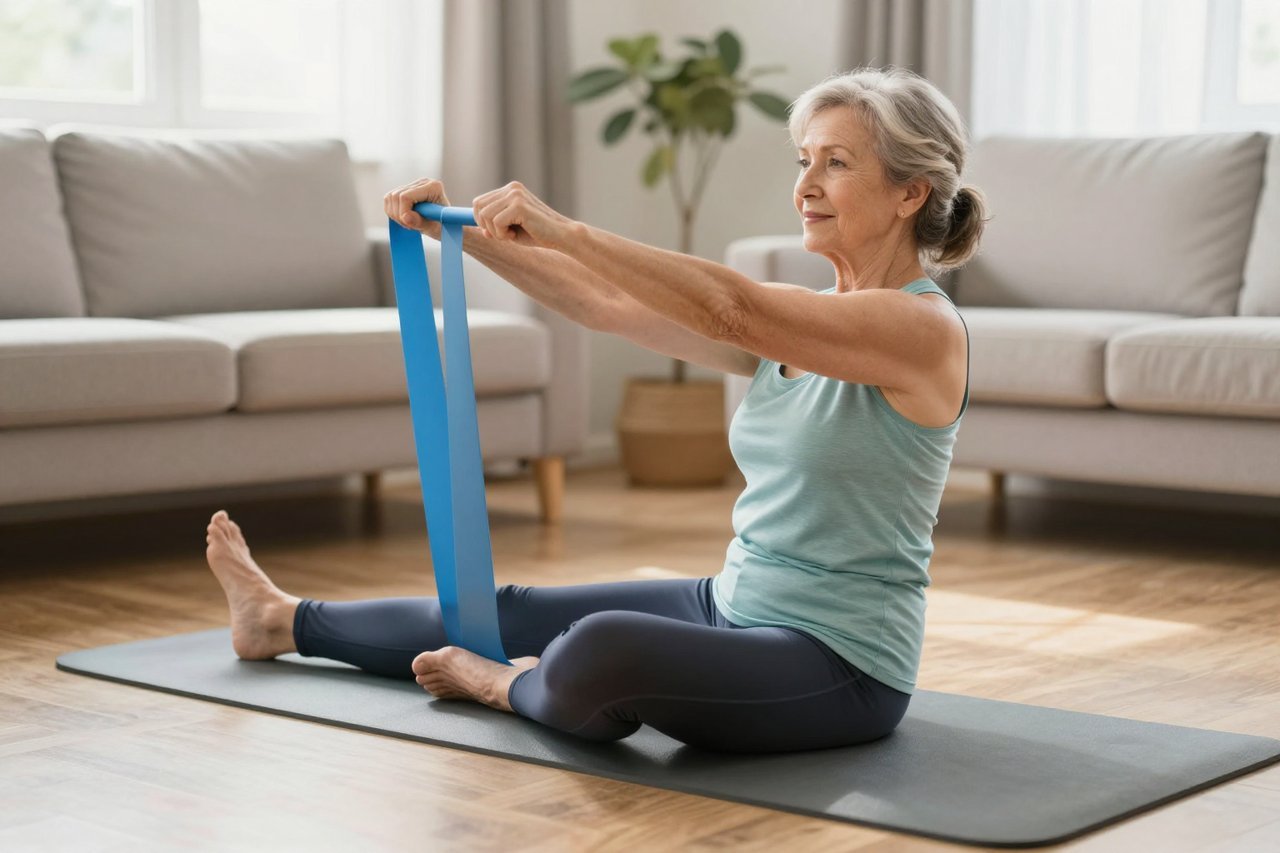
Every session counts. A five-minute walk is better than none. A single seated strength routine with light resistance bands is better than skipping it because you couldn’t do the full set. Start where you are, keep moving, and let the compound effect of small, consistent efforts rewrite what’s possible for your body.


