
Table of Contents
A criminal trial looks calm from the gallery. A clerk calls a case number, a judge reads from a script, a lawyer stands up to object. Underneath all that procedure sits a fairly simple contest: the government says a person broke a specific law, and the person says it never happened, or happened differently, or cannot be proven.
Most people never see how that contest unfolds. Television squeezes a year of pretrial motions into forty minutes and skips the parts that actually decide cases. In the United States, roughly 95 out of every 100 criminal cases end without a trial at all. The ones that do go to trial follow a sequence that has barely changed in two centuries, and knowing that sequence takes a great deal of the fear out of it.
From Arrest to the Courtroom Door
An arrest is not a charge, and a charge is not a trial. After someone is taken into custody, they are usually brought before a judge within 24 to 72 hours for an initial appearance. That hearing is short. The judge confirms identity, reads the basic allegations, and sets bail or releases the person on conditions like electronic monitoring or a curfew.
Charging comes next. Some jurisdictions send the case to a grand jury, which reviews the evidence and issues an indictment. Others have the prosecutor file a charging document called an information. Either way, the state carries the burden from this moment forward and must prove every element of the offense beyond a reasonable doubt, not merely that the person probably did it.

Some charges run on their own procedural track. Allegations involving an intimate partner or a household member often trigger mandatory arrest rules, no-contact orders, and conditions set within hours of booking, which is why people in that situation tend to need a domestic violence lawyer involved early rather than after charges are finalized.
The Arraignment and the First Real Decision
Arraignment is where the defendant hears the formal charges read aloud and enters a plea: guilty, not guilty, or no contest, which is called nolo contendere in some states. Almost everyone pleads not guilty here, including people who eventually take a deal. It costs nothing and preserves every option, including the right to force the government to prove its case.
What the judge covers at arraignment
- The exact statute, charge level, and whether it is a felony, misdemeanor, or infraction
- Maximum penalties, including fines, probation, jail or prison time, and collateral consequences like losing a professional license
- Conditions of release, travel restrictions, and any protective orders
- Deadlines for discovery, pretrial motions, and a trial setting
Felony arraignments are heavier proceedings than most people expect. A single charge can carry a sentencing range that spans years, and the difference between one charge level and the next is often decided by negotiation long before a jury is ever seated. That is the reason choosing a felony attorney who handles the charge level routinely matters more than picking a familiar name.
Pretrial: Where Most Cases Are Actually Decided
The months between arraignment and trial do more work than the trial itself. Three things happen during that window, and they decide the outcome far more often than a dramatic cross-examination does.
Discovery
Both sides exchange evidence: police reports, body camera footage, lab results, witness statements, 911 recordings, phone location data. Prosecutors are constitutionally obligated to hand over material that could help the defense, including evidence that a witness has been inconsistent or that an officer has a history of credibility problems.
Motions
Defense lawyers file motions to suppress evidence. A traffic stop that stretched past its lawful purpose, a search conducted without a warrant or valid exception, an interrogation that continued after someone asked for a lawyer, a photo lineup that suggested the answer. Winning one of these can remove the only real evidence in the case, and the prosecution may dismiss rather than proceed.
Plea bargaining
Prosecutors trade reduced charges or a sentencing recommendation for a guilty plea. Judges are not required to accept the terms, but most do. This is a negotiation with a number attached, and it is where a lawyer’s familiarity with the local courthouse pays for itself. If you are still assembling representation, this guide on finding a lawyer near you without wasting money covers what to ask and what to avoid paying for.
Jury Selection Is Not Random
Voir dire sounds like a formality and is not. A felony jury typically runs 12 people plus one or two alternates; many misdemeanor trials use six. The judge and both lawyers question the panel about what they have heard, whether they know anyone involved, and what they believe about police testimony or DNA evidence.
Each side also gets a set number of peremptory strikes, which remove jurors without stating a reason. Those strikes cannot be used to exclude people because of race or sex. A lawyer who suspects that is happening can raise a Batson challenge, and the other side then has to offer a neutral explanation.
The Trial Itself, in Order of Events
Opening statements
Each side tells the jury what the evidence will show. These are arguments, not evidence, and the judge says so out loud. The prosecution goes first because it carries the burden, and the defense may wait until after the government rests.
The prosecution’s case
Witnesses are called and questioned directly by the prosecutor. Exhibits get numbered and admitted. Experts explain DNA mixtures, ballistics, or the medical findings behind an injury. Jurors take notes in most courtrooms and can submit written questions to the judge in some jurisdictions.
Cross-examination and the defense case
The defense then questions each government witness, hunting for inconsistency, motive, and gaps in the chain of custody. When the prosecution rests, the defense can ask for a judgment of acquittal if the evidence is legally insufficient. If that fails, the defense presents its own witnesses, and the defendant has an absolute right to testify or to stay silent. Jurors are instructed not to treat silence as an admission.
The rules that shape every question
- Hearsay is generally excluded unless an exception applies, which is why so many objections sound technical
- Character evidence is largely barred, so the jury usually never hears about unrelated conduct
- Prior convictions come in only under specific conditions, often to attack credibility
- Leading questions are allowed on cross-examination but restricted on direct
Closing Arguments and Jury Instructions
Closing arguments are the last chance to frame the evidence. The prosecution argues first, the defense answers, then the prosecution gets a brief rebuttal. After that, the judge reads the jury instructions: the legal definition of each charge, the burden of proof, and the rules for deliberation. Those instructions matter enormously. Two offenses that sound identical in plain English can turn on a single word, such as whether the defendant acted knowingly or recklessly.
Deliberation and the Verdict
Jurors elect a foreperson and deliberate in private. Verdicts in felony cases generally must be unanimous. If the panel cannot agree after extended deliberation, the judge may declare a mistrial, and the prosecution has to decide whether to retry the case. A hung jury is not an acquittal.
The verdict is read in open court with everyone present. On a not guilty verdict, the defendant walks out, subject to any other pending matters. On a guilty verdict, the judge usually sets a sentencing date and may order a presentence report that takes weeks to complete.
Sentencing and What Comes After
Sentencing is a separate hearing. The judge weighs the sentencing guidelines or statutory range, the facts of the offense, the person’s record, victim statements, and any mitigation the defense presents. A defendant has the right to appeal within a fixed deadline, but appeals are narrow. They ask whether the trial was conducted correctly, not whether the jury got the facts right, and most are denied.
What It Feels Like From the Defense Table
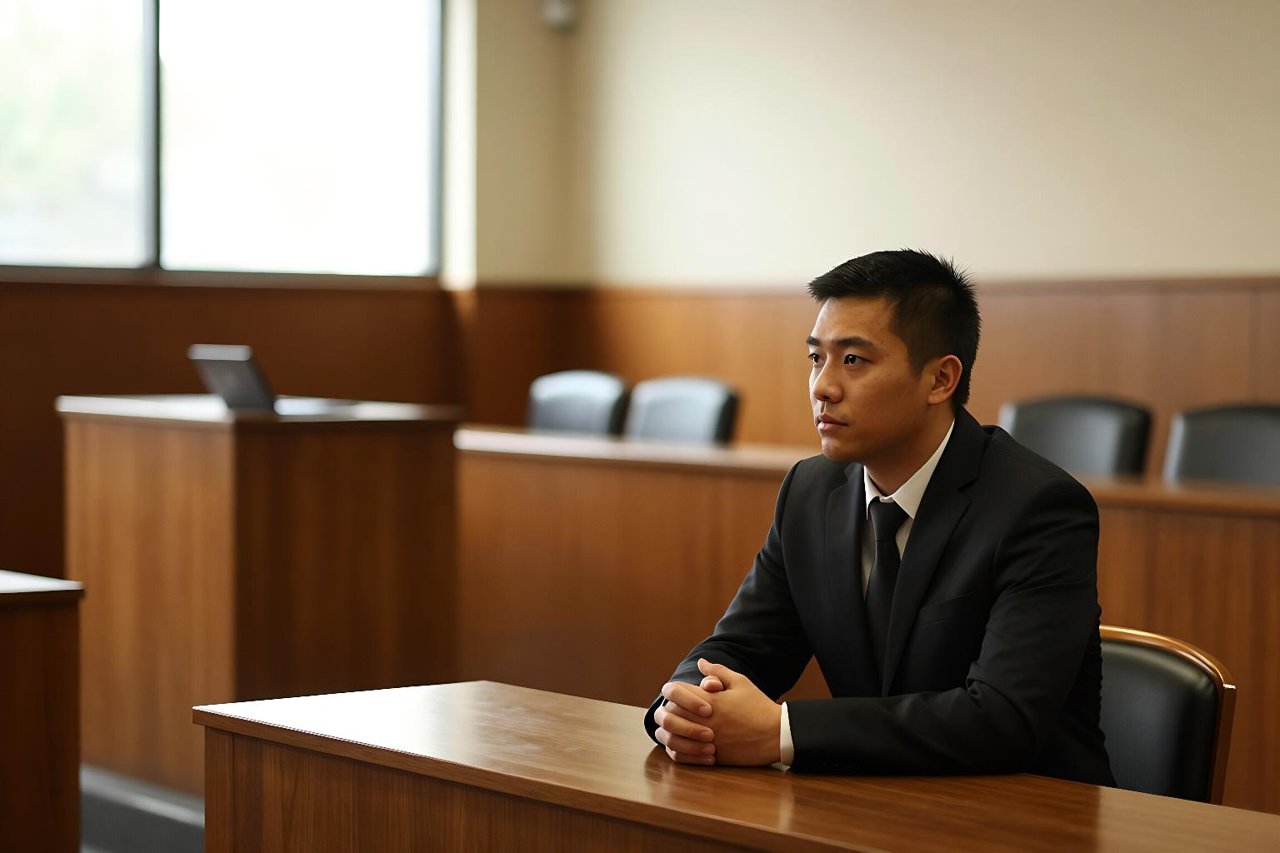
The part of a criminal trial nobody prepares you for is the waiting. Subpoenas get served late. A witness fails to appear and a continuance pushes everything back six weeks. Courtrooms run behind schedule, and a hearing scheduled for 9 a.m. may start at 2:40 p.m. Defendants spend whole mornings sitting in a hallway on a hard bench, and the actual proceeding takes eleven minutes.
There is also the strangeness of hearing your own life described in the third person by people who have never met you. A detective summarizes your conduct in a monotone. A neighbor describes your front yard. The jury watches all of it without expression, and afterward nobody tells you what they thought.
What a defendant controls is limited but real: showing up on time, dressing as the judge expects, following every condition of release to the letter, telling counsel the truth about the bad facts as well as the good ones, and staying reachable when something changes. Defense lawyers can work with difficult evidence. They cannot work with a client who disappears for two weeks before trial. Most cases that go badly go badly for reasons that started long before the first juror was sworn in.


