
Table of Contents
Some countries get all the attention. You know the ones: Italy in July, Bali in August, a queue for the Eiffel Tower that snakes past the ice cream stand. Then there are the places that quietly deliver just as much — better food, fewer crowds, half the price — while somehow staying off the radar. Those are the underrated countries worth visiting, and this list is built around them.
I’ve picked twelve, and for each one I’ve tried to say something concrete: what it costs, when to go, and the one thing that makes it worth the flight. Because “underrated” is a hollow word unless you can point at a specific reason. Here are the reasons.
Albania: Mediterranean Coast Without the Mediterranean Bill
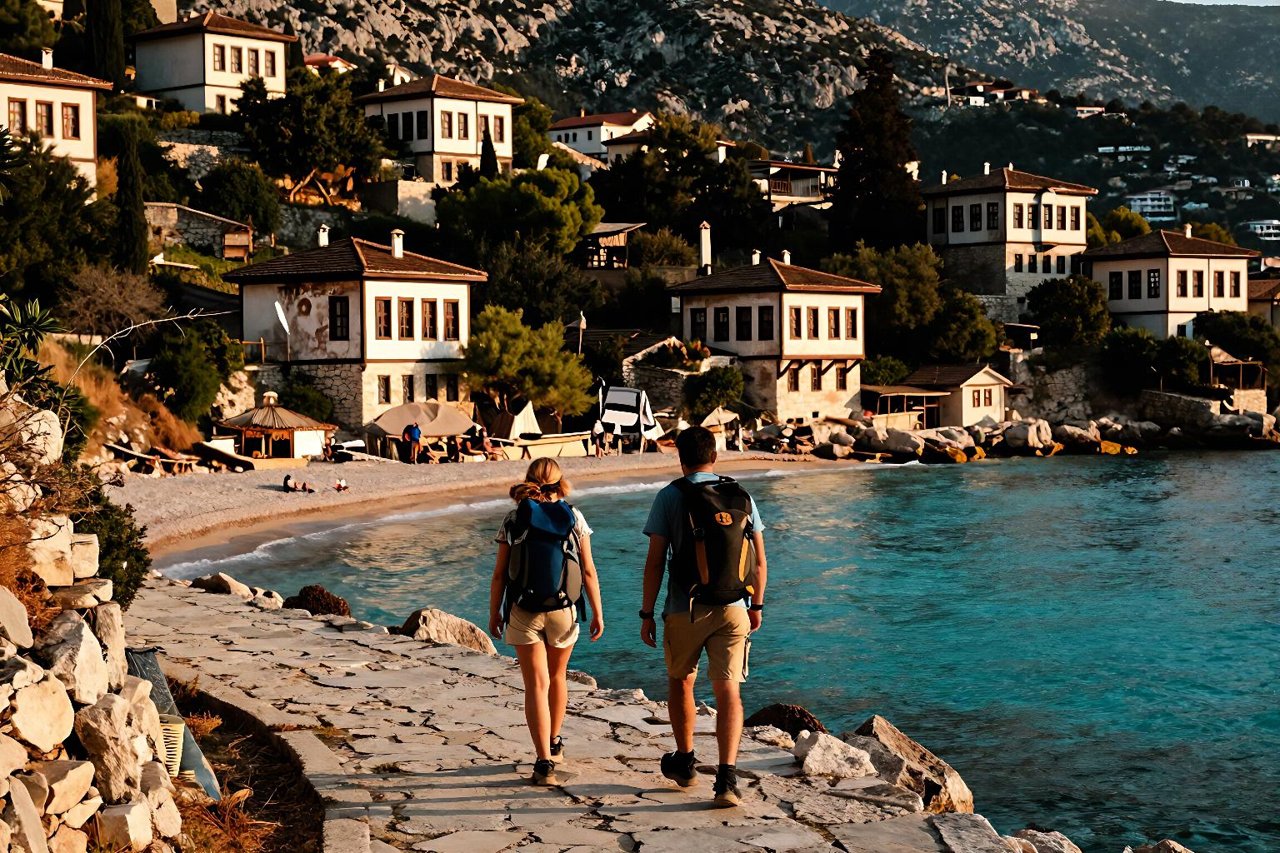
Albania sits on the same Ionian Sea as Corfu, close enough that on a clear day you can see Greece from the beach. The difference is the price. A decent double room in Saranda in June can run €40–50, and a full seafood lunch for two — grilled sea bass, salad, bread, a carafe of house wine — lands around €25.
The Albanian Riviera between Vlorë and Ksamil is the headline, but don’t sleep on Berat or Gjirokastër, two Ottoman-era towns of white stone and narrow cobbled lanes that UNESCO listed years ago and tourists largely ignored. Buses between major towns are cheap and slow; renting a car for €25 a day gives you far more freedom on the coastal roads.

Go in: late May or September. July and August bring Albanians from Tirana to the coast, and prices double.
Georgia: Wine, Mountains, and Hospitality That Borders on Overwhelming
Georgia has been making wine for roughly 8,000 years in clay vessels called qvevri, and the country treats hospitality as a competitive sport. Sit down for a supra — a traditional feast — and you’ll be toasted at by a tamada (toastmaster) for three hours. Refusing a glass is not really an option.
What to actually do
- Wander the old town of Tbilisi, where sulphur bathhouses sit beside crumbling art nouveau balconies
- Take a marshrutka (shared minibus) to Kazbegi for the Gergeti Trinity Church hike under Mount Kazbek
- Spend two days in Kakheti tasting saperavi and rkatsiteli at family wineries for a few euros a bottle
- Eat khinkali — soup dumplings you hold by the twisted top, bite, slurp, then discard the knot
Georgia is also strikingly affordable. A comfortable guesthouse is €30–40, a taxi across Tbilisi is €4, and a good dinner with wine rarely breaks €20 a head. English is patchy outside the cities, so learn a few phrases and keep Google Translate handy.
Slovenia: The Alps, the Adriatic, and About Two Hours Between Them
Slovenia is small enough that you can ski in the morning and swim in the Adriatic by late afternoon, which is a genuinely odd and wonderful thing. Lake Bled gets the postcards, but Lake Bohinj, twenty minutes deeper into Triglav National Park, is quieter and arguably prettier.
Ljubljana deserves more than a stopover. It’s compact, largely car-free in the centre, and full of riverside cafés where a coffee costs €2 and nobody rushes you. If you’re mapping out a broader European trip, it slots neatly into the kind of itinerary covered in this roundup of the best places to travel in the world — but give it three days rather than one.
Uzbekistan: Silk Road Architecture With Almost No Crowds
Samarkand, Bukhara, and Khiva are the three names to know. The Registan in Samarkand — three madrasas facing a single square, covered in turquoise tilework — is one of the most spectacular pieces of architecture on earth, and on a weekday morning you might share it with thirty people.
Since Uzbekistan loosened visa rules and added high-speed Afrosiyob trains between cities, getting around has become genuinely easy. Tashkent to Samarkand takes about two hours. A night in a restored Bukhara guesthouse runs $35–50, and a full plov lunch is $5.
Go in: April–May or September–October. Summer hits 40°C and the tilework radiates heat like a oven door.
Slovakia: Castles, Caves, and a Very Underrated Food Scene
Most travellers skip straight from Prague to Budapest and miss the country in between. That’s a mistake. Slovakia has more castles and chateaux per square mile than almost anywhere in Europe, plus the High Tatras — a proper alpine range with hiking trails, mountain huts, and lift prices a third of what you’d pay in Switzerland.
Bratislava is a pleasant two-day city, but the real value is outside it: the wooden churches of the east, the ice caves at Dobšiná, and the spa towns where a day pass to thermal pools costs under €15. For food, look for bryndzové halušky — potato dumplings in sheep cheese with bacon — and wash it down with a local Zlatý Bažant.
Oman: Desert, Wadis, and Coastline Built for Road Trips
The Gulf has a reputation for glass towers and shopping malls. Oman has those too, but drive two hours from Muscat and you’re in a landscape that looks like another planet: dunes at Wahiba Sands, turquoise pools in Wadi Bani Khalid, and the fjord-like Musandam peninsula where dolphins follow the boats.
It’s not a budget destination, but it’s far cheaper than Dubai and far less crowded. Petrol is cheap, roads are excellent, and wild camping is legal on most public land — a rarity in the region. The food deserves more attention than it gets; if you want a broader map of where to eat well, this guide to the best places to eat makes a good companion read.
Latvia and the Baltics Beyond Riga’s Old Town
Riga’s old town is gorgeous and increasingly busy in summer. Sigulda, an hour by train, has castles, a bobsled track you can ride, and Gauja National Park. Further afield, the Curonian Spit and the Baltic coast offer empty white-sand beaches in June.
Prices remain firmly in the budget bracket: a bowl of cold beet soup and a beer in a Riga cellar is under €10. English is widely spoken by anyone under 40.
Why the Lesser-Known Countries Deliver More
There’s a pattern here. The places that haven’t been fully absorbed by mass tourism tend to have three things in common: lower prices, more genuine interactions, and a sense that you’re discovering something rather than filing through it.
They also ask more of you. In Georgia or Uzbekistan, menus may not be in English. Buses leave when they’re full, not on a schedule. You’ll need to be flexible, carry cash, and accept that the plan might change. In my experience that friction is exactly what makes a trip memorable — the two-hour wait for a marshrutka in the Caucasus is a better story than a seamless airport transfer.
A few practical rules that apply almost everywhere on this list
- Learn the local greeting and “thank you” — it changes how people respond to you
- Carry some cash; card acceptance drops sharply outside capital cities
- Book accommodation directly where possible; small guesthouses often beat booking sites on price
- Travel in shoulder season — late spring and early autumn are consistently the sweet spot
- Check visa rules early; several of these countries have e-visa systems that take a week to process
Pairing Underrated Countries With Better-Known Neighbours
One of the smartest ways to use this list is to bolt a lesser-known country onto a trip you were already taking. Two weeks in Italy plus five days in Albania. A week in Vienna plus four days in Bratislava — they’re an hour apart by train. A Japan trip that includes a few days somewhere quieter is another version of the same idea, and the cultural groundwork matters; these Japan etiquette tips for travelers are worth reading before you go.
If your taste runs to cold-weather landscapes and long hikes, the far north is its own reward, and this guide to exploring the outdoors of Northern Norway covers the practical side of that kind of trip.
The One Thing I’d Tell a First-Timer
Don’t try to do five of these in one trip. Pick one country, give it eight to ten days, and go deep. Learn a handful of words, eat where the locals eat, and take the slow bus at least once. The whole point of visiting underrated countries is that they reward attention rather than ticking off a checklist — and the moment they stop being underrated, the reason you went will have quietly disappeared.


