
Table of Contents
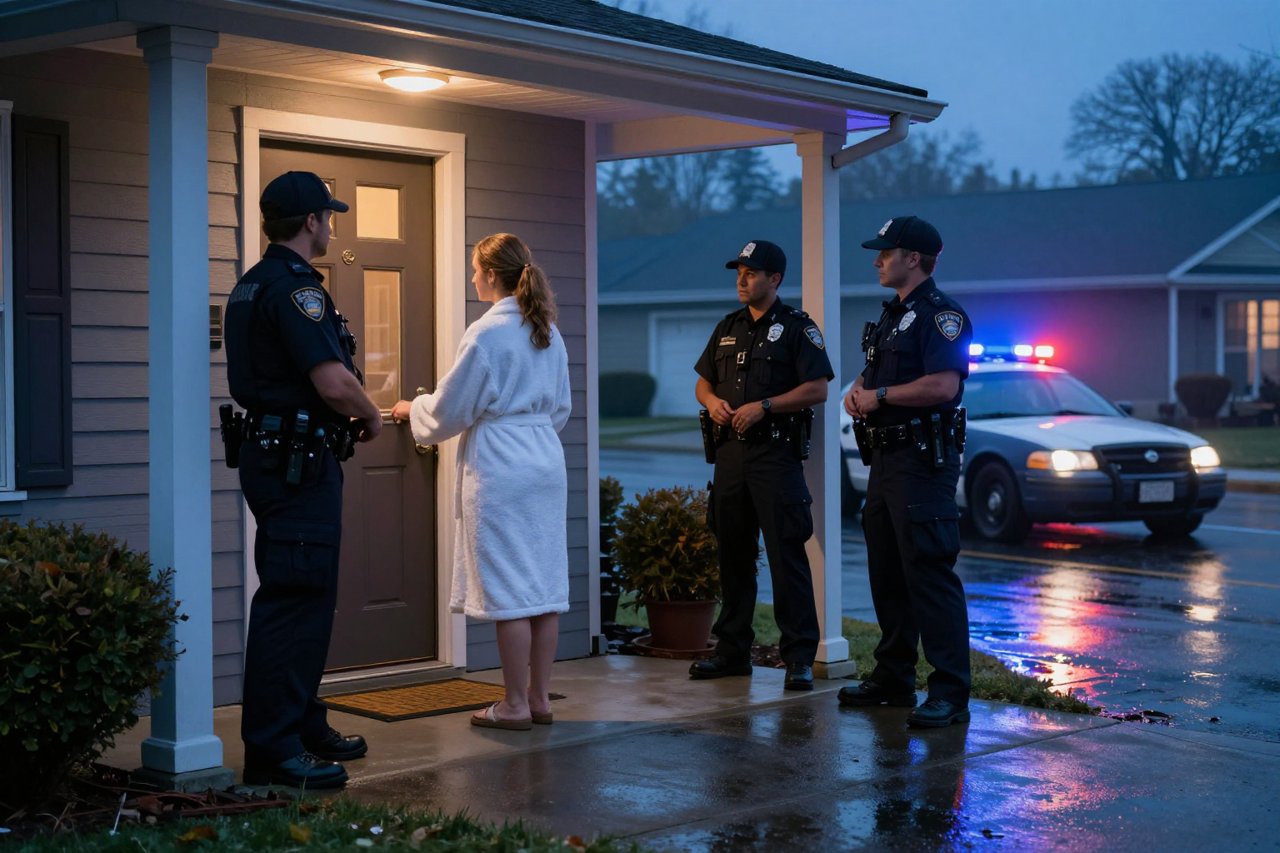
It’s 6:10 on a Tuesday morning and someone is hammering on the front door. Through the blinds: two officers, a marked unit at the curb, and a sentence that reorganises your whole week. “We have a warrant for your arrest.”
Most people have a vague picture of what that means from television. The reality is more procedural, and in some ways more limited, than the drama suggests. An arrest warrant is a court order signed by a judge that gives police legal authority to take one specific person into custody over one specific alleged offence. It is not a conviction. It is not even a finding that you probably did it, in the sense a jury would understand.
Here is the full mechanism, from the sworn affidavit a detective drafts to the moment a clerk types a name into a national database.
What an arrest warrant actually is
The key point most people miss: a warrant is a judicial act, not a police decision. Officers cannot decide on their own to issue one, and they cannot write one for themselves. Someone has to persuade a neutral judge or magistrate that there is probable cause, which is a legal standard meaning a reasonable person would believe an offence was committed and that this particular person committed it. That is a much lower bar than “beyond reasonable doubt,” and it is supposed to be a much higher bar than a hunch.

The four things a judge checks before signing
- Who the warrant names. A legal name, date of birth, physical description, or enough identifiers to remove ambiguity about which human being is meant.
- What the offence is. Usually a statute number, plus the date and location of the alleged conduct.
- Why there is probable cause. A sworn affidavit from an officer or investigator setting out facts. Good affidavits describe what was seen, heard, or found. Weak ones recite conclusions and get rejected.
- Who authorised it. A judge or magistrate, or in some jurisdictions a grand jury indictment that functions the same way.
In busy courthouses this whole process can take under an hour. A detective finishes a report at 2pm, a prosecutor reviews the affidavit, a duty judge signs at 4pm, and by 5pm the warrant exists. Speed is precisely why the probable cause requirement matters. It is the only gate between an allegation and the state’s power to seize a person.
You can be arrested without a warrant, and usually are
Here is the part that surprises people who assume a warrant is always required. The overwhelming majority of arrests in the United States happen without one. An officer who watches someone commit a felony can arrest on the spot. So can an officer who arrives at a scene and develops probable cause, provided the offence falls within the rules of that state. Emergency situations, disappearing suspects, and evidence being destroyed all push courts to allow warrantless arrests.
Arrest warrants matter most in the slower cases: investigations that take weeks, suspects who have moved towns, financial crimes, and anything where the person was not there when police showed up. The warrant converts an investigation into an arrestable event that any officer in the country can act on.
Arrest warrants and search warrants are not the same thing
A search warrant authorises police to look through a place or seize particular property. An arrest warrant authorises them to take a person. The two get confused constantly, and the confusion has real consequences at the front door.
Under the rule set out in Payton v. New York, police generally need an arrest warrant plus reason to believe the suspect is inside before they can enter a home to make the arrest. To go into someone’s house looking for a third party who lives elsewhere, they need a proper search warrant instead, as Steagald v. United States established. If you want the mechanics of that second kind of order, this breakdown of search warrants, their scope and their limits is worth reading alongside this one.
Bench warrants: the ones that sneak up on people
Not every warrant starts with a crime. A bench warrant comes from a judge’s bench rather than a police investigation, and it is typically issued when someone fails to appear in court, ignores a fine, skips jury duty, or falls behind on child support. Some states issue them for unpaid traffic tickets.
These are the warrants that wreck ordinary lives. A missed court date over a $180 fine can produce a warrant that surfaces three years later during a routine traffic stop, turning a ten-minute conversation into a night in a holding cell. If you know you missed a date, deal with it before a stranger in a patrol car deals with it for you.
What happens once a judge signs
The warrant goes into the court’s records and, in most cases, into the National Crime Information Center, an FBI-run index that police departments query constantly. That is why a warrant issued in one county can get you detained in another state entirely, sometimes handcuffed on a holiday weekend with no local judge available.
Contrary to popular belief, arrest warrants generally do not quietly expire. A warrant from 2009 is still a live warrant in 2025 unless a court recalls it. A handful of jurisdictions run periodic amnesty or purge programmes for old low-level warrants, but you should never count on one. What does have a clock on it is the underlying charge: statutes of limitation can bar prosecution even when a warrant still sits in a database.
How to find out if a warrant has your name on it
You do not need to guess, and you should not call 911 to ask. Most counties publish warrant lists online, and court dockets are searchable by name in many states. A criminal defence lawyer can call the clerk’s office directly and get an answer the same afternoon, which is usually the cleanest route because it does not put your name and address into a conversation with law enforcement before you have a plan.
Watch for scams here. Callers impersonating sheriff’s deputies demand gift cards or bank transfers to “clear a warrant.” No court in the country accepts payment in iTunes cards. Real warrants are resolved in person, at a courthouse, with paperwork.
If officers arrive with a warrant
Stay calm and stay verbal rather than physical. Resisting, even when you believe the warrant is mistaken, adds charges and injures people. Ask to see the document. Ask whether you are free to leave, because if the answer is no, you are being detained and everything from that point is evidence. Say clearly that you want a lawyer, and decline any request to search beyond what the warrant covers.
Putting your hands behind your back when asked is not an admission of anything. It just keeps the next hour from becoming a fight you cannot win.
Immigration warrants follow a different set of rules
This is where terminology gets genuinely misleading. ICE issues its own “warrants of arrest” and “warrants of removal” on forms I-200 and I-205. Those documents are signed by immigration officers, not judges, which makes them administrative warrants rather than judicial ones. Federal courts have repeatedly held that an administrative warrant alone does not authorise entry into a private home without consent or a genuine judicial warrant.
The gap between what an administrative warrant legally permits and what happens on the ground is where a lot of the current controversy sits. Reporting on ICE enforcement in Minneapolis and the legal questions it raised lays out how those distinctions play out in practice, and this piece on seven practical ways to rein in ICE covers the policy side. If a federal agent is at your door, the question to ask is simple and worth repeating: is this a judicial warrant signed by a judge?
When the warrant is wrong
Mistakes happen more often than the system likes to admit. Common names collide. A middle initial gets dropped. Someone uses a stolen identity during a traffic stop and the warrant lands on the victim’s record years later. Warrants get recalled by a judge but never purged from the database, so a person gets arrested on a warrant that no longer exists.
Records in those systems are shared across agencies at remarkable scale, and the same appetite for bulk data that produced the NSA’s sprawling surveillance programmes shows up in how aggressively personal records get cross-matched without correction.
The fix is paperwork, and it works: a motion to quash or recall, a certified copy of the dismissal, an expungement order, a letter from the court clerk. Once you have the warrant cleared, keep a certified copy in your car and a scan on your phone. The database may lag for weeks, and the officer at the roadside will believe a stamped court document long before he believes you.
The first 48 hours after a warrant arrest
Most jurisdictions require a first appearance before a judge within 48 hours, sometimes stretching to 72 over a weekend. That hearing is where bail gets set, where you learn the actual charge, and where a public defender is appointed if you cannot afford a lawyer. Booking will involve fingerprints and photographs whether or not you think the arrest is justified.
Two things make that window easier. First, say nothing about the facts of the case to anyone in the facility, including the person in the next cell. Second, get the charging documents. They tell you what the state thinks it can prove, and they are the starting point for every conversation you will have with counsel afterward. A warrant is the beginning of a legal process, not the end of one, and it can be challenged at almost every step along the way.


