
Table of Contents
Car manufacturing is one of the most capital-hungry businesses on earth. A single assembly line can cost more than a billion dollars to tool, and the money starts going out years before the first finished vehicle rolls into a showroom. That mismatch between huge fixed costs and unpredictable demand explains why so many car manufacturer bankruptcy stories follow the same shape: confidence, expansion, a cash squeeze, then a scramble for a buyer.
Some collapses are slow and painful. Others arrive with a tabloid headline and a sports car. The best stories sit somewhere between engineering ambition and financial reality, and they tend to leave behind loyal owners, empty factories, and a lot of unanswered questions.
Studebaker and Packard: the merger that did not save either
Studebaker had been building things since 1852, when it made wagons for people heading west. By the 1950s it was a genuine carmaker with a reputation for sturdy engineering, but its South Bend, Indiana, plant was old and its costs were high. Packard was the prestige partner: conservative, expensive, and struggling to fund new models. The two merged in 1954, hoping scale would fix what neither could fix alone.
It didn’t. The merged company lacked the cash to develop two distinct car lines. The 1957 Packard Clipper was essentially a Studebaker with a Packard badge, and buyers noticed. The last true Packard had been built in 1956; the name disappeared after 1958. Studebaker kept going with compacts like the Lark, but the money ran out. The South Bend line closed in December 1963, and Canadian production ended in 1966.

The Studebaker-Packard story is a reminder that a merger is not a rescue. When two weak companies combine, they often create one tired company with two sets of bills.
DeLorean: the dream car with a cocaine sting in the rearview
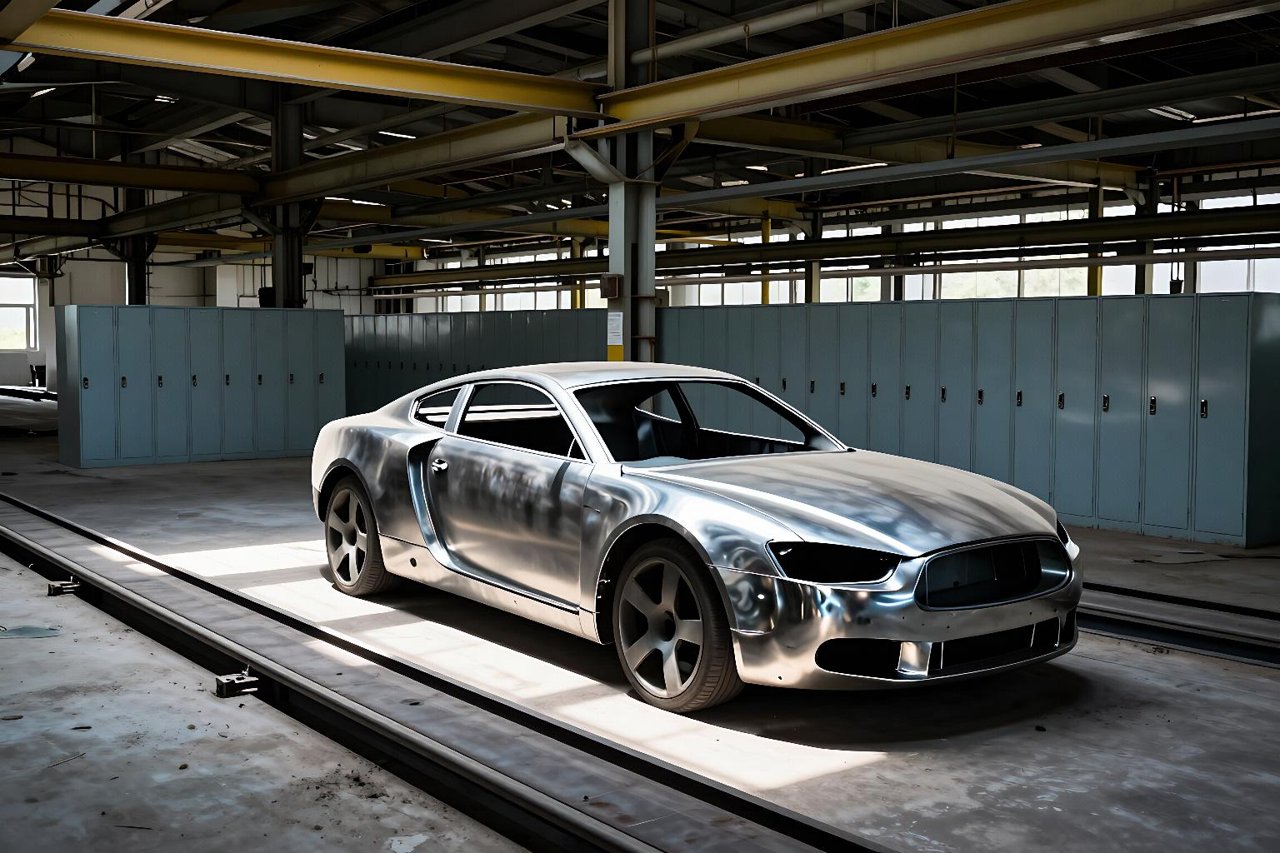
John DeLorean was a brilliant GM executive who walked away to build his own sports car. He raised money from investors, secured support from the UK government, and built a factory in Dunmurry, Northern Ireland, at a time when the region desperately needed jobs. The DMC-12 had stainless-steel body panels, gullwing doors, and a rear-mounted V6. It looked like the future.
The car was underpowered, expensive, and quality problems slowed production. The company ran out of cash and collapsed in 1982, with roughly 9,000 cars built. Then came the tabloid twist: DeLorean was arrested in a cocaine trafficking sting, though he was later acquitted. The car became a movie star in Back to the Future; the company became a case study in how hype can outrun a business plan.
The DeLorean story is often reduced to the sting and the movie cameo. That tidy version skips the factory, the workers, and the loan guarantees, a selective amnesia that also shapes how uncomfortable histories get rewritten in other fields.
Tucker 48: too ambitious, too soon
Preston Tucker’s 1948 sedan was packed with ideas: a rear-mounted flat-six, a safety windshield, and a focus on crash protection. Tucker promised a lot and built 51 cars. The Securities and Exchange Commission investigated, the company ran out of money, and Tucker was tried for fraud before being acquitted. By then, the business was gone.
Tucker’s story gets told as a conspiracy, and there were certainly powerful interests that disliked him. But the simpler truth is that a new carmaker needs enormous amounts of cash and a supplier network that trusts it will survive. Tucker had neither.
Saab and MG Rover: national champions, private pain
Saab Automobile filed for bankruptcy in December 2011 after years of losses. GM had sold the brand to Spyker in 2010, and a series of Chinese investment deals fell apart. The Trollhättan plant stopped, suppliers were left with unpaid bills, and owners of 9-3s and 9-5s wondered where the parts would come from.
MG Rover collapsed in April 2005, taking about 6,000 jobs with it. The Phoenix Four, a group of executives who bought the company for a nominal sum, had promised to secure its future. Instead, the business ran out of money and the Longbridge factory went quiet. The remains were bought by China’s SAIC, and MG later returned as a very different brand.
The modern EV graveyard
The electric vehicle boom produced a new crop of car manufacturer bankruptcy stories, with a familiar rhythm: a flashy prototype, a SPAC listing, a factory deal, and then a cash crunch.
Fisker: two bankruptcies, one founder
Henrik Fisker’s first company, Fisker Automotive, filed for bankruptcy in 2013 after a $529 million U.S. Department of Energy loan and the collapse of battery supplier A123. It had built the Karma plug-in hybrid. His second act, Fisker Inc., launched the Ocean SUV and filed for Chapter 11 in June 2024 after software problems, service complaints, and a failed rescue deal.
Lordstown Motors: the pickup that ran out of road
Lordstown Motors bought GM’s old Lordstown, Ohio, plant and promised an electric pickup called the Endurance for fleet buyers. It went public through a SPAC, faced questions about preorders, and filed for Chapter 11 in July 2023 after a deal with Foxconn fell apart.
Nikola: hydrogen hype and a fraud conviction
Nikola promised hydrogen fuel-cell trucks and a network of stations. Founder Trevor Milton was convicted of fraud in 2022, and the company filed for Chapter 11 in February 2025. The trucks were real by then, but the balance sheet was not.
Why carmakers go bankrupt, even when the cars are good
- Fixed costs eat cash. Factories, tooling, engineering, and dealer networks cost money whether a line runs at 50% or 100%.
- Volume is everything. A new platform needs hundreds of thousands of sales to pay back development costs.
- Suppliers feel it first. When a carmaker stretches payment terms or misses invoices, suppliers stop shipping parts.
- Debt and leases create traps. Low-margin leasing can leave a manufacturer holding residual values it guessed wrong.
- Hype cannot pay wages. SPACs and preorders can raise money, but they do not solve the cost of actually building vehicles at scale.
- Government support is not a strategy. Loans and grants buy time, not customers.
There is also the human factor. Founders who are brilliant at design or promotion are not always good at inventory, warranty costs, and supplier negotiations. Boards often wait too long to replace them, because the founder is the story.
What happens to owners when a carmaker dies
When a manufacturer files for bankruptcy, the first question for owners is usually parts and software. A Saab owner can still find some components through specialists, but a Fisker Ocean owner depends on a much smaller network and over-the-air updates that may never arrive. Fleet buyers of the Lordstown Endurance face the same problem at a larger scale.
Before buying from a struggling brand, check a few practical things:
- Who owns the warranty, and is it backed by a parent company with cash?
- Can independent garages get diagnostic tools and parts?
- Does the car rely on cloud services or software updates to keep working?
- How many dealers or service points are within reasonable distance?
- What is resale value likely to do if the brand disappears?
Bankruptcy does not always mean the cars vanish. Parts inventories get sold, service networks get picked up, and enthusiast communities keep cars alive. But the risk is real, and it usually lands on owners after the headlines have moved on.


