
Table of Contents
Two blocks into the test drive, the transmission slipped between second and third gear. The seller, who ten minutes earlier had described the car as “runs great, no issues,” suddenly remembered an appointment. That scene plays out in parking lots every day, and it is almost always avoidable. Buying used is a process problem far more than a luck problem. Get the order of operations right and you will pay less, drive away with fewer surprises, and sidestep the cars someone else is trying to unload.
Set the number before you set foot on a lot
Most buyers start with a monthly payment in mind and work backwards from whatever the dealer can get approved. Flip that around. Decide what you can spend in cash, then add roughly 10% for the costs nobody budgets for: immediate repairs, new tires, a brake job, the first insurance payment, and registration transfer fees.
If you are financing, get pre-approved by a credit union or your own bank before you shop. An $18,000 loan over 60 months at 8% runs about $365 a month. At 14%, the same car costs closer to $419. That gap is roughly $3,200 over the life of the loan, and it has nothing to do with which car you pick. Walking in with a rate in hand changes the conversation entirely.
Shop three models, not thirty
The people who get the best value from a used car usually decided what they wanted before they started scrolling. Pick two or three models with a reputation for cheap parts and long service intervals: a Corolla, a Civic, a Mazda3, a Camry, a Honda Fit. Then check three things online before you go any further.

- Insurance cost. Get a quote on the exact year, trim and engine. A used WRX and a used Legacy cost wildly different amounts to insure, and the difference can run $800 a year.
- Known failure points. Search something like “2016 Mazda3 common problems” and read owner forums, not just review sites. Every model has a weak spot. You want to know yours before you hand over cash.
- Local mechanic support. Call an independent shop and ask what they charge to work on that model. Some European cars are perfectly reliable but expensive to keep running where you live.
Where the decent listings actually live
Private sellers usually price lower because there is no lot, no commission and no reconditioning budget baked in. Dealers offer convenience, financing and, on certified pre-owned cars, an actual warranty. Certified cars typically carry a $2,000 to $3,000 premium over a comparable private listing, which is fair value if the coverage addresses what worries you and a poor deal if it doesn’t.
There is a middle ground worth knowing: off-lease cars, rental fleet retirements and company vehicles. They come with complete service records and higher mileage, and those records are often worth more than a low odometer reading on a car with an unknown history. Our guide to the best used car websites where real buyers shop covers which platforms are worth your time and which are stuffed with relisted dealer inventory.
Five questions that save you a wasted trip
Call or message before you drive across town. Anyone unwilling to answer these is telling you something useful.
- How long have you owned the car, and is the title in your name right now?
- Why are you selling?
- Has it been in any accidents, and has any bodywork or paint been done?
- Do you have service records, and when was the last major service?
- Is there anything wrong with it that I would notice on a test drive?
The answer to that last one is usually “nothing major.” It’s the pause before the answer that tells you what you need to know. Ask for the VIN and run a vehicle history report before you commit to a viewing.
Inspect it in daylight, on purpose
The walk-around
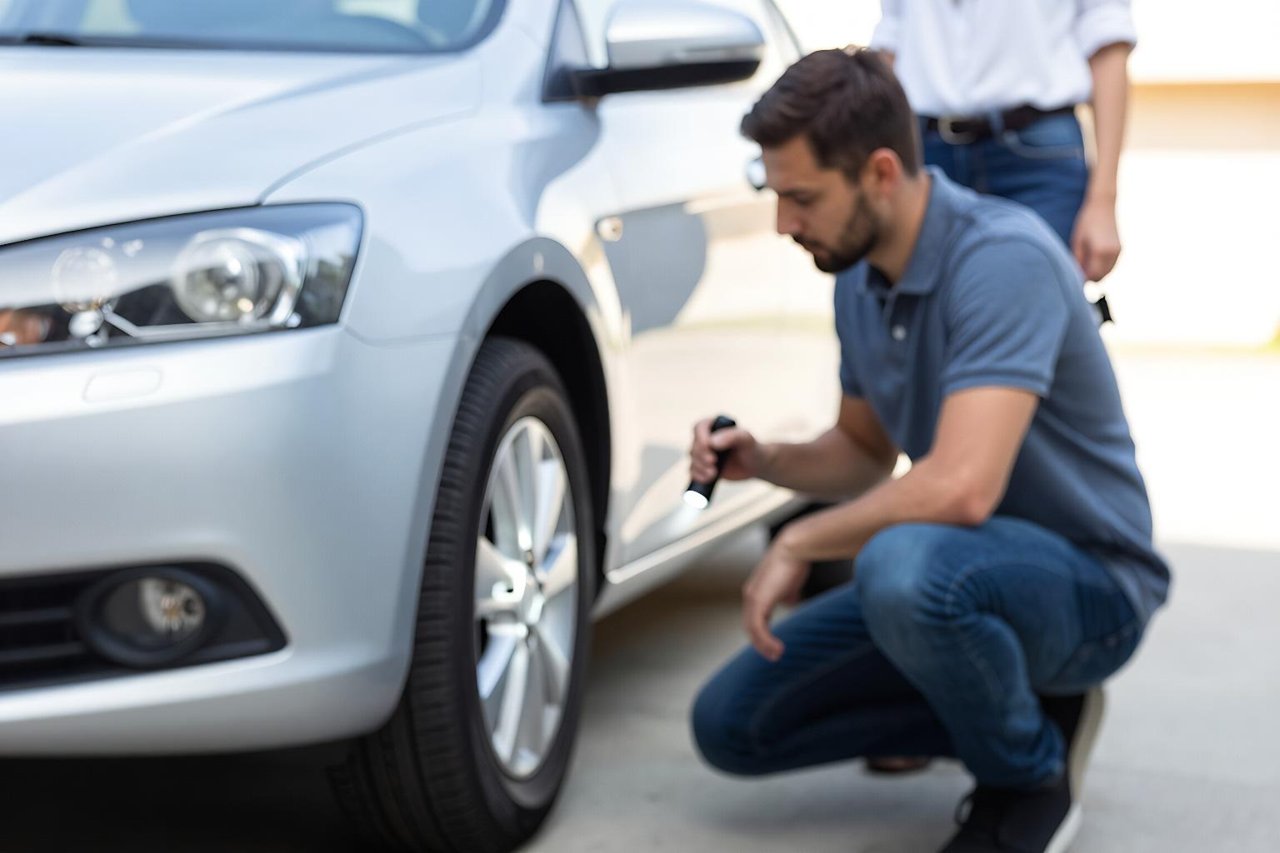
Look down the length of the car from both sides and check that panel gaps are even and paint matches from panel to panel. Repainted bumpers and fenders are common and not always a problem, but they are clues. Then read the tire date codes on the sidewall: four digits, where “3219” means week 32 of 2019. Tires past six years old are a $600-plus bill no matter how much tread is left.
Under the hood
Coolant should be bright, not brown sludge. Oil on the dipstick should be amber, not black and gritty. Look for fresh sealant squeezed out around the valve cover or oil pan, which sometimes means a leak was just covered up for the photo. Check the tops of the strut towers and the corners of the engine bay for rust.
The test drive
Twenty minutes minimum. Include a highway on-ramp, a stop-and-go stretch, a parking lot where you can do full-lock turns, and a quiet road where you can listen for wheel bearing noise. Test every single button: air conditioning at full cold, all four windows, seat heaters, the radio, the backup camera. Hold the brake pedal down at a standstill. If it sinks slowly toward the floor, you have a hydraulic problem.
Pay for an inspection once, not for a repair twice
An independent pre-purchase inspection costs $120 to $200 and takes about an hour. Book it before money changes hands, and ask the shop to scan for pending codes, not just active ones. A fault code that was recently cleared will not light the dash but will still show up as “not ready” on the emissions monitor. On a car past 120,000 miles, request a compression test. If a seller refuses to allow an inspection, the process ends there and you have lost nothing but a phone call.
Paperwork is where cheap cars get expensive
Before you pay, confirm the VIN on the dashboard matches the sticker on the driver’s door jamb and the number printed on the title. Ask to see the title in the seller’s name. A “title jumper” who bought the car last month and never transferred it can leave you with weeks of DMV grief and no plate. Call your state DMV with the VIN to check for an open lien.
Watch for title washing too, where a salvage or flood-branded car gets moved through a state that doesn’t print the brand on the new document. A history report won’t always catch it, but a shop inspection usually will. Write up a simple bill of sale listing the date, price, VIN, odometer reading and both signatures, and get a signed odometer statement if your state requires one.
Negotiate with a number, not a feeling
Before you make an offer, pull five comparable listings for the same model, year and mileage within 100 miles and write down the average. Then subtract, openly and specifically, for everything the inspection flagged. A seller can argue with your opinion. They cannot argue with three repair quotes in writing. Our walkthrough on buying a car for less without playing dealership games goes deeper on the tactics you’ll run into, and if you’re trading in rather than selling privately, it’s worth reading about winning both sides of the deal before you walk in.
Timing moves the price more than haggling does
Dealers chase monthly and quarterly targets, which makes the last two days of a month measurably better than the first. Late December, when showrooms are quiet and next year’s models are already parked outside, is another reliable window. On the private market, convertibles go cheapest in January and four-wheel-drive sells highest in October. Used prices overall track off-lease supply and repossession volume, so a car that was overpriced in spring can be a bargain by late summer. Read up on the timing moves that actually cut the price, and if you want the bigger picture, why used car prices rise and fall explains whether you’re shopping in a buyer’s market or a seller’s.
Fix your walk-away number and bring a witness
Write your maximum on a note before you leave the house, and include the inspection and the tax in that figure. Bring someone whose only job is to say “we agreed on $11,400.” Adrenaline is real, and every car looks better in person than it did in the listing photos. If the seller won’t reach your ceiling, thank them and go. There are thousands of the same model within a day’s drive, and the one you almost bought is not the only good one out there.
Once you do buy, transfer the title and add the car to your insurance before you drive it home, not the following week. Most states give you a window of somewhere between five and thirty days depending on where you live, and an uninsured gap on a car you just bought is an expensive way to end an otherwise good deal.


