
Table of Contents
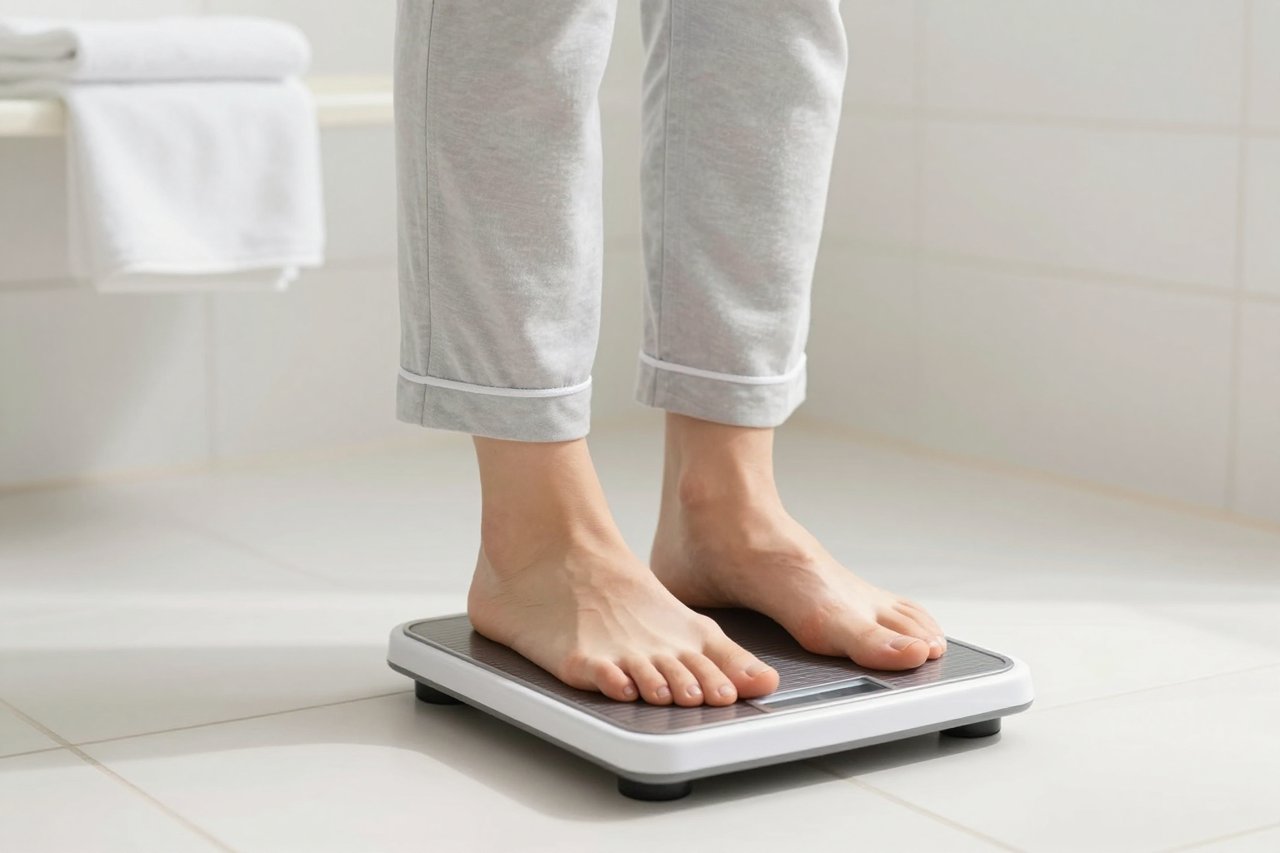
You step on the scale on Tuesday morning: 71.2 kg. Wednesday: 72.4. Thursday: 71.6. Nothing about your diet changed, you didn’t suddenly eat 9,000 extra calories, and yet the number jumped around like a stock price. This is normal. Day-to-day weight swings of 1–2 kg (roughly 2–4 lb) are so common that researchers who run weight-loss trials often ask participants to weigh daily and then average the week, precisely because single readings are so noisy.
Fat doesn’t appear and disappear overnight. Water, glycogen, gut contents and a dozen smaller variables do, and they move the needle far more than most people realise. Here are the seven biggest culprits — plus how to weigh yourself so the number actually tells you something.
1. You ate more salt than usual
A single takeaway curry, a bowl of ramen, or a bag of crisps can carry 3,000–4,000 mg of sodium, well past the 2,300 mg daily ceiling most health bodies recommend. Your body doesn’t just let that sit. It holds water to keep the concentration of sodium in your blood within a safe range, and water is heavy: one litre weighs a full kilogram.
A salty meal on Tuesday night can easily leave you 1–1.5 kg heavier on Wednesday morning, and none of it is fat. It usually clears within 24–48 hours if you drink normally and keep your kidneys working. Odd as it sounds, drinking more water helps rather than hurts, because it gives your body the fluid it needs to flush the excess sodium out.

Salt is one of the few diet factors measured across nearly every country, and a look at global health trends makes it clear how salty the average plate has quietly become — particularly once restaurant and packaged food enter the picture.
2. Your glycogen stores shifted
Every gram of carbohydrate stored in your muscles and liver as glycogen comes with roughly 3–4 grams of water attached. A trained adult can hold 400–500 g of glycogen, which means the associated water alone can account for well over a kilogram on the scale.
This explains two things people find baffling. First, why a low-carb diet appears to melt 1.5 kg off in three days — that’s water leaving with the glycogen, not fat. Second, why a big pasta dinner on Saturday can make Sunday’s reading look alarming. Your body hasn’t stored fat overnight; it has topped up its fuel tank and brought the water with it.
3. Hormones are doing their monthly thing
In the week before a period, rising progesterone interacts with aldosterone and the body retains more sodium and fluid. A swing of 0.5–2 kg across the cycle is completely typical, and it disappears a few days after bleeding starts. If you’ve ever felt puffy and heavy on day 26 and lean on day 5 of the next cycle, you weren’t imagining it.
Hormonal shifts at other life stages matter too. Perimenopause and menopause bring their own fluid and body-composition changes, and the strategies that work then are not identical to the ones that worked at 25 — menopause weight gain has more on what genuinely shifts the numbers and what doesn’t.
4. There’s food still in transit
At any given moment your digestive tract holds somewhere between 0.5 and 1.5 kg of food, liquid and waste. A late, large dinner eaten at 9 pm and a weigh-in at 7 am will catch most of that still inside you. A high-fibre day, a constipated stretch, or a big glass of water before bed can each add a few hundred grams.
Weigh yourself before and after a generous meal and you’ll see the effect in real time. It’s not a flaw in the scale. It’s just that the scale doesn’t distinguish between you and your lunch.
5. Hard training causes temporary water retention
A tough leg session creates microdamage in muscle fibres, and the repair process brings inflammation and fluid to the area. That can add 1–2 kg for 24–48 hours, which is why people often weigh more the day after their best workout and panic about it.
Creatine belongs in this category too. Supplementing typically adds 1–2 kg of intracellular water in the first few weeks, and it stays there. That’s not a problem — it’s the mechanism by which creatine works — but it does mean your baseline weight shifts upward while your measurements may not.
6. Sleep, stress and alcohol
One rough night raises cortisol, and cortisol encourages fluid retention. Add a stressful work week, a couple of glasses of wine (which dehydrate you and then trigger rebound retention), or a long-haul flight with salty plane food and disrupted sleep, and you’ve built a perfect storm for a 1 kg jump that has nothing to do with calories.
Irregular sleep also makes consistent tracking harder, which is its own problem. If your weigh-in routine keeps collapsing after four days, the fix is usually structural rather than motivational — the same principle behind using AI to hold a routine together when willpower alone keeps failing.
7. The scale itself is less precise than you think
Home scales drift. Placing one on carpet instead of hard tile can shift a reading by 0.5 kg or more, and cheap models vary by 0.2–0.5 kg between consecutive readings. Your weight also changes across the day, typically peaking in the evening after meals and settling lowest after a night’s sleep and a bathroom trip.
You can test your own scale by weighing something with a known mass, like a 5 kg dumbbell, three times in a row. If the readings disagree, some of your daily fluctuation is measurement noise, not biology.
How to weigh yourself so the number means something
None of this means the scale is useless. It means single readings are, and trends are not. A few habits make the data far cleaner:
- Weigh at the same time daily, ideally in the morning after the bathroom and before eating or drinking.
- Use the same scale on the same hard floor spot, and don’t move it around.
- Log it and look at the 7-day average. One number is noise; a weekly average is a signal.
- Ignore the day after a salty meal, a heavy workout, a flight or a bad night’s sleep. Mark it and move on.
- Add a tape measure or waist measurement monthly. Body composition changes that the scale misses will show up there.
When a daily swing is worth a doctor’s visit
Everyday fluctuation is one thing. Certain patterns are worth investigating rather than shrugging off. Book an appointment if you gain 2–3 kg over a few days alongside swelling in the ankles or legs, shortness of breath, or a sudden drop in urine output — that combination can point to heart, kidney or liver issues rather than water weight from last night’s pizza.
The same goes for unexplained weight loss of more than 5% of your body weight in a month without trying, persistent swelling that doesn’t resolve within a week, or weight changes accompanied by fatigue, hair thinning, feeling cold all the time, or irregular periods. Those can signal thyroid problems, PCOS or other conditions that deserve proper testing rather than another week of cutting back on salt.
For everyone else, the practical takeaway is straightforward: treat the scale as a trend-tracking tool with a margin of error of a kilo or two, not a verdict on yesterday’s choices. Weigh daily if you like, average the week, and stop letting a Wednesday spike rewrite how you feel about a Tuesday that was, in fact, completely fine.


