
Table of Contents
Your dog empties the water bowl after a lunchtime walk, flops onto the kitchen tile, and pants hard for ten minutes. Nine times out of ten that’s just a dog cooling down. The tenth time, it’s the start of something that needs a vet by evening.
Dehydration in dogs is easy to miss because dogs don’t complain. A dog can lose around 5% of their body water and still wag, eat, and follow you from room to room. Once the signs become obvious — sunken eyes, wobbly legs, gums like sandpaper — you’re usually past the point where a fresh bowl of water fixes it.
The good news: you can check most of this yourself in about three minutes, with your hands, your eyes, and no equipment.
Why dogs lose water faster than you’d expect
Dogs barely sweat. They have sweat glands on their nose leather and paw pads, which do almost nothing for cooling. Panting is their main cooling system, and panting is expensive: a dog breathing hard in the heat can exhale a surprising amount of moisture in an hour.

That makes some dogs far more vulnerable than others. Flat-faced breeds like pugs, French bulldogs, and Boston terriers move air poorly, so they overheat and dehydrate quickly. Puppies have a higher surface-area-to-weight ratio and turn over water fast. So do seniors, nursing mothers, and any dog on a diuretic such as furosemide for heart disease.
Add a July afternoon, a game of fetch, and a bowl the dog can’t reach, and you’ve got the setup for a bad evening.
The three-minute at-home hydration check
Run through these in order. Any single failure is worth a call to your vet; two or more is a reason to go in.
1. The skin tent test
Pinch a fold of skin between your dog’s shoulder blades and lift it gently. In a well-hydrated dog, it drops back flat the instant you release it. If it takes one to two seconds to settle, your dog is mildly dehydrated. If it stays up in a ridge, or takes longer than two seconds, that’s significant fluid loss.
One caveat: very lean dogs, older dogs, and some breeds naturally have less elastic skin, which can make the test read falsely. Compare one side of the body to the other, and trust the other checks if the result looks odd.
2. The gum check
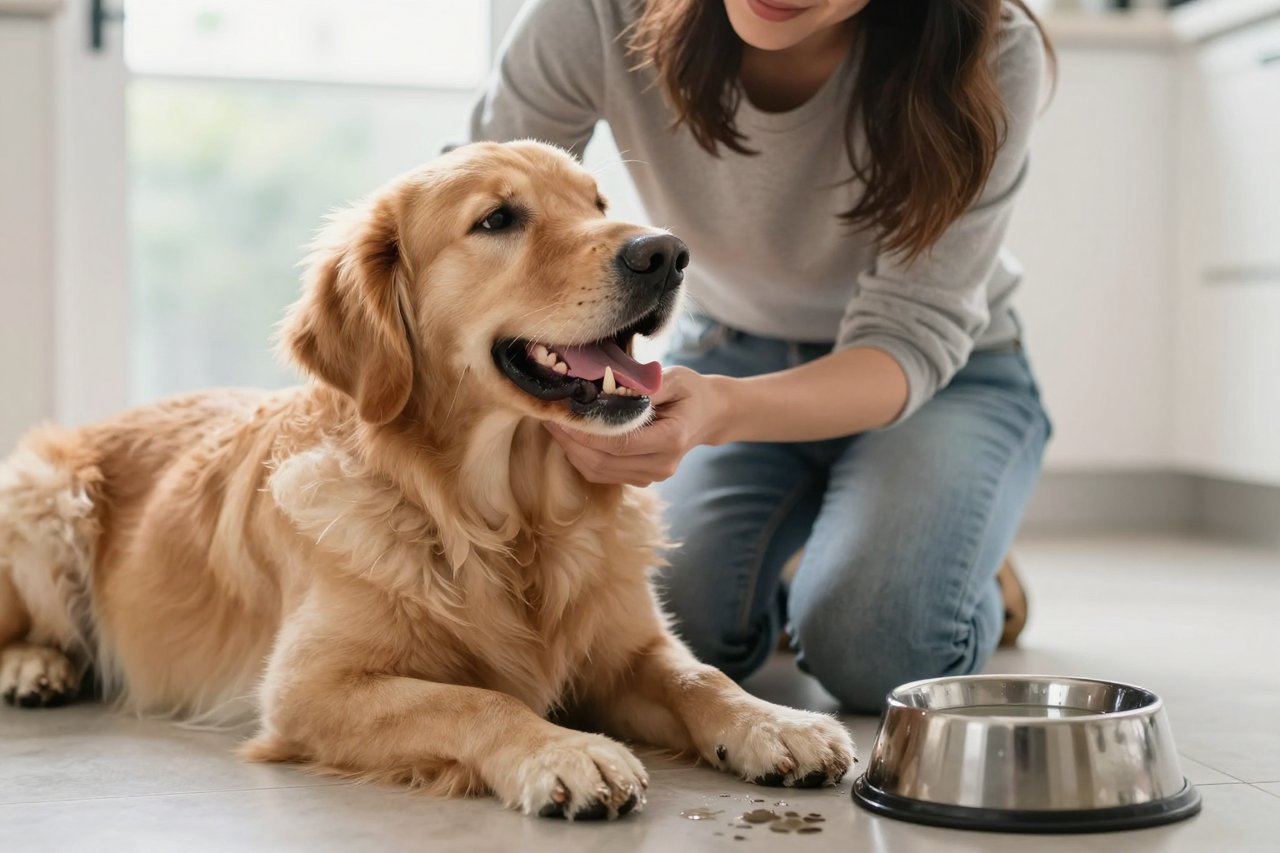
Lift your dog’s lip and run a finger along the gum above an upper canine tooth. Wet and slick is normal. Sticky, tacky, or dry means the body is pulling fluid away from the mouth. Healthy gums are bubblegum pink; pale, grey, white, or a deep brick red all deserve a phone call.
3. Capillary refill time
Press a fingertip firmly on the gum until the spot blanches white, then lift. Colour should flood back in under two seconds. Three seconds or more suggests poor circulation and is a same-day emergency, not a wait-and-see.
4. Eyes and urine
Look at your dog head-on. Eyes sitting deeper in the socket than usual, with a slightly hollow look above them, is a classic late sign. A healthy adult dog pees roughly three to five times a day; dark yellow, strongly scented urine, or no pee in 12 hours, tells you the tank is low.
Behavioural signs that show up first
Physical checks tell you what’s happening now. Behaviour tells you it’s starting. Watch for:
- Panting that doesn’t stop. A dog who is still puffing 10 minutes after coming indoors into a cool room is not just warm.
- Lagging on walks. A dog who normally pulls ahead suddenly walking behind you, or lying down mid-block, is often dehydrated before anything else shows.
- Loss of appetite. Dehydrated dogs lose interest in food before they lose interest in water.
- Lethargy and stiffness. Slow to stand, slow up the stairs, sleeping more than usual.
- Hunting for cool surfaces. Tile, bathroom floors, the shade under the car.
- Sticky drool or a dry nose. A dry nose alone proves little, but a crusty nose plus tacky gums is a pattern.
- Sunken flanks. The belly tucking up tighter than usual, with the skin looking less pliable.
What’s actually causing it
Heat and exercise are the obvious culprits, but plenty of dehydrated dogs are inside on a mild day. Vomiting and diarrhoea drain fluid fast — a dog with gastroenteritis can lose more in 24 hours than they drink in three days. Fever does the same, as does any illness that makes a dog feel too nauseous to visit the bowl.
Keep an eye out for dogs who quietly stop drinking. Dental pain, a sore neck, a change of bowl position, or a water source that’s gone stale can all do it. So can under-treated diabetes and kidney disease, which push water out through the bladder faster than the dog can replace it.
When it’s an emergency, not a top-up
Call your vet immediately, or head to an emergency clinic, if you see any of the following:
- Collapse, weakness, or confusion
- Gums that are grey, white, or blue, or refill taking three seconds or longer
- Skin that stays tented up and doesn’t flatten
- Vomiting so persistent the dog can’t keep water down
- No urination in 12 hours or more
- Rapid, shallow breathing or a racing heartbeat
- Sunken eyes with a dull, unfocused look
Do not squirt water into the mouth of a vomiting or barely responsive dog. It risks choking and aspiration into the lungs, and it doesn’t fix the underlying fluid deficit anyway. Severe dehydration needs subcutaneous or intravenous fluids, which is a ten-minute job at the clinic and a dangerous gamble at home.
How much water should your dog be drinking?
A reasonable rule of thumb is about 1 ounce of water per pound of body weight per day, or roughly 50–60 ml per kilogram. A 20 lb cocker spaniel should be putting away around 2 to 2.5 cups daily. A 70 lb labrador needs closer to 9 cups.
Dogs on wet food get a chunk of that from their meals, so they drink less from the bowl. Hot weather, long walks, and nursing can push requirements up by 50% or more. Instead of guessing, fill a 2-litre jug each morning and top the bowl from it — at the end of the day you’ll know exactly what went in.
Getting a fussy dog to drink more
Some dogs are simply not interested, especially older dogs and dogs who are feeling off. Small, practical nudges work better than a full bowl:
- Set out three or four bowls in different rooms so water is never more than a few steps away.
- Refresh bowls twice a day. Many dogs refuse water that’s been sitting since morning.
- Stir a spoonful of wet food or a splash of unsalted, onion-free chicken broth into the bowl.
- Add warm water to kibble to soften it — this sneaks in fluid with the meal.
- Try a pet fountain. Moving water gets a lot of reluctant drinkers going.
- Offer water after every walk and every play session, before the dog flops down.
Skip the salt, skip the sports drinks, and never withhold water from a dog who’s already dehydrated as a way to “make them drink later.”
What to have ready when you call the vet
The difference between a phone consultation and a wasted trip often comes down to detail. Before you dial, jot down your dog’s weight, how long the symptoms have been going on, roughly how much they’ve drunk and peed today, whether there’s been vomiting or diarrhoea and how many times, and any medications they’re on.
If you can, do the skin tent and gum check while you’re on the phone and describe exactly what you see: “The skin stays up for about three seconds, her gums are tacky, and the refill took three seconds.” That single sentence tells a vet more than a paragraph of worry, and it’s the fastest route to your dog getting the fluids they need.


