
Table of Contents
There’s a specific look a dog gives you at 6:40pm: head tilted, one paw lifted, eyes flicking between your fork and your face. Most of us cave. The good news is that plenty of what’s on your plate is genuinely fine for them. The less good news is that “fine” depends on how it’s prepared, how much goes down the hatch, and a short list of foods worth keeping under lock and key.
What follows is a practical rundown of the human foods dogs can safely eat, with the details that actually matter in a real kitchen: how to cut it, whether to cook it, and how much is too much.
The three rules that make any food safe
Get these right and the list below takes care of itself.
- Plain beats seasoned. Onion, garlic, salt, and most spice blends are the problem, not the carrot.
- Small is the whole game. Treats should stay under roughly 10% of your dog’s daily calories. For a 10kg dog that’s about 50 to 70 kcal a day, which is a small handful of blueberries, not a bowl of them.
- Cut for the size of the mouth. Choking risk climbs fast with round, firm foods. Slice carrots lengthwise for anything under 10kg, and quarter anything cherry-sized.
Fruits: the easiest place to start
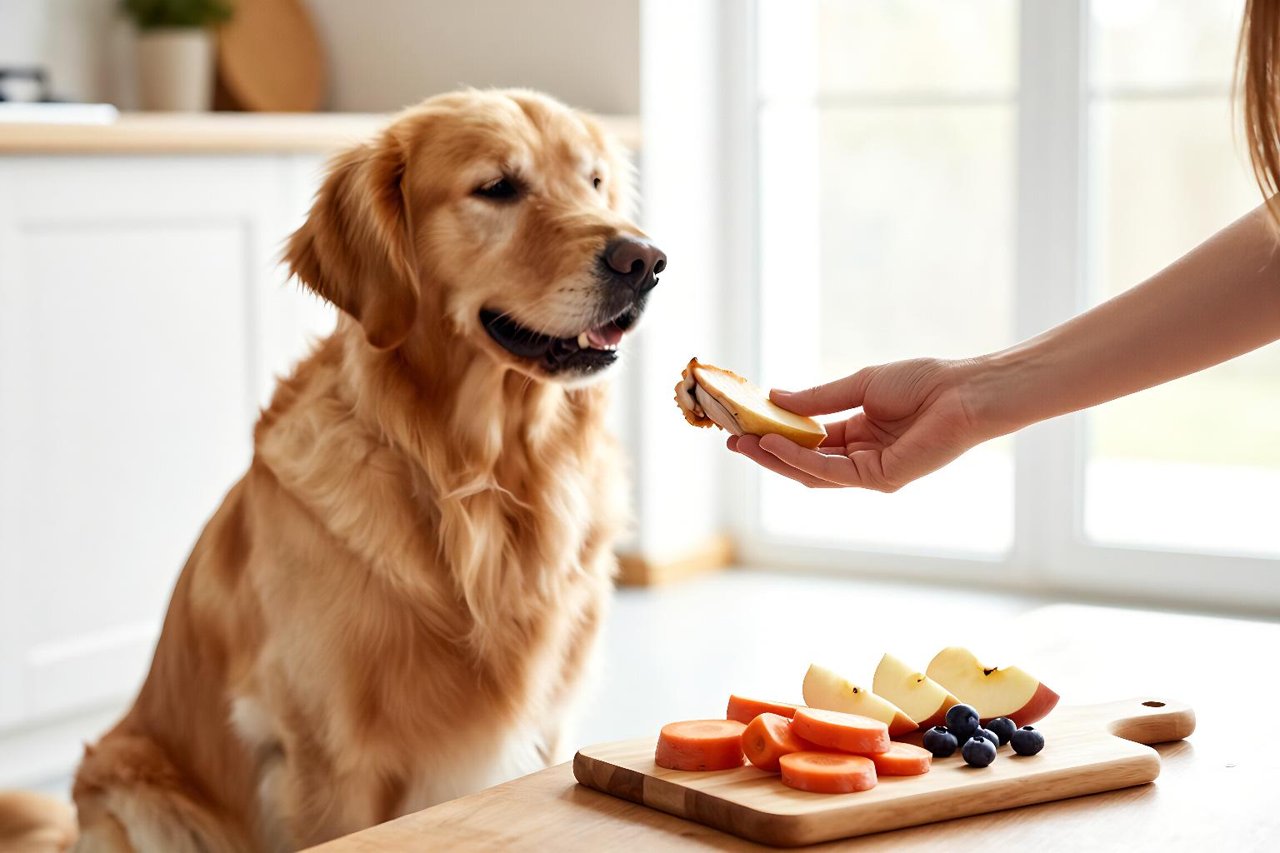
Fruit is where most people begin, and for good reason. It’s cheap, dogs usually like it, and it works as a training reward that’s lower in calories than most commercial biscuits.

Berries and soft fruit
Blueberries, raspberries, and strawberries are all fine, fresh or frozen. Frozen blueberries make an excellent summer treat and a slow one, since a dog has to work at each berry. Go easy on blackberries if your dog has a sensitive stomach; the seeds are gritty.
Apple and pear
Both are safe with the core and seeds removed. Apple seeds contain small amounts of cyanogenic compounds, and a dog would need to eat a serious quantity to get sick, but coring an apple takes ten seconds. Slice into wedges.
Banana and melon
Banana is high in sugar. A couple of slices is plenty, not half the fruit. Watermelon is mostly water and a good hot-weather treat, though the rind and every seed need to come out first. Cantaloupe and honeydew work well too, chopped into bite-sized cubes.
Mango and pineapple
Fine in small amounts, skin and core off. Pineapple contains an enzyme that can irritate some dogs’ mouths in quantity, so a cube or two is the sensible ceiling.
Ripe red tomatoes are also safe. Green tomatoes and the leaves contain solanine, so keep the tomato plant itself away from the dog.
Vegetables that earn their place in the bowl
Most dogs will ignore a broccoli floret and then steal one off the counter ten minutes later. Offer vegetables anyway. They add fiber and bulk for very little energy.
Carrots and green beans
Raw carrot is a good chewer for most dogs, though it’s a real choking hazard for small breeds and fast gulpers. Steam it soft for those. Green beans, fresh or frozen but never canned with salt, are a favorite for dogs carrying a bit of extra weight.
Pumpkin and sweet potato
Plain cooked pumpkin is one of the most useful things in a dog’s diet. It firms up loose stools and settles an upset stomach. Use plain purée, never pie filling. If you want the full breakdown on serving sizes and canned versus fresh, there’s a thorough guide to feeding pumpkin to pets. Sweet potato should always be cooked, never raw.
Cucumber, zucchini, and bell peppers
All fine, all low calorie. Bell peppers should be deseeded with the stem removed, since the stem is a choking risk rather than a toxin. Cucumber slices make a decent stand-in for a biscuit on a warm afternoon.
Protein: meat, fish, and eggs
This category matters most, and it’s where preparation does the heavy lifting.
Chicken and turkey
Plain, skinless, boneless, cooked. No salt, no oil, no onion powder. Boiled chicken is the standard bland diet vets suggest alongside rice when a dog has a dodgy stomach.
Beef and lamb
Lean cuts, cooked, fat trimmed. A small amount of unseasoned ground beef is fine. High-fat trimmings can trigger pancreatitis in dogs prone to it, which is a vet visit and a half.
Fish
Cooked salmon, white fish, and sardines packed in spring water rather than brine or oil are all good choices. Fish brings omega-3s, which support skin, coat, and joints. If you’d rather add an oil than a fish cube, here’s how to add omega-3 oils to your dog’s diet safely. Dosing matters with oils in a way it never does with a piece of salmon.
Eggs
Cooked eggs, scrambled or hard boiled, are excellent protein. Raw eggs aren’t recommended: salmonella risk for the dog, and for anyone handling the bowl afterwards.
Grains, dairy, and pantry bits
- Plain rice and pasta, cooked with no sauce, both work for bland diets.
- Rolled oats cooked in water are gentle on sensitive stomachs.
- Plain yogurt and kefir with live cultures and no added sugar. Many dogs handle dairy better than expected; some don’t, so start with a teaspoon.
- Cheese is high in fat and salt, but a tiny cube is a superb high-value reward for a stubborn dog.
- Peanut butter: check the label for xylitol, which is lethal to dogs, and for added salt and sugar. Two ingredients is the target.
- Plain cooked legumes: small amounts of unsalted lentils or chickpeas suit most dogs, though they can cause gas.
Foods that appear on “safe” lists but deserve a second look
A few items get a cautious green light with strings attached. Avocado flesh is technically low in persin, the compound that’s toxic to birds and rabbits, but the skin and pit are not safe and the fat content is high. Most vets simply say skip it. Nuts are similar: a plain almond won’t kill anyone, but macadamias are genuinely toxic and salted nuts are a salt load. Spinach and other high-oxalate greens should be a garnish, not a bowl, for dogs with a history of bladder stones.
The hard no list is short and worth memorizing: grapes and raisins, onions, garlic, leeks and chives, chocolate, xylitol (found in sugar-free gum, some peanut butters, and a surprising number of toothpastes), alcohol, caffeine, and raw bread dough.
Fitting treats into an actual diet
People food was treated as a one-way ticket to an unbalanced diet for years. The thinking has shifted. Real food has a place, as a supplement to a complete diet rather than a replacement for it.
Two situations where this matters. If your dog turns their nose up at dinner because they’re holding out for chicken, that’s a training problem, and the picky eater playbook covers how to reset it without a hunger strike. If you’re using food to manage a problem instead, the base diet matters more than the toppings. Dogs with chronic inflammation do better on a diet built around anti-inflammatory whole foods than on one with a few blueberries scattered on top, and if itching is the issue, choosing a food for allergies is its own process.
Introduce anything new one item at a time, over two or three days, starting with a teaspoon for a small dog and a tablespoon for a large one. If the stool changes, back off. That’s a far better test than any list, including this one.


