
Table of Contents
Most people come to the longevity diet after reading a headline about adding a decade to their life. Then they find a maze of conflicting advice: eat less, fast more, go vegan, eat steak, avoid carbs, load up on olive oil. It is enough to make anyone close the browser tab and order a pizza.
Here is the calm version. The longevity diet is not a strict regimen with a rulebook. It is a way of eating built around foods and habits that research links to a lower risk of heart disease, type 2 diabetes, dementia, and other age-related conditions. The goal is not just to live longer, but to spend those extra years feeling good.
This guide is for anyone starting from zero. No calorie apps, no superfood powders, no guilt. Just the fundamentals, explained simply.
What Does “Longevity Diet” Actually Mean?
Scientists use the term to describe eating patterns associated with longer, healthier lives. The most studied examples include the Mediterranean diet, traditional Okinawan eating, and various plant-forward diets. They differ in details, but share a lot: plenty of vegetables, fruit, beans, whole grains, nuts, and seeds; moderate amounts of fish and dairy; little red meat; and very little ultra-processed food.

It is helpful to think of the longevity diet as a framework rather than a fixed menu. You are not required to eat sardines if you hate them. You are not banned from birthday cake. The framework simply nudges you toward foods that support your body’s repair systems, reduce inflammation, and keep your metabolism steady over decades.
One more clarification: the longevity diet is not the same as severe calorie restriction. Some animal studies suggest that eating significantly less can extend lifespan, but the evidence in humans is mixed and the approach is hard to sustain. For most people, improving food quality matters more than shrinking portions dramatically.
The Core Principles (No Calorie Counting Required)
You can sum up the longevity diet in five practical principles. None of them require a scale or a spreadsheet.
1. Build meals around plants
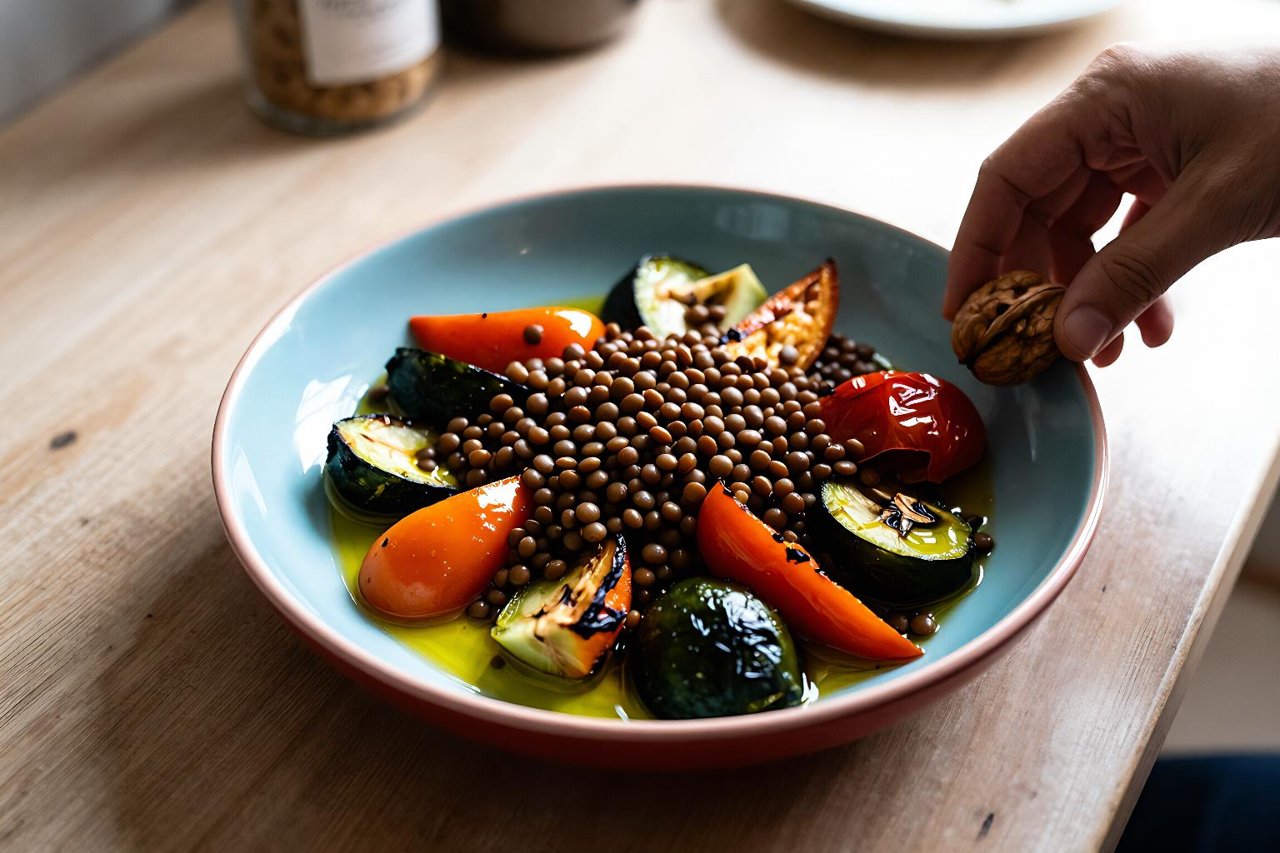
Vegetables, fruit, legumes, whole grains, nuts, and seeds should take up most of your plate. Aim for 25–30 grams of fiber a day, which is roughly double what the average person gets. Fiber feeds beneficial gut bacteria, helps control blood sugar, and keeps you full. A simple target: half your lunch and dinner plates filled with vegetables or salad. For a deeper list of specific foods and portions, see this guide to what to eat on the longevity diet to extend your years.
2. Eat enough protein, but not too much
Protein is essential for muscle, bone, and immune health, especially as you age. Most adults need about 0.8 grams per kilogram of body weight, and active older adults may need a bit more. That translates to a palm-sized portion of fish, poultry, tofu, or beans at one or two meals. You do not need a protein shake after every workout. And you do not need to eat a steak every day. Plant proteins like lentils, chickpeas, and edamame count.
3. Choose fats from whole foods
Olive oil, nuts, seeds, avocado, and fatty fish are staples in longevity-friendly eating patterns. These foods provide monounsaturated and omega-3 fats that support heart and brain health. Aim for one or two servings of fatty fish per week, such as salmon, mackerel, or sardines, and use olive oil as your default cooking fat. Avoid trans fats and limit refined seed oils found in packaged snacks.
4. Cut back on ultra-processed foods and added sugar
This is the single biggest lever for most people. Ultra-processed foods—sodas, packaged pastries, processed meats, sugary cereals, fast-food burgers—are linked to higher rates of chronic disease. You do not have to eliminate them entirely. Aim for an 80/20 balance: whole foods 80% of the time, flexibility for the rest. Check labels for added sugar; the American Heart Association recommends no more than 25 grams a day for women and 36 grams for men.
5. Consider a gentle eating window
Time-restricted eating, such as fasting for 12–14 hours overnight, gives your digestive system a break and may improve insulin sensitivity. A simple version: finish dinner by 7 p.m. and eat breakfast after 7 a.m. If fasting makes you irritable or leads to overeating later, skip it. There is no rule that you must fast to benefit from a longevity diet.
Here is a quick-reference list you can carry to the grocery store:
- Vegetables: leafy greens, broccoli, carrots, tomatoes, peppers, onions, mushrooms
- Fruit: berries, apples, oranges, pears, kiwi
- Legumes: lentils, black beans, chickpeas, split peas
- Whole grains: oats, brown rice, quinoa, barley, whole-wheat bread
- Healthy fats: olive oil, walnuts, almonds, flaxseed, avocado
- Protein: fish, eggs, poultry, tofu, tempeh, Greek yogurt
- Limit: soda, candy, processed meats, white bread, packaged snacks
How to Start Without Overhauling Your Life
Big changes fail. The people who stick with a longevity diet usually start with one or two swaps, not a full pantry purge. Try these small steps:
- Add a vegetable to breakfast—spinach in eggs, berries in oatmeal.
- Replace one soda a day with sparkling water or unsweetened tea.
- Cook one extra batch of beans or lentils on Sunday for quick meals.
- Swap white rice for brown rice or quinoa at dinner.
- Keep a bowl of fruit on the counter and nuts in a visible jar.
If you want a structured starting point, this article on the longevity diet in 6 manageable steps breaks the process down week by week. The key is to pick one change and repeat it until it feels automatic. That might take two weeks or two months. Either is fine.
What a Day of Longevity Eating Looks Like
You do not need exotic ingredients. Here is a realistic day:
Breakfast: Greek yogurt with a handful of berries, a tablespoon of ground flaxseed, and a few walnuts. Coffee or tea.
Lunch: A large salad with mixed greens, chickpeas, cherry tomatoes, cucumber, olive oil and lemon. A slice of whole-grain bread.
Snack: An apple and a small handful of almonds.
Dinner: Baked salmon with roasted broccoli and sweet potato. Or a lentil curry with brown rice and spinach.
Notice what is missing: no calorie counting, no “detox” tea, no skipping meals. The portions are moderate but satisfying. You could eat like this most days and still enjoy a glass of wine or a piece of cake at a celebration.
Common Mistakes That Trip Up Beginners
Even well-intentioned people stumble. One common trap is chasing superfoods—goji berries, acai, mushroom powders—while ignoring the basics like vegetables and fiber. Another is over-restricting, cutting out entire food groups, and then bingeing on the weekend. A third is forgetting about protein and losing muscle mass, which is especially risky after age 50.
For a detailed list of pitfalls, read the 8 mistakes that quietly undo your longevity diet. The short version: focus on consistency, not perfection. A diet that makes you miserable is not a longevity diet, because you will not stick with it.
Longevity Diet vs. Keto, Fasting, and Mediterranean
People often ask which diet is best. The honest answer: the one you can sustain. The Mediterranean diet is the most studied and fits the longevity framework closely. A plant-forward diet is similar but emphasizes plants even more. Keto and fasting can produce short-term metabolic benefits, but they are harder to maintain and may not suit everyone. If you are curious about how these approaches compare, this longevity diet face-off breaks down the evidence. Most beginners do best starting with a Mediterranean-style or plant-forward approach, then experimenting with eating windows if they want.
The Mindset Shift That Makes It Stick
The word “diet” can trigger a cycle of restriction and guilt. The longevity diet works best when you stop thinking of it as a temporary project and start treating it as a set of skills. Skills like planning a few meals, chopping vegetables once, and learning to enjoy food without needing it to be hyper-palatable. If you have a history of disordered eating or a rocky relationship with food, it is worth addressing that first. This piece on developing a healthier relationship with food without another diet is a good starting point.
Also, remember that longevity is not just about food. Sleep, movement, stress, and social connection all matter. The diet is one pillar, not the whole building.
Your First Week: Three Small Changes
If you take nothing else from this guide, do these three things this week. They are simple, cheap, and backed by research.
- Add one extra vegetable to lunch and dinner. A handful of spinach, a few carrot sticks, a scoop of roasted peppers. That is it.
- Swap one processed snack for a whole-food snack. Instead of a granola bar, try an apple with peanut butter or a handful of almonds.
- Eat dinner a little earlier. Aim to finish by 7 or 8 p.m. and give your body a 12-hour overnight break. This alone can improve sleep and digestion for many people.
Do these for seven days. Then add one more change. That is how a longevity diet becomes ordinary—not through a dramatic overhaul, but through a series of small, repeatable choices.


