
Table of Contents
Ask a hundred centenarians what they eat, and you’ll get a hundred different answers. One credits raw garlic. Another swears by a daily glass of red wine. But strip away the folklore and a clear pattern emerges. Researchers who study the world’s longest-lived populations have mapped a way of eating that supports cellular repair, reduces inflammation, and keeps your metabolism humming for decades. It’s called the longevity diet.
The term was popularised by biogerontologist Valter Longo, but the principles behind it are ancient. It’s not a rigid meal plan or a quick-fix detox. It’s a flexible framework for eating that balances what we know about nutrient requirements with the surprising power of eating less, eating plant-heavy, and giving your body a break from digestion.
What Is the Longevity Diet?
At its simplest, the longevity diet is an eating pattern that aims to extend the number of healthy years you live, not just total lifespan. It borrows from Blue Zone regions like Okinawa and Sardinia, where residents routinely reach 90 and 100, and from modern laboratory research on how food affects aging at the cellular level.
In his 2018 book, Longo outlines a regimen built on moderate calorie intake, a mostly plant-based menu, and periodic fasting. The core recipe: 70–80% of calories from plants, a moderate protein intake of around 0.7–1 gram per kilogram of body weight, healthy fats from olive oil and nuts, and an eating window that stays under 12 hours. Several times a year, you might add a five-day fasting-mimicking diet to rewire your metabolism. But you don’t need to follow that strict protocol to benefit.

The Five Core Principles of a Longevity Diet
1. Eat Mostly Plants, But Not Only Plants
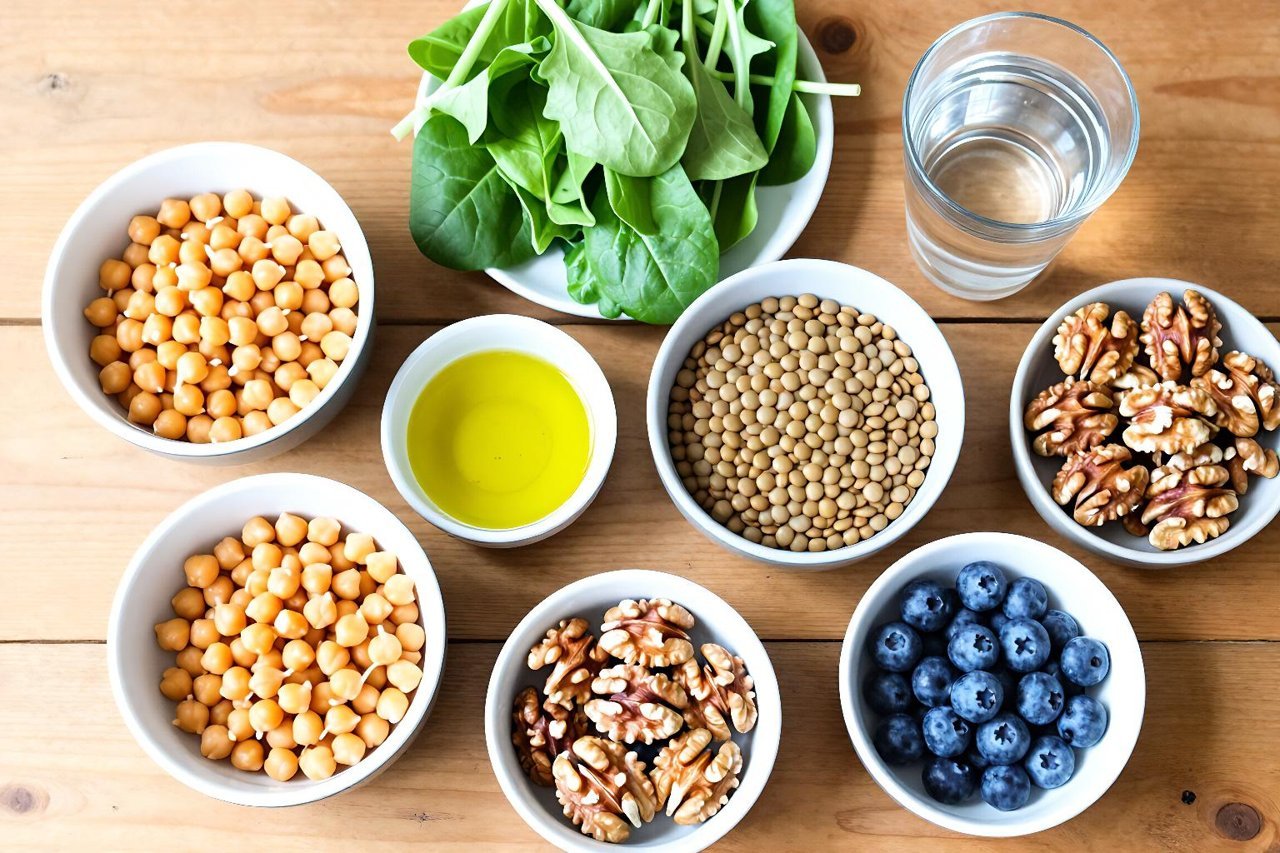
A longevity plate is about 70–80% plant foods. Think chickpeas, lentils, whole oats, dark leafy greens, tomatoes, and olive oil. That doesn’t mean you must go vegan. Many longevity researchers include small amounts of sustainably sourced fish, eggs, and fermented dairy. The key is making plants the default rather than the garnish. A great starting point is the Mediterranean diet, which shares many of these principles – you can dig into the Mediterranean diet and its proven benefits in our full article.
Why plants? They deliver fibre, polyphenols, and a wide range of micronutrients that keep the gut microbiome diverse and tamp down chronic inflammation, which is the silent driver behind most age-related diseases.
2. Use Fasting to Activate Cellular Repair
Fasting triggers autophagy – the cellular recycling process where your body clears out damaged proteins and organelles. Even a 12- to 14-hour overnight fast helps. The longevity diet recommends squeezing all meals into a 10- to 12-hour window, then letting your body work in repair mode while you sleep.
Longo goes further with a 5-day fasting-mimicking diet a few times a year, but you don’t have to start there. Begin with a simple rule: finish dinner by 8pm and hold off breakfast until 8am. If you want more evidence on how fasting stacks up against other healthy habits, these science-backed longevity tips cover it in practical detail.
3. Moderate Protein – Especially as You Age
Protein is essential for muscle repair, but high daily intake – especially animal protein – can overactivate a nutrient-sensing pathway called mTOR, which accelerates aging in animal studies. The longevity diet recommends moderate protein: around 0.7–0.9 grams per kilogram of body weight each day, skewing toward plant sources like lentils, chickpeas, and quinoa. Older adults need a little more to preserve muscle, so the smartest approach is to spread protein evenly across meals and prioritise quality.
4. Cut Refined Sugar and Industrial Seed Oils
Excess sugar spikes blood glucose and drives insulin resistance, a major accelerator of biological aging. Industrial seed oils high in omega-6 fats – think corn, soybean, and sunflower oil – can promote inflammation when they dominate the diet. The longevity diet replaces these with extra-virgin olive oil, avocados, and nuts. Simple swap: if a food comes in a wrapper and lists more than five ingredients, it’s not on the longevity menu.
5. Favour Healthy Fats for Brain and Heart
Monounsaturated fats like oleic acid help maintain cell membrane fluidity and support cognitive function. Around 30% of calories in the longevity diet come from fat, mostly olive oil, nuts, and fatty fish. These fats also help your body absorb fat-soluble vitamins A, D, E, and K, which act as antioxidants and reinforce bone and immune health.
Foods to Prioritise on a Longevity Diet
You don’t need a pantry stocked with exotic superfoods. The longevity diet is built on affordable staples, many of which you already know. Fill your grocery cart with:
- Beans and legumes: chickpeas, lentils, black beans, soy
- Whole grains: oats, barley, quinoa, whole wheat pasta
- Dark leafy greens: spinach, kale, Swiss chard, arugula
- Healthy fats: extra-virgin olive oil, walnuts, almonds, avocados
- Fatty fish: sardines, salmon, mackerel (a couple of times a week)
- Fermented foods: sauerkraut, kimchi, plain yogurt for gut health
The easiest way to implement this is to build each meal around a legume or whole grain, then pile on vegetables and drizzle with olive oil. That’s a longevity bowl.
Foods to Avoid or Limit
Ultra-processed foods, added sugar, refined white flour, and excessive red meat should make up a very small portion of your life. The longevity diet isn’t about perfect restriction; it’s about removing foods that consistently promote inflammation and insulin resistance. You don’t have to swear off sugar forever, but saving it for special occasions becomes the norm. The same goes for industrial seed oils – check labels and choose monounsaturated fats instead.
A Day on the Longevity Diet
If you’re wondering what this actually looks like, try this simple template:
Breakfast: Oatmeal cooked with water or almond milk, topped with walnuts and blueberries.
Lunch: Lentil soup with a drizzle of olive oil and a side salad with chickpeas.
Dinner: Baked salmon or grilled tofu, roasted vegetables, and a handful of quinoa.
Keep the window tight: eat your first bite at 10am and finish by 8pm. This gives you a 14-hour fast overnight, which is enough to shift your body into a repair state.
Beyond the Plate: Why Longevity Isn’t Just About Food
The longevity diet delivers its fullest effect when combined with adequate exercise, stress management, and quality sleep. If you’re aiming for what researchers call extreme longevity and health optimization, the food is just one pillar. A comprehensive approach also includes strength training to preserve muscle, regular walking or movement, and social connection.
Supplements can play a supporting role, too. CoQ10, for example, is involved in mitochondrial energy production and naturally declines with age. You can read about the benefits of CoQ10 and whether it fits your supplement regimen.
How to Start Your Longevity Diet in 5 Simple Steps
You don’t need to overhaul everything at once. Start small and let these habits compound:
- Set a 12-hour eating window (for example, 8am to 8pm).
- Make lunch a longevity bowl: legumes + vegetables + whole grain.
- Switch cooking oil to extra-virgin olive oil.
- Choose fish or plant-based protein at dinner most nights.
- Once a month, try a 24-hour fast or simply skip breakfast one day a week.
The longevity diet isn’t about perfection. It’s about making small, consistent swaps that compound over decades. You don’t need a complete overhaul today – just a version that’s a little better than yesterday.


