
Table of Contents
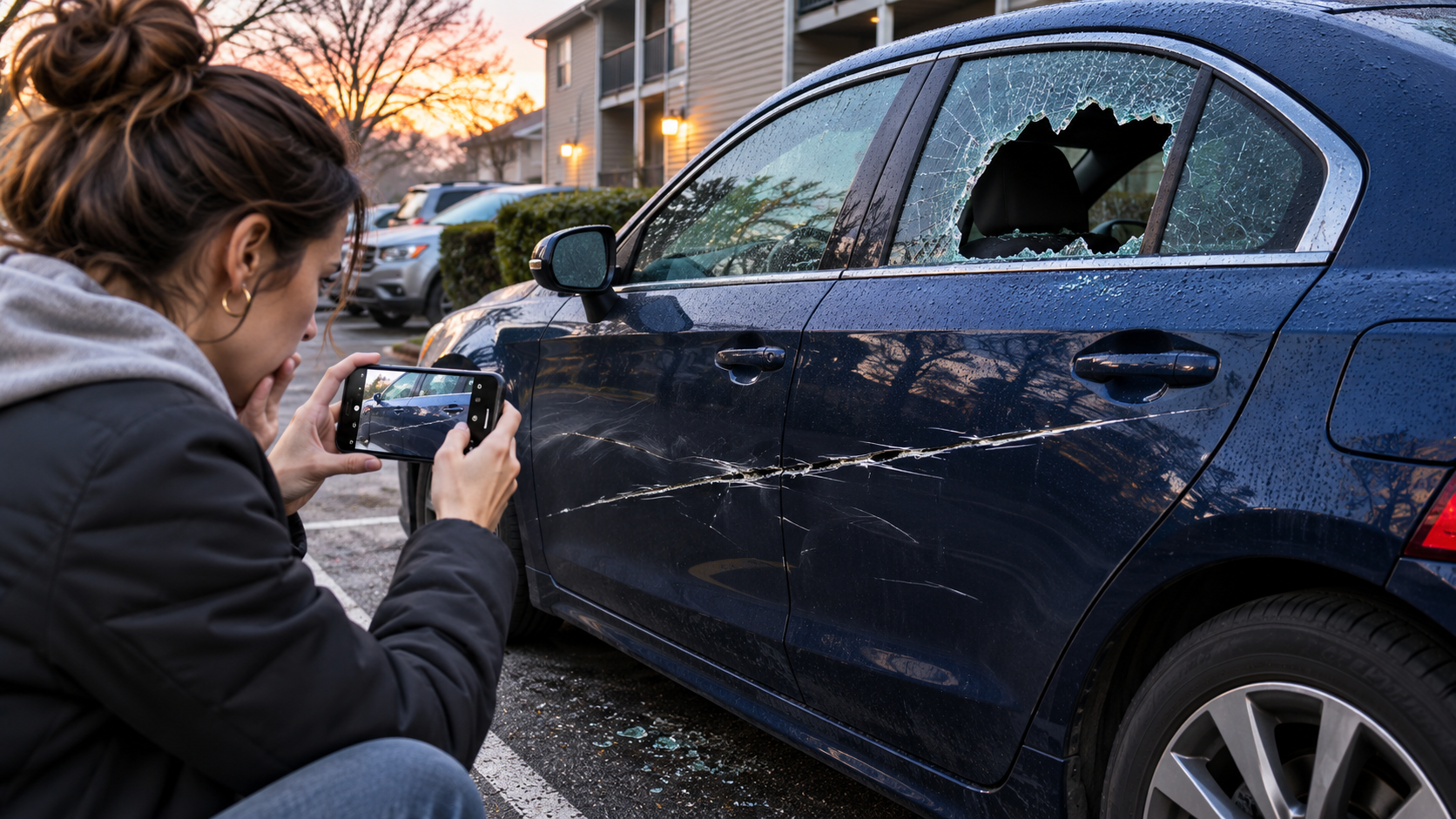
Someone drags a key along your door in a supermarket car park. Or you come out in the morning to a spiderweb crack across the windscreen, a snapped wing mirror, or spray paint looping across the bonnet. The car still starts. Nobody was hurt. And you’re standing there working out whether this is even worth a phone call to your insurer.
It usually is, but not always. Whether car insurance covers vandalism depends on one thing above everything else: the type of policy you bought. After that, it becomes a question of numbers, deductibles and how the claim will follow you at renewal.
The short answer on vandalism cover
Comprehensive insurance covers vandalism. Third-party, liability-only and basic fire-and-theft policies do not. That’s the rule in two sentences, and everything else is detail.
Comprehensive policies usually call it “malicious damage” or, in the US, “other than collision” damage. Same idea: someone deliberately damaged your car, it wasn’t your fault, so the insurer pays to put it right minus your deductible. In the UK, the phrase “malicious damage” appears explicitly in most comprehensive booklets, which makes the claim easier to argue if a handler tries to file it elsewhere.

What insurers count as vandalism
The label matters because it decides which section of your policy responds. Insurers generally treat vandalism as deliberate damage to your vehicle by someone who isn’t insured to drive it.
- Keyed or scratched paintwork down to the primer
- Broken windows, headlights, tail lights and wing mirrors
- Slashed tyres, or a fuel tank punctured with a drill
- Graffiti, spray paint, thrown eggs, poured paint stripper
- Wipers bent back, badges prised off, aerials snapped
- Superglue in the door locks, expanding foam in the exhaust
Two grey areas worth knowing. If a catalytic converter is cut out and taken, most insurers record it as theft rather than vandalism, though the same comprehensive section pays for it. And if someone smashes a window and lifts your laptop off the back seat, you have a theft claim and a vandalism claim on one incident. The car damage is covered. The laptop usually isn’t, unless you have contents cover that extends to the vehicle.
How the payout is actually calculated
Your deductible (excess in the UK) comes off the repair bill, not off the car’s value. That single detail decides whether a claim makes financial sense.
The deductible maths
Say your deductible is $500. A keyed door costs $380 to repaint. Filing a claim means the insurer pays nothing and you’ve logged an incident anyway, so pay the body shop directly.
Now swap in a smashed rear window, a bent quarter panel and a partial respray: $1,900. You pay $500, the insurer covers $1,400, and the claim is clearly worth making. Somewhere between $700 and $900 is where most people’s arithmetic starts favouring the insurer.
Glass often has its own deductible
Plenty of policies set a lower, separate glass deductible, often nothing for a chip repair and $100 to $250 for a full windscreen replacement. If the only damage is glass, read that section before assuming you’re paying the full $500.
Repair network versus cash settlement
Insurers steer you towards their approved body shop because the labour rate is pre-agreed and the parts are sourced cheaply. You can normally take a cash settlement instead, but the offer is built on their estimate, not your local shop’s quote. On older cars, expect the repair to be priced with used or aftermarket panels. That’s legal and standard, and it’s worth asking about if you plan to sell within a year or two.
What vandalism cover won’t pay for
- Damage caused by someone in your household. Policies exclude deliberate acts by named drivers and family members living at your address.
- Your own handiwork. Angry kicks and crowbar incidents you caused yourself aren’t covered, and claiming them can be treated as fraud.
- Wear and tear. Rust, faded lacquer and stone chips are maintenance, not vandalism.
- Undeclared modifications. An unlisted body kit or aftermarket wheels can reduce or void the payout.
- Personal property inside the car. Tools, bags, sunglasses and stereos normally need home or contents insurance.
- Late reporting. Most policies require prompt notification, typically within 7 to 30 days, and many ask for a police report for malicious damage.
Will a vandalism claim push up your premium?
Usually, yes, which is exactly why so many people repair small damage quietly. Vandalism isn’t your fault, but insurers price risk on claims history, and a comprehensive claim on your record makes you statistically more likely to claim again.
The visible hit is your no-claims discount, which can drop from 30% or 40% back to zero after a single claim. On a $1,400 annual premium, losing a 25% discount costs roughly $350 a year, and it takes several clean years to earn back. Some insurers also apply a claims loading at renewal. Others simply bump the base rate and blame the market.
What you generally escape is the heavier penalty attached to at-fault collision claims, because there’s no third party to pursue and no fault assigned to you. Ask the claims handler two direct questions: whether the incident will be logged as fault or non-fault, and what it does to your renewal quote. Get the answer before you agree to anything.
The first 24 hours decide how smooth the claim runs
- Photograph everything before you touch it. Wide shots showing the car’s position, close-ups of each damaged panel, and a timestamp. Fifteen photos cost nothing and settle most arguments later.
- Report it to the police. Many insurers want a crime reference number for malicious damage claims, and the reporting window is usually 24 to 48 hours.
- Write down where it happened. Street name, which level of the car park, whether cameras were visible. Ask the site owner to preserve footage, because it’s often overwritten within 72 hours.
- Don’t wash or repair the car until an assessor has seen it, or you’ll be asked to explain the missing evidence.
- Call rather than click. Online forms are fine, but a five-minute call lets you ask about the deductible, the repair network and the no-claims impact before anything is logged on your file.
If the car wasn’t yours
Insurance follows the vehicle. If you borrowed a friend’s car and it was keyed while parked outside your flat, their comprehensive policy responds first, because the damage is to their property and their contract. Your own policy may extend cover to damage in a borrowed car, but liability-only insurance won’t touch it. A non-owner policy is the clean solution if you drive other people’s cars regularly and don’t own one yourself.
Cutting the odds of a repeat
Most vandalism is opportunistic: a parked car, someone with time on their hands, no witnesses. A few habits reduce the invitation.
- Park under a working streetlight or near a building entrance with foot traffic, not in the dark corner of a car park.
- Leave nothing visible on the seats, including a phone cable and loose change. A bag on the back seat is an invitation for a smashed window.
- Fit a dashcam with parking mode. A small red recording light is a genuine deterrent, even when the camera is cheap.
- Use a steering wheel lock on older cars, which are easier to break into and more often targeted.
- Fold the mirrors in and leave a gap from neighbouring cars. Door dings get reported as vandalism more often than people admit.
- If your area has a catalytic converter problem, ask a garage about a converter cage or protective plate.
One number worth keeping in mind: a typical comprehensive malicious damage claim lands somewhere between $800 and $1,500 depending on how many panels are involved. If a body shop quote comes in far under your deductible, protect your claims record and pay the shop yourself. If it’s a four-figure repair on a car you still need next week, make the call the same day and let the policy earn its premium.


