
Table of Contents
Salvage cars get a bad reputation, and some of it is earned. A vehicle written off by an insurer has usually been through something: a collision, a flood, a hailstorm, a theft recovery. The title carries that history forever, and no amount of buffing will remove it. But “salvage” is a financial label, not a mechanical verdict. Plenty of cars get totaled for cosmetic damage that costs more to fix at insurance-shop labor rates than the car is worth. Buy those right and you drive a solid vehicle for 40% less than retail.
The skill is knowing which salvage cars are worth the risk, where they actually change hands, and how to do the math before you raise a paddle.
What a Salvage Title Really Tells You
When an insurer declares a vehicle a total loss, typically because repairs exceed 70 to 80 percent of its pre-accident value, the state re-titles it as salvage. That’s the whole story. The label doesn’t describe the damage, doesn’t grade it, and doesn’t guarantee the car is unsafe. Two salvage vehicles sitting side by side on the same auction yard can be completely different animals.
Salvage, rebuilt, and clean are three different things
A salvage title means the car hasn’t been repaired and inspected yet. A rebuilt title (sometimes called reconstructed) means someone did the work, passed a state safety inspection, and got it cleared for road use. Rebuilt cars are worth more and are far easier to insure, but you’re trusting a stranger’s bodywork and a state inspector who spent maybe twenty minutes on it. A clean-title car with an accident on its history report can easily be the better buy.

Damage types rank very differently
- Hail and cosmetic damage: Usually the safest bet in the whole category. Roof, hood, and trunk panels get dimpled, the insurer totals it, and the drivetrain never gets touched.
- Collision damage: Workable when it’s a rear or side impact away from the frame rails. Walk away from bent unibody structure or deployed airbags unless you have a body shop willing to quote it first.
- Flood damage: The category to avoid unless you’re buying a donor car for parts. Water destroys wiring, connectors, and control modules, and the electrical gremlins show up six months after you hand over the money.
- Theft recovery: Often mechanically fine but missing interior pieces or with a drilled ignition. Look for cut harnesses under the dash, which is an expensive habit to inherit.
Where Salvage Cars Actually Change Hands
Most salvage inventory flows through two auction giants, Copart and IAA. Both run online sales that are open to the public in many states, though some require a dealer license, a business license, or a paid membership. You’ll also find salvage vehicles scattered across Facebook Marketplace and the usual classifieds, usually from flippers who bought at auction a month earlier and marked the car up 20 to 30 percent. If you’re cross-shopping the open market, it helps to know where genuine buyers find used cars online so you aren’t comparing auction pricing to the worst overpriced listings in your zip code.
Call the yard before you drive two hours. Registration rules vary by state, and some facilities won’t release a vehicle to a private buyer without a salvage certificate in hand.
Run the Numbers Before You Raise a Paddle
The rule most rebuilders use: a finished rebuilt car should cost 60 to 70 percent of clean retail, and that’s after repairs, not before. So if a clean 2019 Civic with 70,000 miles books at $15,800, your all-in ceiling is roughly $11,000. If the salvage car is bid to $6,500 and you estimate $3,400 in parts and paint, you’re at $9,900 plus fees, transport, and inspection. Thin margin, but workable. If the estimate creeps to $5,200, you’ve lost the plot.
Get real quotes, not guesses. Parts for common domestic and Japanese models are cheap and easy to source used. European electronics, airbag modules, and anything with radar or camera calibration built into the windshield gets expensive fast. Factor in auction fees (often $300 to $900 by the time buyer’s fees, internet fees, and gate fees stack up), towing at $3 to $5 per mile, and a state reconstruction inspection fee.
Buyers shopping auction lots in general should know that the discipline here is the same one that protects you on repossessed cars sold at auction: set a hard ceiling, write it down, and treat the bidding as a separate activity from the buying.
Inspect It Like the Money Is Yours, Because It Is
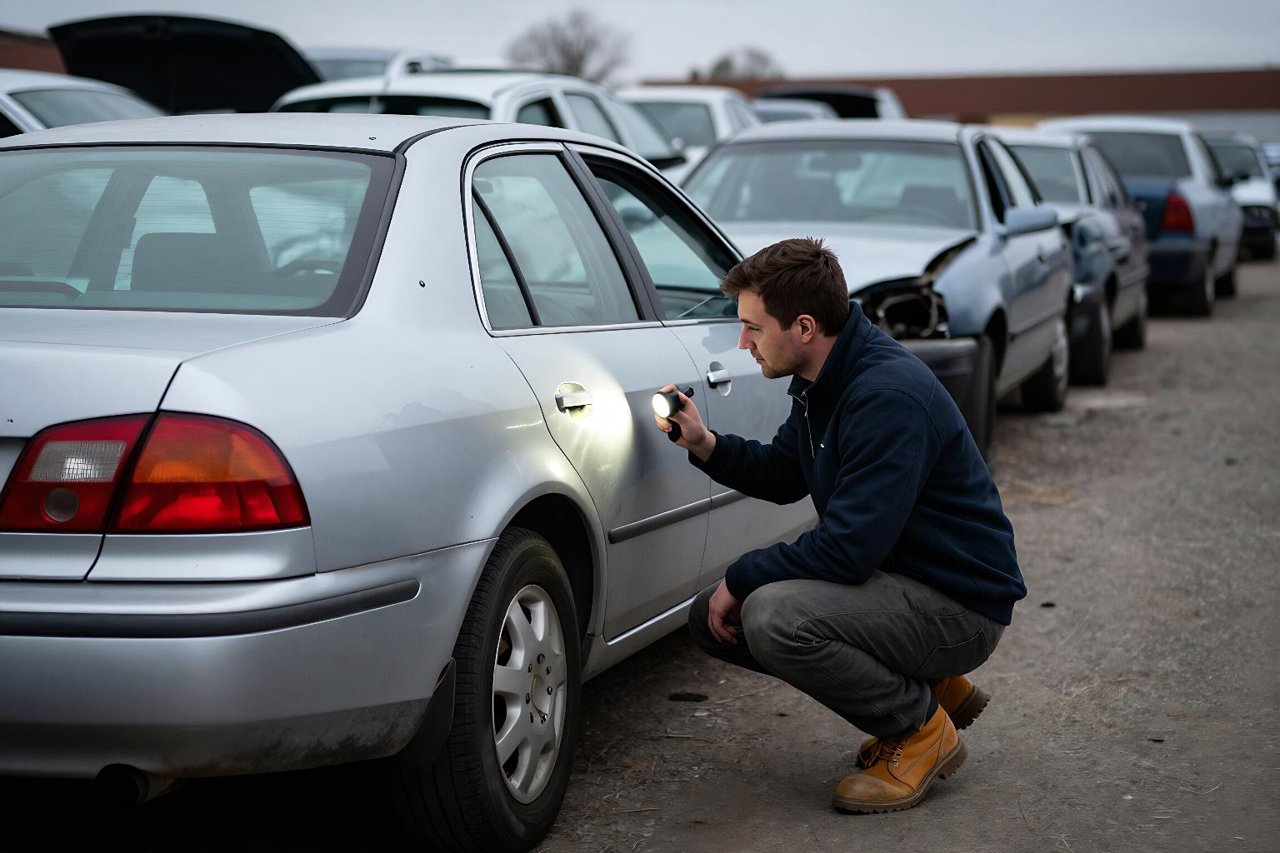
Public auction lots usually let you look before the sale, and Copart offers third-party inspections at many locations for around $100 to $200. Pay for one on anything you plan to drive. If you’re viewing in person, bring a flashlight and get under the car.
- Check frame rails and strut towers for wrinkles, fresh seam sealer, or hammer marks.
- Look at tire wear patterns for a bent suspension or a car that’s been dragged.
- Pull the oil dipstick and the transmission fluid. Milky fluid means coolant, and coolant means head gasket.
- Scan for codes with a $30 OBD2 reader. Sellers clear them; codes often return within a few drive cycles.
- Check panel gaps and paint texture on every corner. Mismatched orange peel means bodywork.
- Confirm the VIN on the dash matches the title and the door jamb sticker.
If you’re buying from a private seller rather than an auction, the pressure shifts: you’re dealing with someone who has had time to hide things. The inspection checklist in this guide to buying a used car without getting burned covers the paperwork and test-drive traps that catch people on salvage purchases too.
Insurance and Registration Will Make or Break the Deal
This is where a lot of salvage buyers get surprised. Some insurers won’t write collision or comprehensive coverage on a salvage-title vehicle at all, only liability. Others will cover a rebuilt title but cap the payout at a fraction of book value. Call your carrier with the VIN before you bid. A car you can’t fully insure may still be worth owning, but you need to know that going in, not after.
Registration is a separate obstacle course. Most states require a rebuilt-title inspection with receipts for major parts, and a handful require you to post a bond. Rules change; a call to your state DMV takes ten minutes and saves months.
Financing a Salvage Car Is a Different Game
Banks overwhelmingly refuse to lend against salvage titles, and rebuilt titles only qualify with certain credit unions and specialty lenders at higher rates. Cash is the clean path. If you’re weighing a loan, understand the terms before you sign: the strategies in this guide to buying a car with bad credit without getting buried in the loan apply doubly when the collateral is a vehicle most lenders won’t touch.
Bidding Without Losing Your Head
Salvage auctions are engineered to create momentum. Countdown timers, a crowd, and a starting bid that looks like a bargain all push you past your number, and the increments are small enough that each click feels harmless. Decide your maximum in writing before the sale opens, subtract your fees from it, and stop there. The mechanics of staying disciplined are covered in detail in this piece on how not to bid against yourself at auction, and they matter more on salvage lots than anywhere else because there’s always another identical car next week.
Know Your Exit Before You Buy
Salvage cars are hard to sell. A rebuilt title scares off a chunk of the retail market, dealers will lowball you on trade-in, and private buyers will ask why it’s branded. If you plan to keep the car until the wheels fall off, that’s fine and often the smartest use of a salvage purchase. If you’re hoping to flip it in eighteen months for a profit, price that difficulty in now.
The people who do well with salvage cars share a habit: they buy the boring stuff. Three-year-old sedans with hail damage. Rear-ended SUVs with good drivetrains. Vehicles with deep parts availability and a repair estimate they got in writing from a shop that has actually done the job before. The ones who get hurt chase the cheap Porsche, discover the $4,000 headlight and the $2,800 airbag module, and end up selling at a loss to a neighbor who knows exactly what they’re doing. Treat the salvage market as a place to buy transportation at a discount, not a place to win, and the math works in your favor more often than not. That two-sided awareness is the whole game, and it’s the same principle behind winning both sides of a car deal whether the title is branded or clean.


