
Table of Contents
A puppy and a 60-hour work week are a bad match. Most “low maintenance pet” lists won’t say that out loud, because the writers want you to buy the cage. So here’s a different approach: work out how many minutes you can genuinely give away each day, then pick the animal that fits inside that number on your worst week, not your best one.
The filter that matters more than any breed list
Almost every pet is easy on a sunny Saturday. The question is what happens on a Tuesday when a meeting runs to 8pm and you haven’t eaten dinner. Any animal that needs you to be alert and present right then will struggle.
So start with a rough time budget. A dog needs 60 to 90 minutes of walking and engagement daily, before training, grooming and vet runs. A single cat needs 15 to 20 minutes of active play plus litter scooping. A planted fish tank takes about 20 minutes a week for a water change, plus an hour a month for filter cleaning. A leopard gecko is 10 minutes of feeding two or three times a week and a full tank clean every four to six weeks.
Then apply two tests. First, can this animal be alone for a full working day without distress? Second, do you have someone who can step in for a week if you get flu? If the answer to either is no, keep looking.

Pets that genuinely fit a packed schedule
Cats, with a couple of conditions
Cats are the default answer for a reason, but the specific choice matters enormously. An adult cat from a shelter settles into a routine within days. A kitten under six months is a small demolition expert who needs feeding four times a day and supervision for months.
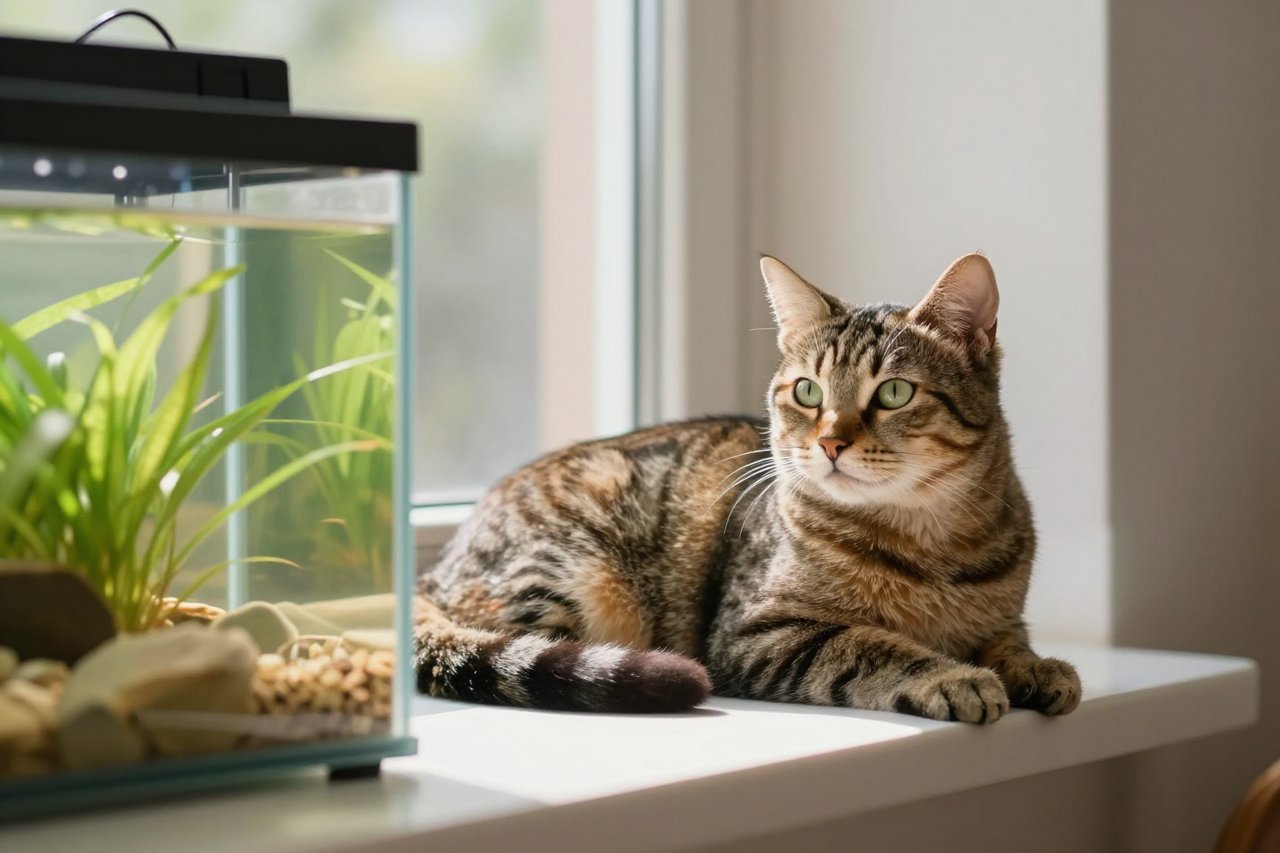
Get two cats rather than one, if your space allows it. A pair entertains each other during the eleven hours you’re out, and a bored solo cat that’s left alone daily tends to redecorate your curtains. Cats that have each other also need less from you in the evening, so 15 focused minutes with a wand toy does more work than an hour of half-hearted attention. The best toys for indoor cats are the ones that mimic actual prey movement, not the ones that look cute on a shelf.
If there are children in the house, temperaments matter as much as schedules. Some breeds tolerate noise and grabbing; others vanish under the bed for a decade. It’s worth reading up on cat breeds that handle family chaos well before you choose, because a rehome after eight months is bad for everyone.
Fish and planted aquariums
A properly cycled tank is one of the calmest pets you can own. You feed once or twice a day, change 20 percent of the water weekly, and test the parameters once a month. No boarding, no vet appointments, no guilt about a missed evening.
The catch is setup. A tank takes two to six weeks to cycle before any fish goes in, and a 20-gallon tank is roughly the small end of sensible. Skip the one-gallon bowl entirely; that’s a slow death sentence for a betta, not a pet setup. Do it once, do it properly, and the ongoing cost is about 20 minutes a week.
Leopard geckos and crested geckos
Both are solitary, quiet, and indifferent to whether you’re home. A leopard gecko eats insects two or three times a week and needs a heat mat on a thermostat. A crested gecko lives on a powdered diet mixed every other evening, which removes the live-cricket problem entirely. Both are handleable, both live 15 to 20 years, and neither cares if you work late.
Rats
Genuinely underrated. Two male rats are social, litter-trainable, and content with 20 minutes of out-of-cage time in the evening. They’re affectionate in a way most small mammals aren’t, they cost less than a cat at the vet, and they live two to three years, which suits people who aren’t sure about a decade-long commitment.
Dogs, if you’re honest about the hours
A dog can work with a full-time job, but only if you choose the right one and pay for help. Low-energy adults, greyhounds off the track, and certain companion breeds can handle a nine-hour gap with a midday walker. Working breeds and herding types cannot, no matter how many puzzle toys you buy.
This is where most people get it wrong, so it’s worth reading an honest breakdown of dog breeds that suit full-time workers before visiting a breeder. An adult rescue is usually a better bet than a puppy, because someone has already told you what the dog is actually like at home.
Pets that look easy but aren’t
- Parrots and cockatiels. Highly social birds self-harm when left alone for long stretches. They need several hours of company daily, not crumbs of attention.
- Rabbits. Often sold as cage pets. They need a large run, unlimited hay, daily cleaning, and a bonded partner. Two rabbits with proper space is more work than a cat.
- Hermit crabs and small reptiles bought on impulse. Cheap to buy, expensive to house correctly, and often dead within a year because the setup was wrong from day one.
None of these are bad pets. They’re just bad fits for someone whose schedule is already stretched. If a low-maintenance animal is what you actually want rather than a status symbol, there’s a whole tier of genuinely easy pets to look after that doesn’t require rearranging your life.
Build a routine that survives a bad week
The trick isn’t motivation, it’s removing decisions. Set these up once and the care happens on autopilot.
- Anchor tasks to existing habits. Litter scooping happens while the kettle boils. Feeder fish get fed before you put your shoes on.
- Automate what you can. A timed feeder and a water fountain cost about £60 together and remove two daily failure points.
- Batch the weekly jobs. One 30-minute slot on Sunday covers tank water, cage spot-cleaning, and a quick health check on eyes, coat and weight.
- Keep a backup person named. Tell a neighbour or friend what your animal eats and where the carrier lives. Emergencies are the only time this matters, and it always matters at the worst moment.
- Book the vet before you need one. An annual checkup on a recurring calendar reminder beats an out-of-hours emergency fee at 11pm.
Real numbers, so you can plan
A cat runs about £900 to £1,400 a year including food, litter, insurance and one vet visit. A 20-gallon freshwater tank costs £250 to £400 to set up and then roughly £80 a year. A leopard gecko setup is £200 to £300 up front and under £100 a year to run. A dog, conservatively, is £1,800 to £3,000 annually once you add a midday walker at £12 to £15 a visit.
If this is your first animal and the numbers feel abstract, start with a species whose failure modes are cheap and forgiving. There’s solid guidance in these honest pet picks for first-time owners that won’t nudge you toward something you’ll regret in March.
Match the animal to your worst week, not your best
Before you commit, write down three things: the number of uninterrupted minutes you have each evening, the amount you can spend in a single emergency, and the name of one person who’d take the animal if you were hospitalised. If you can fill those in honestly, the shortlist above narrows itself.
Be wary of picking an animal because it’s impressive, because it’s cheap, or because a flat felt empty. A leopard gecko that gets fed properly and left in peace is a good pet. A parrot bought for company and ignored for eleven hours a day is a rescued bird by next spring. The animals that suit busy owners are the ones whose natural instincts already match your absence: independent cats, fish in a well-built tank, and reptiles that genuinely prefer their own company.
That’s the real answer. Not a species that needs nothing, but one whose needs land in the hours you actually have.


