
Table of Contents
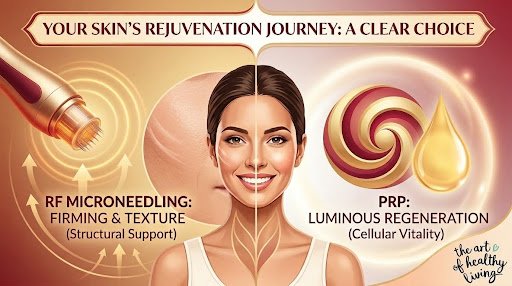
RF microneedling and PRP (the “vampire facial”) both stimulate collagen, but they work through very different mechanisms and suit different concerns. RF microneedling uses radiofrequency heat to tighten and lift sagging skin, while PRP harnesses your own blood’s growth factors to heal, brighten, and regenerate. The best choice depends on whether your main goal is firmness or overall skin quality.
You’ve done the research. You’ve scrolled through Reddit threads and Instagram before-and-afters until your eyes glazed over. Two treatments keep showing up: RF microneedling and PRP. Both promise younger-looking skin. Both involve needles (sorry). And both have passionate fans who insist theirs is the superior option.
So which one actually makes sense for your skin?
If you’ve already looked into the most effective anti-aging treatments available right now, you’ve probably noticed how many options exist. That’s part of the problem. The sheer number of choices makes it harder to figure out what’s actually right for you versus what’s just well-marketed. Here’s the thing: RF microneedling and PRP do genuinely different things. Asking “which is better?” is a bit like asking whether a hammer or a screwdriver is the better tool. Depends entirely on the job.
What Actually Happens During Each Treatment
RF Microneedling: Heat and Needles, Working Together
RF microneedling pairs tiny insulated needles with radiofrequency energy. The needles penetrate the skin to a controlled depth, usually between 0.5 and 4.5mm depending on the treatment area and the device being used. At the tip of each needle, RF energy heats the deep dermis to roughly 65 to 70°C, and that controlled heat kicks off a wound-healing response.
What makes this different from standard microneedling is the thermal element. The heat triggers fibroblast activity and stimulates production of collagen, elastin, and hyaluronic acid. Not just one of those. All three. A 2025 study published in Scientific Reports found that RF microneedling significantly reduced the number of senescent (aged) fibroblasts in skin compared to standard microneedling alone, while simultaneously increasing collagen and elastin levels. That’s a meaningful distinction.
Several devices fall under the RF microneedling umbrella: Morpheus8, Secret RF, Vivace, and Profound. Profound RF is notable because it’s the only device with FDA clearance for stimulating all three structural proteins at once. Most RF microneedling protocols call for one to three sessions, with results building gradually over three to six months as your body does the actual remodelling work.
PRP: Your Blood’s Own Repair Kit
PRP stands for platelet-rich plasma, and it’s exactly what it sounds like. A small amount of your blood gets drawn, then spun in a centrifuge to concentrate the platelets. Those platelets are packed with growth factors, the proteins your body naturally uses to repair tissue.
The concentrated plasma is either injected directly into the skin or applied topically right after a microneedling session. That second option is the “vampire facial” you’ve seen everywhere. According to the Cleveland Clinic, PRP contains growth factors that support wound healing and tissue regeneration, and its use in cosmetic skin treatments has grown steadily since the 2010s.
PRP is particularly strong for improving radiance, evening out skin tone, treating mild scarring, and rejuvenating delicate areas like under the eyes. Because it’s derived from your own blood, there’s virtually no risk of an allergic reaction. You’ll typically need three to four sessions spaced about four to six weeks apart.
So Which One Is Better For Your Skin?
That depends on what’s actually bothering you.
If sagging or laxity is the main issue – RF microneedling has a clear edge. The thermal energy contracts existing collagen fibres while triggering new collagen and elastin production at a deeper level than PRP can reach. This makes a real difference on the jawline, lower face, and neck, which are the areas where gravity tends to show up first. PRP simply doesn’t deliver thermal energy to the dermis, so it can’t achieve the same degree of tightening.
If your skin looks tired, uneven, or has mild scarring – PRP paired with microneedling is worth serious consideration. The growth factors speed up cellular repair and turnover, which translates to brighter, smoother skin over a series of treatments. It’s especially effective for post-inflammatory pigmentation and shallow acne scars. The American Academy of Dermatology notes that combining PRP with microneedling can lead to less visible scarring compared to microneedling alone.
And if you want tightening and a glow – Some clinics offer both treatments in the same session. This isn’t just marketing fluff; there’s clinical evidence behind it. A 2024 clinical trial examining neck wrinkle treatments found that combining radiofrequency with PRP produced significantly better skin elasticity and collagen outcomes at six months compared to either PRP injections alone or microneedling with PRP alone. The combination group held up better over time, too.
What the Results Actually Look Like
Neither treatment delivers overnight results. Just want to set that expectation clearly.
With PRP, you’ll often notice a glow within a few days. Your skin looks a bit plumper, a bit more alive. But the real texture and tone improvements build over several weeks and multiple sessions. It’s a slow burn.
RF microneedling works on a longer timeline. Early tightening might become visible around four to six weeks, but the full effect doesn’t land until three to six months out. That’s because collagen remodelling is a gradual biological process, not a switch you flip.
One step that doesn’t get enough attention: before you commit to either treatment, look at actual patient photos from the specific device and clinic you’re considering. Not stock imagery. Not filtered social media posts. Real before-and-afters from the provider you’re planning to see. For RF microneedling in particular, profound RF skin tightening before-and-after photos can give you a much clearer sense of the kind of contouring and tightening this technology delivers on real patients. Different devices and different providers produce different outcomes, so seeing evidence from your actual treatment option matters more than reading about averages.
Downtime, Cost, And The Practical Stuff
These details often end up being the deciding factor, so I’ll be straightforward.
PRP microneedling comes with about one to two days of redness. Most people feel comfortable applying makeup the next day. It’s a pretty easy recovery. RF microneedling asks more of you. Expect two to five days of redness and mild swelling, with some potential bruising. If you’re looking at Profound RF specifically, plan for about five to seven days of social downtime. It’s not painful exactly, but you won’t want to schedule a big event the week after.
Session-wise, PRP typically requires three to four treatments for optimal results. RF microneedling often needs fewer, sometimes just one session with Profound RF. That matters when you factor in time and scheduling.
Cost is trickier to pin down because it varies by location and provider, but generally PRP microneedling is less expensive per session. RF microneedling costs more upfront, though the fact that you may need fewer sessions can balance things out. Both treatments use numbing cream; RF can be slightly more uncomfortable because of the heat. Profound RF is usually performed under local anaesthesia, which makes a big difference. Honestly, I put off looking into needle-based treatments for ages because I assumed they’d be unbearable. The numbing genuinely helps. The anticipation was worse than the actual experience.
A Few Things To Keep In Mind Before You Book
Provider credentials matter here more than you might think. The AAD recommends seeing a medical doctor with expertise in cosmetic skin treatments, and that advice is solid. Both RF microneedling and PRP require skill to deliver safely and effectively, and the quality of your outcome depends heavily on who’s performing the treatment and what equipment they’re using.
Both treatments are generally safe across all skin tones, but proper device settings and provider experience are critical, especially for deeper complexions where incorrect settings could cause hyperpigmentation. Ask questions. A good provider will welcome them.
And please skip the at-home microneedling rollers. The AAD has specifically flagged at-home microneedling as risky due to infection and technique issues. Professional-grade treatments work at depths and energy levels that consumer devices simply can’t replicate safely.
If you have active breakouts, eczema, or any kind of skin infection, you’ll need to wait until things clear up before booking either treatment. That’s non-negotiable. One more thing: not all RF microneedling devices are created equal. The technology, needle configuration, and energy delivery vary between brands. Ask your provider which device they use and why they chose it.
Picking What’s Right For You
Neither treatment wins across the board. They solve different problems. The smartest move is getting honest about what your skin actually needs. Is firmness the priority? RF microneedling is hard to beat. Are you chasing better texture, brighter tone, or faster healing? PRP has a strong track record there. Some people do both, staggered or combined. That’s a perfectly reasonable approach too.
The key is matching the treatment to the goal, not the trend.
If you’re thinking about how skin treatments fit into a broader approach to looking after yourself, The Art of Healthy Living has a useful piece on keeping wellness in your beauty routine that connects some of these dots. Worth a read if you’re still mapping out your plan.