
Table of Contents
Walk into any gym and you’ll see the same scene: someone crunching away on a mat, hoping to carve out a six-pack. But the truth is, ab exercises are about far more than looks. Your core is the central link between your upper and lower body. A strong core helps you run faster, lift heavier, play sports safely, and even stand taller. The problem is that most people train their abs with outdated, inefficient moves.
What Your Core Actually Does (and Why It Matters)
Before you add another set of sit-ups to your routine, it helps to understand what “core” really means. It’s not just the six-pack muscle (rectus abdominis). It includes the obliques that rotate and bend your trunk, the transverse abdominis that hugs your organs like a corset, and deeper stabilizers that attach to your spine and pelvis.
When these muscles work together, they keep your spine neutral during movement. Think of your core as a pressure system. It braces to protect your back when you lift a heavy box, transfers force when you throw a punch, and keeps you balanced when you walk on uneven ground. Weakness here doesn’t just mean a soft belly—it often leads to lower back pain, poor posture, and inefficient workouts.
That’s why a smart core program isn’t about doing 100 crunches a day. It’s about choosing exercises that train your core the way it actually functions: stabilizing, rotating, resisting motion, and transmitting force.

The Best Ab Exercises, Ranked by Science
Not all ab exercises are created equal. Research using muscle activation shows that some moves are far more effective than crunches. Here are the ones worth your time.
The Plank (and All Its Variations)
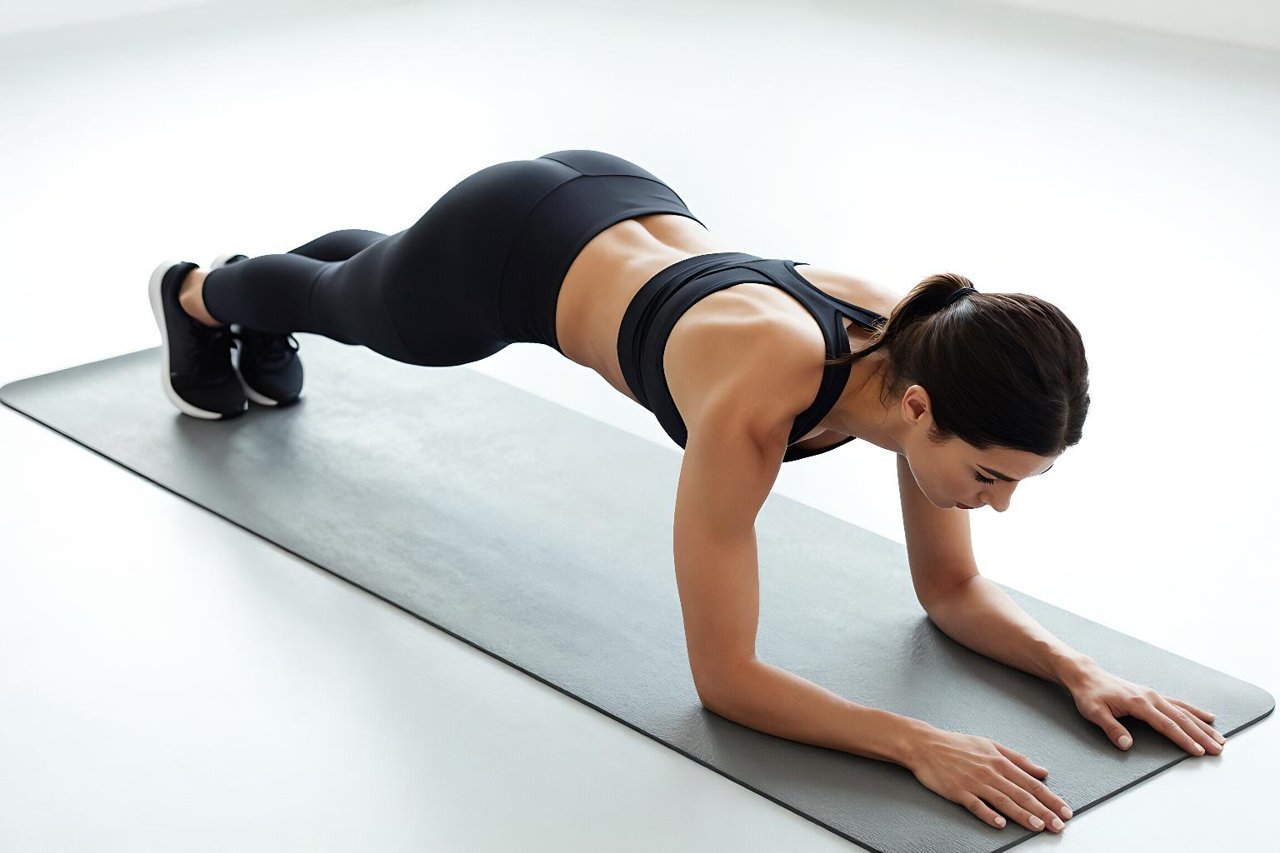
The classic forearm plank is a mainstay for good reason. It works the entire core isometrically, meaning you hold a position without moving. Start with your forearms on the floor, elbows under your shoulders, and your body in a dead-straight line from head to heels. Squeeze your glutes and brace your abs as if you’re about to be poked in the stomach.
Once a standard plank feels easy, progress it. Lift one leg, reach one arm out, or place your feet on a stability ball. Each variation increases the challenge and keeps your core guessing.
Dead Bug
Despite the silly name, the dead bug is a serious core builder that many physical therapists prescribe. Lie on your back with your arms extended toward the ceiling and your knees bent at 90 degrees. Press your lower back into the floor and slowly straighten your right leg while lowering your left arm overhead. Keep your back glued to the mat, then return and switch sides.
This move teaches your core to stabilize your spine while your limbs move—a skill you use in everything from walking to running. Aim for 8 to 10 slow reps per side.
Hanging Leg Raises
If you have a pull-up bar, hanging leg raises are incredible for your lower abs and hip flexors. Hang with a firm grip and keep your shoulders engaged. With control, raise your legs until they’re parallel to the floor, or higher if you’re advanced. Avoid swinging. Lower slowly. If this is too tough, start with knee raises or do the same motion lying on the floor, like a reverse crunch.
These variations matter. The key is to focus on curling your pelvis upward instead of just lifting your legs. That pelvic tilt engages your abdominal wall, not just your hip flexors.
Bird Dog
The bird dog is a low-impact move that fires up the muscles along your spine and your deep core. Start on all fours, hands under shoulders, knees under hips. Maintain a neutral spine as you extend your right arm forward and your left leg backward. Pause for a second, then switch. Move slowly and keep your hips level—don’t let them tilt outward.
This exercise improves coordination and balance, making it a perfect complement to a routine filled with unilateral work like this one. And if you’re dealing with any back sensitivity, bird dogs are often a safer entry point than crunches.
Deadlift and Squat Variations
Your abs work hard during heavy compound lifts, too. When you brace for a deadlift or squat, your core activates to protect your spine and transfer force through your body. That’s why many strong athletes skip dedicated ab work and still have rock-solid midsections. But for most of us, a mix of compound lifts and direct core work yields the best results.
How to Progress Your Ab Workouts (Without Getting Bored)
Your abs are skeletal muscle, just like your biceps. They respond to progressive overload: gradually making each workout more challenging. If you do three sets of 30-second planks every day, you’ll plateau quickly.
Instead, add tension or time each week. Here are a few proven strategies:
- Increase the duration of isometric holds by 5 to 10 seconds weekly.
- Add resistance by holding a weight plate over your chest during crunches or hollow holds.
- Slow down the tempo. Take 3 seconds to lower your legs in a hanging leg raise, which increases time under tension.
- Move from stable surfaces to unstable ones, like a medicine ball or BOSU, but only after mastering the stable version.
Of course, no amount of direct ab work will reveal a six-pack if excess body fat covers it. That’s why pairing core training with a smart fat-loss plan is crucial. If you’re looking to shed those layers for good, this guide to weight loss exercises that actually work will help you choose moves that torch calories without wrecking your joints.
Common Mistakes That Kill Your Ab Progress
Mistake 1: Holding Your Breath
Most people instinctively hold their breath during ab exercises, especially during planks. That’s counterproductive. Breathing is a core function. Exhale on the exertion, inhale on the release. Keep your breathing steady even under tension so you don’t spike your blood pressure or compromise your form.
Mistake 2: Using Your Neck
Crunches and sit-ups often end up as neck pulls. If you feel tightness in your neck, you’re not engaging your abs properly. For crunches, keep a fist of space between your chin and chest, and imagine lifting your shoulder blades off the floor, not your whole head. Better yet, switch to dead bugs or planks where spinal positioning is easier to manage.
Mistake 3: Training Abs Every Day
Your core needs rest just like any other muscle group. Training abs daily doesn’t accelerate progress; it just increases the risk of overuse injuries and poor recovery. Two to three focused sessions per week is plenty. On the other days, let your core work naturally through compound lifts and full-body movements.
Mistake 4: Ignoring Your Posterior Chain
Achieving a strong core isn’t only about the front of your body. Your glutes, hamstrings, and lower back complement your abdominal muscles. If you neglect them, you’ll end up with an imbalance that can lead to poor posture and pain. Maintaining balance with these hip and knee exercises is a smart way to keep your entire lower chain happy.
A Simple, Effective Weekly Ab Routine
Here’s a straightforward plan you can plug into your existing workout week. Perform this routine twice a week, with at least one day of rest in between. It takes about 15 minutes.
- Dead Bug: 3 sets of 10 reps per side (slow and controlled)
- Forearm Plank: 3 sets of 30 to 45 seconds
- Bird Dog: 3 sets of 10 reps per side
- Hanging Leg Raise (or reverse crunch): 3 sets of 8 to 15 reps
Rest 60 seconds between each exercise, and focus on form over speed. As you get stronger, add a second round or increase the hold times. This routine pairs well with full-body strength sessions, which are the best way to build a resilient physique.
If you’re pregnant or recently postpartum, your core needs are different. The best pregnancy exercises for a fit pregnancy prioritize safety and avoid supine positioning, so make sure to adjust your ab work accordingly and consult your healthcare provider first.
Remember, consistency beats intensity. Your core will respond to repeated effort, not occasional bursts of extreme pain. Start with the basics, progress steadily, and keep your focus on quality movement.
Building a strong core is also about integrating the right habits into your everyday life. Simple things like sitting upright at your desk, carrying groceries evenly, and stretching your hips daily all reinforce the work you do in the gym. A holistic approach to recovery and movement quality will always outperform a crash course in ab exercises. And if you’re just starting to rebuild your exercise routine after a long break, you might find it helpful to learn how structuring small, repeatable habits can set you up for long-term success.


