
Enthusiasm was high at the Atlanta Shoe Market (TASM) last weekend, where footwear brands presented their fall 2026 collections to an ever-larger crowd of retail buyers.
Retailer attendance at the twice-annual trade show was up 8 percent from the previous event in August 2025. Additionally, the number of exhibitors increased 7 percent, bringing the total number of lines on view to roughly 2,000 — a new record for TASM, which is amid an ongoing venue renovation.
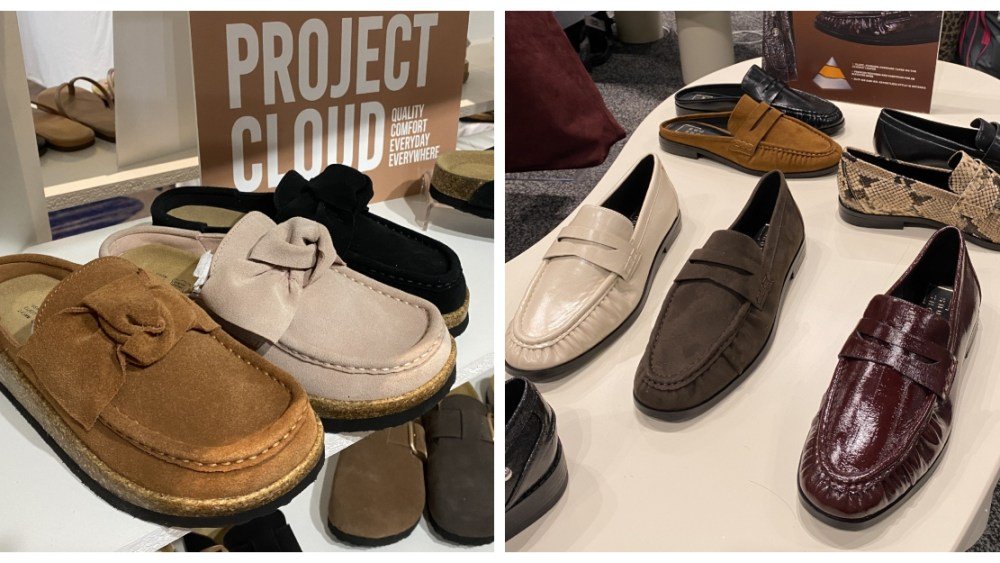
Also on the rise at the trade show: demand for brown-shoe silhouettes. After years of super-heated sales for performance and athleisure sneakers, classic leather styles such as loafers, clogs, ballerina flats and tall boots have been gaining ground over the past year — and fall 2026 seems as though it’ll be another strong season for those items, based on the collections on display.
Across each category, brands were leaning into heritage looks, updated in elevated materials such as soft unlined leathers, suede, patent, ponyhair and embossed snakeprint. To add additional interest, they went all-in on studs in every shape and size, giving everything from boots and loafers to slingback heels and pumps a rocker-chic vibe.

Shu Shop pointy-toe slingbacks with oversized stud details.
Jennie Bell/FN
As for the boot outlook for fall 2026, the winds have shifted slightly away from Western toward sculpted high-heeled tall boots and more classic options. At Frye, for instance, unisex styles like engineer and harness boots were available in abundance. And Chelsea boots continued to be a favored look at labels like Aetrex and Reiker, where they were freshened up with patterned elastic panels and taller shafts.
A fall 2026 Chelsea from Reiker with patterned elastic panel.
Jennie Bell/FN
Brand execs celebrated the trend shift in the marketplace back to traditional brown shoes and dress styles.
“Dress is coming back,” said Matt Feiner, chief commercial officer of Ecco. “We had a phenomenal boot season last year, and we think we’re well-positioned to perform well in that space. Because we have our own leather business, we can offer beautiful, handcrafted, quality leathers — and comfort.”
Feiner, who joined Ecco in September, said the brand had lost some of its focus in recent years, but is reinvigorated for 2026 under the leadership of its new chief executive officer of the Americas, Neal Taylor. And it is embracing its heritage, including reviving the vintage Walker moc-toe laceup.
As for what’s driving the overall trend changes, Rich Rask, president of Rieker Shoe Corp. was definitive: “It’s 100 percent driven by the customers returning to the office,” he said.
Rask noted that boots have always been an important segment for Rieker and are looking strong for fall 2026. However, he noted, “Sneakers aren’t going away. Customers will need both in their wardrobe.”
Jerry Williamson, senior vice president of business development for footwear at Aetrex, agreed that retailers are stocking more diverse assortments for this year, with a mix of sneakers, casual shoes, dress styles and boots. “I wouldn’t say any one particular thing is doing better than others right now,” he said. “It’s just a lot more balanced.”
Indeed, sneakers were still a major component of the fall collections at the show, especially low-profile soccer/football-inspired styles, which have been dominating the fashion landscape recently. Brands took a variety of approaches to the look for fall 2026. Shu Shop, for instance, opted for novelty versions of the laceups with ponyhair and animal prints. At Gola, though, demand has been highest for its neutral colorways, featuring natural shades of brown, taupe, olive and muted pinks.
Gola is seeing strong demand for its heritage sneakers, especially in muted, natural tones.
Jennie Bell/FN
The other topic that dominated TASM last fall was President Donald Trump’s tariff spikes on imports, particularly from China. But footwear execs at the show this past weekend said the topic rarely came up during conversations with buyers.
“Retailers are being a little more conservative in their buys, but tariffs have not been as much of a factor,” said Feiner, adding that most seem to have accepted the situation and are focused on finding ways to maximize their dollars.
In that vein, brands have responded.
Williamson said that at Aetrex, the company hasn’t introduced any major price increases due to tariffs, but it has worked to improve the price-value relationship of its product line. For fall 2026, the company is expanding more into what it called “modern casuals” — trend-right styles that are anchored in Aetrex’s heritage and comfort technology and elevated with premium materials and unique details.
Aetrex is introducing a line of “modern casuals” for fall 2026 with trend-right styling and comfort technology.
Jennie Bell/FN
Alex Cantu, commercial manager at SureWerx, a safety footwear specialist that produces workwear under the New Balance, Airwalk, Avenger and Dickie’s labels, said, “We took the opportunity with tariffs to upgrade all the styles in the Avenger line, to create more value for the retailer and consumer, while keeping the core price point the same.” That included incorporating more comfort features in the boots, such as insoles from SureWerx’s MegaComfort label.
Cantu added, “Our company is very nimble and we had already started the process of moving around our manufacturing, so we were able to pivot quickly when the tariffs happened. We’re lucky that we’ve been able to navigate this new world very well.”
And after seeing steady growth in the business in 2025, he said, “We’re feeling a lot of momentum heading into 2026.”