
Table of Contents
Walk into a dealership in 2026 and the conversation is different. The salesperson still talks about horsepower, but they spend just as long on charging speeds, over-the-air update schedules, and whether the heated seats are a one-time purchase or a monthly fee. That shift, more than any single model launch, is what defines automotive news and industry coverage right now.
The last few years have been loud. Battery prices swung, tariffs reshaped shipping routes, and nearly every legacy maker announced a pivot, an un-pivot, or a “strategic review” of its electric plans. Underneath the noise, a few durable trends are settling in. Here’s what actually matters if you follow the sector, or if you’re just trying to decide what to buy next.
EV Prices Finally Stopped Being the Punchline
For most of the past decade, the easiest joke about electric cars was the sticker price. That’s getting harder to make. Pack-level battery costs have slid below $120 per kilowatt-hour in most markets and under $100 in China, and those savings are showing up in showrooms. Several mainstream models in the US now start in the low $30,000s before incentives, and used EV prices have fallen far enough that the second-hand market has become a genuinely viable entry point.
What changed? Scale, mostly. Cell manufacturing capacity caught up with demand forecasts written during the 2021 hype cycle. LFP chemistry also took over the entry-level segment, trading some range for a much lower cost per pack and a longer cycle life. That trade-off turns out to be fine for most commuters, who drive 30 to 40 miles a day and plug in at home.

The flip side is margin pressure. Automakers who promised investors double-digit EV profits are now competing on price with manufacturers who can build at costs Western plants struggle to match.
Software Is Where the Real Competition Lives
Hardware gets the headlines, but the differentiator is increasingly code. A modern vehicle runs somewhere in the region of 100 million lines of software spread across dozens of electronic control units, and the companies that can update that code remotely, cleanly, without bricking anything, are pulling ahead.
Over-the-air updates are table stakes now
Tesla proved the model. Rivian, Hyundai, Ford and most European brands have followed. What matters in 2026 isn’t whether a car can receive an update, but what the update contains. Fixing a rear camera bug is nice. Adding range through better thermal management, or shipping a genuinely smarter route planner, is a different category of value because it changes the car after you’ve already bought it.
The subscription experiment is souring
Customers have drawn a line. Heated seats on a monthly plan generated so much backlash that BMW walked it back within a year. The industry learned the lesson imperfectly. Nobody minds paying for an ongoing service like cellular data or a premium driver-assist stack, but nobody wants to rent hardware they already own. Expect more bundling and fewer hostage-style features.
The Silicon Supply Chain Never Really Untangled
The 2021 chip shortage wiped an estimated $210 billion off global auto revenue, and the response was to stop treating semiconductors as a commodity. Automakers now sign direct agreements with foundries, hold buffer inventory, and in a few cases design their own silicon.
That matters because the chips going into cars are getting more interesting. Advanced driver-assist systems, in-cabin AI assistants and battery management all demand real compute, and the research push behind essential chips for AI workloads feeds directly into what shows up on the road a few years later. A car is now roughly a data center on wheels, competing for the same manufacturing capacity as everything else in a world that cannot get enough accelerators.
Charging, the Grid, and the Unglamorous Bottleneck
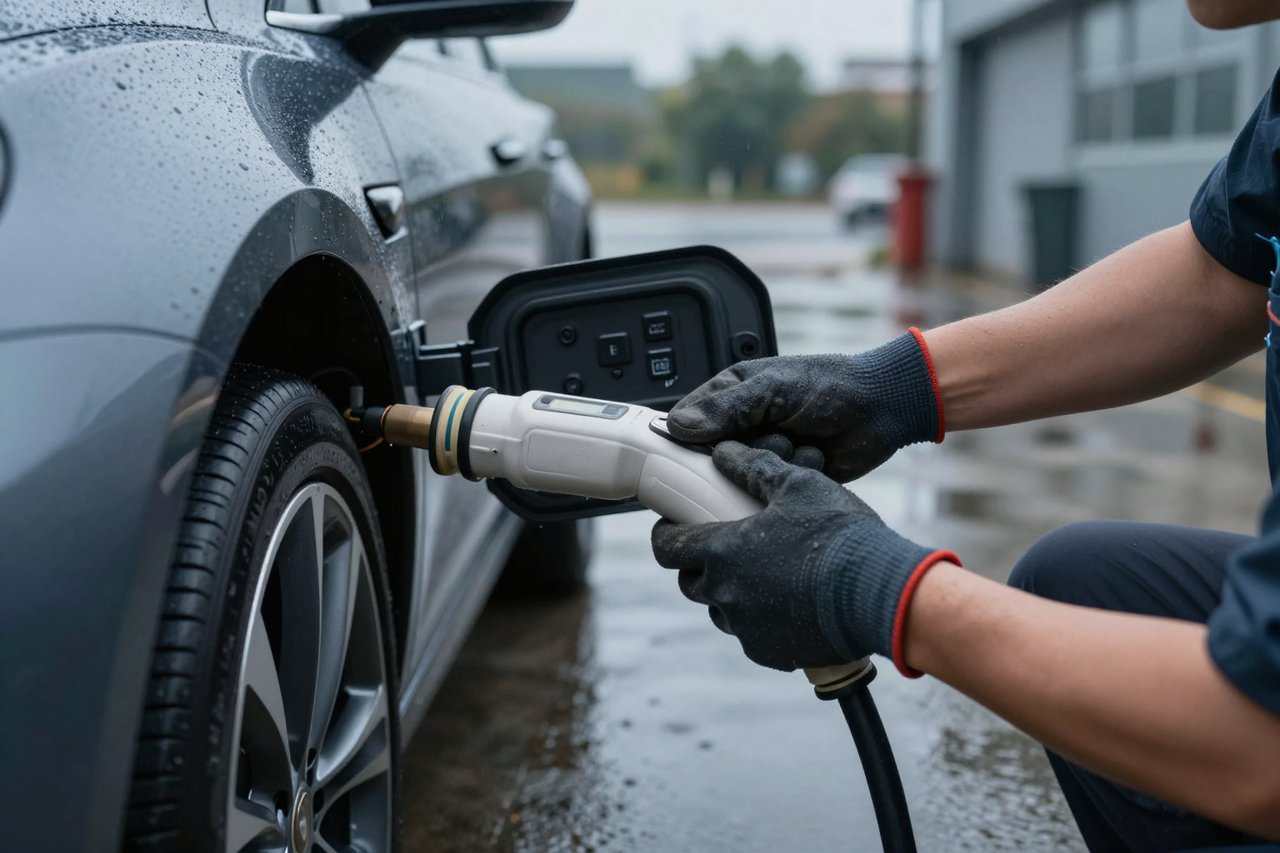
Range anxiety has quietly become charging anxiety. The cars are fine. The experience around them is uneven. A 350 kW station that delivers its rated speed for four minutes and then tapers is not the same as one that holds a curve, and drivers notice the difference on a long weekend.
Progress is real, though. The shift to the NACS connector in North America is consolidating plugs, Tesla’s network opened up to other brands, and the number of dependable 150 kW-plus sites keeps climbing along highway corridors. Public charging still has dead zones and broken stalls, and the biggest transportation stories of the past year keep circling the same theme: the infrastructure build-out is the slow part.
Then there is electricity itself. Utilities are being asked to absorb EV load, heat pumps and data centers at the same time, which is why conversations like the Data Center Power Forum matter to anyone who owns a car. Grid capacity stopped being an abstract climate debate years ago. It is now a planning constraint on how fast charging infrastructure can grow.
China, Tariffs, and the Global Chessboard
Roughly half of new vehicles sold in China in recent months have been plug-in hybrids or battery-electric, a penetration rate no other major market is close to. That domestic scale gave Chinese manufacturers a cost structure Western brands are still chasing, and it explains the tariff walls that went up across the US, EU and Canada.
Tariffs protect market share, but they do not close a technology gap. The more interesting response is partnership: joint ventures, licensing deals and platforms co-developed with Chinese battery suppliers. Expect more of these arrangements even while the political rhetoric stays confrontational.
- Battery chemistry: LFP for cost, high-nickel for range, sodium-ion creeping into entry-level cars.
- Solid-state: Pilot lines are running, but volume production for mainstream models is realistically late this decade.
- Charging: NACS consolidation in North America, 800-volt architectures becoming common in premium segments.
- Autonomy: Hands-off highway driving is broadly available; unsupervised city driving remains a small, geofenced experiment.
The Jobs Picture Is Shifting, Not Shrinking
Every change in powertrain reshuffles who gets hired. Fewer people are needed to assemble a drivetrain with a fraction of the moving parts, and more are needed to write embedded software, calibrate sensors and manage battery supply chains. Traditional mechanic work has not disappeared either. High-voltage systems need trained technicians, and most markets have a genuine shortage of them.
For anyone trying to break into the sector, the bar has moved toward software and systems thinking. The fundamentals that help when preparing for a technical interview apply here too: demonstrable projects, comfort with data, and the ability to explain trade-offs rather than recite specifications.
What to Watch Over the Next Few Quarters
Three things will tell you more about where this industry is heading than any press release.
First, watch battery pack pricing. If the slide continues, EVs reach real price parity with combustion cars without subsidies in most segments, and the competitive map changes overnight.
Second, watch software revenue. Automakers keep promising recurring income from subscriptions and driver-assist features. The gap between the promise and the actual line item in quarterly earnings is an honest scorecard, and it is usually the last number anyone wants to discuss on an earnings call.
Third, watch infrastructure numbers: charger uptime and grid interconnection queues, not just installed stall counts. Keep an eye on the wider technology curve as well, including the signals flagged in recent technology radar reports, because the sensors, compute platforms and energy management systems landing in cars tend to appear first in adjacent industries.
Cars are becoming less like appliances and more like platforms, and the companies treating them that way are the ones worth following. The next two years of automotive news will be decided by execution on charging, software and cost, not by another concept car rolling onto a stage under a spotlight.


