
Table of Contents
Walk into any pharmacy and you’ll see shelves stacked with bottles claiming to be the answer to everything from fatigue to brittle nails. But not all vitamins deserve the same attention. Some are easy to get from a decent diet, while others are so widely deficient that they’re worth prioritising. Here’s a clear-eyed look at the best vitamins to focus on in everyday life, what they really do, and where to find them.
What makes a vitamin the “best”?
“Best” is subjective. But a vitamin earns the spot when it meets three criteria: it’s difficult to get enough of from food, it plays a critical role in how your body runs, and a deficiency shows up quickly in ways you feel. That’s why vitamin D, B12, and C appear on nearly every list. They’re also the ones most likely to be low in people who eat a modern, processed diet. It’s not about chasing every trendy nutrient, but plugging the gaps that actually affect you.
The most common missing vitamins
Vitamin D
Vitamin D is arguably the king of vitamins. It helps your body absorb calcium, regulates immune function, and even influences mood. The strange part is that it’s not really a vitamin, it’s a hormone your skin makes from sunlight. Yet around 40% of Americans are deficient. In winter, many of us rely on food sources like salmon, sardines, fortified milk, and egg yolks. A couple of eggs for breakfast gives you a small hit, though you’d need quite a few to hit daily targets. If you’re curious about which eggs deliver the most nutrition for the price, this overview of the best value egg brands across the US is worth a read.
Vitamin B12
B12 is a quiet workhorse. It helps make red blood cells, keeps nerve endings protected, and supports your brain’s ability to focus. The catch is that it only occurs naturally in animal products. If you eat meat, fish, or dairy, you’re probably fine. If you’re vegetarian or vegan, a deficiency can creep up over years, causing numbness, tiredness, and even memory problems. The B vitamin family is complex, so it helps to understand the whole picture. Take a look at this guide to understanding the importance of B vitamins for health to see how they work together.

Vitamin C
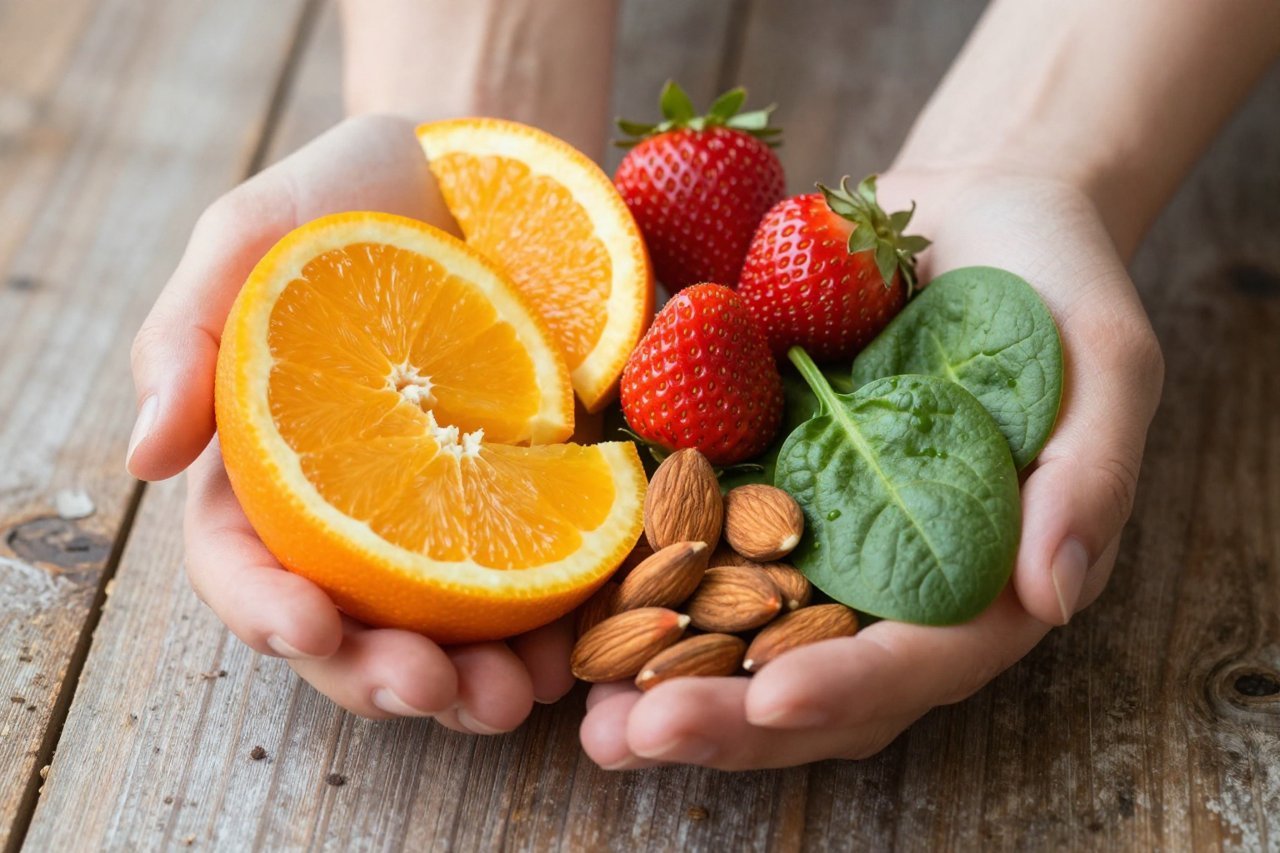
You probably think of oranges, but vitamin C is also abundant in red peppers, kiwi, broccoli, and Brussels sprouts. Unlike some animals, humans can’t make their own vitamin C, so we need a daily supply. It’s essential for collagen production, which keeps your skin firm and wounds healing, and it works as an antioxidant that shields cells from daily wear and tear. The recommended daily amount is 75mg for women and 90mg for men, which is roughly one orange and a handful of strawberries. Most people don’t need a supplement unless they’re fighting off a cold, but it doesn’t hurt to check your intake.
Vitamin A
Vitamin A comes in two forms: retinol from animal foods and beta-carotene from plants. Your body converts the plant type as needed. It keeps your eyes adapting to darkness, your skin from drying out, and your immune system ready for action. Good food sources include liver, sweet potatoes, carrots, and spinach. Since it’s fat-soluble, your body stores it, so you don’t need it every day. But you also shouldn’t go overboard with supplements, because too much stored vitamin A can become toxic.
Vitamin E
Vitamin E is the main antioxidant that protects the fats in your cell membranes. Without it, your cells become more vulnerable to oxidative stress, which is linked to ageing and chronic disease. Nuts, seeds, and vegetable oils are the richest sources. A handful of almonds covers 70% of your daily need. It’s not a vitamin you hear about often, but it’s one of the best vitamins for general cellular health.
Vitamin K
Vitamin K helps your blood clot and works with vitamin D to keep calcium in your bones and out of your arteries. It’s found in leafy greens like kale, spinach, and collards. The fat-soluble kind (K2) is made by bacteria in your gut and also appears in fermented foods like natto and certain cheeses. It’s often overlooked in supplement formulas, but pairing K2 with vitamin D3 is one of the smartest combos you can take for bone health.
The best vitamins for specific goals
For immune support
Your immune system relies on an orchestra of nutrients, but vitamin D, vitamin C, zinc, and vitamin A take the lead. Vitamin D deficiency has been linked to more frequent respiratory infections. Vitamin C helps immune cells travel to sites of infection. If you’re someone who gets sick often, it’s worth getting your blood levels checked before you start megadosing.
For steady energy
If you’re always dragging, the problem often isn’t lack of caffeine, it’s low B vitamins. B12, B6, and folate are directly involved in converting food into cellular energy. A long-term deficiency can leave you with brain fog and fatigue that doesn’t go away with sleep. Iron also plays a role, but that’s a mineral. If you’re low on iron, you’ll feel breathless and weak. The best way to fix it naturally is to eat foods that are rich in iron, like red meat, lentils, and spinach, alongside a little vitamin C to boost absorption. Not sure where to start? This list of the best foods that are rich in iron offers simple meal ideas.
For skin, hair, and nails
Here, vitamin A and C are the stars, but biotin (a B vitamin) and vitamin E get a lot of attention too. Biotin is often marketed for hair regrowth, but the evidence is mixed unless you’re actually deficient. Skin health benefits most from collagen, which needs vitamin C to form. If your skin looks dull, upping fruits and vegetables is a better first step than buying expensive creams.
For strong bones
Vitamin D and vitamin K2 work as a team. D helps you absorb calcium from your gut, while K2 ensures it ends up in your bones, not your blood vessels. Some studies suggest that combining D3 and K2 improves bone density more than taking D alone. You can get K2 from fermented foods, but many people use a supplement to hit consistent levels.
Should you take a multivitamin?
Short answer: it depends. A multivitamin is a useful insurance policy for people with restricted diets, digestive issues, or poor eating habits. But it’s not a substitute for real food. Your body absorbs nutrients from whole foods better than from pills, and food contains thousands of phytochemicals that can’t be bottled. If you’re trying to decide whether a multivitamin is worth it, ask yourself if your diet includes a variety of vegetables, fruits, protein, and healthy fats on most days. If the answer is no, a basic multivitamin could fill some gaps. Just don’t assume more is better, megadosing can do more harm than good.
How to buy supplements without wasting your money
Walk into a store and you’ll see vitamins priced from $5 to $50. The expensive ones aren’t necessarily better. Look for brands that do third-party testing, like USP or NSF, and check that doses are within sensible ranges. Also, a capsule is only useful if your body can actually break it down, so pick tablets and capsules with a straightforward ingredient list. And if you have a flexible spending account (FSA) or health savings account (HSA), you can use those pre-tax dollars to buy eligible supplements. That’s a clever way to save before your balance expires. This guide on the best ways to use your FSA and HSA funds before they expire breaks it down.
Three quick tips for better absorption
Vitamins are not one-size-fits-all. Here are a few practical ways to get more out of every dose:
- Fat-soluble vitamins need fat. Vitamins A, D, E, and K are absorbed better when eaten with food that contains fat, like eggs, avocado, or olive oil.
- Take water-soluble vitamins with water. Vitamins C and the B-complex dissolve in water, so taking them with a large glass of water helps them move through your system.
- Space out your minerals and vitamins. For example, calcium can block iron absorption. If you take both, separate them by a couple of hours.
If you’re not sure where to start, the smartest move is a blood test, not a guessing game. Your doctor can tell you if you’re low on vitamin D, B12, iron, or anything else. Once you know your numbers, you can choose supplements that actually address your needs. In the meantime, building meals around whole foods is the most reliable way to get the best vitamins your body needs.


